Photo: Wikipedia
Political ClimatePolitical Climate in Lowell, MA
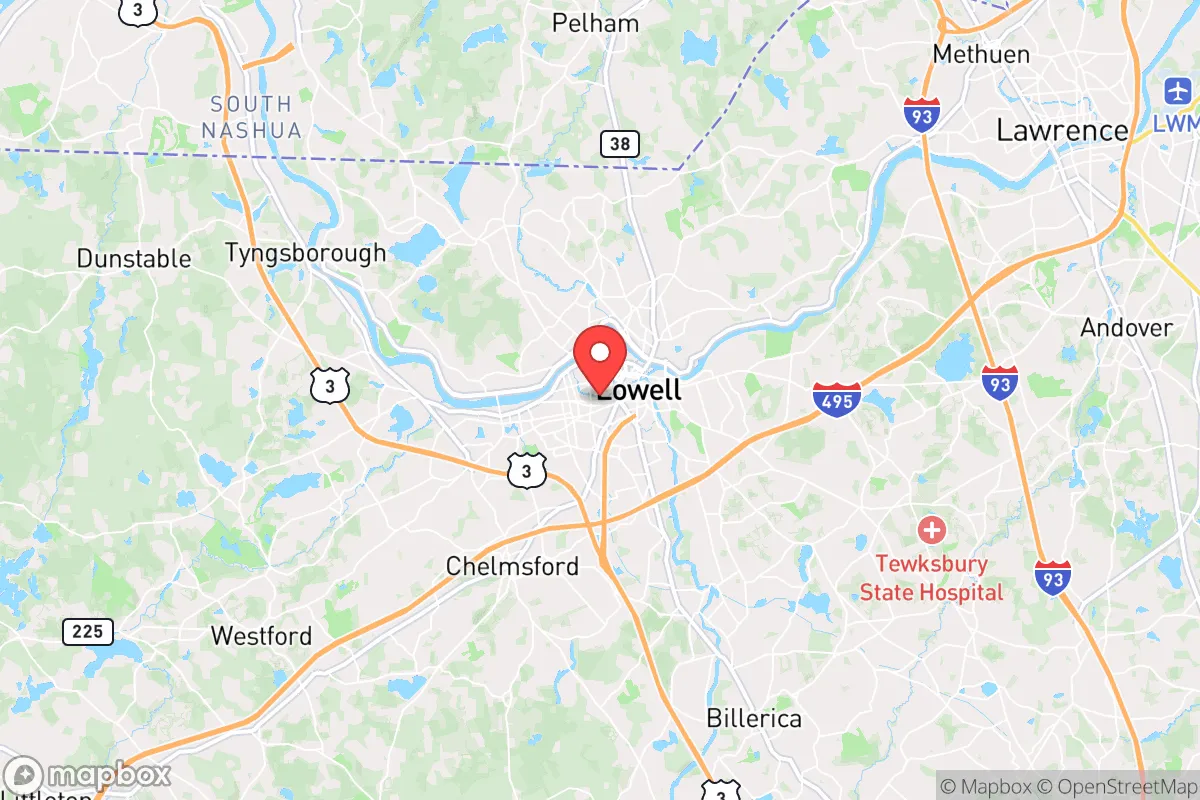
District shown is the primary district for this city’s centroid. Cities may span multiple districts.
Local Political AnalysisPolitical Analysis of Lowell, MA
Lowell, Massachusetts, has been a reliably blue city for decades, and the numbers back that up with a Cook PVI of D+11, meaning it votes about 11 points more Democratic than the national average. But if you’ve lived here as long as I have, you know that “reliably blue” used to mean something different—more of a working-class, union Democrat vibe, where folks were fiscally conservative and socially moderate. Over the last ten to fifteen years, that’s shifted hard toward progressive activism, with city council and school board seats increasingly filled by candidates pushing policies that feel less about common sense and more about top-down social engineering. The trajectory is clear: Lowell is moving further left, and not in the old-school, “let’s fix the potholes” way, but in a “let’s reimagine public safety and overhaul zoning” way that raises eyebrows for anyone who values personal freedom and limited government.
How it compares
If you drive ten miles west to Chelmsford or twenty miles north to Nashua, New Hampshire, you’ll feel the political temperature drop noticeably. Chelmsford still leans blue, but it’s a softer shade—more tax-wary, more skeptical of big spending. Nashua, just over the border, is a whole different animal: no state income tax, a live-and-let-live attitude, and a city council that’s far less eager to regulate how you run your business or what you do on your own property. Lowell, by contrast, has embraced the full suite of progressive priorities: sanctuary city policies that limit cooperation with federal immigration enforcement, a push for rent control that makes landlords nervous, and a school district that’s poured resources into DEI initiatives while basic reading and math scores have stagnated. The surrounding towns like Dracut and Tewksbury are more mixed, with a strong contingent of conservative-leaning voters who commute to Lowell for work but wouldn’t dream of living inside the city limits because of the political direction.
What this means for residents
For the average person just trying to raise a family or run a small business, the practical effect is a slow creep of government into daily life. Property taxes have climbed steadily to fund expanded city services and school programs that often feel more ideological than practical. If you own a three-decker in the Highlands, you’re watching your insurance costs rise alongside the city’s new rental inspection fees and tenant protection ordinances. There’s also a growing sense that your voice matters less if you’re not part of the activist class—town hall meetings are dominated by a vocal minority pushing for things like defunding the police or banning natural gas in new construction, while the silent majority of longtime residents just want reliable snow plowing and safe streets. The city’s embrace of ranked-choice voting and other electoral reforms has made it harder for moderate candidates to break through, locking in a one-party dynamic that leaves little room for dissent.
Culturally, Lowell still has its charms—the mill history, the Lowell Folk Festival, the incredible diversity of restaurants along Merrimack Street. But there’s an undercurrent of tension that wasn’t there twenty years ago. The city’s official stance on issues like police reform and public health mandates has been aggressively progressive, and if you’re the type who values individual liberty over collective messaging, you’ll find yourself increasingly at odds with the local government. Long-term, I see Lowell continuing down this path unless a major economic downturn forces a reckoning with the cost of all these policies. For now, the best advice I can give a friend considering a move here is: know what you’re signing up for. If you want a city that respects your right to live your life without a lot of bureaucratic interference, you might be happier in Nashua or even parts of southern New Hampshire. But if you’re okay with a place where the government is deeply involved in everything from your rent to your kids’ curriculum, Lowell will feel right at home.

State Political ClimatePolitical Climate in Massachusetts
State Political AnalysisPolitical Environment in the State
Massachusetts is one of the most reliably Democratic states in the nation, with a political climate that has shifted steadily leftward over the past two decades. The state hasn’t voted for a Republican presidential candidate since 1984, and in 2024, Kamala Harris carried it by over 25 points. The dominant coalition is a blend of coastal urban progressives, academic elites, and union-aligned Democrats, with the GOP reduced to a rump presence in the legislature and a handful of suburban and exurban pockets. Over the last 10-20 years, the state has moved from a moderate, “Massachusetts Republican” tradition—think Governors Bill Weld and Mitt Romney—to a place where single-party rule is nearly absolute, and the political center has all but vanished.
Urban vs. rural divide
The political map of Massachusetts is a stark study in contrasts. The Boston metro area, including Cambridge, Somerville, and Brookline, is the engine of the state’s progressive tilt, routinely delivering 80-90% Democratic margins. These are the densest, most educated, and most affluent enclaves, where policies like rent control, sanctuary city status, and universal health care are local orthodoxy. Western Massachusetts, anchored by Northampton and Amherst, is similarly deep blue, driven by the Five College consortium and a strong activist culture. The rural and exurban areas tell a different story. Plymouth County and the South Shore have become more competitive, with towns like Marshfield and Hanover flipping toward the GOP in recent cycles. The Cape Cod and Islands region is a mixed bag—wealthy second-home owners lean moderate, while year-round residents in towns like Barnstable have drifted right. The only reliably red counties are the far western hill towns and parts of the Berkshires, but even there, the margins are small. The urban-rural divide is widening, with Boston’s growth and influence pulling the entire state leftward, while the rural periphery feels increasingly ignored and overruled.
Policy environment
Massachusetts has one of the most aggressive progressive policy environments in the country. The state income tax is a flat 5%, but voters rejected a move to 4% in 2022, and the legislature has shown no appetite for broad-based cuts. Property taxes are high, especially in the Boston suburbs, and the state’s “millionaire’s tax” (a 4% surcharge on income over $1 million) passed in 2022, adding a new layer of fiscal burden. Regulatory posture is dense: the state has some of the strictest environmental rules, a robust rent control movement in Boston and Cambridge, and a healthcare system that mandates near-universal coverage under Chapter 58. Education policy is dominated by the teachers’ unions, with school choice limited to inter-district transfers and charter schools capped. Election laws are among the most liberal: no-excuse mail-in voting, same-day registration, and automatic voter registration are all in place. The state also has a sanctuary state law (the 2017 “Safe Communities Act” equivalent), limiting local cooperation with federal immigration enforcement. For a conservative-leaning individual, the policy environment feels like a one-way ratchet toward higher taxes, more regulation, and less local control.
Trajectory & freedom
Over the past five years, Massachusetts has become demonstrably less free in several key areas. On gun rights, the state already had some of the strictest laws in the nation, but in 2024, the legislature passed H.4885, a sweeping gun control bill that bans “ghost guns,” expands the “red flag” law, and restricts carrying in additional public places. This came despite a Supreme Court ruling (NYSRPA v. Bruen) that should have limited such restrictions. On parental rights, the state passed a 2023 law requiring schools to adopt policies that affirm a student’s gender identity without parental notification—a direct blow to family autonomy. On medical freedom, Massachusetts maintained its COVID-19 emergency orders longer than most states, and vaccine mandates for healthcare workers remain in place. Property rights are under pressure from a wave of rent control proposals and a 2024 law that limits evictions and expands tenant protections. The only area where freedom has expanded is marijuana legalization, which voters approved in 2016. The overall trajectory is clear: the state is moving toward a model where government dictates more aspects of daily life, from what you can carry to how you raise your children.
Civil unrest & political movements
Massachusetts has a long history of organized activism, and the current landscape is dominated by the left. The Boston chapter of Black Lives Matter has been highly active, with large protests in 2020 that led to the removal of a statue and the renaming of several schools. The “Defund the Police” movement had real traction in Boston and Cambridge, though it has since receded. On the right, the Massachusetts Republican Party is a shell of its former self, with no statewide elected officials and a shrinking base. Grassroots conservative groups like the MassFiscal Alliance and local gun rights organizations (e.g., GOAL) remain active but are largely outgunned. Immigration politics are a flashpoint: the state’s sanctuary policies have drawn federal scrutiny, and the 2023-2024 migrant crisis saw thousands of arrivals bused to Massachusetts, overwhelming shelters in Boston, Worcester, and Springfield. This has created visible tension, with some towns pushing back against state mandates to house migrants. Election integrity controversies are minimal—Massachusetts has a well-funded, professional election system—but the lack of voter ID laws and the expansion of mail-in voting remain concerns for conservatives. The most visible flashpoint for a new resident would be the constant presence of political signage and activist energy in the urban cores, contrasted with the quieter, more conservative rural areas.
Projection
Over the next 5-10 years, Massachusetts is likely to become even more progressive, driven by demographic trends and in-migration patterns. The Boston metro area is growing faster than the rest of the state, attracting young, educated, left-leaning professionals from across the country. The rural and exurban areas are aging and losing population, which will further dilute their political influence. The state’s “millionaire’s tax” may accelerate an exodus of high earners, but the net effect will be a more homogeneous electorate. Expect further expansions of rent control, a push for single-payer healthcare, and more restrictions on gun rights and free speech. The only wild card is a potential federal intervention—if a future Republican administration withholds funding or challenges sanctuary policies, Massachusetts could face a fiscal crisis. But for now, the state is on a one-way track toward a European-style social democracy. Someone moving in now should expect to find, in a decade, a place where taxes are higher, personal freedoms are more constrained, and the political culture is uniformly left-of-center, with little room for dissent.
For a conservative-leaning individual or family, moving to Massachusetts means accepting that you will be a political minority in a state where your values are increasingly marginalized. The practical takeaways are stark: expect high taxes, limited school choice, a regulatory environment that favors government over individual initiative, and a culture that is openly hostile to traditional views on family, guns, and religion. If you value personal freedom, local control, and a community that shares your principles, Massachusetts is likely a poor fit. If you are willing to pay a premium for world-class education, healthcare, and infrastructure—and can navigate a political landscape that will constantly challenge your beliefs—it remains a functional, if ideologically narrow, place to live. But the trend lines are clear, and they are not moving in your direction.
* Values derived from national, state, county, city and local statistics and may differ in a specific area. Last updated: 2026-05-02T01:37:53.000Z
Narrative content on this page is AI-generated and may contain mistakes. Verify any details that matter before acting on them.
ReloMaps may earn a commission from affiliate links at no extra cost to you.

