Photo: Wikipedia
Demographics of Lovettsville, VA
Affluence Level in Lovettsville, VA
An upper-middle-class area. Household wealth, education levels, and homeownership run ahead of national benchmarks.
People of Lovettsville, VA
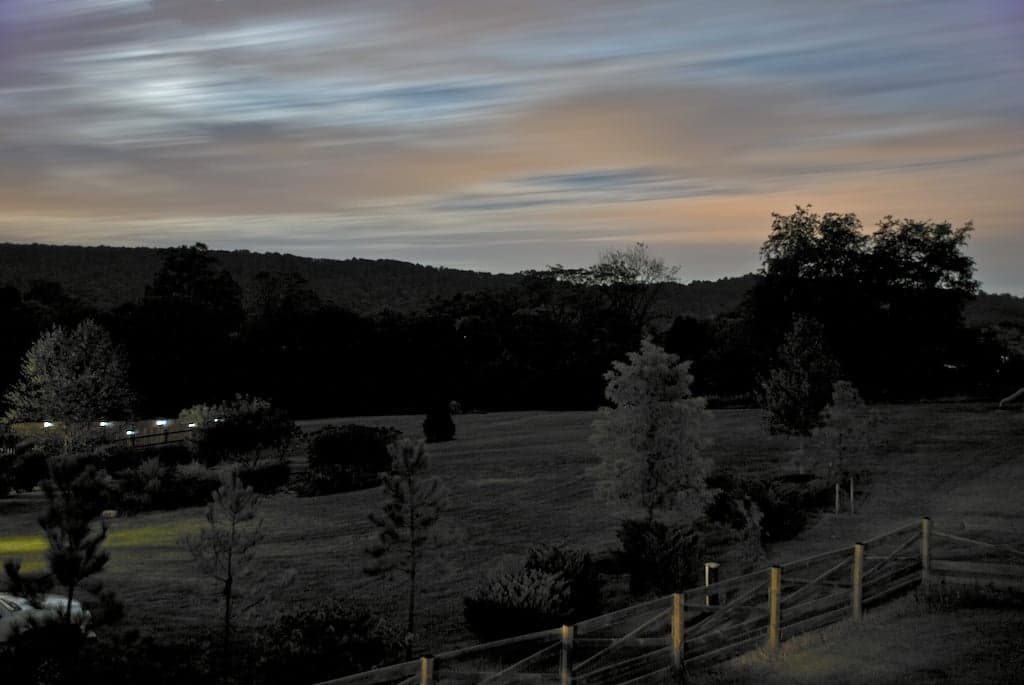
Lovettsville, Virginia, is a small, historically German-American town of 2,697 residents that retains a distinctly rural, family-oriented character while absorbing modest diversity in recent decades. The population is notably well-educated, with 49.4% holding a college degree, and leans conservative in its local politics, reflecting its deep agricultural roots and strong sense of community. The town’s identity is shaped by its location in the Loudoun County foothills, where historic stone houses and active churches anchor a population that is 66.6% White, with growing Hispanic (11.5%), Black (9.6%), and East/Southeast Asian (8.3%) communities. Lovettsville feels more like a tight-knit village than a suburb, with a low foreign-born share of 3.4% underscoring its primarily native-born, multi-generational character.
How the city was settled and grew
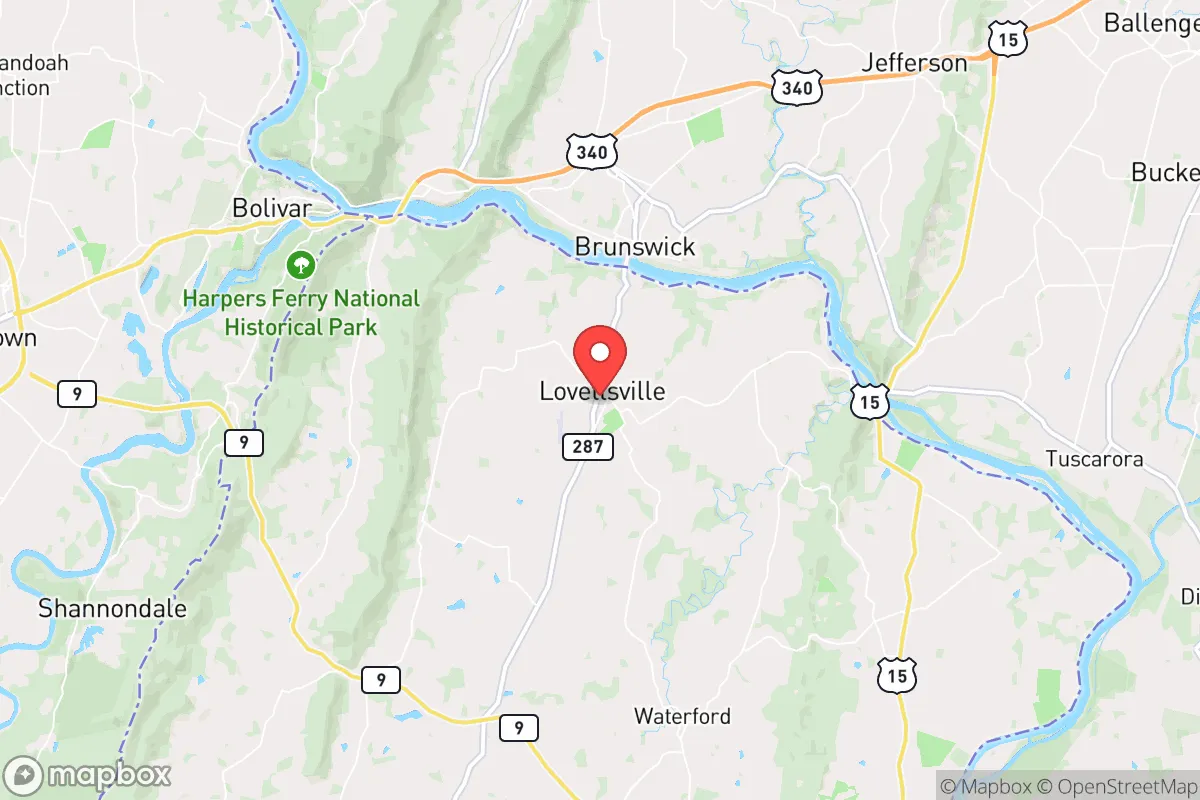
Lovettsville’s original population was overwhelmingly German, part of the broader Pennsylvania Dutch migration that pushed south into the Shenandoah Valley in the mid-1700s. Land grants from Lord Fairfax attracted these settlers, who were primarily Lutheran and Reformed farmers seeking fertile, affordable land along the Potomac River. The town itself was formally laid out in 1836 by Charles Lovett, but the surrounding area had been settled for nearly a century by German-speaking families who built the area’s iconic fieldstone houses and barns. The Old Town neighborhood, centered on the intersection of Berlin Turnpike and Lovettsville Road, contains many of these original 18th- and 19th-century stone structures, now home to descendants of those early families. The Lovettsville Historic District preserves this German heritage, with St. James Lutheran Church (founded 1765) serving as a cultural anchor. Through the 19th and early 20th centuries, the population remained almost entirely White and German-American, sustained by wheat farming, milling, and the railroad that connected the town to markets in Baltimore and Washington, D.C. The population hovered around 500 until the post-World War II era, as the town remained a quiet agricultural hamlet largely bypassed by early suburbanization.
Modern era (post-1965)
Lovettsville began to see significant demographic change after 1965, driven by the expansion of the Washington, D.C. metropolitan area and the construction of the Greenway toll road (Route 7) in the 1990s, which made the town a viable commuter option for federal workers and professionals. The Hillsboro Run subdivision, developed in the 1990s and 2000s, attracted many of these new residents—predominantly White, college-educated families seeking larger lots and lower taxes than closer-in Loudoun suburbs like Leesburg or Ashburn. This wave increased the population from roughly 800 in 1990 to over 2,600 by 2020. Hispanic residents began arriving in the 2000s, many working in construction, landscaping, and the region’s expanding data-center industry; they concentrated in the Lovettsville Commons area, a mix of townhomes and apartments near the town’s commercial core. Black and East/Southeast Asian families moved in during the 2010s, drawn by the same affordability and school quality, settling in newer subdivisions like Lovettsville Station and Potomac View. The foreign-born share remains low (3.4%), indicating that most of this diversity comes from domestic migration—families moving from more diverse parts of Northern Virginia or the D.C. region. The town’s political character has remained conservative, with Loudoun County’s rural western precincts consistently voting Republican, even as the county’s eastern suburbs have shifted left.
The future
Lovettsville’s population is likely to continue growing slowly, with the town’s 2023 comprehensive plan projecting an increase to roughly 3,500 by 2040. New development is concentrated in the Lovettsville Village planned community, a 200-acre mixed-use project approved in 2022 that will add single-family homes, townhomes, and a small commercial district. This development is expected to attract more White and Asian professionals from the D.C. metro area, as well as some Hispanic families, but the town’s limited rental stock and higher home prices ($550,000+ median) will likely keep the foreign-born share low. The population is becoming slightly more diverse—the Hispanic and Asian shares have each risen about 2 percentage points since 2010—but Lovettsville will remain predominantly White and native-born. The cultural identity is evolving from a purely German-American farming community to a more generic exurban bedroom town, though the historic district and annual Oktoberfest celebration maintain a strong German thread. For new residents, the trade-off is clear: lower density and a conservative, family-oriented atmosphere in exchange for a longer commute and fewer amenities than closer-in suburbs.
Lovettsville is becoming a slightly more diverse, still predominantly White exurb where the old German-American character persists in its historic core and annual traditions, while newer subdivisions fill with commuters seeking space and schools. For a conservative-leaning family or individual moving in now, the town offers a stable, low-crime environment with a strong sense of place—but one where the pace of change is slow, and the population will remain largely native-born and politically traditional for the foreseeable future.

* Values derived from national, state, county, city and local statistics and may differ in a specific area. Last updated: 2026-08-24T22:48:36.000Z
Narrative content on this page is AI-generated and may contain mistakes. Verify any details that matter before acting on them.
ReloMaps may earn a commission from affiliate links at no extra cost to you.

