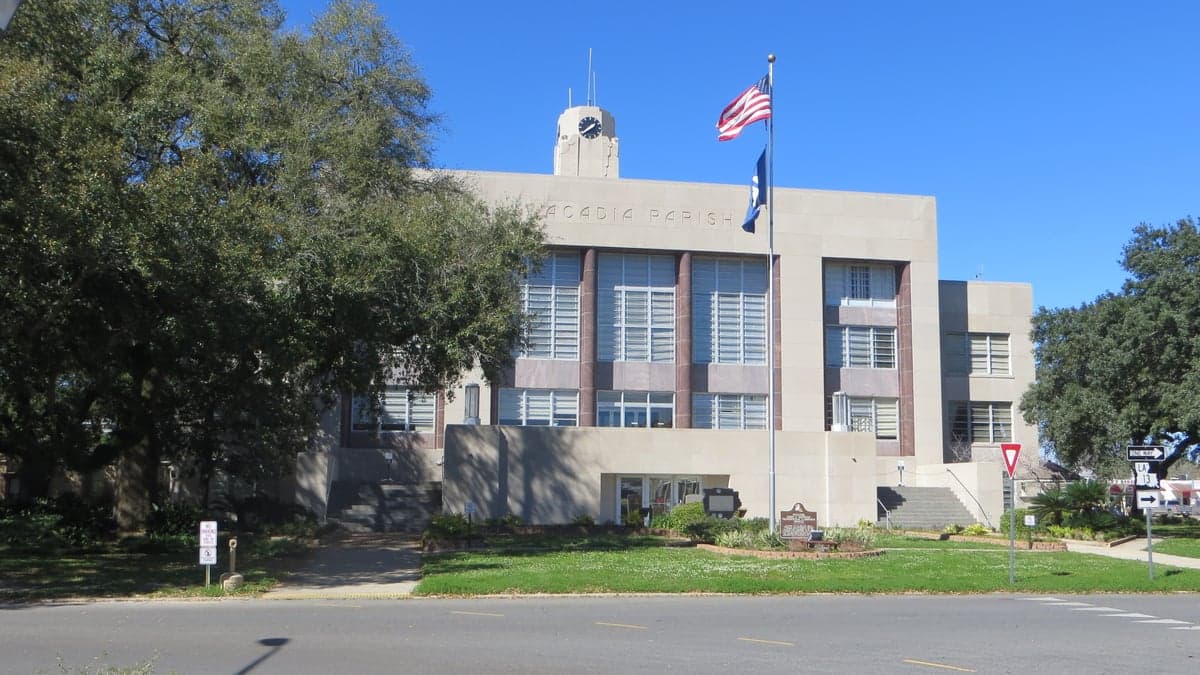
Photo: Wikipedia
Quality of Life in Acadia County
A livable area that tracks near national norms for affordability, walkability, and neighborhood health.
What does Quality of Life tell us?
Quality of Life measures an area by evaluating factors like cost of living, nearby amenities, country club access, airport proximity, socioeconomic signals and neighborhood character. For large states, this is a general average — quality of life can vary dramatically between metro areas, suburbs, and rural communities within the same state.
What does this tell us?
Quality of Life measures an area by evaluating factors like cost of living, nearby amenities, country club access, airport proximity, socioeconomic signals and neighborhood character. For large states, this is a general average — quality of life can vary dramatically between metro areas, suburbs, and rural communities within the same state.
Cost of Living
42% below national average
108%
The Real Cost of Living in Acadia County for 2026
| Tier | Individual | Family (4) |
|---|---|---|
| Survival | $12k | $22k |
| Comfortable | $29k | $42k |
| Luxury | $82k+ | $127k+ |
| Elite (Top 5%) | $108k+ | $168k+ |
Quality-of-Life Analysis
Acadia County, Louisiana, offers a distinct quality-of-life spectrum that ranges from the small-city conveniences of Crowley to the deep rural quiet of unincorporated communities like Mire and Iota. The county’s overall cost of living index sits at 58—42 percent below the national average—making it one of the most affordable places in the state. This economic reality attracts a mix of agricultural workers, oil-and-gas industry commuters, and retirees seeking a low-stress, low-cost lifestyle. The choice for a new resident largely comes down to how much daily convenience and social activity they are willing to trade for space and quiet.
Largest town(s) & population centers
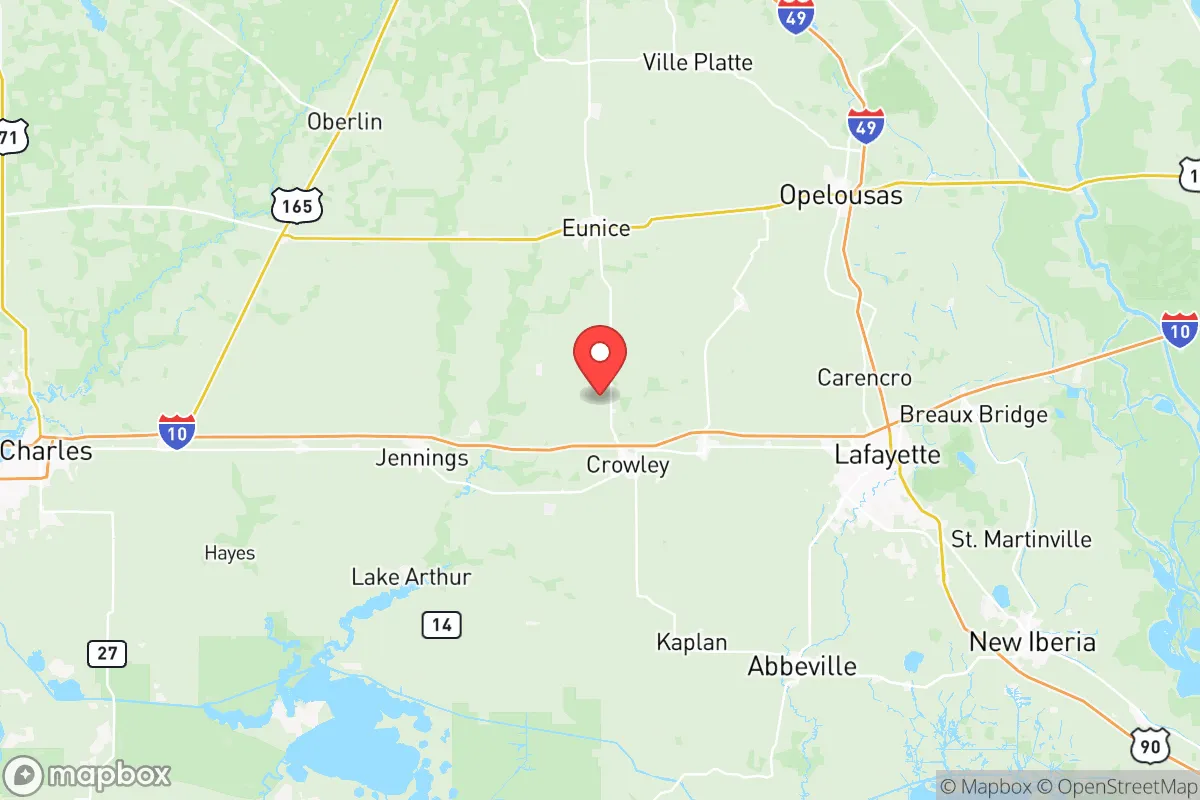
Crowley is Acadia County’s largest municipality and its commercial and cultural hub, with a population of roughly 13,000. Daily life here revolves around the historic downtown square, the annual International Rice Festival, and a modest but functional set of amenities including a regional hospital, grocery stores, and local restaurants. Crowley is the county seat, so government services, the courthouse, and most professional offices are concentrated here. The town has a walkable core, though most residents still drive for errands. Housing is notably affordable: the countywide median home value is $146,900, and median rent is $725, with Crowley’s inventory of older Craftsman and ranch-style homes often falling below those averages. The average commute in the county is about 28 minutes, which for Crowley residents typically means a short drive to work within town or a longer haul to Lafayette (roughly 25 miles east) for higher-paying jobs in healthcare, education, or energy.
Smaller towns & rural pockets
Outside Crowley, the county is dotted with smaller communities that offer a quieter, more agrarian rhythm. Rayne, known as the “Frog Capital of the World,” has about 8,000 residents and a compact downtown with a few cafes and antique shops. It feels more like a large village than a town, and its annual Frog Festival draws regional visitors. Church Point (pop. ~4,500) is even smaller, with a strong Cajun-French cultural identity and a slower pace of life. Iota and Mire are unincorporated areas where homes sit on larger lots, often surrounded by rice fields and crawfish ponds. In these pockets, the nearest grocery store or gas station may be a 10- to 15-minute drive, and internet connectivity can be less reliable than in Crowley. These areas appeal strongly to families who want land for gardening or livestock, and to retirees who prioritize privacy over proximity to services.
Cost & lifestyle range
The cost-of-living spread across Acadia County is narrow by national standards, but the lifestyle difference is real. At the higher-amenity end, Crowley offers the most rental options, the best access to healthcare, and the only movie theater in the county. A two-bedroom rental here typically runs $650–$800, and a modest three-bedroom home can be found for $120,000–$160,000. At the lower-cost, lower-amenity end, rural areas around Iota and Estherwood offer home prices that can dip below $100,000 for a fixer-upper, and land is cheap enough that a family can buy a few acres for what a small lot costs in Crowley. The trade-off is clear: residents in the rural pockets accept longer drives for groceries, school drop-offs, and medical appointments. Utility costs are slightly higher in outlying areas due to well water and septic system maintenance, but property taxes remain low across the entire county. For those who work in Lafayette or Lake Charles, the 28-minute average commute is a manageable price to pay for a home that costs half as much as something comparable near the city.
Acadia County is best suited for people who value affordability and space over urban amenities. Young families on a tight budget, agricultural workers, and retirees on fixed incomes will find the most value here. Professionals who need daily access to a major metro area may find the commute to Lafayette or Baton Rouge wearing over time, but for anyone willing to trade a bit of convenience for a home that costs well below the national median, Acadia County delivers one of the lowest cost-of-living profiles in the Gulf South.

Crime in Acadia County
Crime rates similar to the national median for U.S. locations.
Violent CrimeViolent Crime Analysis
Property CrimeProperty Crime Analysis
Crime Analysis
Acadia Parish, located in the heart of Cajun Country, presents a mixed safety picture for potential residents. The parish recorded a violent crime rate of 362.3 incidents per 100,000 residents and a property crime rate of 1,448.6 per 100,000, figures that place it above the national average for both categories. While certain communities within the parish experience higher concentrations of crime, other areas, particularly smaller towns and rural stretches, maintain a quieter, more secure environment. Understanding where these crime clusters occur is essential for anyone considering a move to cities like Crowley, Rayne, or Church Point.
Crime in context
Acadia Parish’s violent crime rate of 362.3 per 100,000 is roughly 30% higher than the national average of approximately 280 per 100,000, and significantly above the Louisiana state average, which itself is among the highest in the nation. The property crime rate of 1,448.6 per 100,000 also exceeds the U.S. benchmark of roughly 1,200 per 100,000. These numbers are heavily influenced by conditions in the parish’s largest municipality, Crowley, which serves as the parish seat and economic hub. Crowley’s density and socioeconomic challenges contribute disproportionately to the parish-wide statistics. In contrast, smaller communities like Estherwood and Morse report far fewer incidents, though their populations are small enough that a single event can skew annual rates. The parish’s location along the I-10 corridor also introduces transient crime, including drug trafficking and vehicle theft, which flows between larger metros like Lafayette and Lake Charles.
What residents experience
Residents of Acadia Parish most commonly encounter property crimes such as theft, burglary, and vehicle break-ins, particularly in commercial districts and lower-income neighborhoods. Violent crime, while less frequent, is concentrated in specific areas. Crowley sees the bulk of aggravated assaults and robberies, often linked to drug activity and domestic disputes. Rayne, known as the "Frog Capital of the World," has a lower violent crime rate than Crowley but still experiences periodic spikes in property crime. Church Point and Iota are generally considered safer, with tighter-knit communities and fewer reported incidents. The judicial environment in Acadia Parish is notably more conservative than in larger Louisiana metros like New Orleans or Baton Rouge. The district attorney’s office for the 15th Judicial District, which covers Acadia Parish, has a reputation for pursuing charges vigorously, and local judges tend to impose stricter sentences. This contrasts sharply with the progressive, offender-focused policies seen in some urban jurisdictions, where lenient plea deals and early release programs have been linked to higher recidivism and more criminals returning to the streets. For residents, this means a greater likelihood that offenders face consequences, which contributes to a sense of public safety in the parish’s more stable neighborhoods.
Neighborhood-level variation within Acadia Parish is pronounced. In Crowley, areas east of the railroad tracks and near the downtown core report higher crime densities, while newer subdivisions on the western edge of town see far fewer incidents. Rayne’s historic district and outlying rural routes are generally safe, though travelers should exercise caution near the I-10 interchange. For those seeking the lowest crime rates, the small towns of Mermentau and Evangeline offer quiet, low-density living with minimal reported crime, though they lack the amenities of larger parish cities. Prospective residents are advised to consult local crime maps and speak with law enforcement directly, as block-by-block conditions can vary significantly even within a single ZIP code.
* Values derived from national, state, county, city and local statistics and may differ in a specific area. Last updated: 2026-08-08T15:01:42.000Z
Narrative content on this page is AI-generated and may contain mistakes. Verify any details that matter before acting on them.
ReloMaps may earn a commission from affiliate links at no extra cost to you.

