Photo: Wikipedia
Demographics of Long Beach, CA
Affluence Level in Long Beach, CA
A middle-class area roughly in line with national averages across income, home values, education, and employment.
People of Long Beach, CA
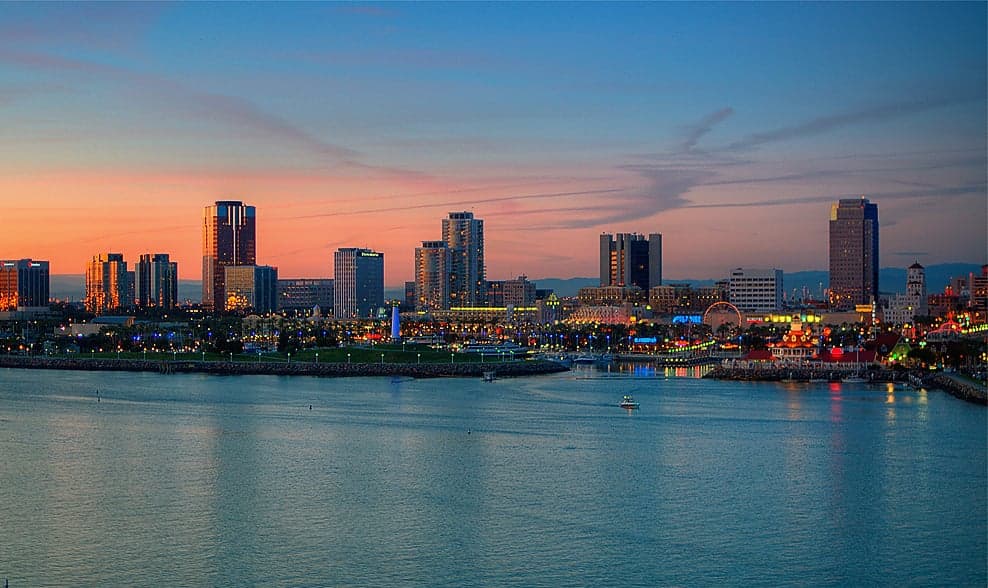
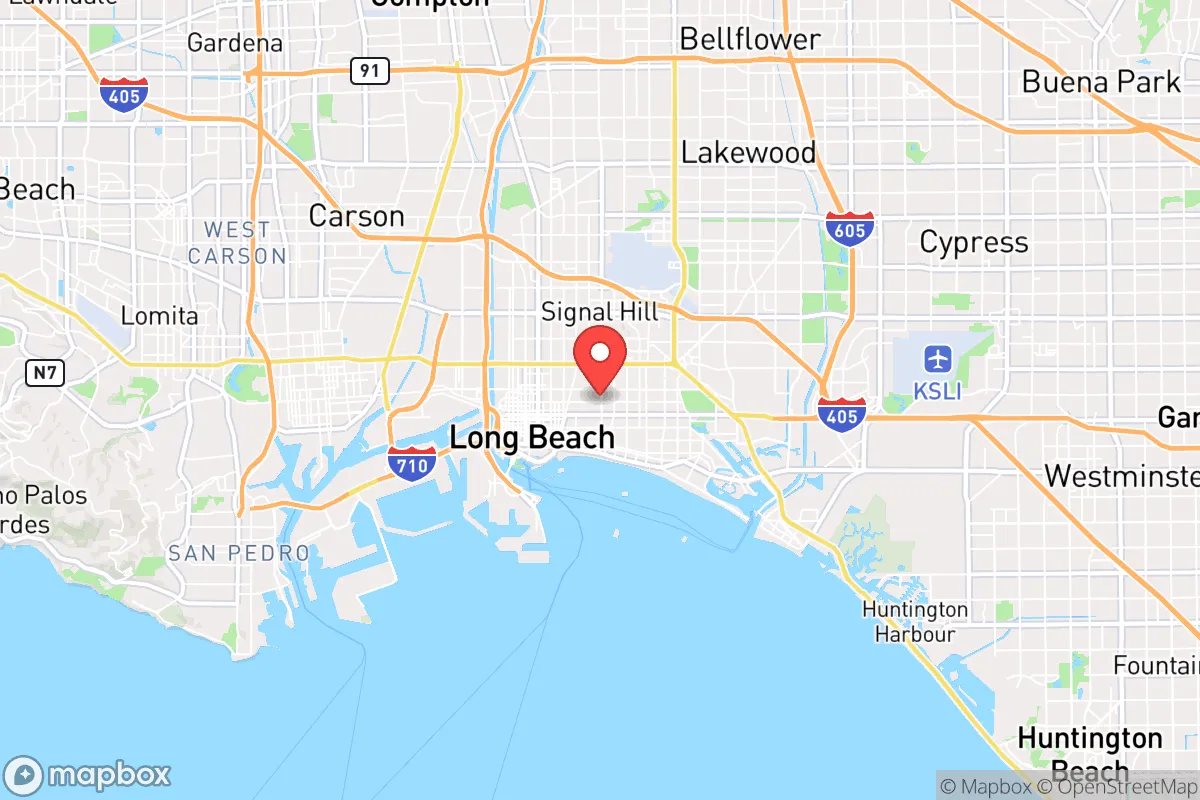
Long Beach, California is a densely populated, majority-minority city of 458,491 residents where no single ethnic group holds a majority. Its population is 43.4% Hispanic, 27.2% white, 11.5% Black, and 11.7% East/Southeast Asian, with a separate 0.7% Indian-subcontinent community and 11.9% foreign-born. The city is defined by its working-class roots, strong union history, and a growing divide between gentrifying coastal neighborhoods and stable inland enclaves. For a conservative-leaning mover, Long Beach offers a politically blue but practically moderate environment with distinct, walkable neighborhoods and a cost of living lower than Los Angeles proper.
How the city was settled and grew
Long Beach was originally part of the 1784 Spanish land grant to Manuel Nieto, but its modern population history begins with the 1880s land boom. The city was incorporated in 1897 as a seaside resort and grew explosively after oil was discovered at Signal Hill in 1921. That oil boom drew a wave of white Midwestern migrants—many from Oklahoma, Texas, and the Plains—who worked the rigs and built bungalow neighborhoods like Wrigley and Bixby Knolls. During World War II, the Navy established the Long Beach Naval Shipyard and the Port of Long Beach expanded, pulling in tens of thousands of defense workers. This era brought a second wave: Black families from the South and Southwest, recruited for shipyard jobs, who settled in the Westside and North Long Beach. By 1950, Long Beach was a white-majority, blue-collar city of roughly 250,000, with a small but growing Black population concentrated west of the Los Angeles River.
Modern era (post-1965)
The 1965 Immigration and Nationality Act reshaped Long Beach’s demographics dramatically. The largest post-1965 influx was from Southeast Asia: Cambodian, Vietnamese, and Lao refugees arrived after the fall of Saigon in 1975 and the Cambodian genocide of the late 1970s. They concentrated in the Cambodia Town district (along Anaheim Street between Atlantic and Junipero) and in Central Long Beach, making Long Beach home to the largest Cambodian population of any city outside Southeast Asia. Simultaneously, Hispanic immigration—primarily from Mexico and Central America—accelerated, with families settling in West Long Beach and North Long Beach, areas that had previously been white and Black. White flight to Orange County suburbs like Los Alamitos and Seal Beach accelerated after the 1965 Watts riots and the 1992 Los Angeles riots, both of which affected Long Beach’s eastern edges. By 2000, the city had shifted from 67% white (1970) to 36% white, with Hispanics becoming the largest single group. The Black population peaked at roughly 14% in the 1990s and has since declined slightly to 11.5%, as some middle-class Black families moved to inland suburbs like Moreno Valley or Fontana.
The future
Long Beach’s population is slowly homogenizing along class lines rather than strictly ethnic ones. The white share has stabilized at around 27%, buoyed by young professionals and empty-nesters moving into renovated Craftsman homes in Bluff Park and Belmont Heights. The Hispanic share continues to grow, driven by both immigration and higher birth rates, and is projected to approach 50% within a decade. The East/Southeast Asian population (11.7%) is plateauing, as second- and third-generation Cambodian and Vietnamese families move to lower-cost suburbs like Garden Grove or Lakewood. The Indian-subcontinent community (0.7%) remains small and dispersed, with no single ethnic enclave. Gentrification pressure is strongest along the 4th Street corridor (Retro Row) and the waterfront, where new market-rate apartments are drawing higher-income renters. The city is not tribalizing into hostile enclaves, but it is sorting: coastal and downtown neighborhoods are becoming whiter and wealthier, while North and West Long Beach remain predominantly Hispanic and lower-income. The foreign-born share (11.9%) is below the national average for a major city, suggesting that Long Beach is more of a second-stage settlement city—immigrants arrive, then their children move out.
For someone moving in now, Long Beach is a city that has largely completed its demographic transition. It is no longer a white working-class Navy town, nor is it a refugee-receiving city in the way it was in the 1980s. It is becoming a more typical Southern California coastal city: expensive, diverse, and politically progressive, but with enough blue-collar grit and neighborhood identity to avoid feeling like a generic suburb. The practical implication for a conservative-leaning mover is that Long Beach offers good schools in pockets (e.g., Los Cerritos), a strong police presence relative to Los Angeles, and a city government that is pragmatic on development and public safety despite its Democratic supermajority.

* Values derived from national, state, county, city and local statistics and may differ in a specific area. Last updated: 2026-04-24T11:52:30.000Z
Narrative content on this page is AI-generated and may contain mistakes. Verify any details that matter before acting on them.
ReloMaps may earn a commission from affiliate links at no extra cost to you.

