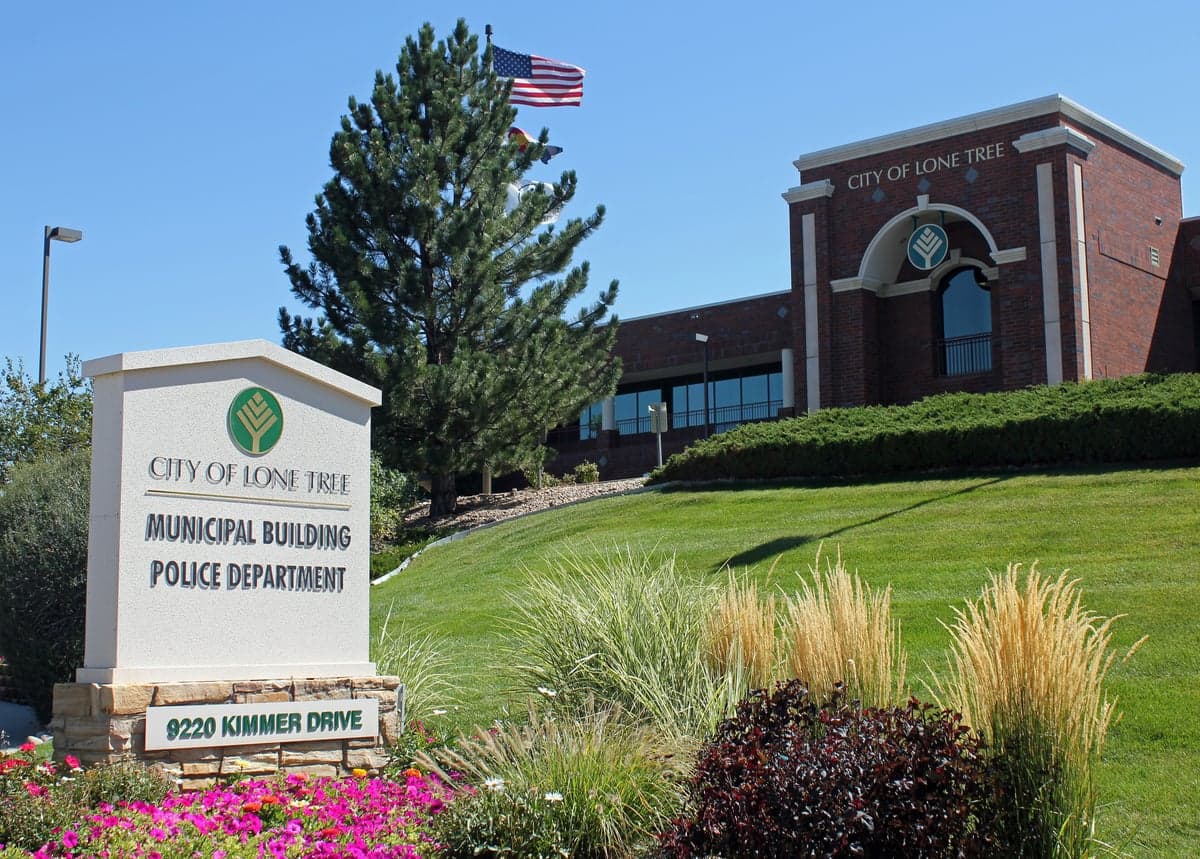
Photo: Wikipedia
Personal Sovereignty in Lone Tree, CO
Viable for self-reliance. Generally workable, though some barriers may limit total independence.
What does Personal Sovereignty tell us?
Personal Sovereignty measures your capacity for self-reliance and independence with minimal government friction. Higher scores mean fewer barriers between you and the way you want to live... but it assumes you have the space you need and good neighbors.
What does this tell us?
Personal Sovereignty measures your capacity for self-reliance and independence with minimal government friction. Higher scores mean fewer barriers between you and the way you want to live... but it assumes you have the space you need and good neighbors.
State Policy
Energy independence: Net exporter (110% of energy produced in-state)
Personal Liberty
Homesteading

Personal Liberty Analysis
Lone Tree, Colorado, offers a mixed bag for those prioritizing personal sovereignty, where the state’s progressive tilt clashes with the city’s more pragmatic, suburban character. While Douglas County remains a conservative stronghold—voting +18 R in the 2024 presidential race—the city itself operates under Colorado’s increasingly centralized state authority, which has steadily eroded local control over key autonomy issues. For a survivalist or prepper mindset, the calculus here isn’t about finding a libertarian utopia, but about identifying where the cracks in the system still allow for self-reliance, and where the state’s reach is most likely to tighten. The bottom line: Lone Tree provides a decent buffer zone for those willing to navigate Colorado’s regulatory landscape, but it’s not a place to let your guard down.
Tax burden and regulatory posture: how much the state takes and controls
Colorado’s Taxpayer Bill of Rights (TABOR) remains a critical safeguard, capping state revenue growth and requiring voter approval for tax increases—a rare constitutional check on government expansion. Douglas County’s property tax rate is a relatively low 0.55% of assessed value, and Lone Tree itself has no city income tax, keeping the immediate bite manageable. However, the state’s flat income tax of 4.4% (set to drop to 4.25% in 2027) is a fixed cost that funds a growing state apparatus. The regulatory posture is where the friction shows: Colorado’s strict land-use laws, driven by the 1974 Land Use Act, give counties and municipalities broad authority to control development, but the state has increasingly preempted local zoning for renewable energy projects and affordable housing mandates. For a prepper, this means you can’t simply buy a rural parcel and do what you want—Douglas County’s zoning code requires minimum lot sizes of 2.5 acres in agricultural zones, and any off-grid structures must meet state building codes. The state’s push for electric vehicle mandates and net-zero energy goals adds another layer of compliance, with new homes required to meet strict energy codes that limit independent power systems. The tax burden is moderate, but the regulatory creep is real—expect to spend time and money navigating permits if you want to build or modify property for self-sufficiency.
Self-defense and gun law specifics: what you can and cannot do
Colorado is a shall-issue state for concealed carry permits, meaning no subjective discretion by local authorities—if you meet the requirements, you get the permit. Lone Tree falls under Douglas County, where the sheriff’s office is known for efficient processing, and constitutional carry (permitless carry) is legal for residents 21 and older since 2021. However, the state has enacted several restrictions that preempt local ordinances: a 2023 law bans the sale of “ghost guns” (unserialized firearms) and requires universal background checks for private sales. Magazine capacity is capped at 15 rounds for handguns and 10 for long guns—a direct hit for preppers who value standard-capacity magazines for defensive scenarios. The state also has a “red flag” law (Extreme Risk Protection Order) that allows family members or law enforcement to petition a court to temporarily seize firearms if someone is deemed a threat. This law has been used over 3,000 times since 2020, and while Douglas County’s sheriff has publicly opposed it, the state’s authority overrides local resistance. For self-defense on private property, Colorado’s “Make My Day” law provides strong protections—you have no duty to retreat if someone unlawfully enters your home, and you can use deadly force if you reasonably believe it’s necessary to prevent imminent harm. Stand-your-ground applies outside the home as well, but the state’s gun laws are trending in a restrictive direction, so expect more limitations if the legislature shifts further left.
Self-reliance and homesteading viability: lot sizes, zoning, and off-grid feasibility
Lone Tree itself is a suburban city with typical HOA-governed subdivisions, where lot sizes average 0.2 to 0.5 acres—far too small for serious homesteading. For those willing to drive 15–20 minutes south into unincorporated Douglas County, the picture changes: agricultural zoning allows parcels as small as 2.5 acres, but 5- to 10-acre lots are more common for actual farming. The county’s comprehensive plan encourages rural preservation, so you can keep chickens, goats, and even a few head of cattle on larger lots, but you’ll need to comply with state water rights laws—Colorado is a prior appropriation state, meaning you must have a water right permit for any significant irrigation or livestock watering. Off-grid feasibility is limited: Colorado’s building code requires connection to a septic system (permitted and inspected) and either grid power or a state-approved alternative energy system with battery storage. Solar panels are allowed, but net metering policies are set by the state’s Public Utilities Commission, and Xcel Energy (the dominant provider) has caps on how much you can offset. Rainwater collection is legal for non-potable uses (gardening, livestock) but requires a permit for anything beyond 110 gallons of storage. For a prepper, the biggest hurdle is the state’s fire code: in wildfire-prone areas (which includes much of Douglas County), you must maintain defensible space and use fire-resistant materials, and some counties restrict the use of propane tanks or wood-burning stoves. Homesteading is possible, but it’s a regulated endeavor—not a free-for-all.
Personal liberties: parental rights, medical autonomy, speech, and property
Parental rights in Colorado have become a flashpoint. The state’s 2023 law (HB23-1081) prohibits school districts from notifying parents if a student changes their gender identity or pronouns, overriding local school board policies. Douglas County’s school board has pushed back, but state law preempts local control—parents in Lone Tree cannot rely on schools to inform them of critical decisions about their children. Medical autonomy is similarly constrained: Colorado has legalized assisted suicide (End of Life Options Act) and recreational marijuana, but it also mandates COVID-19 vaccine requirements for healthcare workers and has a strict vaccine schedule for school attendance (with limited religious exemptions). The state’s public health authority can impose isolation and quarantine orders, and during the pandemic, Douglas County saw enforcement of mask mandates despite local opposition. Free speech is protected under the First Amendment, but Colorado’s “bias-motivated crimes” law (HB21-1108) enhances penalties for speech deemed to incite violence or harassment, and the state’s anti-discrimination laws apply to public accommodations, meaning businesses can face penalties for refusing service based on sexual orientation or gender identity. Property rights are relatively strong under TABOR, but the state’s “right to farm” law (CRS 35-3.5-101) protects agricultural operations from nuisance lawsuits—good for homesteaders, but it also means you can’t easily stop a neighboring CAFO from operating. Eminent domain is used sparingly in Douglas County, but the state’s transportation department has broad authority for road expansions. Overall, personal liberties in Lone Tree are a patchwork: strong on property and self-defense basics, but increasingly constrained on parental rights and medical choice.
Compared to other areas in the Front Range, Lone Tree offers a relatively high degree of personal sovereignty for those who can navigate Colorado’s state-level restrictions. The tax burden is manageable, the gun laws are workable (if trending wrong), and the homesteading potential exists just outside city limits. But the state’s progressive tilt on parental rights, medical mandates, and regulatory overreach means you’re always one legislative session away from losing ground. For a survivalist or prepper, Lone Tree is a decent base of operations—but you’ll need to stay engaged, know your local officials, and be ready to adapt as the state’s appetite for control grows. It’s not Texas or Wyoming, but it’s not California either; the key is understanding where the lines are drawn and how to operate within them without surrendering your autonomy.

* Values derived from national, state, county, city and local statistics and may differ in a specific area. Last updated: 2026-04-23T02:02:42.000Z
Narrative content on this page is AI-generated and may contain mistakes. Verify any details that matter before acting on them.
ReloMaps may earn a commission from affiliate links at no extra cost to you.

