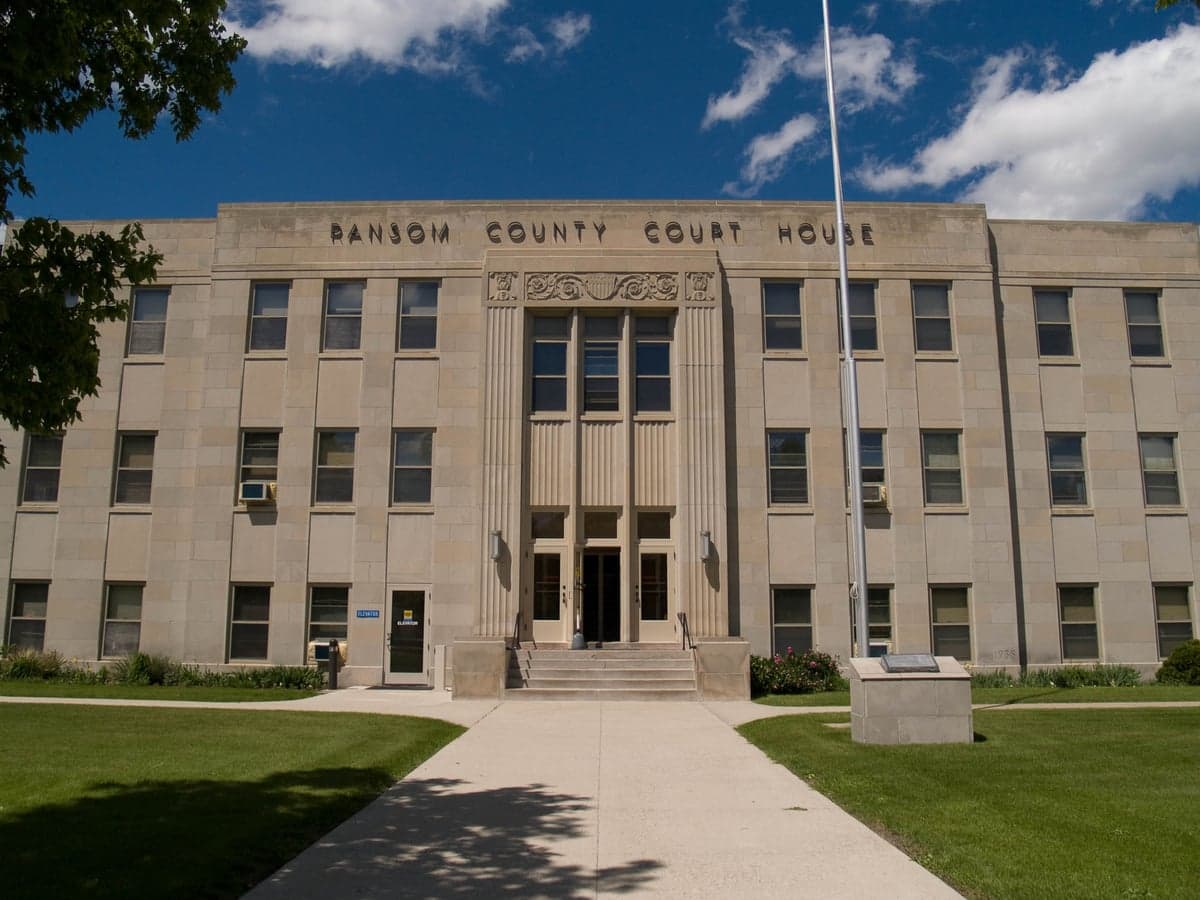
Photo: Wikipedia
Personal Sovereignty in Lisbon, ND
Viable for self-reliance. Generally workable, though some barriers may limit total independence.
What does Personal Sovereignty tell us?
Personal Sovereignty measures your capacity for self-reliance and independence with minimal government friction. Higher scores mean fewer barriers between you and the way you want to live... but it assumes you have the space you need and good neighbors.
What does this tell us?
Personal Sovereignty measures your capacity for self-reliance and independence with minimal government friction. Higher scores mean fewer barriers between you and the way you want to live... but it assumes you have the space you need and good neighbors.
State Policy
Energy independence: Net exporter (500% of energy produced in-state)
Personal Liberty
Homesteading

Personal Liberty Analysis
Lisbon, North Dakota, offers a notably high degree of personal sovereignty relative to most of the United States, functioning as a pocket where state-level preemption and a sparse local government footprint leave individuals largely unbothered. For the survivalist or prepper, this translates into a low-interference environment where the primary constraints on autonomy are practical—weather, distance, and supply chains—rather than bureaucratic overreach. The town’s small population (roughly 1,200) and agricultural character mean that the default expectation is self-reliance, not reliance on government services, which aligns with a conservative, liberty-minded lifestyle.
Tax burden and regulatory posture: how much the state leaves in your pocket
North Dakota’s tax structure is a clear advantage for anyone prioritizing financial sovereignty. There is no state income tax, meaning every dollar you earn stays under your control—no state-level withholding to fund programs you may oppose. Property taxes in Ransom County, where Lisbon sits, are moderate, typically running around 1.2% to 1.5% of assessed value, which is competitive compared to the national average. The state’s sales tax is 5%, with no additional local sales tax in Lisbon, keeping everyday purchases affordable. On the regulatory side, North Dakota is a right-to-work state, which limits union influence on employment, and the state has a strong tradition of resisting federal overreach, particularly on land use and energy extraction. For a prepper, this means fewer layers of red tape when building a workshop, storing supplies, or modifying property. The state’s oil and agricultural heritage has fostered a culture that views government regulation as a necessary evil at best, and Lisbon’s local government is small enough that zoning and permitting are minimal—often a single conversation with the county office suffices for most projects.
Self-defense and gun law specifics: what you can carry and where
North Dakota is a constitutional carry state, meaning no permit is required to carry a concealed firearm for anyone legally allowed to possess one. This is a bedrock sovereignty protection: the government does not demand permission slips for exercising a fundamental right. Lisbon itself has no local ordinances that restrict firearm possession beyond state law, so you can carry openly or concealed without fear of municipal overreach. The state also has strong castle doctrine and stand-your-ground laws, eliminating any duty to retreat before using deadly force in self-defense, whether in your home, vehicle, or any place you have a legal right to be. For the prepper, this extends to property defense: if someone forcibly enters your rural homestead, the law is on your side. Magazine capacity restrictions, assault weapon bans, and waiting periods are nonexistent. The only notable limitation is that firearms are prohibited in certain federal buildings and K-12 schools (with exceptions for law enforcement and authorized individuals), but otherwise, your right to keep and bear arms is robustly protected. The state’s political climate is overwhelmingly supportive of gun rights, so there is little risk of future erosion at the local level.
Self-reliance and homesteading viability: lot sizes, zoning, and off-grid feasibility
Lisbon’s rural character makes it a strong candidate for self-reliant living. Within the city limits, residential lots typically range from a quarter-acre to half-acre, but the real opportunity lies just outside town, where acreages and farmland are readily available. Ransom County has minimal zoning restrictions—most unincorporated land is zoned for agricultural use, which allows for livestock, gardens, workshops, and even small-scale manufacturing without special permits. Off-grid living is legally feasible: North Dakota has no state-level mandate requiring grid connection, and while the county may require a septic system permit (standard for health safety), solar panels, rainwater collection, and private wells are generally allowed. The biggest practical constraint is the climate—winters are harsh, with average lows around -5°F in January—so a reliable heating source (wood, propane, or geothermal) is essential. But the legal environment does not hinder you from building a self-sufficient homestead. For the prepper, this means you can stockpile food, fuel, and ammunition without worrying about local ordinances limiting storage quantities. The town’s agricultural supply stores and proximity to Interstate 29 also provide reasonable access to bulk goods and equipment.
Personal liberties: parental rights, medical autonomy, speech, and property
Parental rights are strongly protected in North Dakota. The state has no universal vaccine mandates for school attendance—exemptions for medical, religious, and personal belief are available—and Lisbon’s school district (Lisbon Public Schools) has historically deferred to parental decisions on medical matters. Medical autonomy is further supported by the state’s lack of a broad public health emergency powers act that could override individual choice; during the COVID-19 pandemic, North Dakota was among the least restrictive states, with no statewide mask mandate or lockdowns. Free speech is protected by both state law and a political culture that values blunt, independent expression—there is no local equivalent of “hate speech” ordinances or permit requirements for public assembly. Property rights are reinforced by North Dakota’s strong eminent domain protections; the state requires a public purpose and just compensation, and there is a history of resistance to pipeline and transmission line projects that would infringe on private land. For the conservative individual, this means your voice, your medical decisions, and your land are treated as yours, not as resources to be managed by the state. The only notable caveat is that Lisbon is a small, close-knit community where social pressure can sometimes substitute for formal regulation—but that is a matter of culture, not law.
In the broader landscape of American sovereignty, Lisbon, ND, ranks among the top-tier locations for those seeking maximum personal autonomy with minimal government interference. The combination of no state income tax, constitutional carry, minimal zoning, strong parental rights, and a political culture that distrusts federal overreach creates an environment where the individual is the primary unit of authority. Compared to coastal states or even neighboring Minnesota, where regulatory density is higher, Lisbon offers a refuge for the prepper or survivalist who wants to live by their own rules. The trade-offs are real—isolation, harsh winters, and limited economic diversity—but for those who prioritize sovereignty above convenience, this small town in the Red River Valley is a strategic choice that few other locations can match.

* Values derived from national, state, county, city and local statistics and may differ in a specific area. Last updated: 2026-04-19T08:56:51.000Z
Narrative content on this page is AI-generated and may contain mistakes. Verify any details that matter before acting on them.
ReloMaps may earn a commission from affiliate links at no extra cost to you.

