
Photo: Wikipedia
Political ClimatePolitical Climate in Lenexa, KS
District shown is the primary district for this city’s centroid. Cities may span multiple districts.
Local Political AnalysisPolitical Analysis of Lenexa, KS
Lenexa, Kansas, sits in a political spot that’s been shifting under our feet for a while now. The Cook PVI of D+2 tells you it’s a toss-up district, but if you’ve lived here as long as I have, you know that number hides a real change. This used to be solid, reliably conservative ground—the kind of place where folks kept their heads down, worked hard, and expected the government to stay out of their business. Now, you’re seeing more progressive energy creeping in, especially as the Kansas City metro area expands westward. It’s not a full-blown blue wave yet, but the trajectory is clear: Lenexa is getting bluer, and that has a lot of us who value personal freedoms and limited government feeling a bit uneasy.
How it compares
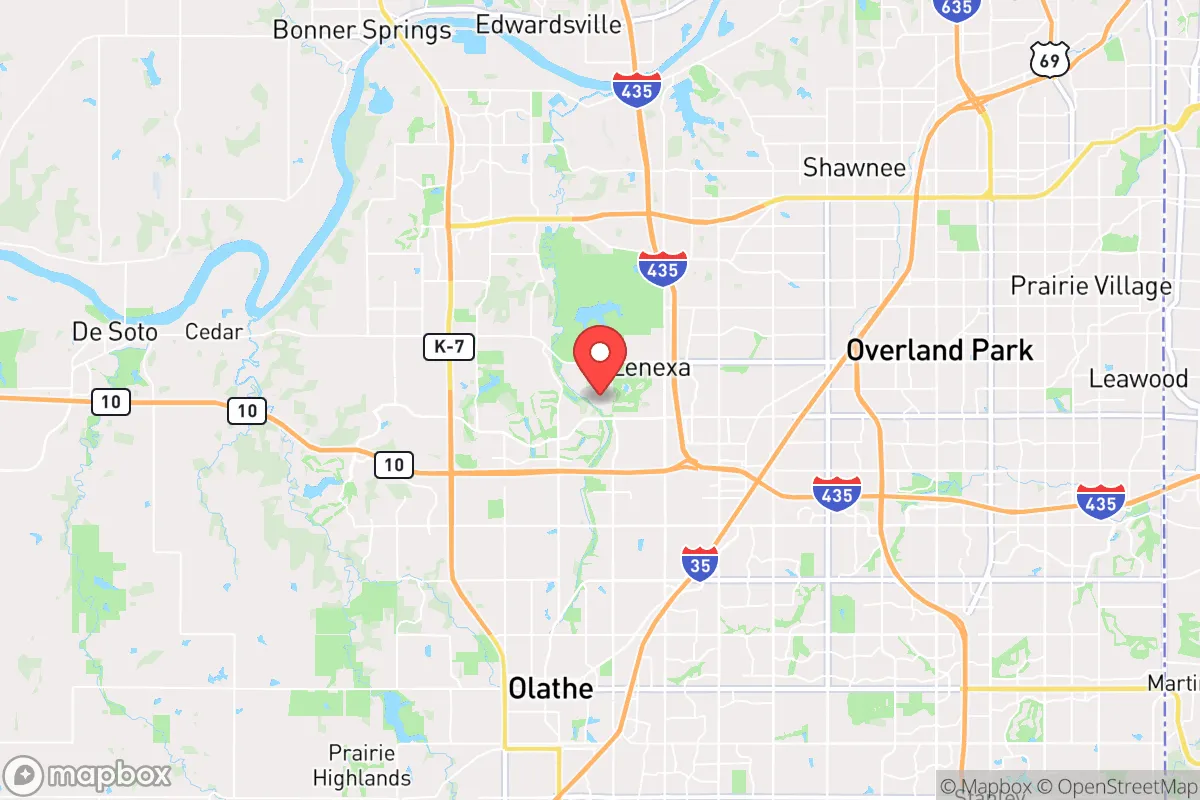
To really get Lenexa’s political flavor, you’ve got to look at the neighbors. Drive east into Overland Park, and you’ll find a similar D+2 vibe—lots of transplants, corporate transplants, and a younger crowd that leans left on social issues. But head west to Olathe, and it’s a different story. Olathe is still solidly red, with a Cook PVI around R+10 or so. That’s the old-school Johnson County: families, churches, and a general distrust of big government. Shawnee, just north of Lenexa, is another mixed bag—some conservative pockets, but the city council has been flirting with progressive zoning and spending policies. The contrast is stark: Lenexa is the middle ground, but it’s tilting. If you’re a conservative, you can still find your people in the western parts of the county, but the local elections here are getting tighter every cycle. The school board, the city council—they’re all being pulled left by the same forces that have turned Lawrence into a progressive stronghold.
What this means for residents
For those of us who moved here to escape the overreach you see in places like Kansas City, Missouri, or even parts of California, the shift is a real concern. You’re starting to see more talk about “equity” initiatives in the schools, higher property taxes to fund pet projects, and zoning changes that favor dense, government-planned developments over single-family homes. The city council has been pushing for more bike lanes and transit-oriented development—sounds nice on paper, but it often comes with mandates that eat into your property rights. The police department is still solid, but there’s pressure from some quarters to defund or redirect resources. If you value the Second Amendment, you’re still safe in Kansas, but the local rhetoric is getting softer on that front. The bottom line: you can still live a quiet, free life here, but you’ll need to keep an eye on the ballot box. The next few elections will decide if Lenexa stays a place where government stays out of your garage, your backyard, and your kids’ education.
Culturally, Lenexa still has that Midwestern, no-nonsense feel—neighbors wave, people mow their own lawns, and the Fourth of July parade is a big deal. But the policy distinctions are creeping in. The city has adopted a “Welcoming City” resolution, which sounds neighborly but raises eyebrows about how it’s enforced. There’s also a push for more “affordable housing” mandates that could let the government tell you what you can do with your property. It’s not San Francisco yet, but the blueprint is there. If you’re a conservative who values personal freedom and limited government, Lenexa is still a decent place to raise a family—but you’ve got to stay engaged. The old guard is fading, and the new wave is voting. Don’t let them turn this into another Overland Park.

State Political ClimatePolitical Climate in Kansas
State Political AnalysisPolitical Environment in the State
Kansas has long been a reliably conservative state, with a Republican lean that has only deepened in recent cycles, though the path has been anything but smooth. The state’s overall partisan tilt is solidly red—Donald Trump won it by 15 points in 2024—but that number masks a fierce internal battle between traditional, business-friendly conservatives and a growing populist, liberty-minded wing. Over the last 10-20 years, Kansas has shifted from a moderate Republican stronghold (think the Bob Dole era) to a state where the most heated fights are now between conservatives themselves, with Democrats largely confined to a few urban islands. For a conservative relocating here, the key question isn’t whether the state is red—it’s which shade of red you’ll find in your chosen community.
Urban vs. rural divide
The political map of Kansas is a textbook study in the urban-rural chasm. The two major metros—Kansas City (Johnson County) and Wichita (Sedgwick County)—are the state’s blue dots, but even they are far from monolithic. Johnson County, the state’s wealthiest and most populous, has been trending left for a decade; it voted for Hillary Clinton in 2016 and has sent Democrats to the state legislature in recent cycles. Wichita is more of a purple battleground, with its suburbs leaning red while the core city tilts blue. Meanwhile, the rest of the state is deeply, often overwhelmingly, Republican. Western Kansas—places like Garden City and Dodge City—routinely votes 80%+ Republican, driven by agricultural interests and a strong rural culture. The Flint Hills region, anchored by Manhattan (home to Kansas State University), is reliably red, though the college town itself injects a small but vocal progressive minority. The real story is the suburban ring around Kansas City, where fast-growing towns like Olathe and Lenexa are becoming political battlegrounds—these are the areas that will decide whether Kansas stays on its current trajectory or drifts toward a more purple future.
Policy environment
Kansas’s policy environment is a mixed bag for conservatives, reflecting the internal GOP struggle. On the plus side, the state has a flat income tax (5.7% as of 2025) after years of the failed “Brownback experiment” that slashed rates and then had to be partially reversed. Property taxes are moderate, and there is no state tax on Social Security benefits—a big draw for retirees. The regulatory climate is generally business-friendly, with right-to-work laws in place and a relatively low minimum wage ($7.25, matching the federal floor). On education, Kansas has been a flashpoint: the state has a robust school choice program, including tax-credit scholarships for private schools, but also faces perennial court battles over school funding adequacy. Healthcare is a sore spot—the state did not expand Medicaid under the ACA, which keeps premiums higher for the individual market but aligns with conservative principles of limited government. Election integrity is a strong point: Kansas requires photo ID to vote and has a voter citizenship verification law (though it was partially struck down in court). The state also has a constitutional carry law (permitless carry of firearms) since 2015, and a stand your ground law. For a conservative, the policy environment is largely favorable, but the constant legislative drama over taxes and school funding can feel like a never-ending soap opera.
Trajectory & freedom
On the freedom front, Kansas has been a tale of two trends. The good news: gun rights have expanded significantly. In 2021, the legislature passed a Second Amendment Preservation Act, which prohibits state and local law enforcement from enforcing federal gun laws that violate the Second Amendment—a direct challenge to federal overreach. Parental rights have also been a focus: in 2023, Kansas passed a Parents’ Bill of Rights, giving parents explicit authority over their children’s education and medical decisions. On the concerning side, the state’s tax burden has crept up after the Brownback era, and there is persistent pressure from the courts to increase school spending, which could lead to future tax hikes. The biggest red flag for liberty-minded conservatives is the Kansas Supreme Court, which has repeatedly ruled that school funding is inadequate and has ordered the legislature to spend more—a judicial overreach that many see as a violation of separation of powers. Additionally, the state has a non-discrimination ordinance in some cities (like Lawrence) that includes sexual orientation and gender identity, which some conservatives view as a threat to religious liberty. Overall, Kansas is becoming more free on gun and parental rights, but the battle over taxes and judicial activism is far from settled.
Civil unrest & political movements
Kansas is not a state known for widespread civil unrest, but it has had its flashpoints. The most visible in recent years was the 2022 abortion rights protests after the Dobbs decision, when thousands gathered at the Kansas Statehouse in Topeka. That energy helped defeat a proposed constitutional amendment that would have removed the state’s protection of abortion rights—a major loss for the pro-life movement. On the right, the Kansas Republican Party has been riven by infighting between the establishment wing and the more populist, Trump-aligned faction. The Kansas Freedom Caucus, a group of hardline conservatives, has been a disruptive force, blocking budget deals and primarying moderate Republicans. Immigration politics are less heated than in border states, but Garden City and Dodge City have seen tensions over meatpacking plant workers, many of whom are immigrants. There is no sanctuary city policy in Kansas—in fact, the state passed a law in 2024 requiring local law enforcement to cooperate with federal immigration authorities. Election integrity controversies have been minimal, though the 2020 election saw some localized disputes over mail-in voting procedures. A new resident would notice the political energy mostly in the form of yard signs and local party meetings—not street protests.
Projection
Looking ahead 5-10 years, Kansas is likely to remain a conservative state, but the suburban drift around Kansas City is the wild card. Johnson County’s continued growth, fueled by remote workers and corporate relocations, could push the state toward a more purple hue, especially if those newcomers bring moderate or left-leaning politics. Meanwhile, rural areas are depopulating, which will slowly erode the GOP’s rural base. The internal GOP civil war will likely intensify, with the populist wing gaining ground as the establishment loses influence. On policy, expect continued fights over school funding and taxes, with the possibility of a constitutional convention to rein in the courts. The state’s gun rights are secure, and parental rights will likely expand further. For a conservative moving in now, the next decade will feel like a holding action—defending gains while watching the suburbs. The state won’t flip blue, but it could become a place where the GOP has to work harder to win.
Bottom line for a new resident: If you’re a conservative looking for a state that respects gun rights, parental authority, and limited government, Kansas is a solid bet—especially if you choose a rural or exurban community like Andover (outside Wichita) or Basehor (near Kansas City). Avoid the urban cores of Lawrence and downtown Kansas City if you want to minimize exposure to progressive politics. The state’s political climate is stable but not static—pay attention to the suburbs, because that’s where the future of Kansas will be decided.
* Values derived from national, state, county, city and local statistics and may differ in a specific area. Last updated: 2026-04-30T05:13:29.000Z
Narrative content on this page is AI-generated and may contain mistakes. Verify any details that matter before acting on them.
ReloMaps may earn a commission from affiliate links at no extra cost to you.

