 Popular
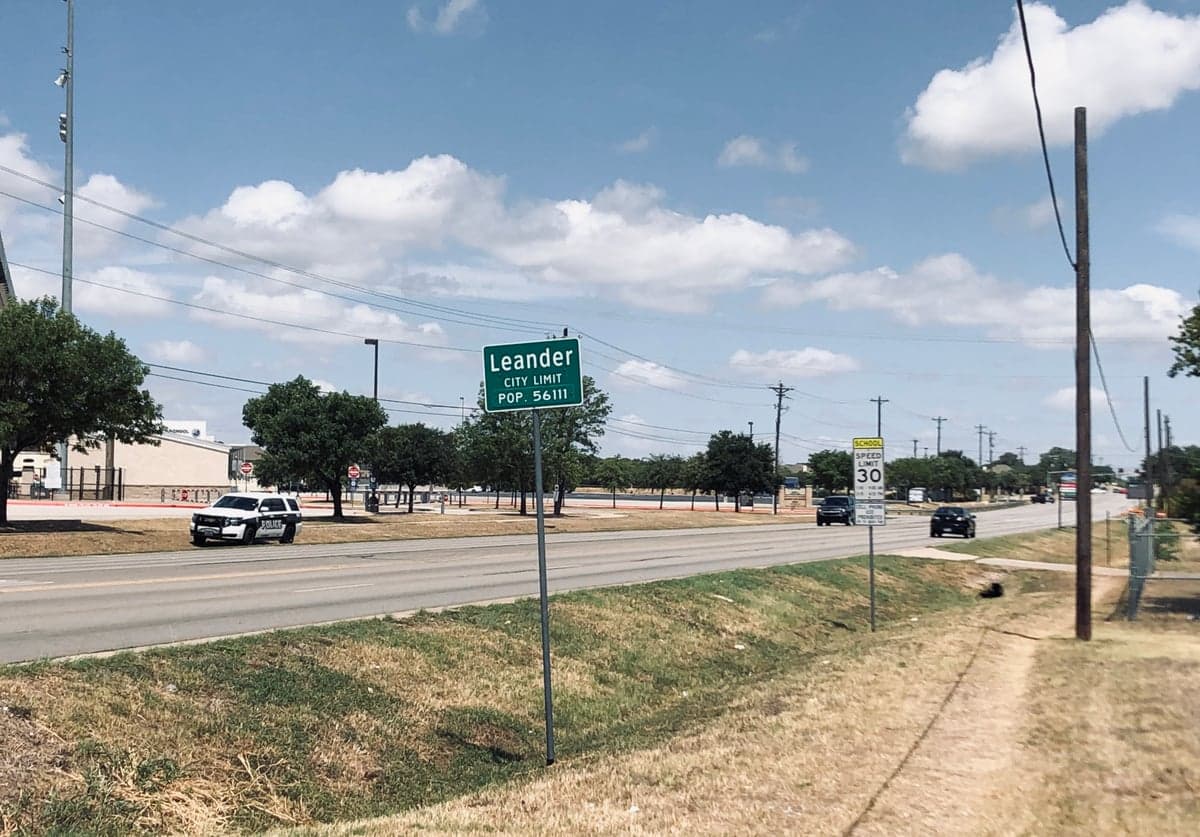
Photo: Wikipedia
Demographics of Leander, TX
Affluence Level in Leander, TX
An upper-middle-class area. Household wealth, education levels, and homeownership run ahead of national benchmarks.
People of Leander, TX
The people of Leander, Texas today number 67,880, forming a rapidly growing, predominantly white-collar suburb where 52.3% of adults hold a college degree. The city’s character is defined by a blend of long-time Texas families and newer arrivals drawn by Austin’s job market and Leander’s comparatively affordable housing. Distinctive identity markers include a strong sense of community centered around the historic downtown and a population that is politically conservative relative to the Austin metro area, with a notable and growing presence of Indian-subcontinent and East/Southeast Asian professionals.
How the city was settled and grew
Leander’s original population was drawn by the railroad and agriculture. Founded in 1882 as a stop on the Austin and Northwestern Railroad, the town was named for Leander “Catfish” Brown, a railroad official. The first wave of settlers were Anglo-American farmers and ranchers, many of whom received land grants in the area. The historic Old Town district, centered around Main Street and the railroad depot, was built by these families and remains the city’s core. A smaller wave of German and Czech immigrants arrived in the late 19th and early 20th centuries, settling on farms to the north and west, an area now partially within the North Creek subdivision. For much of its first century, Leander remained a small, rural community with a population under 500, its economy tied to cotton, cattle, and the railroad.
Modern era (post-1965)
The post-1965 era, particularly after 1990, transformed Leander from a farming hamlet into a booming Austin exurb. The 1965 Hart-Cellar Act had little immediate local effect, but the subsequent expansion of Austin’s technology sector—especially after 2000—drove massive domestic in-migration. Families from California, the Midwest, and other parts of Texas moved to Leander for newer, larger homes and highly rated schools. The Block House Creek neighborhood, developed in the 1990s, became a primary landing point for these white, middle-class families. Simultaneously, the city began attracting a significant number of Indian-subcontinent professionals (now 8.3% of the population) and East/Southeast Asian professionals (4.2%), many employed in Austin’s tech and healthcare sectors. These groups concentrated in newer master-planned communities like Parkside at Leander and Travisso, drawn by the same school quality and newer housing stock. The Hispanic population (22.8%) has deeper roots, with many families living in the South Brook area and older sections of town, reflecting a mix of long-established Tejano families and more recent arrivals working in construction and service industries. The Black population (5.9%) is more dispersed, with no single dominant neighborhood, though a visible presence exists in Westside and newer subdivisions.
The future
Leander’s population is heading toward greater ethnic diversity and continued economic stratification, but not toward homogenization. The Indian-subcontinent and East/Southeast Asian communities are growing rapidly, driven by continued tech-sector employment and chain migration, and are likely to increase their share of the population over the next decade. These groups are not assimilating into a single “Asian” identity; they maintain distinct cultural institutions and residential preferences, with Indian families concentrated in Travisso and East/Southeast Asian families more common in Parkside at Leander. The Hispanic population is stable or slowly growing, with some upward mobility into newer subdivisions. The white, non-Hispanic population (53.8%) is declining as a share but remains the largest group, and the city is not tribalizing into hostile enclaves. Instead, Leander is becoming a collection of distinct, family-oriented neighborhoods where school quality and home values are the primary sorting mechanisms. The next 10-20 years will likely see the city’s population approach 100,000, with the foreign-born share (currently 9.3%) rising to around 15%, driven almost entirely by professional-class immigration from India and East Asia.
For someone moving in now, Leander is becoming a more diverse, highly educated, and economically stratified suburb where a conservative, family-first ethos remains dominant. The city offers a clear trade-off: lower housing costs than central Austin in exchange for a longer commute and a less culturally varied social scene. New arrivals will find a place where their neighbors are likely to be tech professionals, regardless of ethnicity, and where the public schools are the central community institution.

* Values derived from national, state, county, city and local statistics and may differ in a specific area. Last updated: 2026-05-29T21:31:32.000Z
Narrative content on this page is AI-generated and may contain mistakes. Verify any details that matter before acting on them.
ReloMaps may earn a commission from affiliate links at no extra cost to you.

