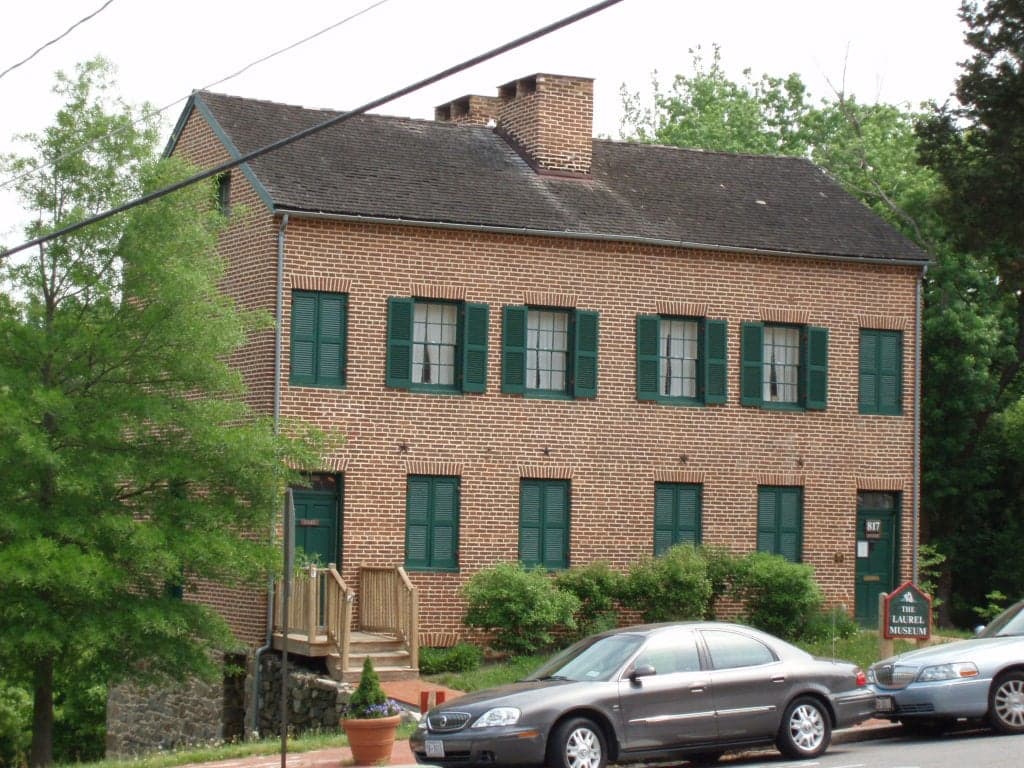
Photo: Wikipedia
Quality of Life in Laurel, MD
Above-average quality of iife. The area offers a reasonable cost of living, decent mobility, and a mix of neighborhood amenities.
What does Quality of Life tell us?
Quality of Life blends cost of living, nearby amenities, socioeconomic signals, and neighborhood character. City-level scores represent the whole municipality; individual neighborhoods can differ.
What does this tell us?
Quality of Life blends cost of living, nearby amenities, socioeconomic signals, and neighborhood character. City-level scores represent the whole municipality; individual neighborhoods can differ.
Cost of Living
49% above national average
The Real Cost of Living in Laurel, MD for 2026
| Tier | Individual | Family (4) |
|---|---|---|
| Survival | $30k | $56k |
| Comfortable | $71k | $105k |
| Luxury | $136k+ | $211k+ |
| Elite (Top 5%) | $160k+ | $248k+ |
90%
The Area Signal
A metric tracking the socioeconomic signals of the area.
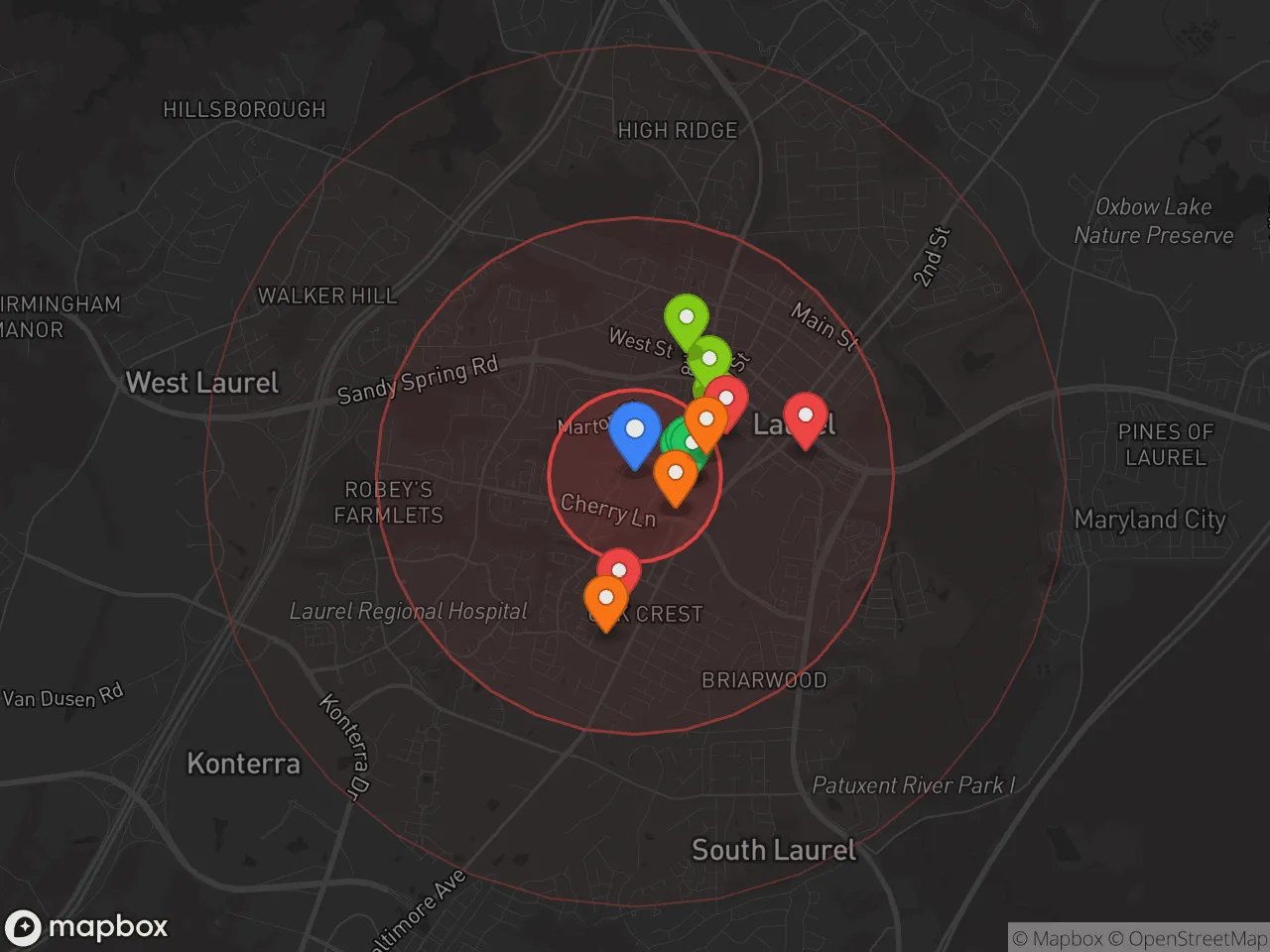
Hobbies
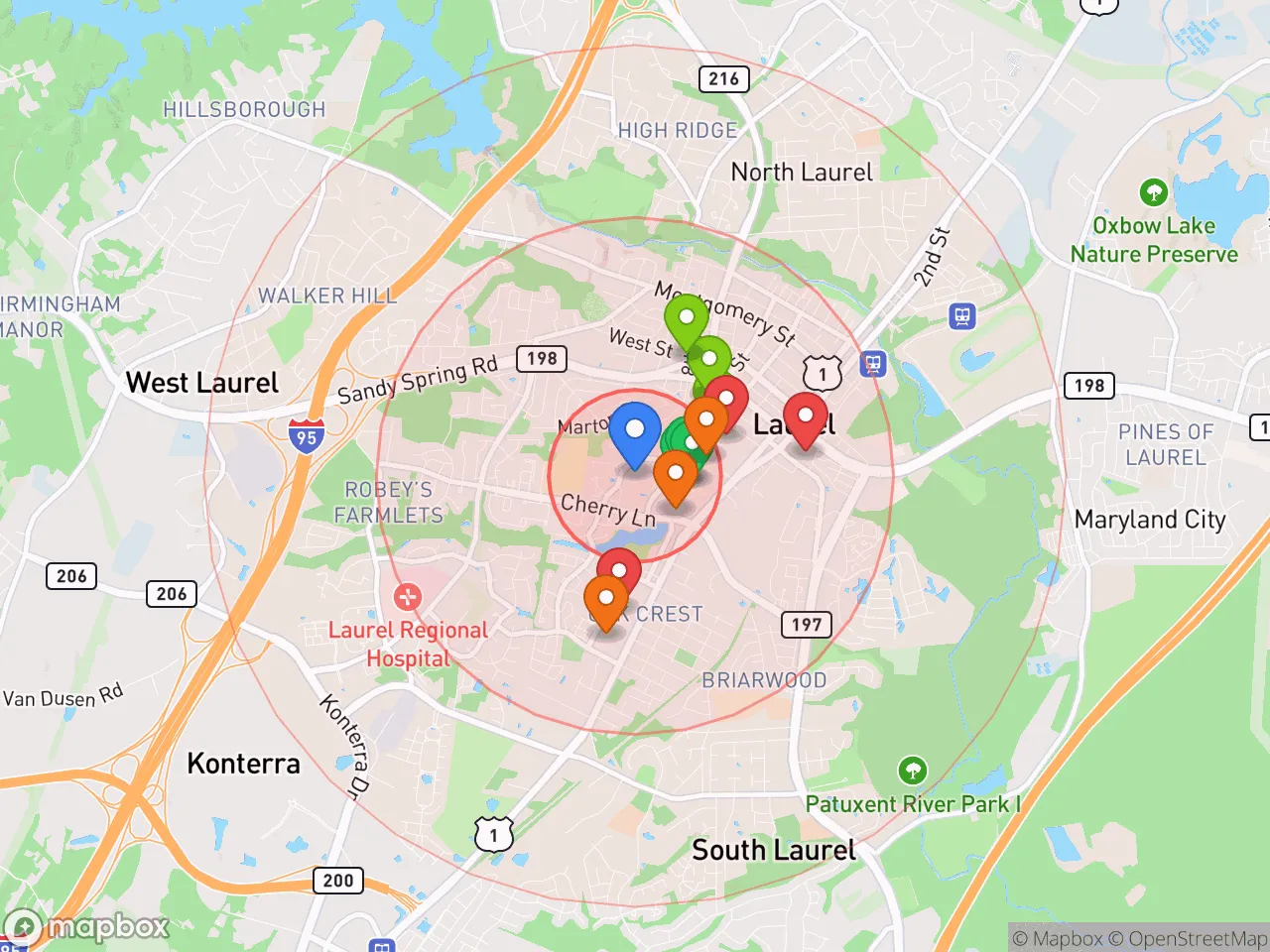
Explore the areaGroceries
7 within 10 miles
Gas
20 within 10 miles
Hospital
20 within 20 miles
Airport
BWI — Baltimore/Washington International Thurgood Marshall
Post Office
USPS — Laurel, MD
Critical Amenities
Quality-of-Life Analysis
Laurel, Maryland, presents a quality-of-life profile defined by its position as an affluent, well-educated suburb within the Washington-Baltimore corridor. The city’s population skews professional and family-oriented, with a high proportion of residents holding bachelor’s degrees or higher and working in government, technology, or defense sectors. Its cost of living index of 149—well above the national average of 100—reflects the premium placed on proximity to two major metro economies, but the trade-off comes in the form of strong public schools, low crime relative to nearby urban centers, and a dense network of parks and retail amenities that shape daily life.
Cost of living, housing, and affordability compared to DC and Baltimore
Laurel’s cost of living is significantly higher than the national norm, driven almost entirely by housing. The median home value sits at $367,300, which is roughly 40% above the national median but notably lower than the $550,000+ typical in closer-in Washington, D.C., suburbs like Bethesda or Silver Spring. Median rent of $1,878 is similarly elevated but still undercuts comparable properties in Prince George’s County’s more expensive western edge. For buyers, the trade-off is clear: you pay a premium for a detached single-family home with a yard and access to the MARC train or I-95, but you avoid the six-figure price tags of inner-ring suburbs. Property taxes in Maryland are moderate, and Laurel’s location means residents can access higher-paying jobs in both DC and Baltimore without paying the full housing premium of either city center. The average commute of just over 32 minutes is a tangible cost of that affordability—longer than the national average but shorter than the 40+ minute commutes common in outer exurbs like Waldorf or Frederick.
Schools, parks, and the daily rhythm of life in Laurel
Daily life in Laurel revolves around a mix of suburban convenience and access to urban amenities. The city is served by Prince George’s County Public Schools, with several elementary and middle schools rated above the state average; Laurel High School offers the International Baccalaureate program, drawing families who prioritize academic rigor. For recreation, the city maintains over 20 parks, including the 200-acre Patuxent River Park with hiking trails and fishing access, and the Laurel Sports Activity Complex with soccer and baseball fields. Retail is concentrated along the Baltimore-Washington Parkway corridor, anchored by the Laurel Shopping Center and the nearby Bowie Town Center, providing grocery, dining, and big-box options within a 10-minute drive. The daily rhythm is car-dependent but not isolating—sidewalks and bike lanes are present in newer subdivisions, and the MARC Penn Line station offers a 30-minute express train to Washington Union Station, making it feasible for commuters to skip the worst of I-95 traffic. Restaurants along Main Street and Route 1 offer a diverse mix of Korean, Salvadoran, and American diners, reflecting the area’s multicultural population.
Laurel is best suited for professionals and families who prioritize access to high-paying jobs in the DC-Baltimore corridor but want a quieter, more affordable base than the inner suburbs. The city works well for dual-income households where at least one person commutes by train, for families who value strong public schools and ample park space, and for buyers who accept a 30-minute commute in exchange for a median home price under $400,000. It is less ideal for those seeking a walkable urban lifestyle or a low cost of living—the COL index of 149 and car-dependent layout make it a poor fit for budget-conscious singles or retirees on fixed incomes. For the right household, however, Laurel offers a stable, amenity-rich middle ground between two major cities.

Crime in Laurel, MD
Higher crime rates than 68% of comparable U.S. locations.
Violent CrimeViolent Crime Analysis
Property CrimeProperty Crime Analysis
Crime Analysis
Laurel, Maryland, presents a mixed safety profile that warrants careful consideration for potential residents. The city's violent crime rate stands at 353.1 incidents per 100,000 residents, while property crime is reported at a significantly higher 3,900.5 per 100,000. These figures place Laurel in a challenging position, particularly given its location within the Washington-Baltimore corridor, an area where progressive prosecutorial policies have been linked to reduced accountability for repeat offenders.
Crime in context
When compared to national benchmarks, Laurel's violent crime rate is roughly on par with the U.S. average of approximately 380 per 100,000, but its property crime rate is substantially elevated—nearly double the national median. More telling is the comparison to Maryland's statewide violent crime rate of about 450 per 100,000, where Laurel fares slightly better. However, the property crime figure of 3,900.5 per 100,000 is a clear outlier, exceeding both the state average (roughly 2,200 per 100,000) and the national average (around 1,950 per 100,000). This disparity is a direct consequence of the region's justice system environment: Prince George's County, which encompasses most of Laurel, has elected prosecutors who prioritize diversion programs and reduced sentencing for property offenses. While intended to reduce incarceration, these policies have demonstrably failed to deter theft, vehicle break-ins, and burglary, creating an environment where property crime is a persistent and normalized risk.
What residents experience
For those living in Laurel, the daily reality is shaped more by property crime than violent incidents. Residents frequently report package theft, car break-ins, and vandalism as routine annoyances. The city's proximity to major highways (I-95 and the Baltimore-Washington Parkway) makes it a convenient target for transient criminals who can quickly enter and exit neighborhoods. Violent crime, while less common, is not absent—assaults and robberies occur, often concentrated in specific apartment complexes and commercial corridors. The broader issue is the lack of deterrence: under the current prosecutorial framework, offenders arrested for property crimes in Laurel often face minimal consequences, with many released on pretrial supervision or given plea deals that avoid jail time. This cycle erodes community confidence and places an unfair burden on law-abiding residents who must invest in security systems, cameras, and neighborhood watch programs to compensate for a justice system that prioritizes offender rehabilitation over public safety.
Neighborhood-level variation is significant. Areas west of US-1, particularly around the Laurel Lakes shopping center and the Montpelier community, experience higher rates of theft and vehicle crime. In contrast, the historic district east of the Patuxent River and newer developments near the MARC train station tend to report fewer incidents, though no part of Laurel is immune. Prospective residents should research specific block-level data and consider that the city's overall crime numbers are inflated by a small number of high-crime zones. However, the systemic issue remains: Laurel operates within a county and state where progressive criminal justice policies have created a permissive environment for property offenders, making proactive personal security measures not just advisable but essential for daily life.
* Values derived from national, state, county, city and local statistics and may differ in a specific area. Last updated: 2026-04-22T02:20:32.000Z
Narrative content on this page is AI-generated and may contain mistakes. Verify any details that matter before acting on them.
ReloMaps may earn a commission from affiliate links at no extra cost to you.

