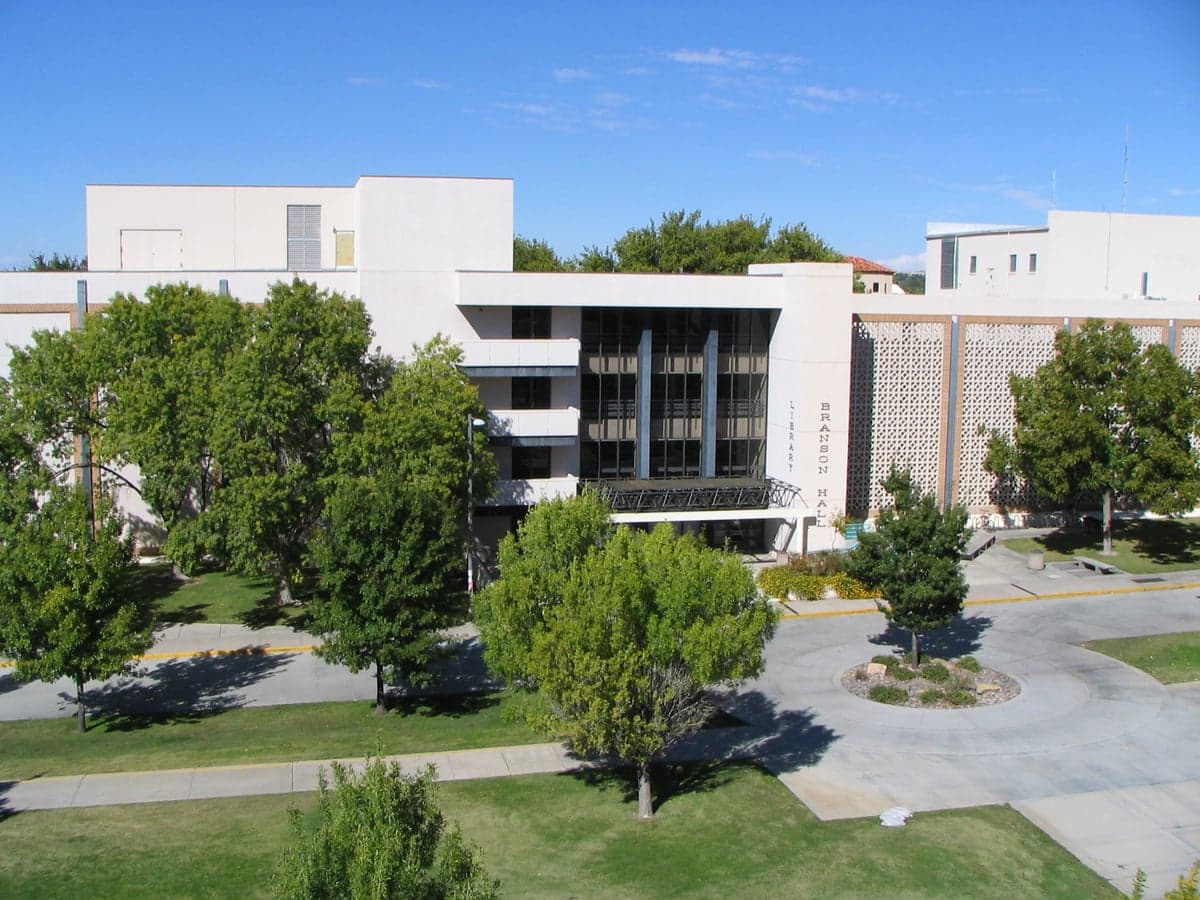
Photo: Wikipedia
Political ClimatePolitical Climate in Las Cruces, NM
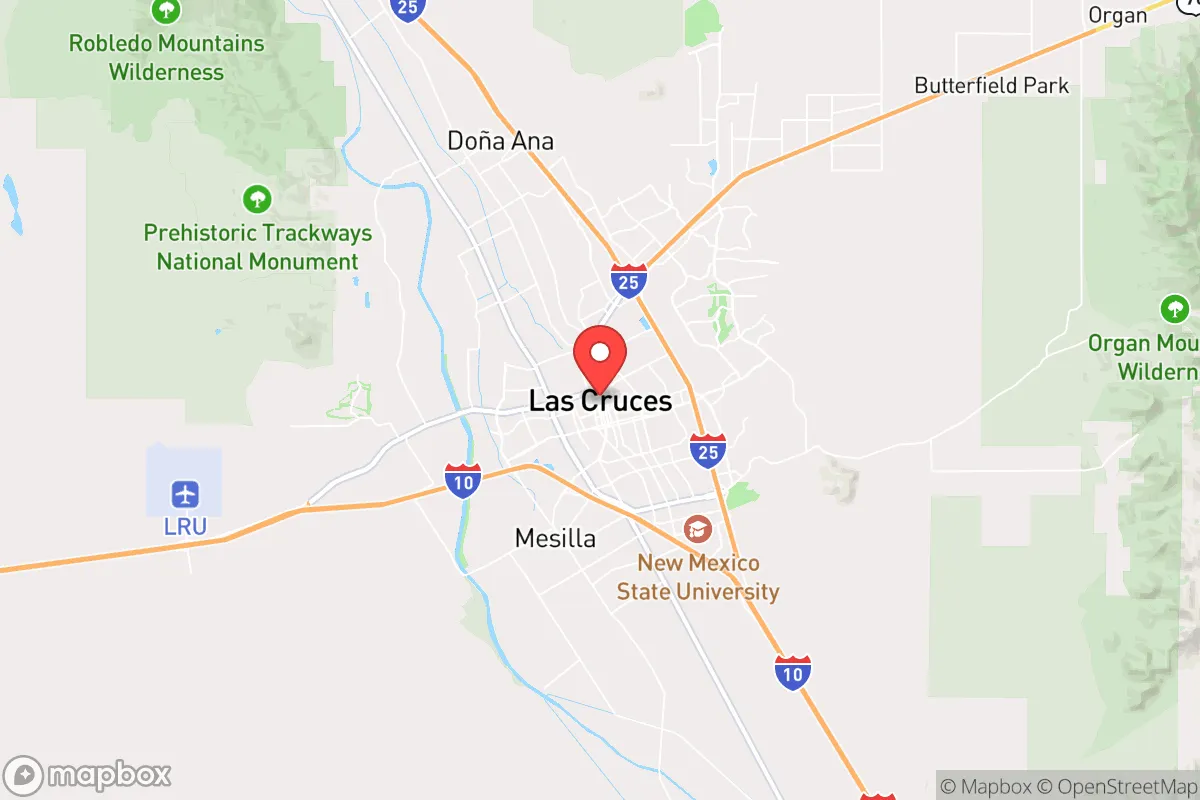
District shown is the primary district for this city’s centroid. Cities may span multiple districts.
Local Political AnalysisPolitical Analysis of Las Cruces, NM
Las Cruces has always been a bit of a blue dot in a red state, but the political lean here has shifted noticeably leftward over the last decade. The Cook PVI rating of EVEN—meaning the district votes exactly at the national average—masks a local reality where progressive policies are gaining ground faster than many long-time residents are comfortable with. While Doña Ana County as a whole has historically been more moderate, the city itself now consistently votes Democratic by double digits in presidential elections, a trend that accelerated after 2020. If you’re looking for a place where traditional conservative values still hold sway, you’ll find more of that just 40 miles north in Hatch or east in Alamogordo, where the political climate is decidedly more red.
How it compares
Drive 45 minutes north to Hatch or 30 minutes east to Alamogordo, and you’ll feel like you’re in a different country politically. Those towns vote reliably Republican, with Alamogordo’s Otero County going +15 points for Trump in 2020. Las Cruces, by contrast, has become a stronghold for progressive activism, with city council races often dominated by candidates pushing for expanded government programs, higher local taxes, and stricter land-use regulations. The contrast is stark: while Hatch residents are fighting to keep property taxes low and local control strong, Las Cruces has seen a steady push for more government oversight in everything from short-term rentals to water rights. The surrounding rural areas—like Mesilla and Doña Ana—still lean more conservative, but they’re being slowly absorbed into the city’s orbit, both politically and economically.
What this means for residents
For someone who values personal freedom and limited government, the trend in Las Cruces is concerning. The city has adopted a series of ordinances that feel like creeping overreach: stricter building codes that make it harder to add a workshop or shed on your own property, noise ordinances that can get you fined for running a generator after 10 PM, and a growing push for “inclusionary zoning” that could force property owners to rent below market rates. Property taxes have risen about 18% since 2020, and the city’s general fund budget has grown by over 25% in the same period—money that’s going toward expanded city staff and new programs, not basic infrastructure. If you’re the kind of person who thinks government should stay out of your garage, your backyard, and your wallet, these are red flags you can’t ignore.
Daily life here still has its charms—the farmers’ market on Saturday mornings, the low traffic compared to Albuquerque—but the political climate is making it harder to just live your life without a permit or a fee. New Mexico’s state-level policies, like the 2021 law banning private prisons and the 2023 law requiring paid family leave for all workers, add another layer of government involvement that many residents didn’t ask for. The city’s push for a “complete streets” policy, which prioritizes bike lanes and bus stops over car traffic, has slowed commute times on major roads like Main Street and Lohman Avenue.
Looking ahead, the next five years will likely bring more of the same: higher taxes, more regulations, and a city government that sees itself as a problem-solver rather than a servant. If you’re considering a move here, keep an eye on the 2026 city council elections—that’s your best shot at slowing the trend. For now, Las Cruces is a place where the old New Mexico of wide-open spaces and live-and-let-live attitudes is slowly giving way to a more managed, progressive vision. It’s still a good place to raise a family, but you’ll want to know what you’re signing up for.

State Political ClimatePolitical Climate in New Mexico
State Political AnalysisPolitical Environment in the State
New Mexico has long been a reliably blue state in presidential elections, voting Democratic by margins of 10-11 points in both 2020 and 2024, but that top-line number hides a deeply fractured political landscape. The state’s dominant coalition is a mix of urban progressives in Albuquerque and Santa Fe, unionized government workers, and a heavily subsidized rural population that votes Democratic out of habit and federal dependency. Over the past 20 years, the state has shifted leftward on cultural issues while maintaining a surprisingly moderate-to-conservative streak on gun rights and energy policy, creating a volatile mix that frustrates conservatives who see a state drifting toward California-style governance without the economic engine to support it.
Urban vs. rural divide
The political map of New Mexico is a tale of three distinct regions. Bernalillo County (Albuquerque) and Santa Fe County together cast roughly 45% of the state’s vote and are solidly Democratic, driven by government employees, university faculty, and a growing Hispanic professional class. Santa Fe itself is one of the most progressive small cities in America, with a city council that has passed sanctuary city ordinances and defunded police programs. Meanwhile, Doña Ana County (Las Cruces) leans Democratic but is more moderate, with a strong military presence from White Sands Missile Range and Fort Bliss just across the Texas line. The rural eastern plains—Roosevelt County (Portales), Curry County (Clovis), and Lea County (Hobbs)—vote Republican by 30-40 point margins, driven by oil and gas workers, ranchers, and conservative Hispanic communities. The northwest corner, San Juan County (Farmington), is a Republican stronghold thanks to the energy industry and Navajo Nation voters who often split tickets. The real battleground is Sandoval County, a rapidly growing suburban ring north of Albuquerque where Rio Rancho’s master-planned communities have produced a purple tilt—it voted for Biden in 2020 but flipped to Trump in 2024, a bellwether for where the state might be heading.
Policy environment
New Mexico’s policy environment is a mixed bag that should give any conservative pause. On taxes, the state has a progressive income tax with rates up to 5.9%, no estate tax, and a gross receipts tax that functions like a sales tax but applies to services too—meaning your haircut and legal fees are taxed. Property taxes are low by national standards, around 0.8% of assessed value, but the state’s reliance on oil and gas revenue (roughly 40% of the general fund) makes budgeting volatile. Education policy is a disaster: the state ranks 50th in K-12 outcomes despite spending above the national average per pupil, and the 2023 passage of a universal school choice bill was a rare win for conservatives, though implementation has been slow. Healthcare is dominated by the state’s Medicaid expansion, which covers nearly 40% of residents, and a 2023 law mandating paid family leave for all workers—a cost burden on small businesses. Election laws are concerning: New Mexico has same-day voter registration, no voter ID requirement (a 2023 bill to require ID failed), and universal mail-in ballots for all registered voters, which critics argue opens the door to fraud. The state also has a sanctuary law, the 2019 New Mexico Act, which prohibits state and local law enforcement from cooperating with federal immigration authorities—a major flashpoint for conservatives.
Trajectory & freedom
On the freedom front, New Mexico is a study in contradictions. Gun rights are surprisingly strong: the state has preemption laws preventing local governments from enacting their own gun bans, and in 2021, the legislature passed a “red flag” law that conservatives fought hard against, but it’s been weakly enforced in rural counties. The 2023 repeal of the state’s ban on concealed carry in schools was a win for the right. But on other fronts, freedom is eroding. The 2021 Energy Transition Act pushed the state toward 100% carbon-free electricity by 2045, effectively killing new natural gas plants and raising electricity costs. The 2023 Reproductive Health Act codified abortion access and removed parental consent requirements for minors—a major concern for parents. Parental rights took a hit in 2024 when the state banned conversion therapy for minors and expanded gender-affirming care protections, overriding parental medical decisions. Property rights are under threat from the 2023 Land Use Planning Act, which gives the state more control over local zoning, and from a 2024 law that allows the state to seize water rights in the name of conservation. The overall trajectory is toward more government control, not less.
Civil unrest & political movements
New Mexico has seen its share of political flashpoints. In 2020, Albuquerque and Santa Fe experienced weeks of protests following George Floyd’s death, with some turning violent—statues were toppled, businesses looted, and the city of Albuquerque paid out millions in settlements. The 2022 Supreme Court leak on abortion sparked protests outside the state capitol, and the 2023 legislative session saw pro-life activists arrested for disrupting hearings. On the right, the 2021 “Freedom Convoy” protests against vaccine mandates drew thousands in Albuquerque and Las Cruces, and the 2022 election integrity movement led to a recount in the close governor’s race, though no widespread fraud was found. Immigration politics are a constant flashpoint: the 2019 sanctuary law has led to standoffs between the state and federal ICE agents, and in 2023, the city of Albuquerque declared itself a “sanctuary city” for transgender individuals, drawing national attention. The Otero County Commission’s 2022 refusal to certify primary election results over voting machine concerns was a major story, though the state Supreme Court forced them to certify. A new resident would notice the visible homeless encampments in Albuquerque’s downtown and the constant political tension between the progressive urban core and the conservative rural periphery.
Projection
Over the next 5-10 years, New Mexico is likely to continue its leftward drift, but with a potential breaking point. The state’s population is stagnant—growing less than 1% since 2020—and the people leaving are disproportionately conservative-leaning families and young professionals heading to Texas, Arizona, and Colorado. The in-migration is mostly retirees from California and progressive remote workers drawn to Santa Fe’s culture, which will further shift the urban vote. However, the oil and gas industry in the Permian Basin (Lea and Eddy counties) is booming, bringing in conservative workers from Texas who could flip those counties even redder. The wildcard is the Hispanic vote: New Mexico’s Hispanic population, which is 50% of the state, has historically voted Democratic but is trending right on cultural issues like abortion and parental rights. If Republicans can capitalize on that, the state could become competitive in 10-15 years. For now, expect more progressive legislation on climate, healthcare, and education, with a growing backlash from rural counties that may lead to secession talk—the 2023 “New Mexico 2.0” movement in eastern counties gained some traction but fizzled. A new resident moving in now should expect a state that is increasingly at war with itself, with a government that prioritizes progressive social policy over economic growth and personal freedom.
For a conservative family or individual considering relocation, New Mexico offers low property taxes, strong gun rights, and beautiful landscapes, but the trade-offs are steep: a failing education system, a sanctuary state immigration policy, eroding parental rights, and a tax structure that punishes small businesses. The urban areas are hostile to conservative values, while the rural areas are friendly but economically limited. If you’re looking for a place where your vote matters and your freedoms are respected, New Mexico is a gamble—the eastern plains and the oil patch are still solid ground, but the state government in Santa Fe is working hard to make it feel like California without the beaches. Do your homework on the specific county and city, because the difference between living in Hobbs versus Santa Fe is like living in two different countries.
* Values derived from national, state, county, city and local statistics and may differ in a specific area. Last updated: 2026-04-19T11:34:06.000Z
Narrative content on this page is AI-generated and may contain mistakes. Verify any details that matter before acting on them.
ReloMaps may earn a commission from affiliate links at no extra cost to you.

