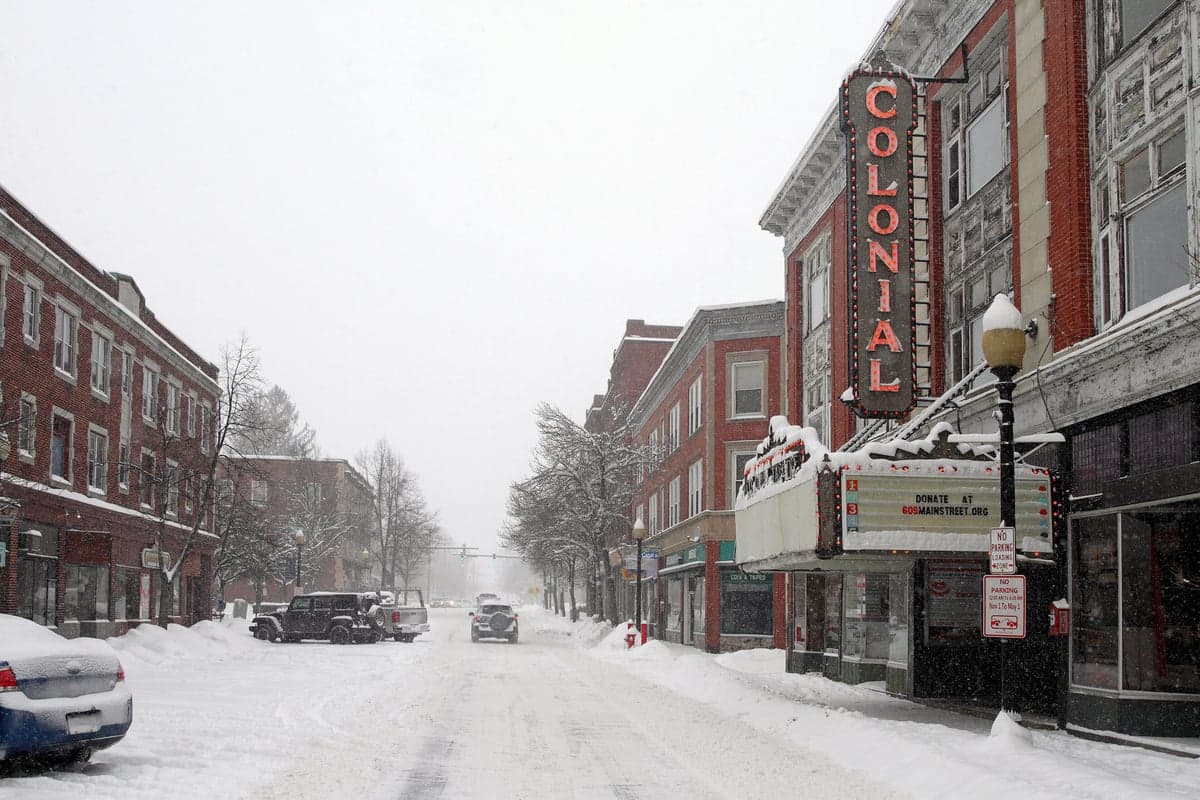
Photo: Wikipedia
Strategic Assessment of Laconia, NH
Meaningful friction. Expect exposure to either population pressure, blast zones, or natural disaster risk. Consider buying a retreat property.
What does the Strategic Assessment tell us?
Our Strategic Assessment grades tactical survivability of an area. Major population centers, military targets, fallout zones, natural disasters, and border exposure all drive risk — lower exposure means a more defensible position in a crisis.
This is heavily inspired by Joel Skousen's Strategic Relocation book. Highly recommended you checkout the book ($)What does this tell us?
Our Strategic Assessment grades tactical survivability of an area. Major population centers, military targets, fallout zones, natural disasters, and border exposure all drive risk — lower exposure means a more defensible position in a crisis.
This is heavily inspired by Joel Skousen's Strategic Relocation book. Highly recommended you checkout the book ($)Strategic Pillars

Key Distances
Regional Safe Places
Below is our recommended "safe zones" in New Hampshire and the surrounding area based on our strategic heuristics. For most people, it's unrealistic to live in a “safe zone” full-time due to work, family or other personal reasons. They tend to be more rural. However, many of these areas are perfect for second homes and retreat properties that double as a vacation home or even a short-term rental.
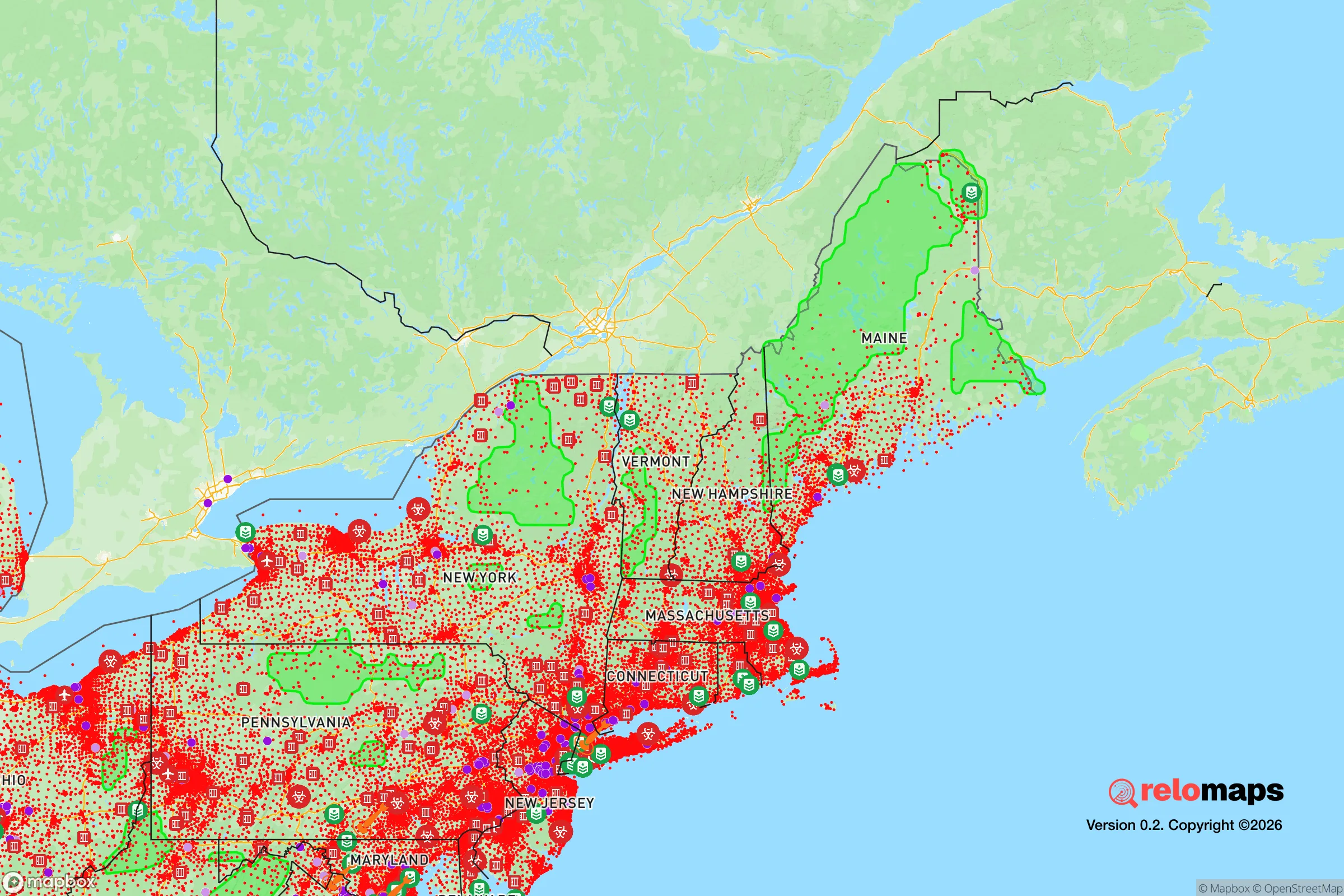
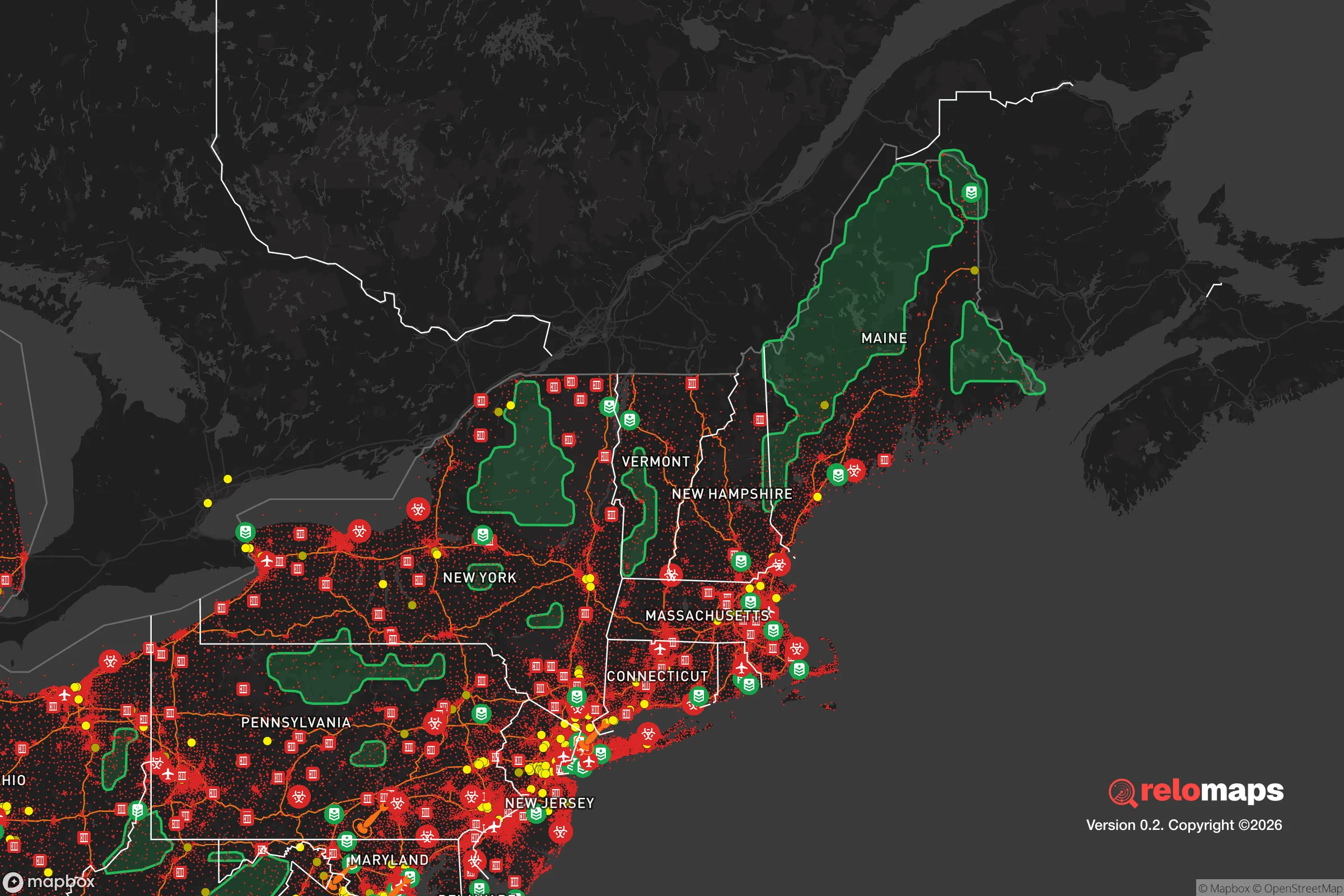


Important Note: For informational purposes only. This does not mean nothing bad ever happens in the green zones. Please use common sense. This is based on public data and modeled with AI. We tried to take a conservative approach but mistakes happen. We update this regularly as new information becomes available.
Solar Generator Recommendations
Backup power matters more here than in safer locations. We've picked three solar generators across budgets and capacity tiers — start with the budget unit if you only need a few essentials, or step up if you want to run a fridge and HVAC for days at a time.

Jackery Portable Power Station Explorer 300
Budget OptionPower on the Go: Weighing only 11 lbs, it's convenient to set up and store with book-sized foldable solar panels

BLUETTI Portable Power Station AC180
Designed for both indoor and outdoor scenarios, AC180 is highly capable as it has a robost capacity and continuous output power.

EF ECOFLOW DELTA Pro Ultra Power Station
Upgraded PickEcoFlow DELTA Pro Ultra is a whole-home energy system designed to grow with your family. Integrated with the Smart Home Panel 2, it scales to meet your evolving energy needs — keeping your home powered, intelligent, and secure through every stage of life.
We earn a commission, at no additional cost to you.
Strategic Assessment Analysis
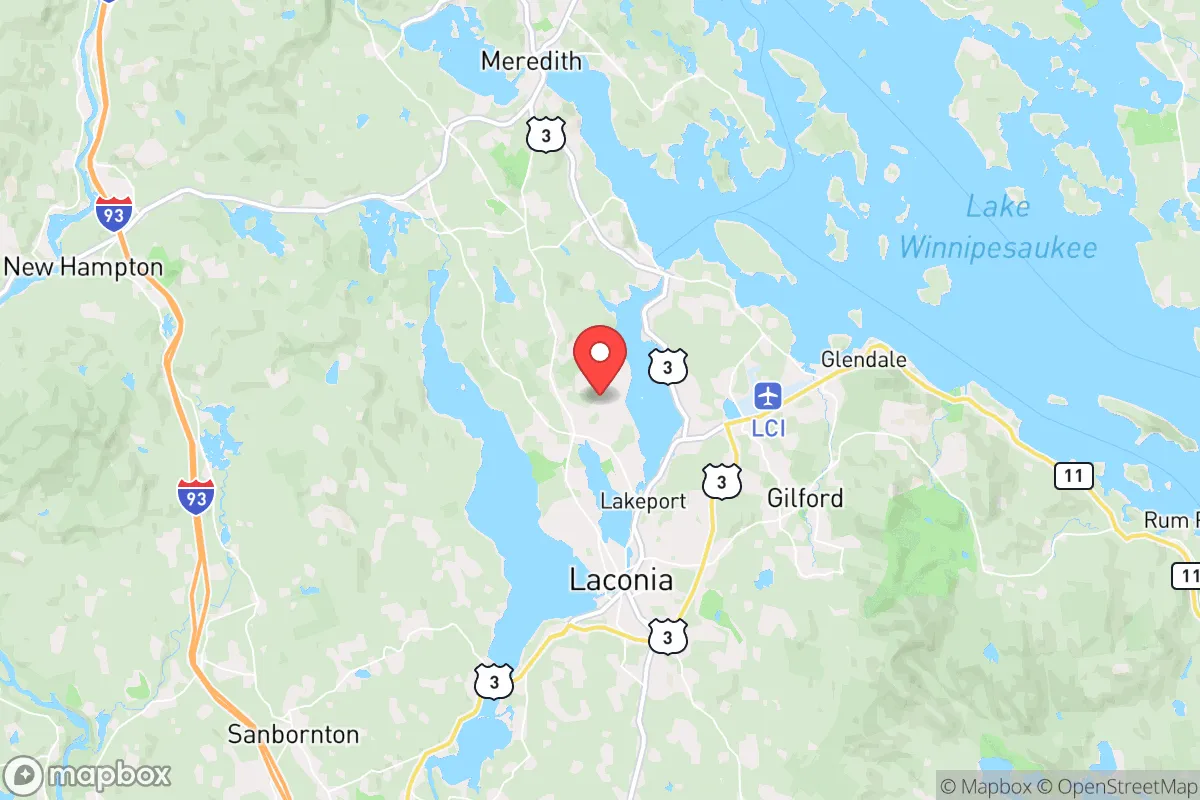
Laconia, New Hampshire, sits in a strategic sweet spot that few relocators fully appreciate: close enough to the economic engine of the Seacoast and Boston for supply runs and employment, yet far enough into the Lakes Region to offer genuine buffer from cascading urban collapse. The city’s position on the northern edge of the state’s population belt, with the White Mountains as a backstop, gives it a resilience profile that leans heavily on geographic isolation without the total self-sufficiency burden of deep wilderness. For a conservative-leaning individual or family looking to hedge against civil unrest, supply chain disruptions, or mass casualty events, Laconia offers a rare combination of access and defensibility—provided you understand its specific vulnerabilities.
Geographic position and natural advantages for long-term security
Laconia’s primary strategic asset is its location at the intersection of Lake Winnipesaukee, Lake Winnisquam, and the Opechee Bay system. This freshwater abundance is not a minor perk—it is a fundamental resilience multiplier. In a scenario where municipal water treatment falters, having multiple large, naturally filtered bodies of water within walking distance of most residential neighborhoods provides a backup that many inland towns lack. The surrounding terrain is a mix of rolling hills, forested ridges, and low mountains, offering natural chokepoints on the major road corridors—Routes 3, 11, and 106—that funnel traffic into the city. A determined group could effectively monitor or block access from the south (Belmont direction) and east (Gilford) with minimal manpower. The city itself sits at roughly 500 feet elevation, but the nearby Belknap Mountains rise to over 2,300 feet, providing observation points and potential retreat zones. Winters are harsh, with average snowfall around 60 inches, which acts as a natural barrier to movement for half the year—a double-edged sword that discourages transient threats but also complicates resupply. The growing season is short (roughly 120 days), so long-term food independence requires greenhouse investment or deep pantry storage, but the surrounding forests offer ample game (deer, turkey, small game) and timber for fuel and construction.
Risks, exposures, and proximity to fallout-relevant landmarks
No location is without exposure, and Laconia has several that a serious prepper must weigh. The most immediate concern is the city’s position roughly 25 miles northeast of Concord, the state capital, and about 70 miles north of Boston. While that distance provides meaningful buffer from a direct urban detonation or civil unrest cascade, it is not enough to escape fallout from a major event targeting the Boston metro area or the Portsmouth Naval Shipyard (about 60 miles southeast). Prevailing winds in New Hampshire are generally from the west and northwest, meaning fallout from a Boston-area event would likely push out to sea or toward the coast, but a ground burst could still deposit particulate in the Lakes Region depending on weather patterns. Laconia is also within 50 miles of the Seabrook Station nuclear power plant (southeast), though that facility’s containment structure and coastal location reduce the likelihood of a catastrophic release affecting the area. More relevant to the prepper mindset: Laconia sits near the intersection of several major natural gas pipelines (the Portland Pipeline and the Maritimes & Northeast Pipeline), which are potential targets for sabotage or cascading failure during civil unrest. The city’s own infrastructure—a single water treatment plant on Lake Winnisquam and a wastewater facility near the downtown—represents a single-point-of-failure risk. A coordinated attack or major earthquake (rare but not impossible in this region) could compromise both simultaneously. Flooding is the most probable natural hazard; the downtown area along the Winnipesaukee River has experienced significant flooding in 2006, 2011, and 2023, with water reaching several feet in low-lying commercial zones. Any relocator should avoid properties in the FEMA-designated floodplain near the river and Lake Opechee outlets.
Practical resilience for a relocator: food, water, energy, and defensibility
For a family or individual serious about self-reliance, Laconia offers a mixed bag. Water is the strongest suit: the three lakes and numerous smaller ponds provide redundant sources, but you will need your own filtration (Berkey or similar) and storage capacity, as municipal supply is vulnerable. The city’s water is drawn from Lake Winnisquam and treated at a plant that relies on grid power and chemical deliveries—both fragile in a prolonged crisis. A well on your own property is the gold standard, and many homes in the outskirts (Lakeport, Weirs Beach, Gilford border) have private wells. Energy resilience is more challenging. Laconia is served by Eversource, and the grid is prone to outages from ice storms and wind events (average 2-3 multi-day outages per year). Solar is viable but winter production drops sharply; a generator with a 500-gallon propane tank is the standard recommendation for year-round reliability. Wood heat is common and practical—the surrounding forests provide ample fuel, but you need a chainsaw, splitting equipment, and dry storage. Food security requires planning. The local growing season is short, but the soil in the Lakes Region is generally sandy loam, workable for root vegetables, greens, and cold-hardy crops. The Laconia Farmers Market (summer only) and local farms (Moulton Farm, Surowiec Farm) provide seasonal produce, but for long-term storage, you will rely on bulk purchasing from Costco in Tilton (10 minutes south) or Market Basket in Gilford. Defensibility is decent but not fortress-grade. The city’s layout—a compact downtown surrounded by residential neighborhoods and then forest—means that a determined group could secure a perimeter around a single street or subdivision, but the open lake access and multiple road entries make total area denial impractical. The best approach is to choose a home on a dead-end road with limited egress, ideally backing onto conservation land or forest. The Belknap County Sheriff’s Office and Laconia Police Department are professional but small (roughly 30 sworn officers for the city), and in a widespread event, they will be overwhelmed. Your security plan must assume no outside help for at least 72 hours, and realistically longer.
The overall strategic picture for Laconia is one of calculated trade-offs. It is not a remote bunker location—it is a mid-sized New England town with real exposure to regional infrastructure risks and a moderate population density (about 16,000 residents) that could become a liability if supply lines fail. But its freshwater abundance, defensible terrain, and distance from primary target zones make it a far better bet than any suburb of Boston, New York, or even Manchester. For the conservative relocator who values community resilience over total isolation, who is willing to invest in winter preparedness and off-grid backups, and who understands that no location is immune from the cascading effects of national instability, Laconia offers a viable base of operations. The key is to treat it as a starting point—not a final answer—and to build your own redundancy into every system before you need it.

* Values derived from national, state, county, city and local statistics and may differ in a specific area. Last updated: 2026-05-01T20:38:10.000Z
Narrative content on this page is AI-generated and may contain mistakes. Verify any details that matter before acting on them.
ReloMaps may earn a commission from affiliate links at no extra cost to you.

