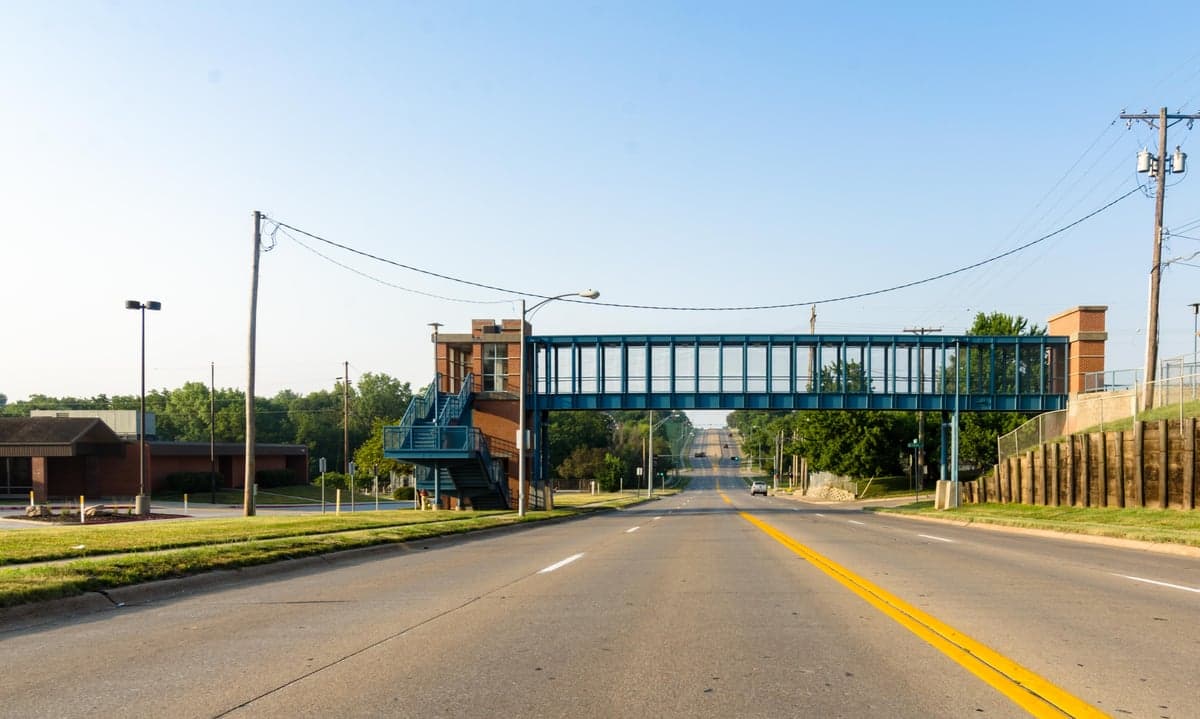
Photo: Wikipedia
Personal Sovereignty in La Vista, NE
Viable for self-reliance. Generally workable, though some barriers may limit total independence.
What does Personal Sovereignty tell us?
Personal Sovereignty measures your capacity for self-reliance and independence with minimal government friction. Higher scores mean fewer barriers between you and the way you want to live... but it assumes you have the space you need and good neighbors.
What does this tell us?
Personal Sovereignty measures your capacity for self-reliance and independence with minimal government friction. Higher scores mean fewer barriers between you and the way you want to live... but it assumes you have the space you need and good neighbors.
State Policy
Energy independence: Importer (35% of energy produced in-state)
Personal Liberty
Homesteading

Personal Liberty Analysis
For a survivalist or prepper evaluating personal sovereignty, La Vista, Nebraska offers a mixed bag that leans more toward freedom than many metro-area suburbs, but it demands careful navigation of local ordinances. As a smaller city within the greater Omaha metro, La Vista benefits from Nebraska’s generally pro-liberty state framework—constitutional carry, no state income tax on Social Security, and a right-to-farm amendment—while still being subject to Sarpy County’s zoning and municipal codes that can chafe against self-reliance goals. The key trade-off here is access to urban infrastructure versus the ability to live truly off-grid, and for the strategically minded, La Vista’s position as a bedroom community means you’ll need to look beyond city limits for full autonomy, though the state’s legal climate provides a solid foundation for defending your rights.
Tax burden and regulatory posture for self-reliant individuals
Nebraska’s tax structure is a double-edged sword for those seeking to minimize government extraction. The state’s individual income tax rate tops out at 5.84% as of 2026, which is moderate but not negligible, and property taxes are among the highest in the nation—averaging roughly 1.7% of assessed value in Sarpy County. For a prepper focused on land ownership, this means a $300,000 home in La Vista carries an annual property tax bill around $5,100, a significant recurring cost that funds local schools and services you may not fully utilize. On the positive side, Nebraska does not tax military retirement pay, and Social Security benefits are exempt from state income tax, which helps retirees and veterans preserve capital. The regulatory posture in La Vista itself is typical of a suburban municipality: building permits are required for most structural changes, and the city enforces a standard set of codes on electrical, plumbing, and structural work. For a homesteader, this means you cannot simply throw up a shed or modify your property without city approval, which can feel like government overreach when you’re trying to improve your self-sufficiency. However, Nebraska’s state-level right-to-farm law (Neb. Rev. Stat. § 2-4401) provides some protection for agricultural activities, though it’s largely preempted by local zoning in La Vista’s residential areas. The bottom line: the tax burden is real and persistent, but the state’s regulatory environment is not aggressively hostile to personal enterprise—just expect to pay for the privilege of living near Omaha’s amenities.
Self-defense rights and gun law specifics in La Vista
Nebraska is a constitutional carry state as of 2023, meaning law-abiding adults 21 and older can carry a concealed firearm without a permit—a major win for personal sovereignty. La Vista does not impose its own gun control ordinances beyond state law, so you can carry openly or concealed in most public spaces, including parks and streets, though private businesses may post signs prohibiting firearms. The state preempts local governments from enacting stricter gun laws, so you won’t face the patchwork of bans seen in states like Colorado or California. For a prepper, this is critical: your ability to defend your home and family is not hamstrung by municipal overreach. Nebraska also has a “Stand Your Ground” law (Neb. Rev. Stat. § 28-1409), which removes the duty to retreat before using deadly force if you are lawfully present and reasonably believe it’s necessary to prevent death or great bodily harm. This applies in your home, vehicle, or any place you have a right to be. Magazine capacity is unrestricted, and there is no state-level assault weapons ban. The only notable restriction is that you must be 21 to carry concealed without a permit (18 with a permit), and firearm purchases require a federal background check through licensed dealers—private sales between individuals are not regulated by the state. For a survivalist mindset, La Vista’s legal environment for self-defense is robust and aligned with the principle that the individual, not the government, is the first line of security.
Self-reliance and homesteading viability: lot sizes, zoning, and off-grid feasibility
Here’s where La Vista’s suburban character becomes a limiting factor for hardcore homesteaders. Typical residential lot sizes in La Vista range from 0.15 to 0.25 acres, with newer developments packing homes closer together. Zoning codes in R-1 (single-family residential) districts prohibit keeping livestock like chickens, goats, or bees without a special permit, and even then, the city’s animal ordinances are restrictive—no roosters, no more than four domestic animals total, and no slaughtering on premises. For a prepper wanting to raise food, this is a non-starter within city limits. Off-grid feasibility is similarly constrained: La Vista requires connection to municipal water and sewer systems, and solar panels are allowed but must comply with building codes and HOA covenants if applicable. Rainwater collection is not prohibited by state law, but local codes may limit barrel size and placement. The practical reality is that La Vista is designed for suburban convenience, not self-sufficient living. However, the surrounding Sarpy County unincorporated areas offer a different story. Just a 10-15 minute drive outside La Vista, you can find 1-5 acre parcels with fewer restrictions—no mandatory sewer hookups, allowance for small-scale agriculture, and more lenient building codes. For the survivalist, the smart play is to live in La Vista for job access while owning a small acreage in the county for a bug-out location or weekend homesteading. Nebraska’s state-level “Right to Farm” amendment (Article I, Section 27 of the Nebraska Constitution) protects agricultural operations from nuisance lawsuits, which is a strong legal shield if you do manage to get a rural property.
Personal liberties: parental rights, medical autonomy, speech, and property
Nebraska has been a battleground for parental rights, and the current landscape is favorable for those who believe parents should have primary authority over their children’s upbringing. The state passed LB 1084 in 2023, which prohibits public schools from teaching “divisive concepts” related to race and gender without parental consent, and requires schools to notify parents of any changes in a student’s mental, emotional, or physical health—a direct check on government overreach into family matters. Medical autonomy is more nuanced: Nebraska does not have a state-level vaccine mandate for adults, and COVID-era emergency orders have expired, but employers and healthcare facilities can still require vaccinations as a condition of service or employment. The state does not have a “Right to Try” law for experimental treatments beyond the federal standard, but it does allow for naturopathic doctors to practice under certain conditions. On speech, Nebraska has no state-level hate speech laws that criminalize protected expression, and the state constitution’s free speech clause (Article I, Section 5) is robust. Property rights are generally strong: Nebraska is a “Dillon’s Rule” state, meaning local governments only have powers explicitly granted by the state, which limits municipal overreach on issues like short-term rentals or home-based businesses. However, La Vista’s zoning code does restrict home occupations to low-impact activities (e.g., office work, not auto repair or food production), so running a prepper supply business from your garage may require a conditional use permit. Overall, the state’s legal climate respects individual liberties more than many coastal states, but local implementation in La Vista can still feel bureaucratic.
In the broader context of personal sovereignty, La Vista ranks as a moderate option for the survivalist-minded relocator. It offers strong self-defense laws, a tax burden that is manageable if you plan for it, and a state-level commitment to parental rights and property protections. The trade-off is the suburban zoning that limits homesteading and off-grid living within city limits, forcing a two-property strategy for those serious about self-reliance. Compared to states like Texas or Idaho, Nebraska’s regulatory environment is slightly more restrictive on land use and taxes, but it is far more free than Illinois, California, or New York. For a single individual or family willing to navigate local codes and perhaps buy a rural lot nearby, La Vista provides a solid base of operations with legal protections that respect the individual’s right to defend, provide, and decide for themselves—without the government breathing down your neck at every turn.

* Values derived from national, state, county, city and local statistics and may differ in a specific area. Last updated: 2026-04-19T07:54:50.000Z
Narrative content on this page is AI-generated and may contain mistakes. Verify any details that matter before acting on them.
ReloMaps may earn a commission from affiliate links at no extra cost to you.

