Strategic Assessment of Kotlik, AK
Strong survivability profile. Good buffer from population centers, with manageable environmental and tactical risks.
What does the Strategic Assessment tell us?
Our Strategic Assessment grades tactical survivability of an area. Major population centers, military targets, fallout zones, natural disasters, and border exposure all drive risk — lower exposure means a more defensible position in a crisis.
This is heavily inspired by Joel Skousen's Strategic Relocation book. Highly recommended you checkout the book ($)What does this tell us?
Our Strategic Assessment grades tactical survivability of an area. Major population centers, military targets, fallout zones, natural disasters, and border exposure all drive risk — lower exposure means a more defensible position in a crisis.
This is heavily inspired by Joel Skousen's Strategic Relocation book. Highly recommended you checkout the book ($)Strategic Pillars

Key Distances
Regional Safe Places
Below is our recommended "safe zones" in Alaska and the surrounding area based on our strategic heuristics. For most people, it's unrealistic to live in a “safe zone” full-time due to work, family or other personal reasons. They tend to be more rural. However, many of these areas are perfect for second homes and retreat properties that double as a vacation home or even a short-term rental.
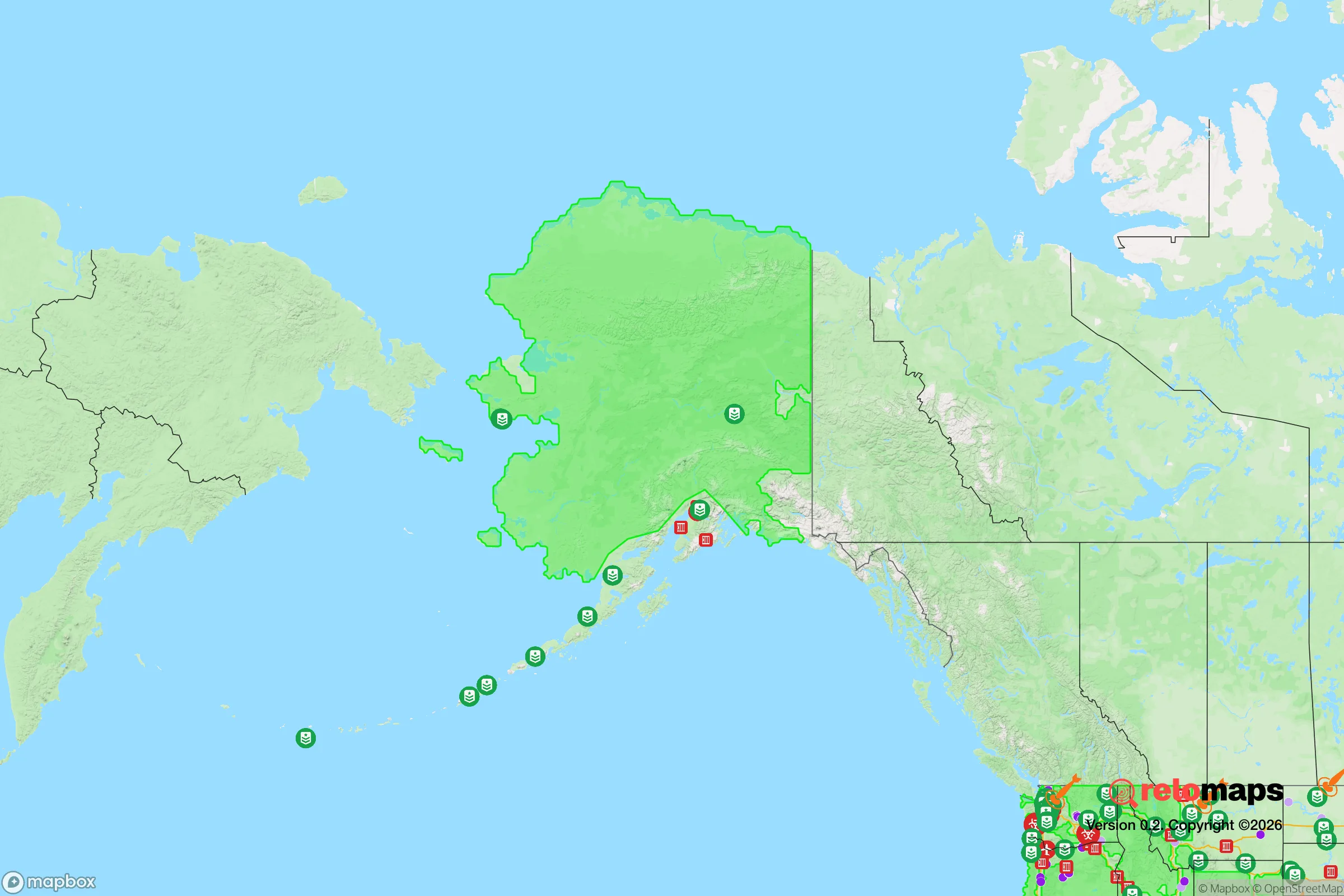
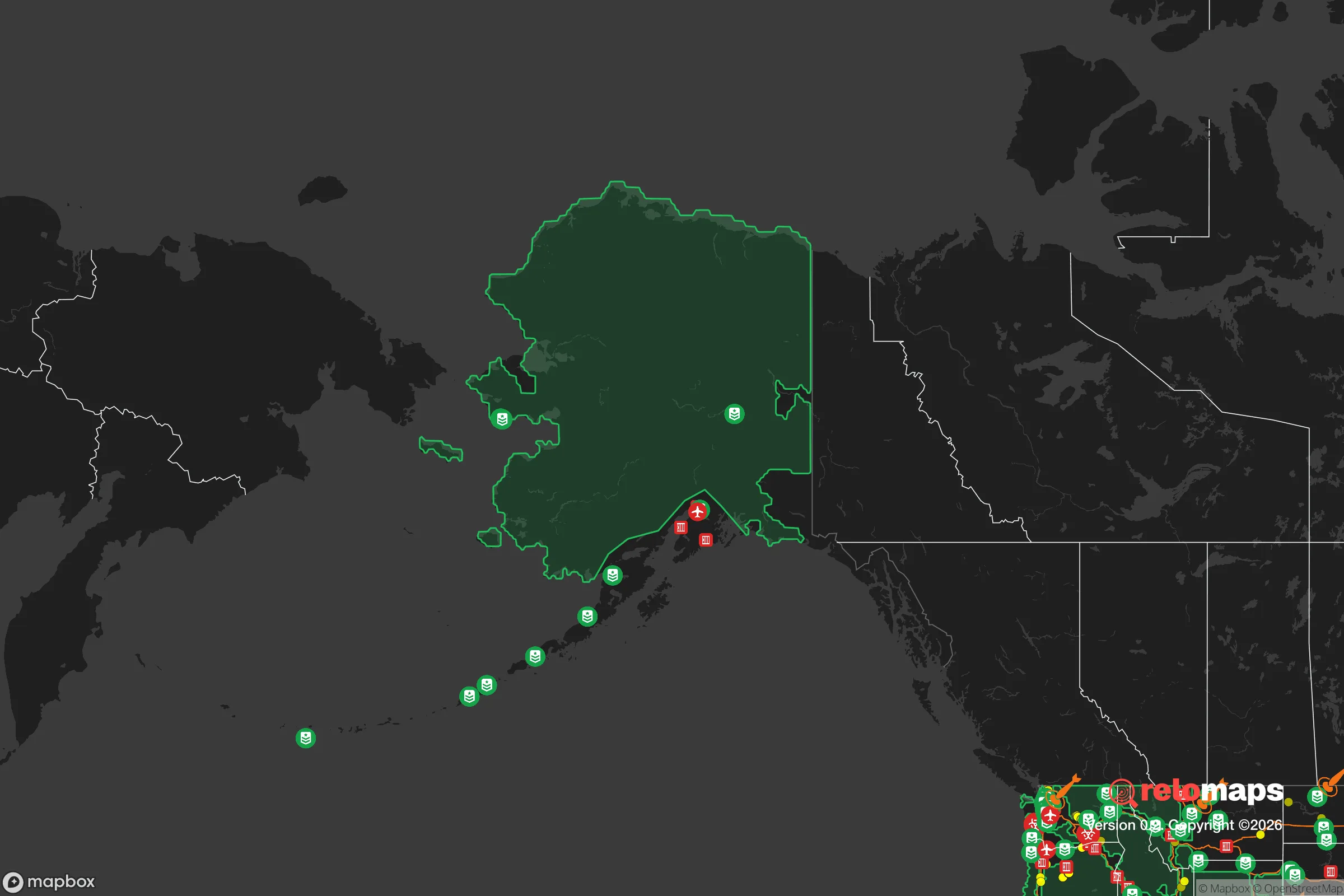


Important Note: For informational purposes only. This does not mean nothing bad ever happens in the green zones. Please use common sense. This is based on public data and modeled with AI. We tried to take a conservative approach but mistakes happen. We update this regularly as new information becomes available.
Solar Generator Recommendations
Backup power matters more here than in safer locations. We've picked three solar generators across budgets and capacity tiers — start with the budget unit if you only need a few essentials, or step up if you want to run a fridge and HVAC for days at a time.

Jackery Portable Power Station Explorer 300
Budget OptionPower on the Go: Weighing only 11 lbs, it's convenient to set up and store with book-sized foldable solar panels

BLUETTI Portable Power Station AC180
Designed for both indoor and outdoor scenarios, AC180 is highly capable as it has a robost capacity and continuous output power.

EF ECOFLOW DELTA Pro Ultra Power Station
Upgraded PickEcoFlow DELTA Pro Ultra is a whole-home energy system designed to grow with your family. Integrated with the Smart Home Panel 2, it scales to meet your evolving energy needs — keeping your home powered, intelligent, and secure through every stage of life.
We earn a commission, at no additional cost to you.
Strategic Assessment Analysis
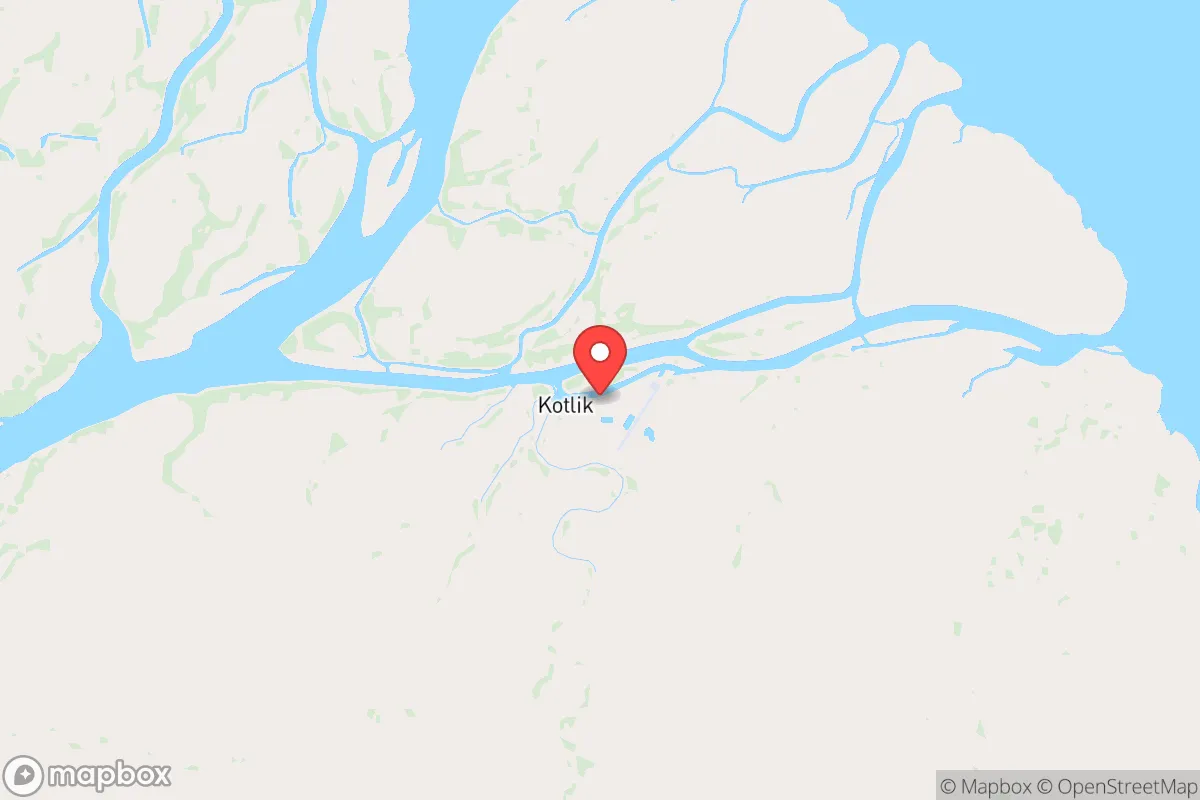
Kotlik, Alaska, is not a place you end up by accident—it’s a deliberate choice for those who prioritize physical isolation, natural resource access, and a low-profile existence far from the chaos of urban collapse. Situated on the eastern bank of the Yukon River near its delta, this Yup’ik village of roughly 650 people offers a resilience profile that few locations in the Lower 48 can match: no road connections, no bridge to the outside, and a subsistence-based economy that doesn’t depend on fragile supply chains. For a relocator with a survivalist mindset, Kotlik represents a genuine off-grid stronghold, but one that comes with extreme trade-offs in climate, logistics, and community integration.
Geographic isolation and natural defensive advantages of Kotlik
Kotlik’s location is its single greatest strategic asset. The village sits roughly 100 miles northwest of Bethel and 120 miles southeast of Nome, but those numbers are deceptive—there are no roads linking Kotlik to either town. Access is limited to small aircraft, snowmachines, boats, and, in winter, ice roads across the Yukon. This natural moat makes Kotlik effectively unreachable by any large-scale ground force, looters, or refugee flow. The surrounding terrain is flat, marshy tundra interspersed with countless sloughs and lakes, which makes overland travel on foot nearly impossible for anyone unfamiliar with the area. For a prepper, this means defensibility is baked into the geography: a small, determined group could monitor and control the only practical approaches—the airstrip and the river—with minimal effort. The Yukon River itself provides a natural barrier to the west and south, while the vast Yukon-Kuskokwim Delta to the east offers hundreds of miles of uninhabited buffer. In a scenario of national breakdown, Kotlik’s isolation becomes a fortress, not a liability.
Fallout proximity, environmental risks, and exposure to collapse vectors
Kotlik’s risk profile is mixed. On the positive side, it is hundreds of miles from any major population center—Anchorage is over 400 miles away, and Fairbanks is even farther. This eliminates the primary fallout dangers of urban unrest, nuclear targeting, or pandemic density that plague the Lower 48. There are no military bases, no major industrial facilities, and no nuclear power plants within a 200-mile radius. The closest potential fallout-relevant landmark is the now-closed Cold War-era radar site at Cape Romanzof, about 80 miles southwest, but that poses no modern threat. However, Kotlik is not immune to natural hazards. The village sits on low-lying ground along the Yukon River, making it highly vulnerable to river ice breakup flooding and storm surges from the Bering Sea, which is only 30 miles downstream. In 2022, Kotlik experienced severe flooding from ice jams that damaged homes and infrastructure. Climate change is increasing the frequency of such events. Additionally, the village’s reliance on a single airstrip means that any disruption to air service—whether from weather, fuel shortages, or national supply chain collapse—could cut off resupply for weeks. The community’s fuel supply is delivered by barge once a year, typically in summer, so a missed or disrupted delivery would be catastrophic. For the prepper, these are not deal-breakers but require serious mitigation planning: elevated building sites, redundant fuel storage, and a robust water purification system for flood-contaminated sources.
Practical resilience for a relocator: food, water, energy, and defensibility
Kotlik’s subsistence economy is the backbone of its resilience. Residents harvest salmon, whitefish, moose, caribou, and waterfowl, and the Yukon River provides an essentially unlimited supply of protein for those willing to learn the methods. Food security is high if you can fish, hunt, and preserve—the village has no grocery store in the conventional sense, but the local store stocks staples like flour, sugar, and cooking oil at high prices (a gallon of milk can run $10 or more). For a relocator, the key is to arrive with skills in fish drying, smoking, and canning, as well as a freezer or two powered by a reliable generator. Water comes from the Yukon River, but it requires treatment—boiling, filtration, or UV—to be safe from parasites and bacteria. The village has a piped water and sewer system, but it is prone to freeze-ups and breaks in winter. A prepper should plan for a backup well or a high-capacity filter like a Berkey or a Katadyn. Energy is the weak link. Kotlik is not connected to the state power grid; electricity comes from a diesel-fired power plant. Diesel is expensive and subject to supply chain disruptions—currently around $6–$8 per gallon. Solar is marginal due to long, dark winters, but wind is a viable supplement; small wind turbines are used by some residents. Defensibility is excellent: the village is small enough that everyone knows everyone, and outsiders are immediately noticed. The community is tight-knit and Yup’ik culture emphasizes cooperation, but an outsider will need to build trust over years, not months. For a single individual or family willing to integrate, Kotlik offers a social structure that is inherently resilient—neighbors share food, help with repairs, and watch out for each other. For a lone wolf who wants to keep to themselves, this is not the place; the social pressure to participate is strong.
The overall strategic picture for Kotlik is one of extreme isolation with high self-sufficiency potential, but only for those who can adapt to a harsh, remote, and culturally distinct environment. It is not a bug-out location for a weekend prepper—it is a permanent relocation that requires a complete lifestyle overhaul. The trade-offs are stark: you trade away access to modern healthcare, Amazon deliveries, and any semblance of urban convenience for a near-zero chance of being affected by civil unrest, nuclear fallout, or supply chain collapse. Kotlik is a fortress, but it is a fortress that demands you become a subsistence hunter, a diesel mechanic, and a member of a Yup’ik community all at once. For the conservative-minded relocator who values self-reliance, family, and distance from the crumbling infrastructure of the Lower 48, Kotlik offers a genuine alternative—but only if you are prepared to work harder for your survival than you ever have before. The Yukon River will provide, but it will also test you. If that sounds like the right kind of challenge, Kotlik might be your last best place.

* Values derived from national, state, county, city and local statistics and may differ in a specific area. Last updated: 2026-04-19T19:29:30.000Z
Narrative content on this page is AI-generated and may contain mistakes. Verify any details that matter before acting on them.
ReloMaps may earn a commission from affiliate links at no extra cost to you.

