Photo: Wikipedia
Demographics of Jessamine County
Affluence Level in Jessamine County
A middle-class area roughly in line with national averages across income, home values, education, and employment.
People of Jessamine County
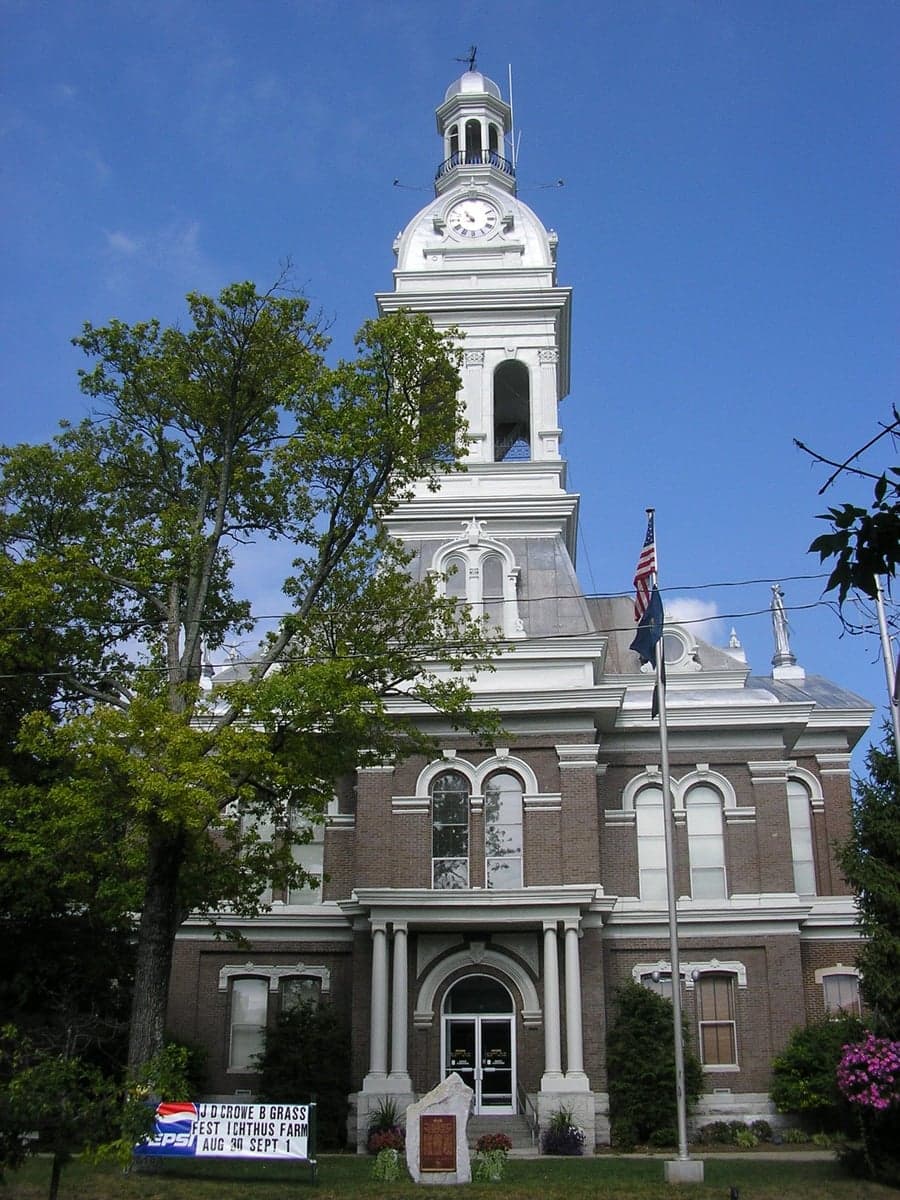
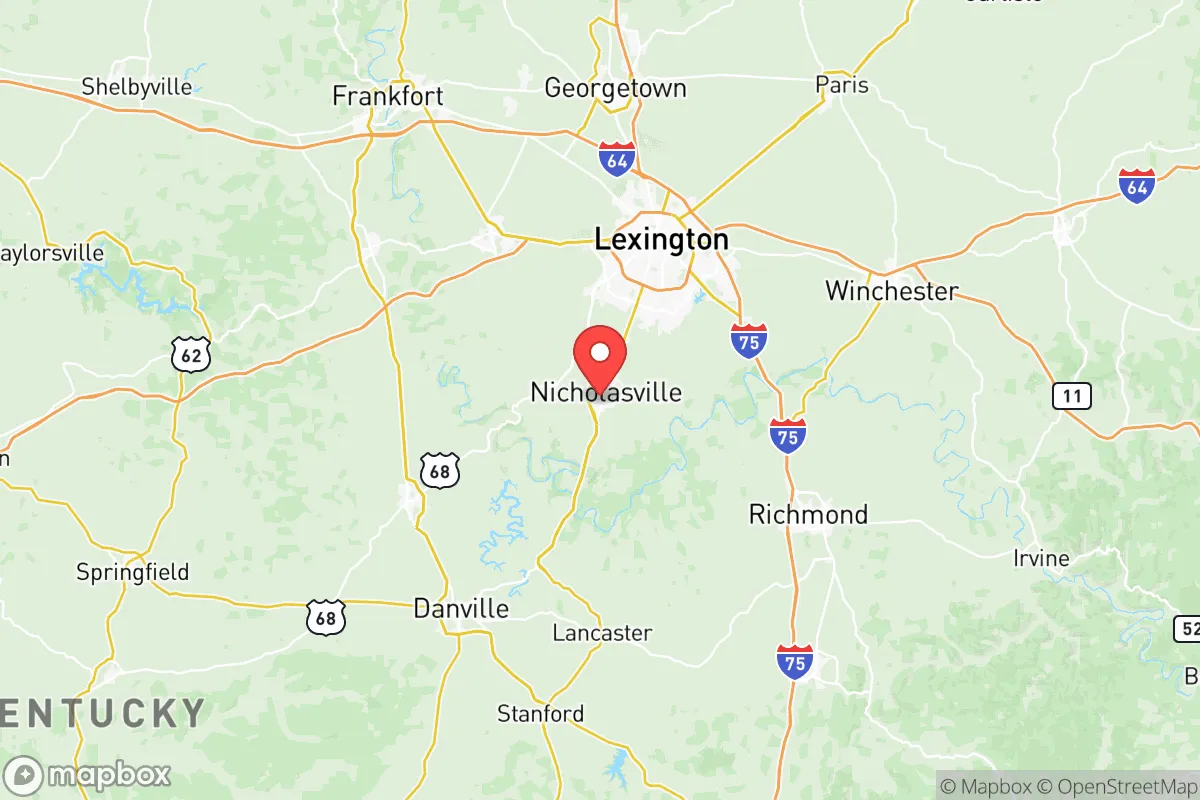
Jessamine County, Kentucky, is home to roughly 53,800 residents, a population that remains predominantly white (86.3%) with a small foreign-born share of 2.2%. The county’s character is a blend of historic small-town roots in its seat, Nicholasville, and a growing suburban identity tied to its proximity to Lexington. Distinctive markers include a strong local agricultural heritage, a notably low Hispanic population (4.6%) compared to state averages, and a modest but present Black community (3.9%) concentrated in and around Nicholasville and the unincorporated community of Wilmore.
Settlement & growth (pre-1960)
Before European settlement, the area now known as Jessamine County was part of the hunting grounds of the Shawnee and Cherokee nations, who used the Kentucky River valley for seasonal camps and travel. No permanent Native villages existed within the county’s modern boundaries, as the region was largely a contested buffer zone between tribes. The first European Americans arrived in the late 1770s, primarily Scots-Irish and English pioneers moving through the Cumberland Gap. These settlers were drawn by land grants offered to veterans of the Revolutionary War, with the Virginia General Assembly awarding large tracts along the Kentucky River. The town of Nicholasville, founded in 1798 as the county seat, became the initial hub for these families, who established subsistence farms and small grist mills.
Through the 19th century, the population remained overwhelmingly of British Isles descent, with a small influx of German immigrants in the 1840s and 1850s. These Germans, many from the Rhineland, settled primarily in the rural areas around Wilmore and Keene, where they established truck farms and vineyards. The county’s economy was driven by hemp and tobacco cultivation, which relied on enslaved African American labor. By 1860, enslaved people made up roughly 30% of the county’s population, a share that declined sharply after emancipation. Following the Civil War, freedmen and their descendants formed small communities in the southern part of the county, particularly near High Bridge and the unincorporated area of Brumfield, where they worked as sharecroppers and railroad laborers. The arrival of the Louisville Southern Railroad in the 1880s connected Nicholasville and Wilmore to broader markets, but the county’s population growth remained slow through the early 20th century, with the 1950 census recording just over 12,000 residents. No significant immigrant waves arrived during this period; the county’s demographic character was firmly established as white, native-born, and Protestant, with a small Black minority.
Modern era (post-1965)
The 1965 Hart-Cellar Act had minimal direct impact on Jessamine County, as the foreign-born population remains just 2.2% today. Unlike larger Kentucky cities such as Louisville or Lexington, the county did not receive significant post-1965 immigration from Asia, Latin America, or the Middle East. The most notable demographic shift since the 1970s has been domestic in-migration from other parts of Kentucky and the Rust Belt. The expansion of Interstate 75 and the growth of Lexington’s economy—particularly in healthcare, education, and manufacturing—pushed suburban development southward into Jessamine County. Nicholasville transformed from a quiet agricultural town into a bedroom community, with its population growing from 6,000 in 1970 to over 30,000 by 2020. New subdivisions and strip malls spread along U.S. Route 27, while Wilmore retained a more compact, college-town feel centered on Asbury University.
The county’s racial composition has shifted modestly. The white share dropped from roughly 96% in 1990 to 86.3% today, driven primarily by an increase in Hispanic residents (now 4.6%) and Black residents (now 3.9%). The Hispanic population, largely of Mexican origin, is concentrated in Nicholasville’s newer neighborhoods and works in construction, landscaping, and the horse industry. The Black population has grown slowly, with families settling in Nicholasville and the Brumfield area, often moving from Lexington for lower housing costs. East and Southeast Asian residents (1.2%) are a small but visible presence, with families employed at Asbury University or in Lexington’s tech and healthcare sectors; they tend to live in the newer subdivisions near the Fayette County line. The Indian subcontinent population (0.4%) is even smaller, mostly professionals commuting to jobs in Lexington. Notably, the county has no distinct ethnic enclaves; all minority groups are dispersed within predominantly white neighborhoods.
The future
Jessamine County’s population is projected to continue growing, likely reaching 60,000 to 65,000 by 2040, driven by ongoing suburban spillover from Lexington. The county is not homogenizing into a single cultural identity; rather, it is tribalizing along geographic lines. The northern half, closest to Lexington, is becoming more diverse, younger, and more transient, with a growing share of college-educated professionals (32.4% of adults have a bachelor’s degree or higher). The southern half, including Keene and rural areas near the Kentucky River, remains older, whiter, and more rooted in agricultural traditions. Immigrant communities are growing slowly but steadily; the Hispanic share may reach 7-8% by 2040, while the Black and Asian shares will likely rise modestly. These groups are assimilating into the broader culture rather than forming enclaves, as the county lacks the institutional infrastructure—ethnic churches, community centers, or dense housing—that supports distinct ethnic neighborhoods.
The cultural identity of Jessamine County is being reshaped by in-migration, but the change is gradual. New residents from Lexington and other states bring more secular, urban attitudes, while long-time locals maintain a conservative, church-centered social fabric. The result is a county that is becoming politically and culturally bifurcated: the northern suburbs lean moderate, while the southern rural areas remain solidly conservative. For someone moving in now, Jessamine County offers a choice between two distinct lifestyles—a commuter-oriented, diversifying suburb in the north, or a quieter, more homogeneous small-town and rural experience in the south. The county is not becoming a melting pot, but a place where different demographic streams coexist without fully merging.

* Values derived from national, state, county, city and local statistics and may differ in a specific area. Last updated: 2026-05-27T20:12:11.000Z
Narrative content on this page is AI-generated and may contain mistakes. Verify any details that matter before acting on them.
ReloMaps may earn a commission from affiliate links at no extra cost to you.

