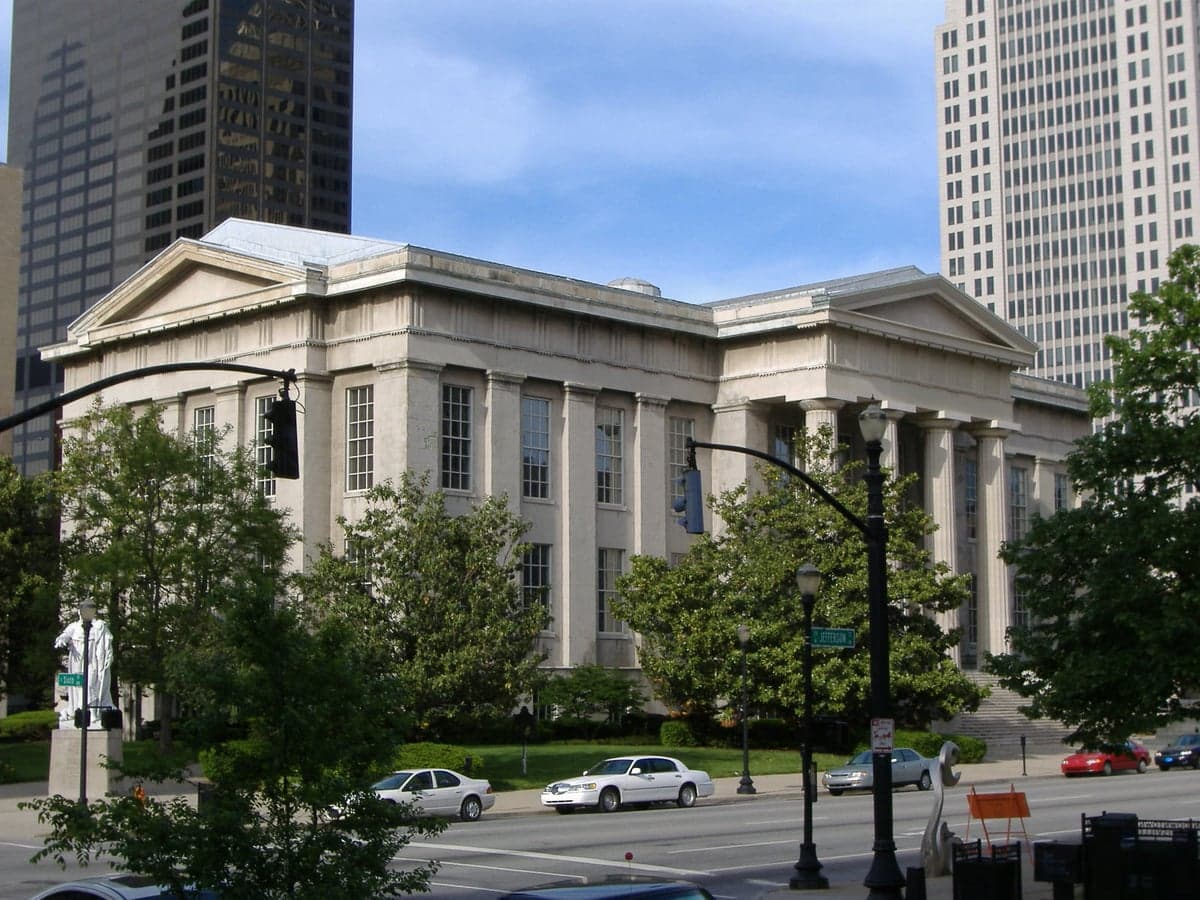
Photo: Wikipedia
Personal Sovereignty in Jefferson County
Viable for self-reliance. Generally workable, though some barriers may limit total independence.
What does Personal Sovereignty tell us?
Personal Sovereignty measures your capacity for self-reliance and independence with minimal government friction. Higher scores mean fewer barriers between you and the way you want to live... but it assumes you have the space you need and good neighbors.
What does this tell us?
Personal Sovereignty measures your capacity for self-reliance and independence with minimal government friction. Higher scores mean fewer barriers between you and the way you want to live... but it assumes you have the space you need and good neighbors.
State Policy
Energy independence: Importer (60% of energy produced in-state)
Personal Liberty
Homesteading

Personal Liberty Analysis
Jefferson County, Kentucky, presents a mixed picture for those prioritizing personal sovereignty, with the city of Louisville exerting significant regulatory influence while outlying areas like Anchorage, Prospect, and Fern Creek offer more breathing room. The county's autonomy environment is shaped by a deep urban-rural divide, where the Louisville Metro Council's ordinances often clash with the more independent-minded culture found in the county's eastern and southern fringes. For a conservative-leaning individual or family weighing relocation, the key is understanding that your experience of freedom here will vary dramatically depending on whether you settle inside the Watterson Expressway or beyond it, in places like Middletown or Fairdale.
Tax burden and regulatory posture: How Louisville compares to surrounding counties
Kentucky's state-level tax structure is relatively favorable for sovereignty-minded residents, with a flat 4% individual income tax and no tax on Social Security benefits. However, Jefferson County adds its own layer: the Louisville Metro occupational tax is 2.25% on gross wages, which applies to anyone working within the county regardless of where they live. This is a notable burden compared to neighboring Oldham County (1%) or Bullitt County (0.5%). Property taxes are moderate, with the county rate around $0.79 per $100 of assessed value, but the city of Louisville adds an additional $0.23 per $100 for services. Regulatory posture is where the friction becomes apparent. Louisville Metro has adopted stricter building codes, stormwater management rules, and business licensing requirements than surrounding counties. For example, starting a home-based business in the Highlands or Germantown requires navigating zoning overlays and conditional use permits that are rarely an issue in unincorporated areas like Okolona or Jeffersontown. The county's land development code is over 600 pages, and any new construction or major renovation triggers a review process that can take months. This regulatory density pushes many sovereignty-focused residents toward the county's rural fringe, where enforcement is less aggressive and the county's "urban services district" boundaries don't apply.
Self-defense and gun law specifics: What the 2026 landscape looks like in Jefferson County
Kentucky is a constitutional carry state, meaning no permit is required to carry a concealed firearm for anyone 21 or older who can legally possess a weapon. This is a strong baseline for personal sovereignty. However, Jefferson County has local quirks. The Louisville Metro Police Department has a reputation for aggressive enforcement of "brandishing" and "menacing" statutes, particularly in high-traffic areas like Bardstown Road or Fourth Street Live. Open carry is legal statewide, but in practice, doing so in downtown Louisville or near the University of Louisville campus will likely result in police contact. The county also has a 10-day waiting period for handgun purchases from licensed dealers, a local ordinance that does not apply in surrounding counties like Shelby or Spencer. For those who prioritize self-defense, the practical advice is to live outside the Louisville city limits—places like Anchorage, Prospect, or even parts of Shively—where police encounters are less frequent and the local culture is more firearm-friendly. The county's gun ranges, such as the Louisville Armory or Knob Creek Gun Range (just south in Bullitt County), are well-regarded, but the latter is a 30-minute drive from downtown. The Castle Doctrine applies statewide, with no duty to retreat in your home or vehicle, but Jefferson County prosecutors have been known to charge self-defense cases more aggressively than in rural counties, so legal defense fund membership is advisable.
Self-reliance and homesteading viability: Lot sizes, zoning, and off-grid feasibility across the county
Homesteading in Jefferson County is a tale of two zones. Inside the Louisville urban services district, minimum lot sizes are typically 5,000 to 7,000 square feet, and keeping chickens or goats requires a permit and neighbor notification. Off-grid living is effectively impossible here due to mandatory connection to city water and sewer. However, in the county's rural preservation zones—primarily in the southeastern and southwestern fringes—the picture changes. Areas like Fairdale, Okolona, and parts of Fern Creek have minimum lot sizes of 1 to 3 acres, and many properties still operate on well water and septic systems. Zoning in these areas allows for small-scale agriculture, including beekeeping, poultry, and even a few head of livestock. The county's Agricultural/Rural (AR) zoning district permits up to 10 animals per acre, but you'll need at least 3 acres to qualify. Off-grid solar is legal but must comply with the Kentucky Building Code, and net metering is available through Louisville Gas & Electric, though the utility requires an interconnection agreement. For those seeking true self-reliance, the best bets are the unincorporated areas near the Bullitt County line (like South Park) or the Spencer County border (east of Jeffersontown). These areas have fewer code enforcement officers and a more live-and-let-live attitude. The county's rainwater harvesting is unregulated for non-potable uses, but any structure for human habitation must have a permitted water source. Overall, Jefferson County is not a homesteading paradise, but it offers viable pockets for those willing to trade proximity to Louisville's amenities for a few acres of freedom.
Personal liberties: Parental rights, medical autonomy, speech, and property in the 2026 context
Kentucky has strong statutory protections for parental rights, including the Parental Rights and Responsibilities Act, which affirms that parents have the fundamental right to direct their children's education, healthcare, and religious upbringing. Jefferson County Public Schools (JCPS) has been a flashpoint, with the state legislature passing laws in 2024 and 2025 requiring parental notification for any changes to a student's gender identity or pronoun usage, and banning certain library materials deemed "harmful to minors." These laws are enforced, but JCPS has a history of resistance, so parents in the district should expect ongoing friction. Medical autonomy is a mixed bag. Kentucky has a near-total abortion ban with no exceptions for rape or incest, which aligns with conservative values, but the state also has a strict certificate-of-need (CON) law that limits the opening of new healthcare facilities, including birthing centers and independent clinics. This CON law is a sovereignty issue because it restricts your ability to choose where and how you receive care. Free speech is protected under the Kentucky Constitution, and Louisville has not enacted any local ordinances restricting political speech or assembly beyond standard time-place-manner regulations. Property rights are generally strong, but the county's historic preservation overlay districts in Old Louisville, the Highlands, and Cherokee Triangle impose strict design review for exterior changes. If you buy a home in these areas, you cannot replace windows, change siding, or alter rooflines without approval from the Landmarks Commission. This is a direct limitation on personal sovereignty that does not exist in newer subdivisions in Middletown or the county's rural areas.
Overall, Jefferson County offers a tiered sovereignty experience. The urban core of Louisville is heavily regulated, with higher taxes, stricter gun enforcement, and limited homesteading potential. But the county's eastern and southern fringes—places like Anchorage, Prospect, Fern Creek, and Fairdale—provide a much more permissive environment for those who value self-reliance, gun rights, and minimal government interference. Compared to deep-red rural counties like Spencer or Henry, Jefferson County is more restrictive, but it also offers better infrastructure, employment, and healthcare access. For the strategic relocator, the calculus is clear: live in the county's unincorporated areas, avoid the urban services district, and you can enjoy 80% of the sovereignty of rural Kentucky while staying within 20 minutes of a major city. The key is knowing which side of the zoning line you're on.

* Values derived from national, state, county, city and local statistics and may differ in a specific area. Last updated: 2026-05-12T12:12:53.000Z
Narrative content on this page is AI-generated and may contain mistakes. Verify any details that matter before acting on them.
ReloMaps may earn a commission from affiliate links at no extra cost to you.

