Photo: Wikipedia
Demographics of Kaunakakai, HI
Affluence Level in Kaunakakai, HI
A middle-class area roughly in line with national averages across income, home values, education, and employment.
People of Kaunakakai, HI
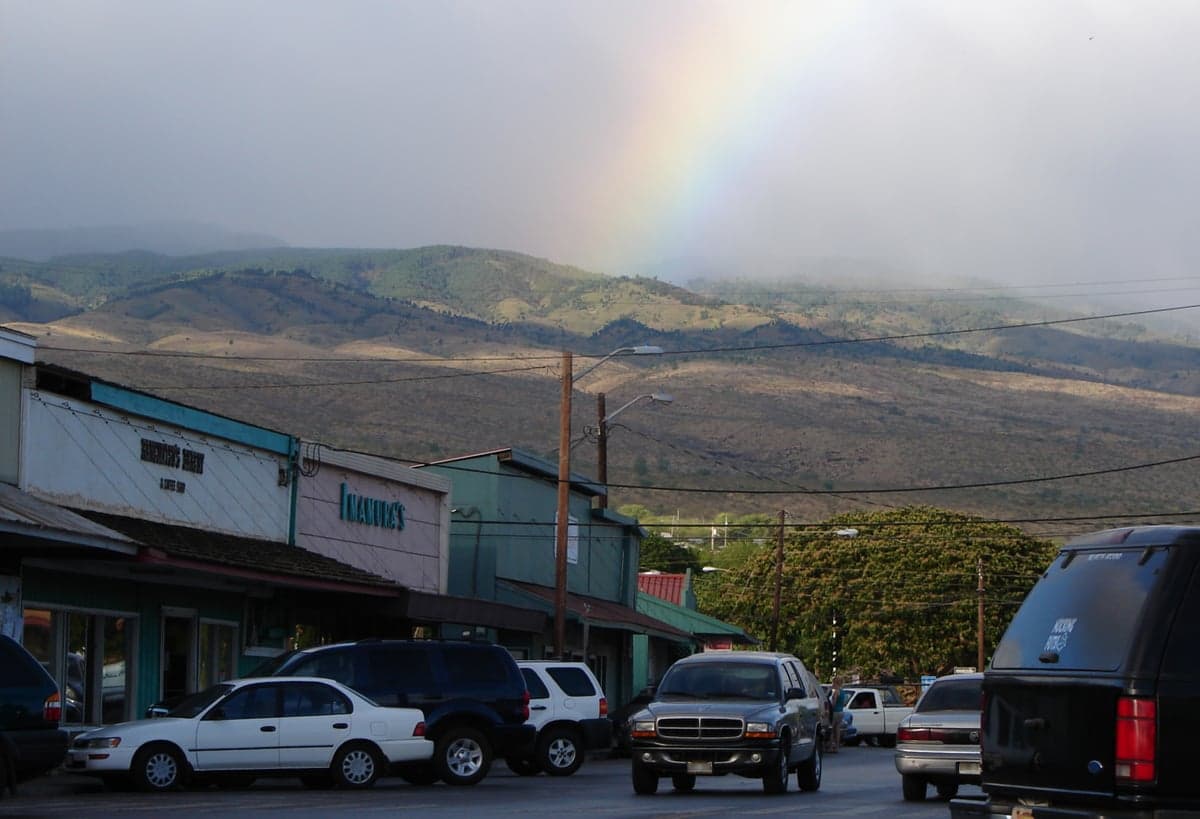
The 3,721 residents of Kaunakakai today form a community shaped by deep Native Hawaiian roots, a significant Asian presence, and a growing Hispanic population, creating a demographic profile distinct from much of the mainland. With a foreign-born share of just 3.6%, the population is overwhelmingly native-born, yet the town’s ethnic makeup—8.8% White, 11.2% East/Southeast Asian, 13.0% Hispanic, and a large Native Hawaiian plurality—reflects centuries of layered migration and plantation-era settlement. The population is notably less college-educated than the national average (16.8%), and the community retains a tight-knit, rural character centered on the harbor and the main commercial strip along Ala Mālama Avenue.
How the city was settled and grew
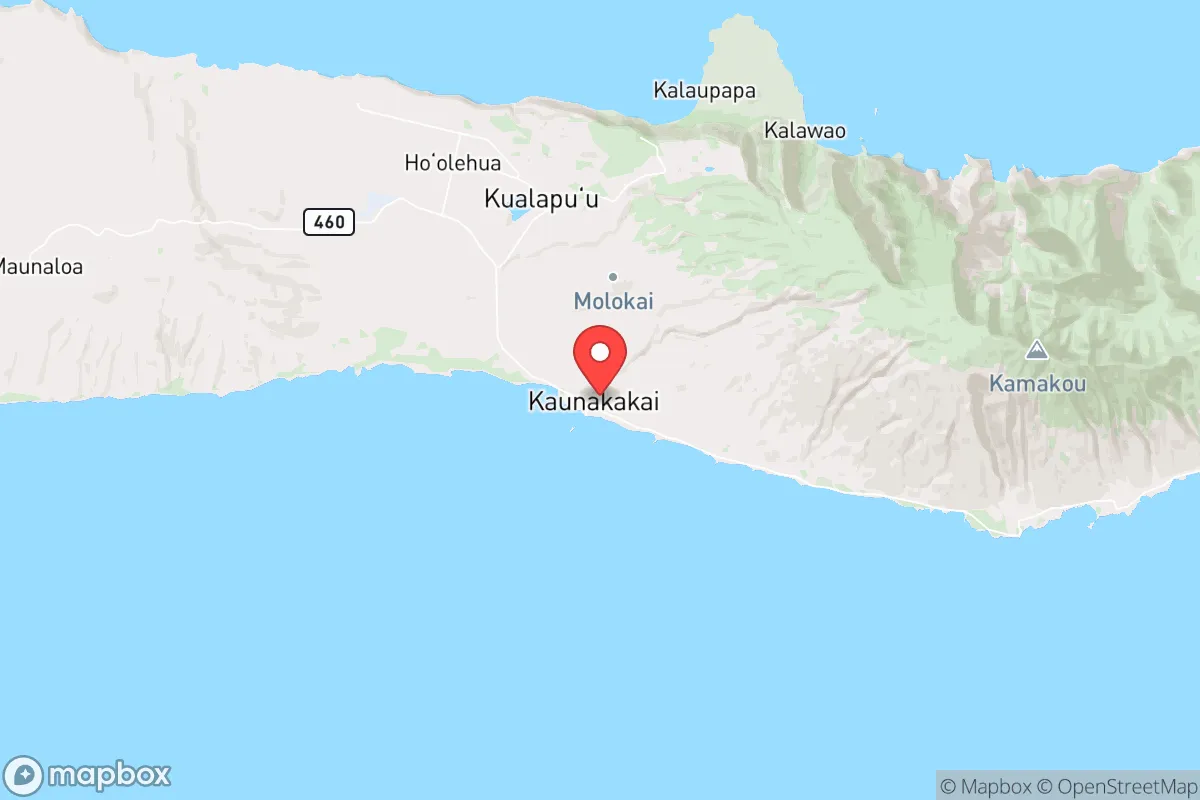
Kaunakakai’s human history begins with Native Hawaiians, who established ahupuaʻa (traditional land divisions) along the south shore of Molokai, with the area around Kaunakakai Harbor serving as a key fishing and canoe landing site. The modern town emerged in the 19th century as a port for the sugar and pineapple plantations that dominated the island’s economy. The first major non-Hawaiian wave came in the late 1800s and early 1900s, when plantation owners recruited laborers from Japan, China, and the Philippines—the ancestors of today’s East/Southeast Asian community (11.2%). These workers settled in plantation camps near the harbor and along what is now Kamehameha V Highway, in areas like Kapaʻakea and Kamiloloa, where modest homes and small farms still dot the landscape. A smaller wave of Portuguese and European immigrants arrived as overseers and merchants, but their numbers remained tiny. By the mid-20th century, Kaunakakai was a classic plantation town, with a population that was predominantly Native Hawaiian and Asian, and a local economy revolving around the Molokai Ranch and the Kualapuʻu pineapple fields.
Modern era (post-1965)
After the 1965 Hart-Cellar Act, immigration to Kaunakakai remained minimal—the foreign-born share today is only 3.6%—but domestic migration patterns shifted. The collapse of the pineapple industry in the 1970s and 1980s led to a population decline, as many families moved to Oahu or the mainland for work. Those who stayed, concentrated in neighborhoods like Kawela and Pukoʻo, often worked in government, healthcare, or tourism. The most notable modern demographic change has been the growth of the Hispanic population, now 13.0%, driven by families from Mexico and Central America who arrived in the 1990s and 2000s for agricultural and service jobs. They have settled primarily in the Kapaʻakea area and along Mauna Loa Highway, often living in multi-generational households. The White population (8.8%) consists largely of retirees and remote workers who moved from the mainland, many buying homes in the Kamiloloa subdivision or near the Molokai Country Club. The East/Southeast Asian community—primarily Filipino and Japanese—remains concentrated in the older core near the harbor and in Kualapuʻu, where family-owned stores and churches anchor the community. The Native Hawaiian population, while not a separate census category in the provided data, is the largest single group, with many families tracing their lineage to the original ahupuaʻa and living in the Kawela and Pukoʻo homesteads.
The future
Kaunakakai’s population is aging and slowly declining, with limited job growth and high housing costs pushing younger families to Oahu. The Hispanic share is likely to continue rising slowly, as families already in the area have higher birth rates and attract relatives through chain migration. The East/Southeast Asian community is plateauing, with younger generations leaving for college and not returning. The White population may grow modestly if remote work trends continue, but the lack of high-speed internet infrastructure and the high cost of shipping goods to the island are barriers. The town is not tribalizing into distinct enclaves—neighborhoods remain mixed—but economic stratification is increasing, with Kamiloloa and Kapaʻakea becoming slightly more affluent and the harbor area more working-class. The next 10-20 years will likely see a smaller, older, and slightly more Hispanic Kaunakakai, with the Native Hawaiian and Asian communities maintaining their cultural influence but shrinking in absolute numbers.
For someone moving in now, Kaunakakai offers a deeply rooted, slow-paced community where family ties and local history matter more than economic dynamism. The population is stable but not growing, and newcomers—especially those without Native Hawaiian or long-time Asian family connections—will find a polite but reserved social environment. The low crime rate and strong sense of place are draws, but the limited job market and high cost of living mean this is a place for those who already have a reason to be here, not for those seeking opportunity.

* Values derived from national, state, county, city and local statistics and may differ in a specific area. Last updated: 2026-05-15T21:54:01.000Z
Narrative content on this page is AI-generated and may contain mistakes. Verify any details that matter before acting on them.
ReloMaps may earn a commission from affiliate links at no extra cost to you.

