Photo: Wikipedia
Demographics of Kalispell, MT
Affluence Level in Kalispell, MT
A middle-class area roughly in line with national averages across income, home values, education, and employment.
People of Kalispell, MT
The people of Kalispell, Montana today number roughly 26,830, forming a predominantly white (88.1%) and native-born population with a notably low foreign-born share of just 1.1%. The city’s character is shaped by its roots as a railroad and timber hub, with a culture that remains distinctly Northern Rockies—practical, outdoors-oriented, and politically conservative. With a college-educated rate of 32.9%, Kalispell attracts a mix of working-class families, retirees, and remote workers drawn to Glacier Country, but its demographic profile is far less diverse than the national average.
How the city was settled and grew
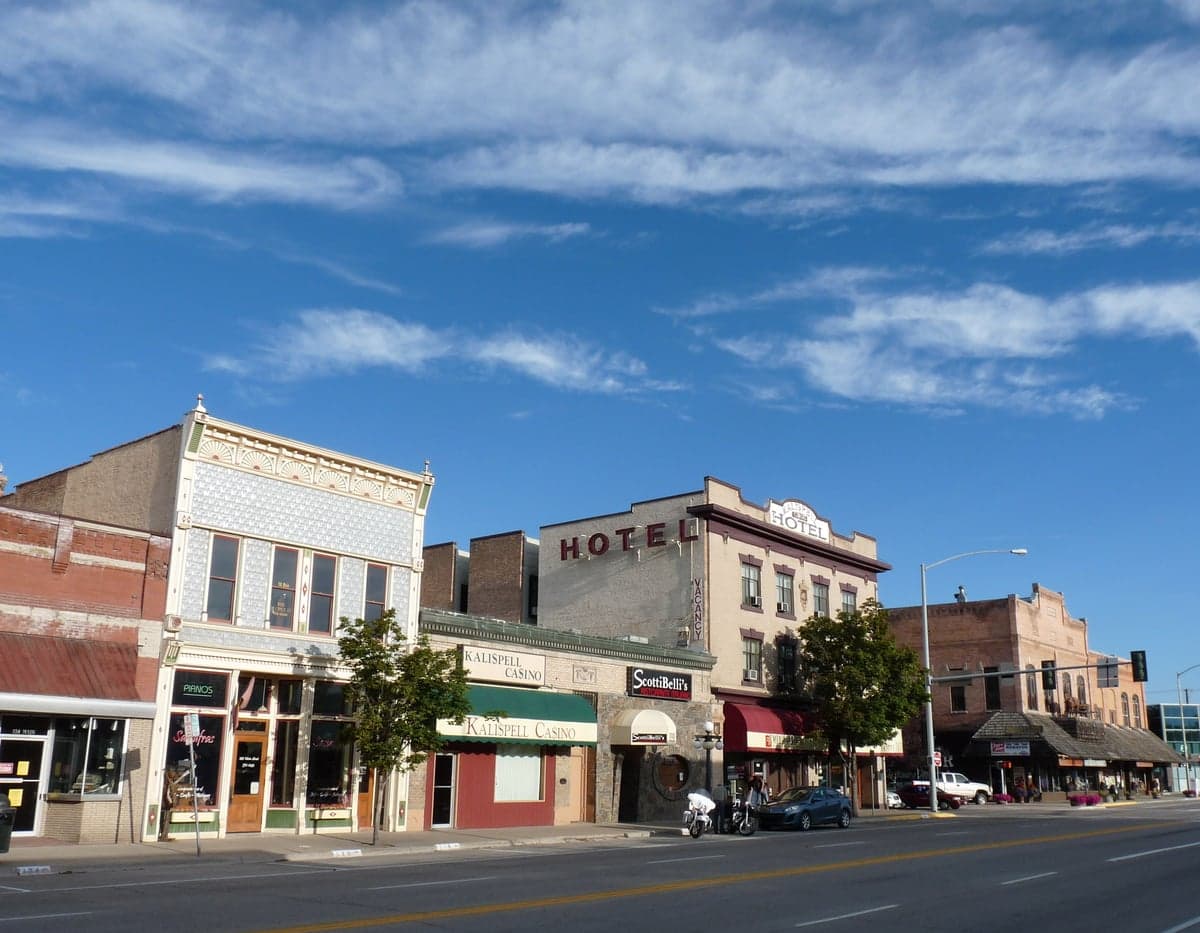
Kalispell was founded in 1891 by the Great Northern Railway, which selected the site as a division point and repair depot. The original population was overwhelmingly Northern European—Scandinavian, German, and Irish immigrants—who arrived to work the railroad, the timber camps, and the early agricultural homesteads. The city’s first neighborhoods took shape around the rail yards: South Kalispell, where railroad workers and their families built modest homes near the depot, and the West Side, which housed millworkers and loggers in company-built cottages. By the 1910s, a small but established Chinese community operated laundries and restaurants along Main Street, though discriminatory laws and economic pressures drove most out by the 1930s. The Great Northern’s decision to move its division headquarters to Whitefish in 1904 slowed Kalispell’s growth, but the timber industry—anchored by mills like the Stoltze Land & Lumber Company—kept the population steady through the mid-20th century. The East Side developed as a middle-class enclave for merchants and professionals, while the North End remained agricultural until post-war subdivisions began filling it in the 1950s.
Modern era (post-1965)
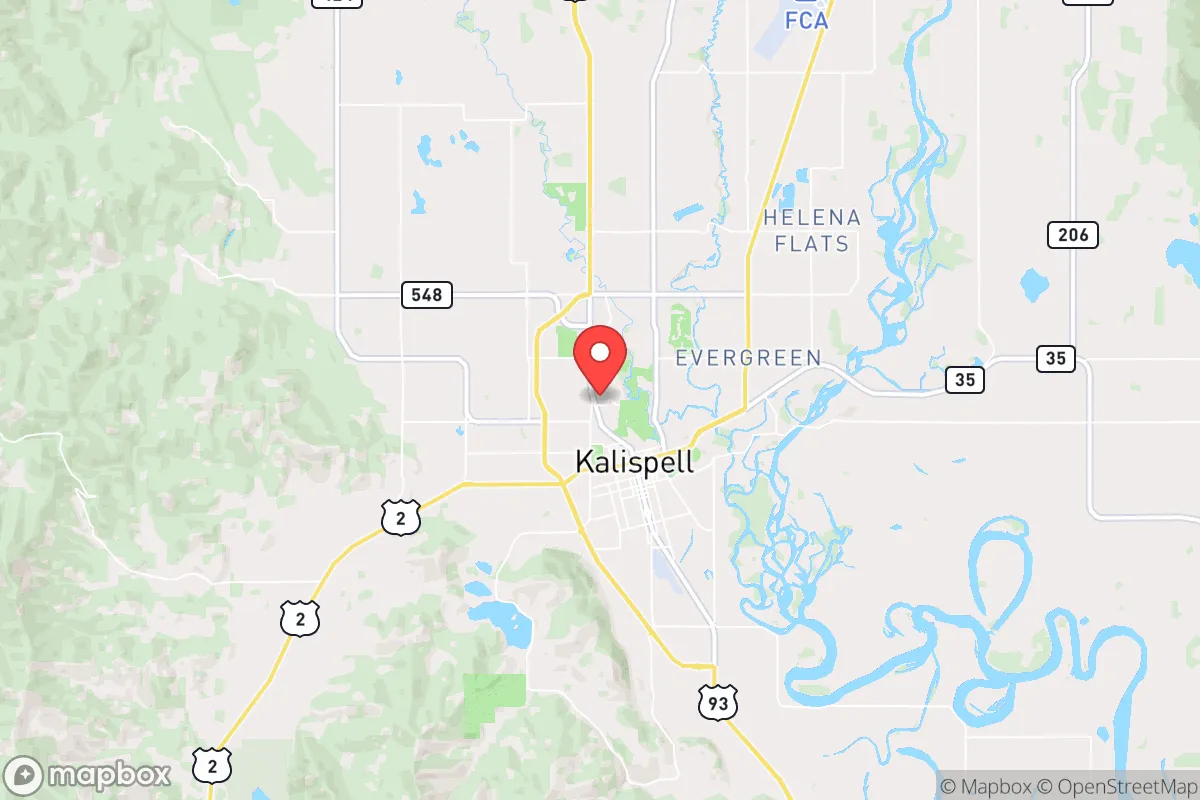
After the 1965 Hart-Cellar Act, Kalispell saw virtually no new immigration from Asia or Latin America—the foreign-born share today is a fraction of the national 13.7% figure. Instead, the city’s modern growth has been driven entirely by domestic in-migration from other parts of Montana and the Pacific Northwest. The 1970s and 1980s brought a wave of Californians and Washingtonians seeking lower costs and mountain access, settling into newer subdivisions like Evergreen, a sprawling unincorporated area east of the city that absorbed much of the population growth. The Hispanic population, now 5.0%, grew modestly through the 1990s and 2000s as agricultural and construction workers arrived, concentrating in the West Side and South Kalispell rental districts. East and Southeast Asian residents (1.2%) are a small but visible presence, many connected to Glacier National Park’s seasonal hospitality workforce or to local medical professions at Kalispell Regional Healthcare. The Indian-subcontinent population (0.2%) is tiny and largely tied to tech and healthcare professionals. The Black population (0.3%) remains negligible. Suburbanization reshaped the city’s geography: North Kalispell saw ranchland converted to large-lot homes for wealthier newcomers, while South Kalispell retained its working-class character with older homes and mobile home parks.
The future
Kalispell’s population is heading toward continued homogenization rather than diversification. The foreign-born share is unlikely to rise significantly given Montana’s restrictive housing supply and lack of traditional immigrant gateway industries. The Hispanic population may grow slowly through natural increase and secondary migration from other Western states, but it will likely remain a small minority. The city is not tribalizing into distinct ethnic enclaves—its neighborhoods are overwhelmingly white and economically stratified more by income than by ethnicity. The next 10–20 years will likely see Kalispell become whiter and older as retirees from California and the Pacific Northwest continue arriving, while younger native-born Montanans leave for larger job markets. The Evergreen area will absorb most new development, while the West Side may see modest infill as housing pressure pushes redevelopment of older lots.
For someone moving to Kalispell now, the city offers a stable, culturally conservative community with a strong outdoor identity and low crime—but little ethnic or religious diversity. New arrivals should expect to integrate into a population that is overwhelmingly native-born, white, and rooted in a frontier self-reliance that remains the area’s defining social currency.

* Values derived from national, state, county, city and local statistics and may differ in a specific area. Last updated: 2026-04-30T08:13:00.000Z
Narrative content on this page is AI-generated and may contain mistakes. Verify any details that matter before acting on them.
ReloMaps may earn a commission from affiliate links at no extra cost to you.

