Photo: Wikipedia
Strategic Assessment of Kailua, HI
Meaningful friction. Expect exposure to either population pressure, blast zones, or natural disaster risk. Consider buying a retreat property.
What does the Strategic Assessment tell us?
Our Strategic Assessment grades tactical survivability of an area. Major population centers, military targets, fallout zones, natural disasters, and border exposure all drive risk — lower exposure means a more defensible position in a crisis.
This is heavily inspired by Joel Skousen's Strategic Relocation book. Highly recommended you checkout the book ($)What does this tell us?
Our Strategic Assessment grades tactical survivability of an area. Major population centers, military targets, fallout zones, natural disasters, and border exposure all drive risk — lower exposure means a more defensible position in a crisis.
This is heavily inspired by Joel Skousen's Strategic Relocation book. Highly recommended you checkout the book ($)Strategic Pillars

Key Distances
Regional Safe Places
Below is our recommended "safe zones" in Hawaii and the surrounding area based on our strategic heuristics. For most people, it's unrealistic to live in a “safe zone” full-time due to work, family or other personal reasons. They tend to be more rural. However, many of these areas are perfect for second homes and retreat properties that double as a vacation home or even a short-term rental.

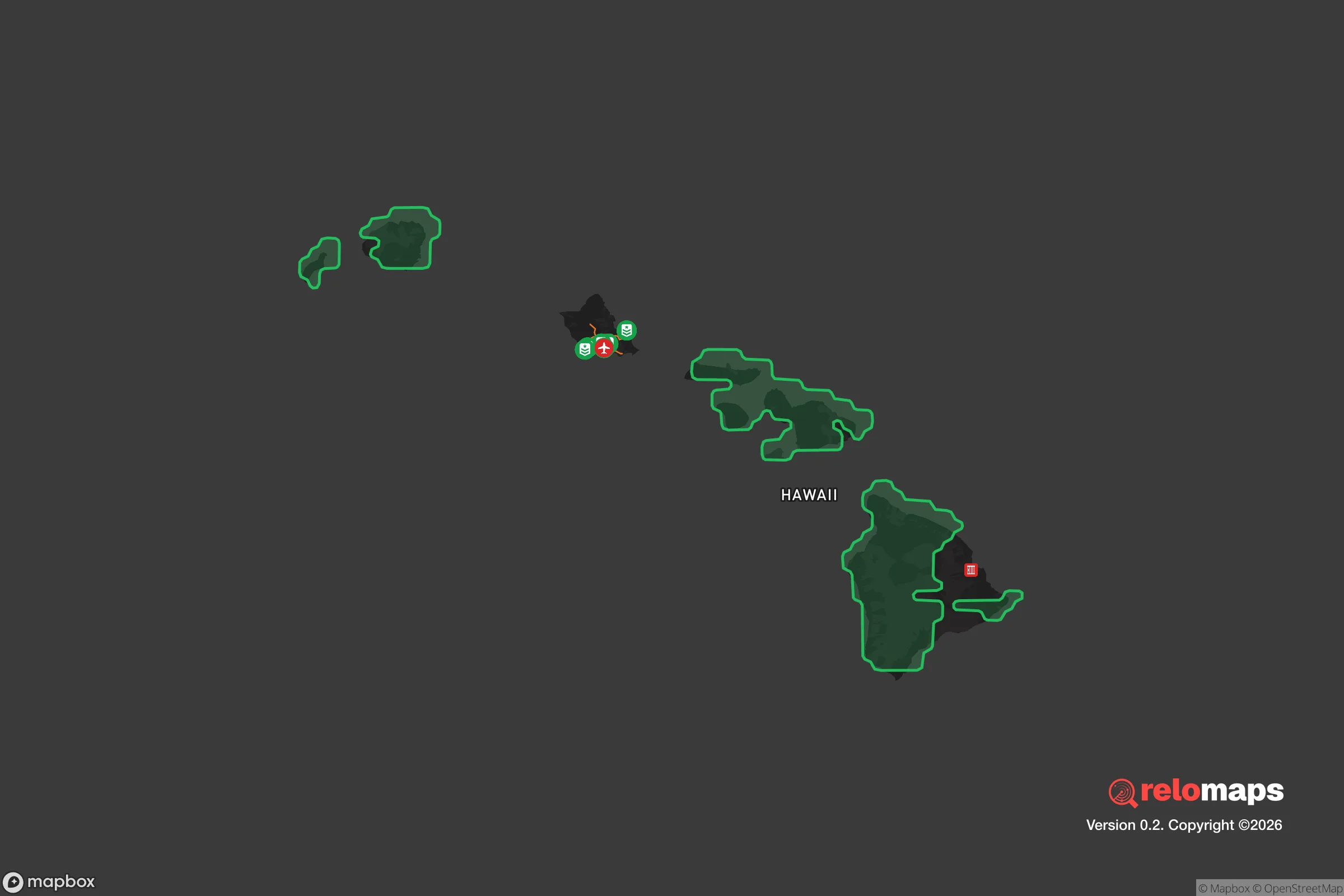


Important Note: For informational purposes only. This does not mean nothing bad ever happens in the green zones. Please use common sense. This is based on public data and modeled with AI. We tried to take a conservative approach but mistakes happen. We update this regularly as new information becomes available.
Solar Generator Recommendations
Backup power matters more here than in safer locations. We've picked three solar generators across budgets and capacity tiers — start with the budget unit if you only need a few essentials, or step up if you want to run a fridge and HVAC for days at a time.

Jackery Portable Power Station Explorer 300
Budget OptionPower on the Go: Weighing only 11 lbs, it's convenient to set up and store with book-sized foldable solar panels

BLUETTI Portable Power Station AC180
Designed for both indoor and outdoor scenarios, AC180 is highly capable as it has a robost capacity and continuous output power.

EF ECOFLOW DELTA Pro Ultra Power Station
Upgraded PickEcoFlow DELTA Pro Ultra is a whole-home energy system designed to grow with your family. Integrated with the Smart Home Panel 2, it scales to meet your evolving energy needs — keeping your home powered, intelligent, and secure through every stage of life.
We earn a commission, at no additional cost to you.
Strategic Assessment Analysis
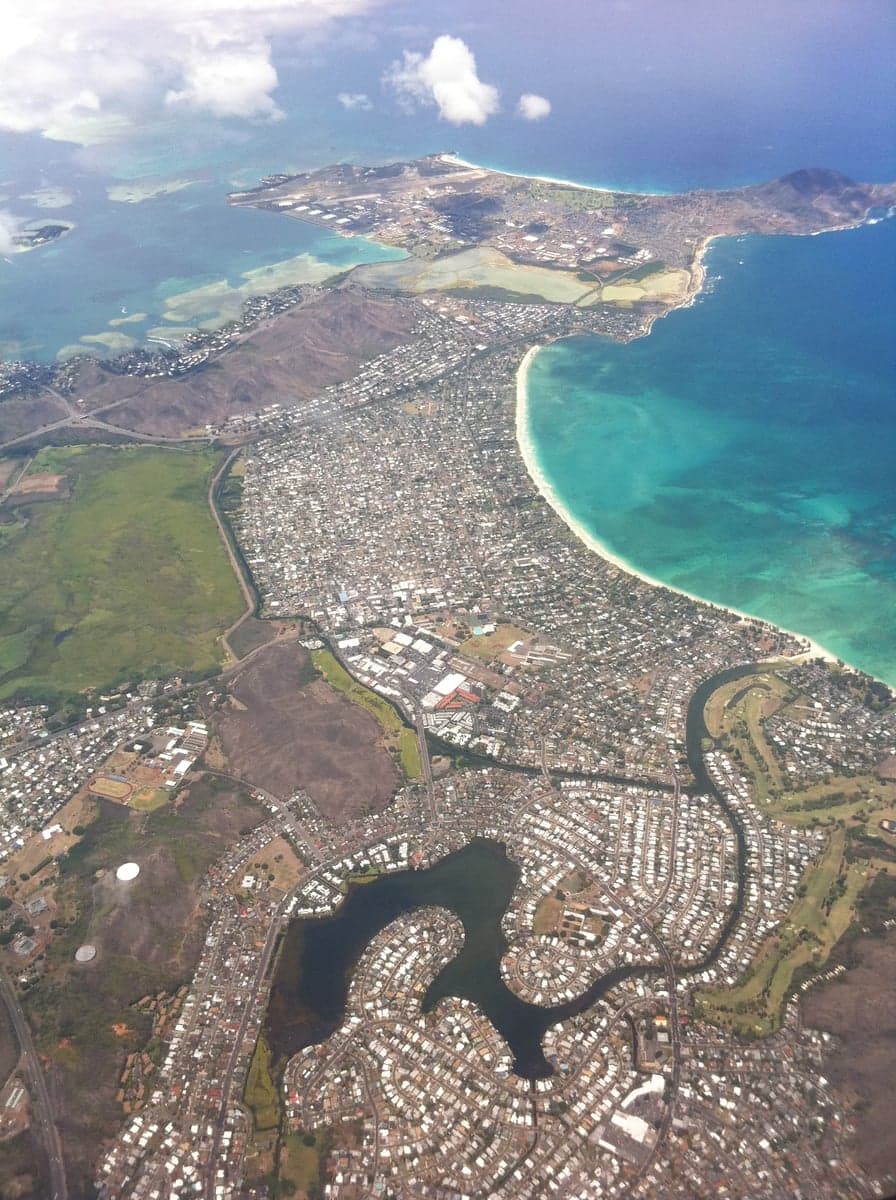
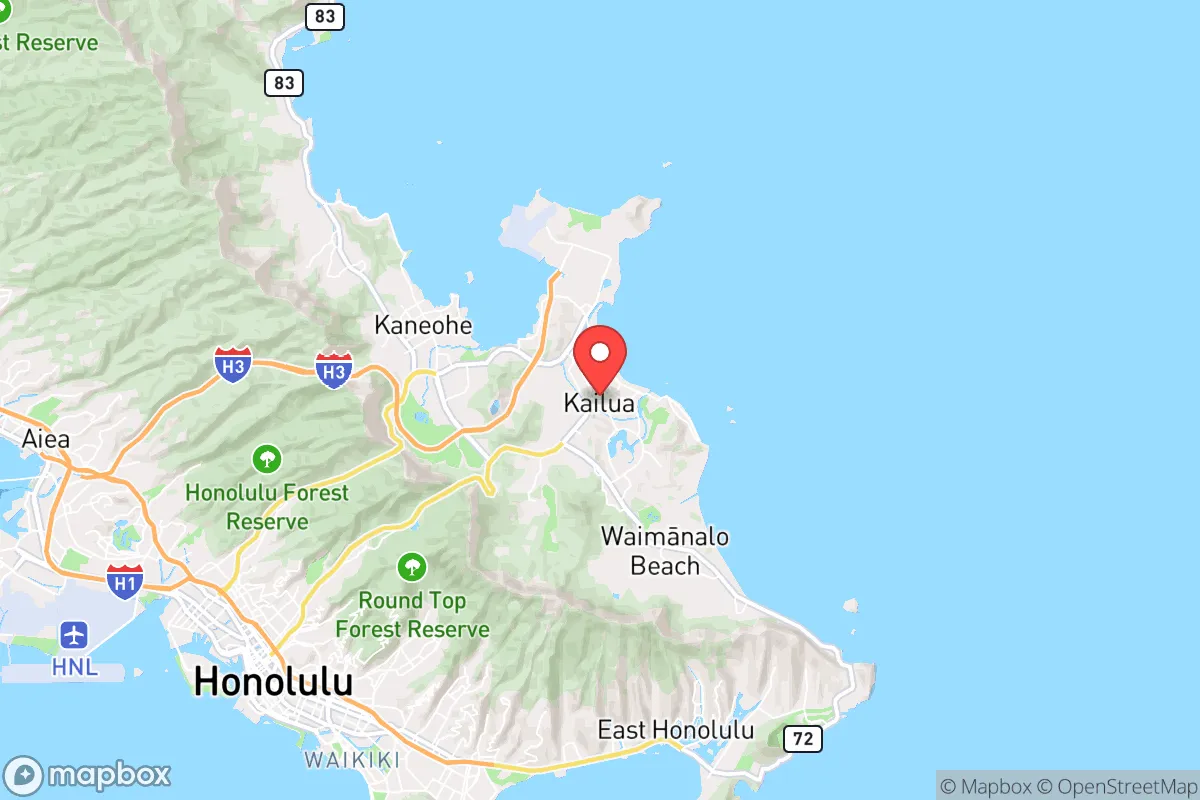
Kailua, on Oahu’s windward coast, presents a complex strategic picture for the conservative prepper. Its primary resilience advantage is geographic isolation from Honolulu’s urban core, but that same isolation creates a logistical bottleneck that could become a trap. The town sits roughly 12 miles northeast of downtown Honolulu, separated by the Koolau mountain range, which provides a natural barrier against the immediate chaos of a city collapse. However, Kailua’s desirability as a bedroom community for Honolulu professionals means it is not a remote bunker; it is a high-value suburb with a population density that could become a liability in a crisis. The key question for a relocator is whether the mountain barrier buys enough time and space to ride out a disaster, or whether the single road in and out becomes a death sentence.
Geographic position and natural defensive advantages
Kailua’s location on the windward side of Oahu offers genuine natural defenses. The Koolau range acts as a physical wall, with only two major road corridors—the Pali Highway (Route 61) and the Likelike Highway (Route 63)—connecting it to Honolulu. In a grid-down scenario, these routes could be controlled or blocked, effectively isolating Kailua from the city’s problems. The town also sits on a peninsula-like landform, with the Pacific Ocean to the east and north, and the mountains to the west. This creates a natural chokepoint: the only land-based escape routes are south toward Waimanalo or back over the mountains. For a prepper, this means defensibility is high if you control the access points, but escape options are limited. The trade winds provide consistent airflow, which reduces the risk of airborne contaminants settling in the area, a minor but real advantage in a biological or chemical event. The ocean also offers a potential maritime escape route, though small craft would be vulnerable in rough seas.
Risks, exposures, and proximity to fallout-relevant landmarks
The strategic weakness of Kailua is its proximity to high-value targets on Oahu. Joint Base Pearl Harbor-Hickam, the Pacific Command headquarters, and the Honolulu urban center are all within 15-20 miles as the crow flies. In a major conflict, these are primary targets for nuclear or conventional strikes. Kailua itself is not a target, but it sits within the fallout plume zone for a strike on Pearl Harbor, depending on wind direction. The prevailing trade winds blow from the northeast, meaning fallout from a strike on Honolulu or Pearl Harbor would likely be carried out to sea, not toward Kailua. However, a strike on the Kaneohe Marine Corps Base, which is only 5 miles north of Kailua, would be catastrophic. That base is a real and present danger in any major conflict scenario. Additionally, Kailua’s reliance on the H-3 freeway and the two mountain passes means that a single accident or deliberate blockage could trap the entire population. In a mass evacuation event, the roads would gridlock within minutes. The town’s water supply comes from the Honolulu Board of Water Supply, which draws from mountain aquifers, but the distribution system is vulnerable to earthquake damage or sabotage. The electrical grid is equally fragile, with overhead lines running through the mountain passes.
Practical resilience for a relocator: food, water, energy, and defensibility
For a relocator serious about self-sufficiency, Kailua offers a mixed bag. The climate allows for year-round food production, and the windward side gets ample rainfall, making rainwater catchment a viable option. Many homes already have catchment systems, but newcomers should verify this. The soil in Kailua is volcanic and fertile, but much of the land is developed. Small-scale gardening is possible, but large-scale agriculture would require acreage in the more rural parts of Waimanalo or up the coast. The ocean provides a protein source, but fishing requires skill and gear, and the nearshore waters are heavily fished. For energy, solar is the obvious play. Kailua gets good sun, though the trade winds and occasional cloud cover reduce efficiency compared to the leeward side. Battery storage is essential, as grid outages are common during storms. Defensibility is the real selling point. The town’s layout, with its single main road and mountain backdrop, makes it easier to secure than a sprawling suburban area. However, the population density—roughly 2,500 people per square mile—means that in a prolonged crisis, you would be competing with neighbors for resources. The ideal prepper property in Kailua would be on the northern or eastern edge of town, near the ocean or the mountain foothills, with good sightlines and limited access points. Avoid properties near the main commercial corridors or the beach parks, which would become gathering points in a disaster.
The overall strategic picture for Kailua is one of calculated risk. It offers genuine natural defenses and a climate that supports self-sufficiency, but it sits within the shadow of major military and urban targets. For a conservative prepper, the calculus comes down to this: Kailua is a good place to ride out a localized disaster like a hurricane or a short-term grid failure, but it is a poor choice for a long-term collapse scenario. The island’s dependence on imported food, fuel, and manufactured goods means that any disruption to the supply chain will hit hard. The population is too large to be supported by local agriculture alone, and the single road out is a vulnerability, not an asset. If you are looking for a place to hunker down for a few months while the world stabilizes, Kailua could work. If you are planning for a permanent reset, you would be better off on the Big Island or in a remote part of the mainland. The key is to be honest about the threat model: Kailua is a suburban refuge, not a wilderness redoubt. It buys you time and distance from Honolulu’s chaos, but it does not remove you from the risk profile of Oahu as a whole.

* Values derived from national, state, county, city and local statistics and may differ in a specific area. Last updated: 2026-04-24T00:03:46.000Z
Narrative content on this page is AI-generated and may contain mistakes. Verify any details that matter before acting on them.
ReloMaps may earn a commission from affiliate links at no extra cost to you.

