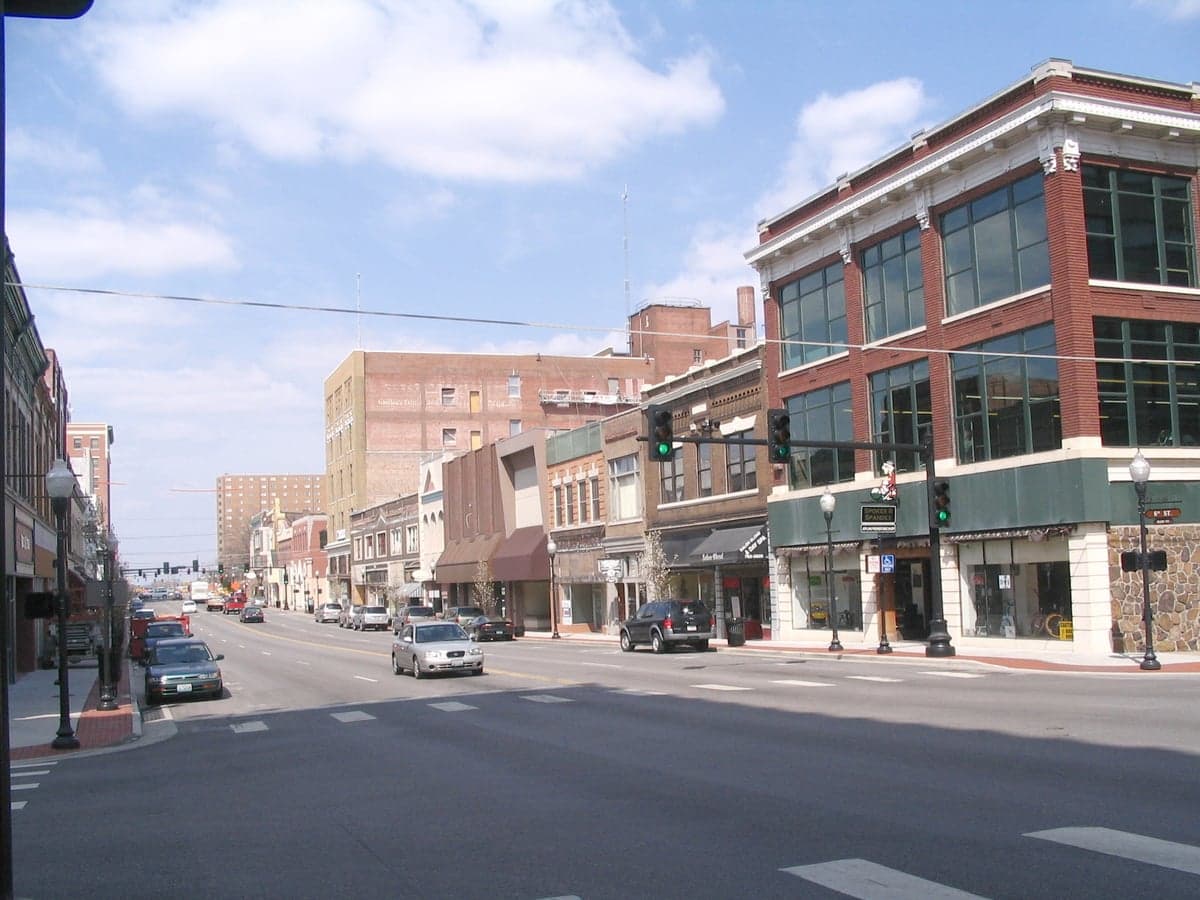
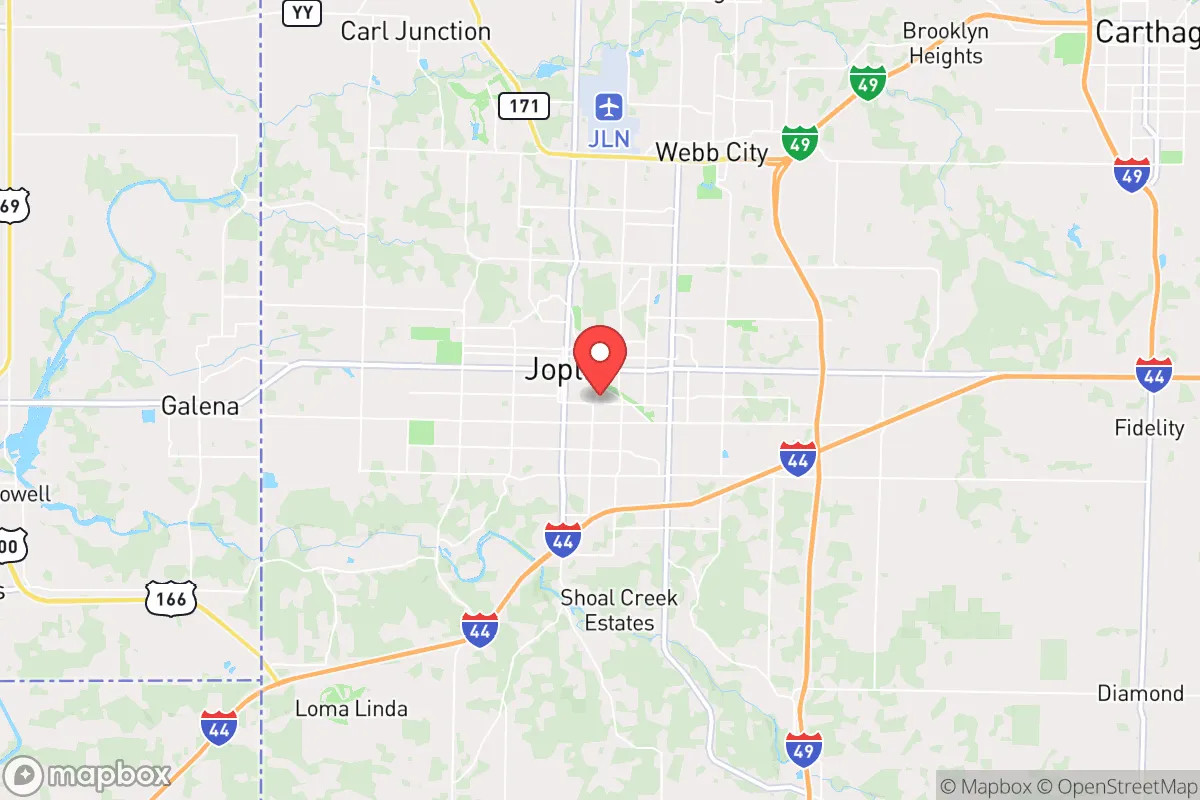
Photo: Wikipedia
Quality of Life in Joplin, MO
A high quality of life with strong walkability, manageable living costs, healthy neighborhood signals, and solid amenity access.
What does Quality of Life tell us?
Quality of Life blends cost of living, nearby amenities, socioeconomic signals, and neighborhood character. City-level scores represent the whole municipality; individual neighborhoods can differ.
What does this tell us?
Quality of Life blends cost of living, nearby amenities, socioeconomic signals, and neighborhood character. City-level scores represent the whole municipality; individual neighborhoods can differ.
Cost of Living
31% below national average
The Real Cost of Living in Joplin, MO for 2026
| Tier | Individual | Family (4) |
|---|---|---|
| Survival | $14k | $27k |
| Comfortable | $31k | $46k |
| Luxury | $92k+ | $143k+ |
| Elite (Top 5%) | $115k+ | $179k+ |
112%
The Area Signal
A metric tracking the socioeconomic signals of the area.
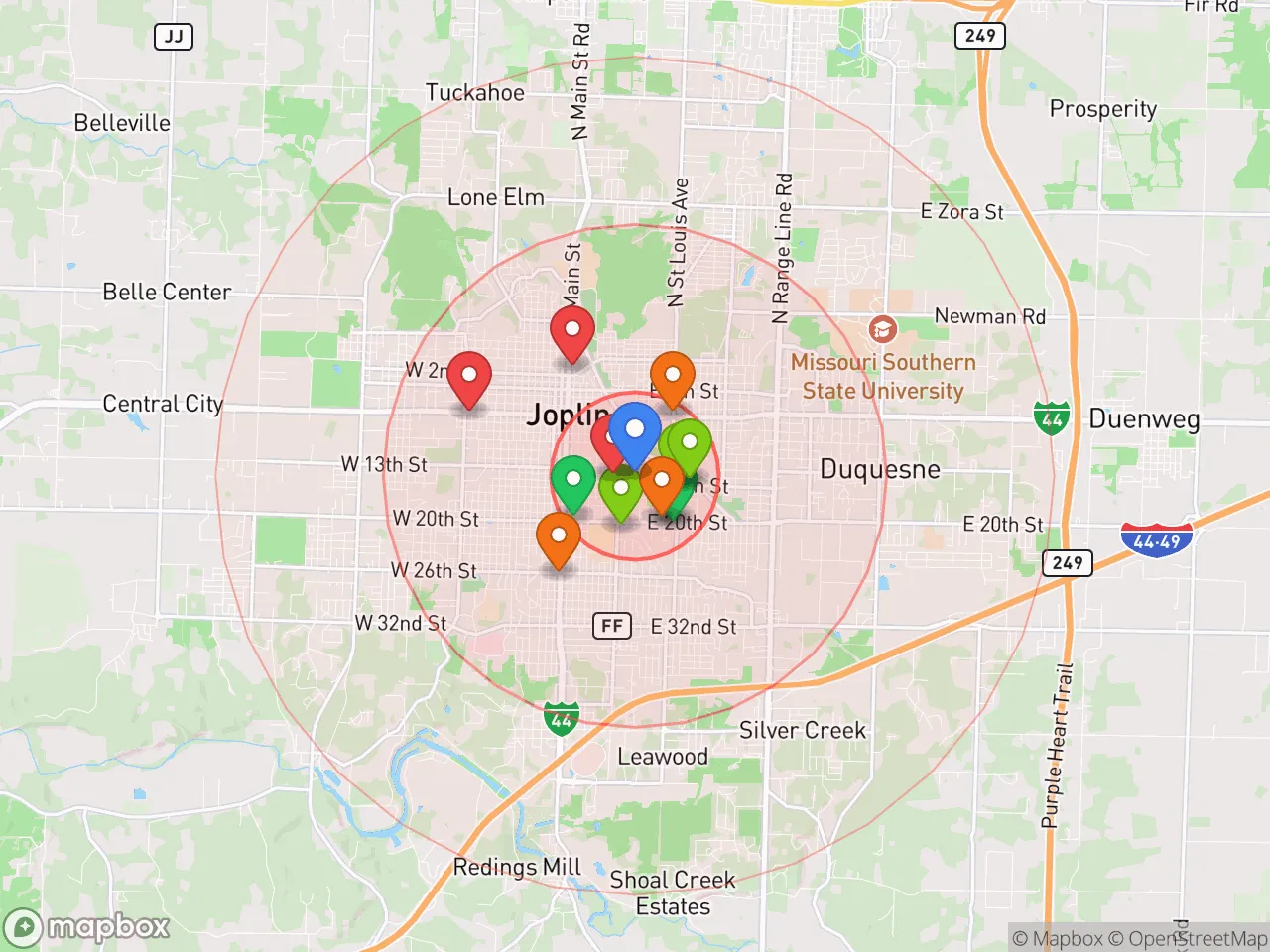
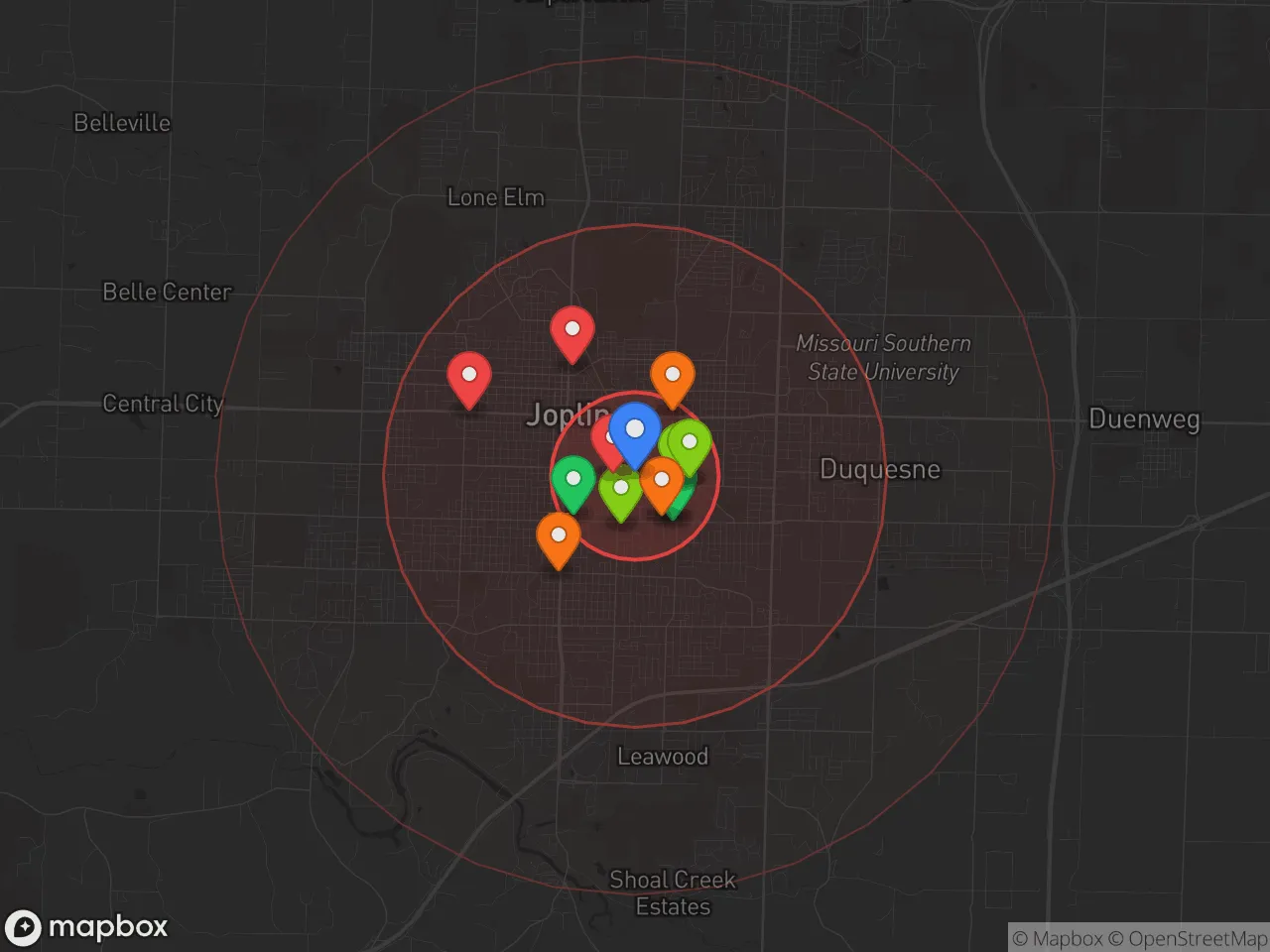
Hobbies
Explore the areaGroceries
4 within 10 miles
Gas
20 within 10 miles
Hospital
8 within 20 miles
Airport
MCI — Kansas City International
Post Office
USPS — Joplin, MO
Critical Amenities
Quality-of-Life Analysis
Joplin, Missouri, offers a notably lower cost of living than the national average, attracting a mix of working-class families, healthcare professionals, and retirees seeking affordability without sacrificing access to regional amenities. The city’s median household income hovers around $47,000, reflecting a community where economic stability is often tied to the healthcare, manufacturing, and logistics sectors. With a population of roughly 52,000, Joplin maintains a small-city feel while serving as a commercial hub for the four-state region of Missouri, Kansas, Oklahoma, and Arkansas.
Cost of living, housing prices, and how Joplin compares to nearby cities
Joplin’s overall cost of living index stands at 69, a full 31 points below the U.S. average, making it one of the most affordable metro areas in the Midwest. The median home value is $159,700, which is roughly half the national median and significantly lower than in nearby Springfield, MO (where the median is around $210,000) or Fayetteville, AR (approximately $290,000). Median rent is $889, well under the national average of $1,200, and the average commute time is just 18 minutes — far shorter than the national average of 27 minutes. This combination of low housing costs and a quick commute means residents can often own a home on a single modest income, a rarity in much of the U.S. Property taxes in Jasper County are also low, typically around 0.8% of assessed value, further reducing the monthly burden for homeowners.
What daily life is like for families: schools, amenities, and local rhythm
Daily life in Joplin centers on a handful of strong local institutions. The Joplin School District serves about 7,800 students and includes Joplin High School, which rebuilt after the 2011 tornado with state-of-the-art facilities. For private options, Thomas Jefferson Independent Day School offers a college-preparatory curriculum. Healthcare is anchored by Mercy Hospital Joplin, a 400-bed regional referral center that is the city’s largest employer, along with Freeman Health System. Retail and dining cluster along Range Line Road and Northpark Mall, while outdoor recreation includes the 112-acre Wildcat Glades Conservation & Audubon Center and the 7-mile Ruby Jack Trail for walking and biking. The city’s arts scene is modest but active, with the Joplin Little Theatre and the Spiva Center for the Arts hosting regular events. The overall pace is unhurried; most errands can be done within a 10-minute drive, and traffic congestion is rare even during peak hours.
Joplin is best suited for people who prioritize affordability and a slower pace over urban nightlife or high-end cultural offerings. Families with young children benefit from the short commutes and low housing costs, while retirees appreciate the low property taxes and access to quality healthcare. Remote workers and early-career professionals will find the cost savings compelling, though job opportunities outside healthcare and manufacturing are limited. Those seeking a vibrant downtown with walkable amenities or a diverse food scene may find Joplin underwhelming. For anyone whose primary goal is financial breathing room in a safe, community-oriented setting, Joplin delivers consistently.

Crime in Joplin, MO
Crime rates similar to the national median for U.S. locations.
Violent CrimeViolent Crime Analysis
Property CrimeProperty Crime Analysis
Crime Analysis
Joplin, Missouri, presents a crime rate significantly higher than both state and national averages, making safety a primary consideration for anyone evaluating a move to the city. With a violent crime rate of 558.6 incidents per 100,000 residents and a property crime rate of 3,612.5 per 100,000, the city's overall safety profile is a clear concern. These figures place Joplin well above the thresholds that typically indicate a safe community, and prospective residents should weigh this data heavily against the city's lower cost of living and other amenities.
Crime in context
To understand Joplin's safety landscape, it is essential to compare its crime rates to broader benchmarks. The national average for violent crime is roughly 380 per 100,000, meaning Joplin's rate is approximately 47% higher. Property crime in Joplin is even more stark, with a rate nearly double the national average of around 1,950 per 100,000. When compared to the state of Missouri, which itself has a higher-than-average crime profile, Joplin still underperforms. Missouri's statewide violent crime rate is approximately 540 per 100,000, placing Joplin slightly above that, while its property crime rate far exceeds the state average of roughly 2,800 per 100,000. These statistics indicate that Joplin is a high-crime outlier within an already challenging state context. The city's location in Jasper County, which is part of a larger metro area, may also expose it to crime patterns associated with regional population centers, where progressive prosecutorial policies can sometimes lead to reduced consequences for repeat offenders, directly impacting community safety.
What residents experience
For those living in Joplin, the high crime rate translates into tangible daily concerns. The property crime rate of 3,612.5 per 100,000 means residents face a 1 in 28 chance of having their property stolen or vandalized each year, a risk that demands proactive measures like security systems and neighborhood watch participation. Violent crime, while less frequent than property crime, is still a serious issue, with a 1 in 179 chance of being a victim. This includes aggravated assault, robbery, and, less commonly, homicide. The prevalence of these crimes is often linked to socioeconomic factors such as poverty and drug activity, but the local justice system's approach also plays a role. In areas where district attorneys and judges adopt lenient or progressive ideologies—prioritizing offender rehabilitation over public safety—repeat offenders are more likely to remain on the streets, increasing the risk for law-abiding residents. This dynamic can erode trust in the justice system and leave victims feeling underserved.
Neighborhood-level variation in Joplin is significant, though data is limited. Areas closer to the downtown core and along major commercial corridors like Range Line Road tend to report higher concentrations of both property and violent crime. In contrast, established residential neighborhoods on the city's south and east sides, such as those near the historic district or around Landreth Park, generally experience lower crime rates. However, no neighborhood is entirely immune, and the city's overall high crime rate means that even safer areas are affected by spillover from higher-crime zones. Prospective residents are strongly advised to consult local police department crime maps and speak with current residents in specific neighborhoods before committing to a move. The combination of high citywide crime rates and the potential for lenient local justice policies makes thorough, localized research essential for anyone considering Joplin.
* Values derived from national, state, county, city and local statistics and may differ in a specific area. Last updated: 2026-04-30T04:56:16.000Z
Narrative content on this page is AI-generated and may contain mistakes. Verify any details that matter before acting on them.
ReloMaps may earn a commission from affiliate links at no extra cost to you.

