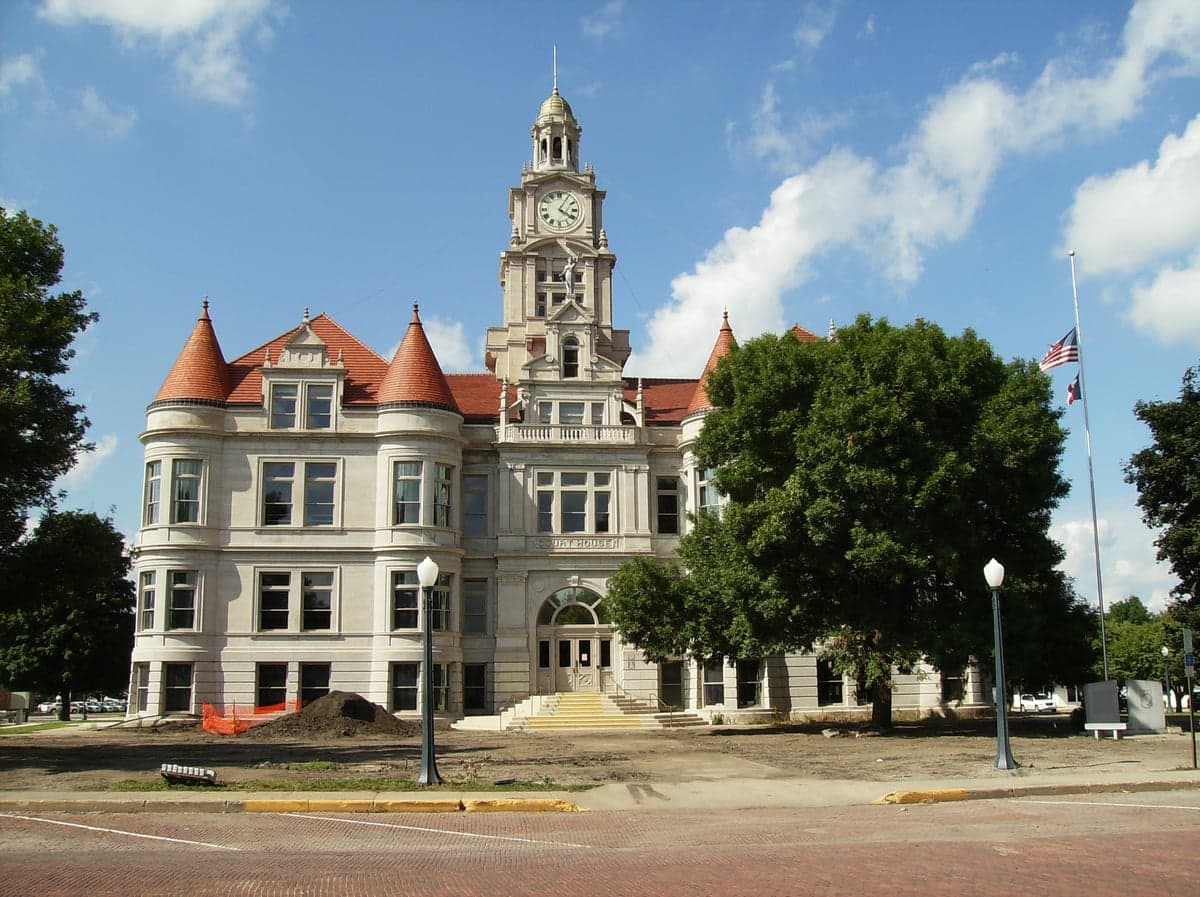
Photo: Wikipedia
Political ClimatePolitical Climate in Dallas County
Showing district-level results — no local-only data available.
Local Political AnalysisPolitical Analysis of Dallas County
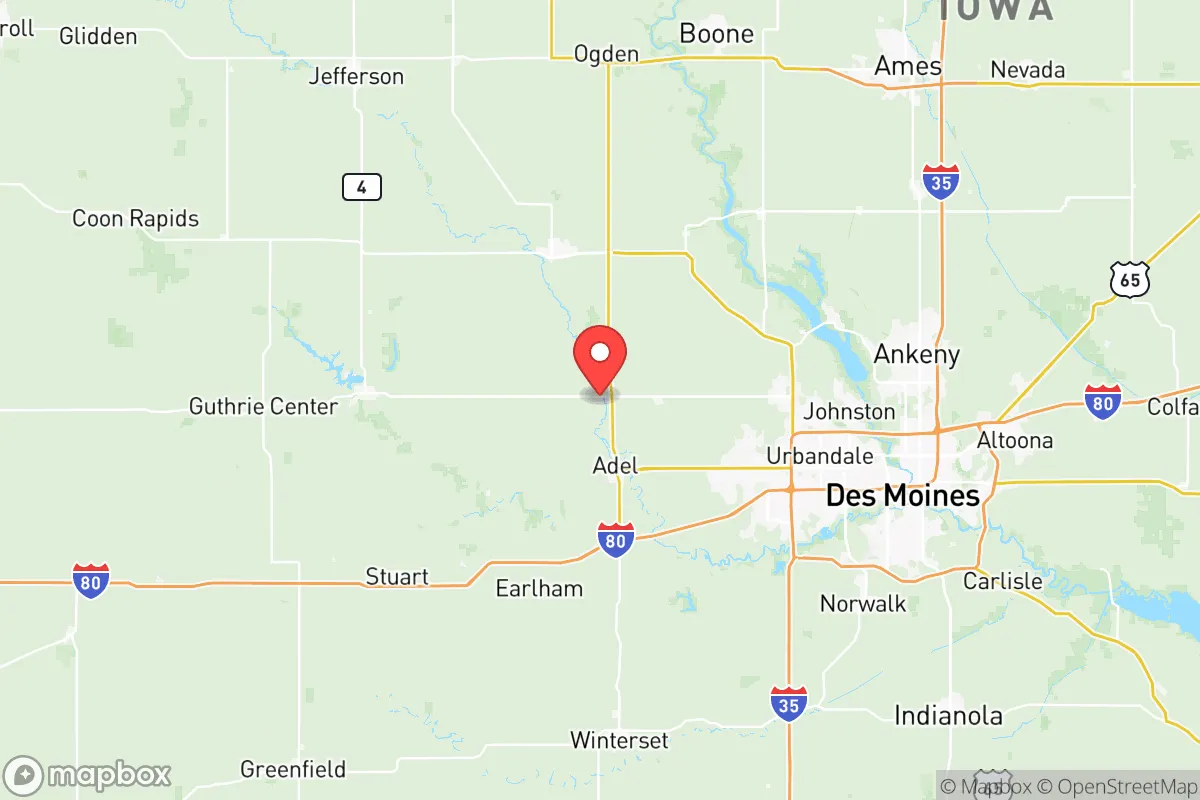
Dallas County, Iowa, has been a reliably conservative stronghold for decades, but like a lot of the Des Moines metro area, it's starting to feel the pressure of shifting demographics. The Cook PVI sits at R+2, which is a solid lean to the right, but it's a far cry from the deep red you'd find in, say, the rural counties to the north and west. The real story here is the suburban sprawl from Des Moines, which is slowly but surely bringing a more progressive, urban-minded electorate into places like Waukee and West Des Moines. If you've lived here long enough, you can feel the political ground shifting under your feet, and it's a trend that's only going to accelerate.
How it compares
When you compare Dallas County to the rest of Iowa, which has a Cook PVI of R+6, you're looking at a county that's about 4 points more moderate than the state average. That might not sound like a lot, but in practical terms, it means the county is a battleground within a battleground state. The western and southern parts of the county, like the towns of Adel, Van Meter, and Dexter, still vote like the old Iowa—solidly Republican, with a strong focus on local control and limited government. But the eastern edge, especially the newer subdivisions in Waukee and the southern parts of West Des Moines, are where you see the swing precincts. These are the areas where a candidate's stance on personal freedoms, like school choice or property rights, can make or break a race. The state as a whole is still reliably red, but Dallas County is where the fight for the soul of the Iowa GOP is happening, and it's getting more intense every cycle.
What this means for residents
For a long-time resident, the most concerning shift is the creeping influence of progressive ideology on local school boards and city councils. In places like Waukee, you're starting to see debates over curriculum and library books that would have been unthinkable a decade ago. It's a classic case of government overreach into personal freedoms—parents are being told what their kids can read, and property owners are facing new zoning restrictions that feel more like a Des Moines policy than a small-town one. The silver lining is that the county's conservative base is still strong, and it's organized. The rural towns and the older neighborhoods in Adel and Van Meter are holding the line, pushing back against any attempt to impose a one-size-fits-all, progressive agenda. If you value your right to live your life without a bureaucrat telling you how to raise your kids or what to do with your land, you're going to want to keep a close eye on the local elections in the eastern part of the county.
Looking ahead, the cultural and policy distinctions within Dallas County are only going to sharpen. The western towns will likely remain bastions of traditional Iowa values—low taxes, limited government, and a focus on agriculture and local business. The eastern suburbs, however, are at a crossroads. If the progressive wave continues, you could see policies that restrict property rights, increase regulations on small businesses, and push a more centralized, government-heavy approach to education. The next few election cycles will determine whether Dallas County stays true to its roots or becomes just another bedroom community for Des Moines' political machine. For now, it's a place where you can still find a good, old-fashioned conservative community, but you have to know where to look.

State Political ClimatePolitical Climate in Iowa
State Political AnalysisPolitical Environment in the State
Iowa has been a reliably Republican state in presidential elections for over a decade, carrying a Cook PVI of R+6, but its political landscape is more nuanced than a simple red-state label suggests. The state has shifted rightward since 2012, when Barack Obama narrowly won it, to Donald Trump winning it by over 8 points in 2020 and 13 points in 2024. This 10-20 year arc shows a consolidation of conservative power, driven by rural and exurban voters, even as the Des Moines metro and college towns like Iowa City push back with increasingly progressive politics.
Urban vs. rural divide
The political map of Iowa is a classic story of urban islands in a sea of red. The Des Moines metro, including Polk County and suburbs like West Des Moines and Ankeny, has trended blue over the past decade, with Polk County voting for Joe Biden in 2020 by about 8 points. Iowa City, home to the University of Iowa, is the state’s most liberal stronghold, consistently voting Democratic by 30+ points. On the flip side, rural counties like Sioux County in the northwest and Decatur County in the south are deeply Republican, often voting 70-80% for GOP candidates. The Cedar Rapids and Davenport metros are more competitive, but the surrounding farm counties overwhelmingly lean red. The divide isn’t just about population density—it’s cultural. Rural Iowans see the state government as a bulwark against coastal values, while urbanites view Des Moines and Iowa City as progressive oases.
Policy environment
Iowa’s policy environment has shifted decisively conservative under Governor Kim Reynolds, who signed a flat income tax rate of 3.8% starting in 2026, down from a progressive top rate of 8.53% just a few years ago. Property taxes are relatively low, with a statewide average levy of about 1.5% of assessed value, though local school bonds can push that higher. The state has no inheritance tax and a low corporate tax rate of 5.5%. Education policy is a flashpoint: the 2023 school choice law created Education Savings Accounts (ESAs) worth about $7,600 per student, allowing families to use public funds for private or homeschool expenses. This was a major win for parental rights, though it remains controversial in rural districts where public schools are the only option. On healthcare, Iowa expanded Medicaid under the Affordable Care Act but has since imposed work requirements for able-bodied adults, a move that reduced enrollment by roughly 50,000. Election laws tightened in 2021 with a law requiring absentee ballot requests 15 days before an election and limiting drop boxes to one per county—a response to 2020 concerns. The regulatory posture is business-friendly, with no state-level minimum wage above the federal $7.25 and right-to-work laws intact.
Trajectory & freedom
Iowa has become measurably freer over the past five years, particularly on gun rights and parental autonomy. The 2021 permitless carry law (HF 756) allows any law-abiding adult to carry a concealed firearm without a permit, a clear expansion of Second Amendment rights. The 2023 school choice law (HF 68) gave parents more control over their children’s education, a direct check on government-run school monopolies. On medical freedom, Iowa passed a law in 2023 banning gender transition procedures for minors, a move that aligns with parental rights advocates who argue the state should not facilitate irreversible medical decisions. Property rights were strengthened with a 2022 law limiting eminent domain for carbon capture pipelines, a populist pushback against corporate overreach. However, the state’s abortion law—a 2023 six-week ban (HF 732)—represents a significant restriction on personal liberty, though it reflects the will of the conservative legislature. The trajectory is toward more individual freedom in most domains, but the state government is not shy about using its power to enforce social conservatism, which some residents see as overreach.
Civil unrest & political movements
Political activism in Iowa is organized but rarely violent. The most visible flashpoints in recent years have been around school board meetings, where parents clashed over COVID-19 mask mandates and critical race theory curricula. In 2021, protests in Des Moines and Ankeny drew hundreds on both sides, with conservative groups like “Iowans for Parental Rights” pushing back against school closures. Immigration politics are less heated than in border states, but Governor Reynolds deployed the Iowa National Guard to Texas in 2021 and 2023 to assist with border security, a symbolic move that resonated with conservative voters. There is no sanctuary city policy in Iowa; in fact, a 2018 law (SF 481) requires local law enforcement to cooperate with federal immigration authorities. Election integrity remains a live issue: the 2020 election saw Trump’s narrow loss in Iowa (by 8 points) sparking no major fraud allegations, but the 2021 voting law was a direct response to concerns about mail-in ballot security. Left-wing activism is concentrated in Iowa City, where Black Lives Matter protests in 2020 were large but peaceful, and in Des Moines, where progressive groups like “Iowa Citizens for Community Improvement” organize around environmental and labor issues. Overall, the state is politically engaged but not volatile—most activism happens at the ballot box and in school board meetings.
Projection
Over the next 5-10 years, Iowa is likely to remain solidly Republican, but the urban-rural divide will deepen. In-migration is modest—about 10,000 net new residents per year—and they tend to be older, whiter, and more conservative, settling in exurbs like Waukee and Johnston near Des Moines. The Des Moines metro will continue to trend blue as younger professionals and remote workers move in, but the state legislature will likely remain firmly in GOP hands due to rural overrepresentation. The flat tax will make Iowa more attractive to retirees and small business owners, while the school choice law could accelerate the decline of rural public schools, further concentrating conservative voters in private and homeschool networks. The biggest wildcard is the state’s aging population—Iowa has the fifth-oldest median age in the country—which could slow the pace of cultural change. Expect more legislation on parental rights, gun rights, and tax cuts, but also potential battles over property taxes as local governments struggle with declining school enrollment. A new resident moving in now should expect a state that is politically stable, increasingly conservative on fiscal and cultural issues, but with a growing progressive urban core that will keep the culture wars alive.
For a conservative-leaning individual or family, Iowa offers a policy environment that respects personal freedom in most areas—low taxes, school choice, gun rights, and limited government overreach in education and healthcare. The trade-off is a state that is culturally homogeneous and aging, with limited diversity in job opportunities outside of agriculture, insurance, and manufacturing. If you value a place where your vote counts in a reliably red state, where you can send your kids to a school of your choice, and where the government mostly leaves you alone, Iowa is a solid bet. Just be prepared for cold winters and a political landscape that, while conservative, is not immune to the national culture wars—especially if you live near Des Moines or Iowa City.
* Values derived from national, state, county, city and local statistics and may differ in a specific area. Last updated: 2026-05-09T23:49:42.000Z
Narrative content on this page is AI-generated and may contain mistakes. Verify any details that matter before acting on them.
ReloMaps may earn a commission from affiliate links at no extra cost to you.

