
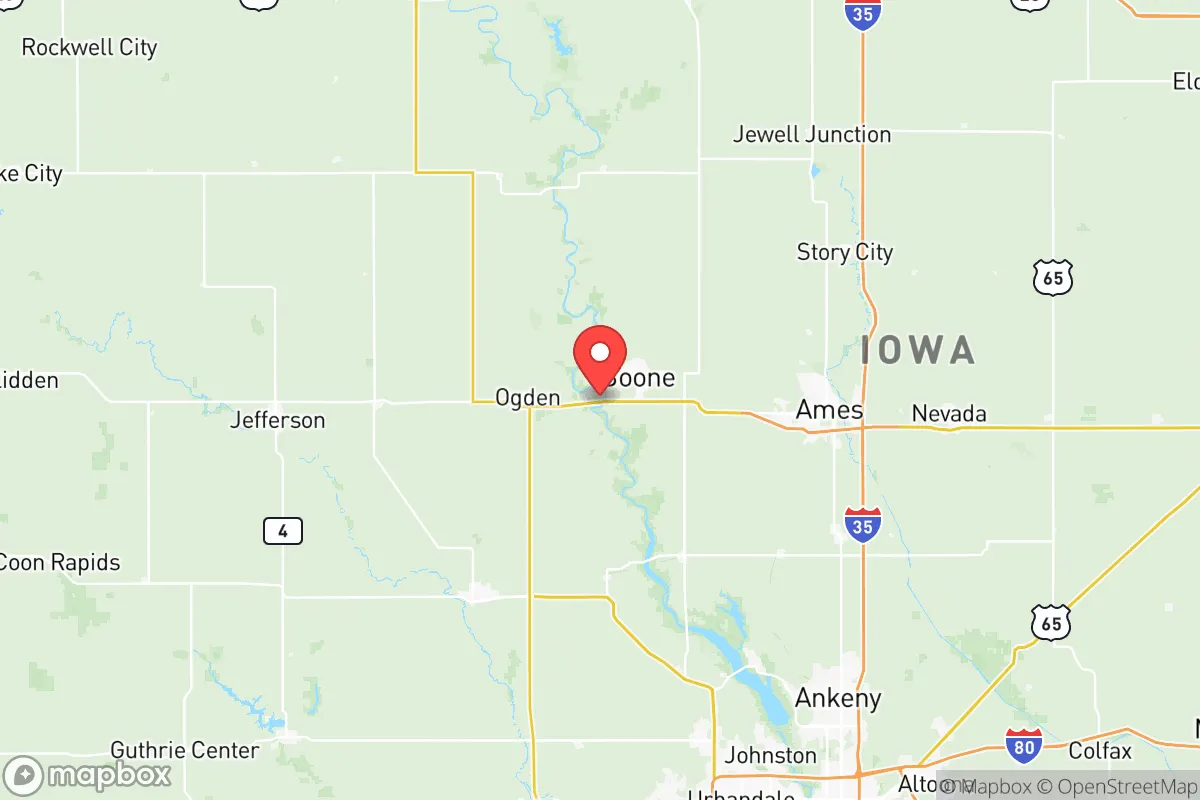
Photo: Wikipedia
Quality of Life in Boone County
A livable area that tracks near national norms for affordability, walkability, and neighborhood health.
What does Quality of Life tell us?
Quality of Life measures an area by evaluating factors like cost of living, nearby amenities, country club access, airport proximity, socioeconomic signals and neighborhood character. For large states, this is a general average — quality of life can vary dramatically between metro areas, suburbs, and rural communities within the same state.
What does this tell us?
Quality of Life measures an area by evaluating factors like cost of living, nearby amenities, country club access, airport proximity, socioeconomic signals and neighborhood character. For large states, this is a general average — quality of life can vary dramatically between metro areas, suburbs, and rural communities within the same state.
Cost of Living
30% below national average
146%
The Real Cost of Living in Boone County for 2026
| Tier | Individual | Family (4) |
|---|---|---|
| Survival | $13k | $25k |
| Comfortable | $37k | $55k |
| Luxury | $120k+ | $186k+ |
| Elite (Top 5%) | $141k+ | $219k+ |
Quality-of-Life Analysis
Boone County offers a spectrum of quality-of-life options anchored by its county seat Boone, with smaller communities like Madrid, Ogden, and rural hamlets each providing a distinct balance of convenience, cost, and quiet. The county’s overall cost of living sits at just 70 on the national index (100 = US average), making it one of the more affordable areas in Iowa, while the median home value of $191,200 and median rent of $826 pull in a mix of retirees, remote workers, and families seeking lower housing costs than Des Moines’ suburbs. The average commute of about 22 minutes reflects the county’s dual role as a bedroom community for the Des Moines metro and a self-contained rural hub.
Largest town(s) & population centers
Boone (pop. ~12,500) is the county’s largest town and the primary population center. Daily life here revolves around a walkable downtown with local restaurants, museums like the Boone County Historical Center, and major employers such as Boone County Hospital, Fareway Stores, and the Boone Community School District. The town sits along the Des Moines River and is a gateway to nearby Ledges State Park, drawing outdoor enthusiasts. Madrid (pop. ~2,500) and Ogden (pop. ~2,000) form the next tier; Madrid offers a small historic downtown and strong community schools, while Ogden is a quieter, family-oriented town with a growing residential base. All three towns have grocery, pharmacy, and basic retail, but most specialized shopping and entertainment requires a 30–40 minute drive to Ames or west Des Moines.
Smaller towns & rural pockets
Beyond the population centers, Boone County includes several unincorporated communities and tiny towns that appeal to those seeking deeper seclusion. Luther (pop. ~100) sits along U.S. Highway 30 and is known for its agricultural roots and proximity to the High Trestle Trail, a popular biking and hiking route. Pilot Mound (pop. ~170) offers a tight-knit rural atmosphere with a post office and basic services, while Beaver and Berkley are unincorporated hamlets where land values are low and homesteading is common. The county’s rural pockets also include extensive farmsteads and acreages, especially in the northern and western townships, where residents often rely on wells and septic systems. These areas attract horse owners, small-scale farmers, and people willing to trade amenities for space and quiet.
Cost & lifestyle range
The cost of living varies noticeably across Boone County. The most affordable housing is found in the unincorporated rural areas and smaller towns like Pilot Mound and Luther, where older homes may sell for well under $100,000 and land is cheap — though inventory is sparse. Boone itself remains low-cost compared to the national average, with median home values about 30% below the U.S. figure, but prices have risen modestly since 2020 as Des Moines-area buyers look for bargains. Madrid and Ogden sit in the middle, with newer subdivisions pushing home values closer to $250,000 in some developments. Rentals countywide average $826 per month, though availability is tightest in Boone and Madrid. Amenities thin out rapidly beyond the three main towns: residents in Luther or Beaver may drive 15–20 minutes for a grocery store and 30 minutes for a hospital. On the opposite end, Boone provides the widest range of services, including a Walmart Supercenter, a regional medical clinic, and multiple childcare centers, making it the most convenient base for families who want lower costs without total isolation.
Boone County’s mix of affordable towns, tiny farm communities, and open countryside suits a broad audience. Commuters who work in Ames or Des Moines find the 20–30 minute drive manageable, especially with gas prices factored into a low COL. Retirees on fixed incomes can stretch their savings further in Boone or Ogden, while remote workers and hobby farmers gravitate toward the cheap land around Luther and Pilot Mound. The county lacks nightlife and high-end dining, but its blend of walkable small-town cores and deep rural quiet — all within reach of a major metro — makes it a realistic option for those who prioritize affordability and space over urban polish.

Crime in Boone County
Generally safer than 69% of comparable U.S. locations.
Violent CrimeViolent Crime Analysis
Property CrimeProperty Crime Analysis
Crime Analysis
Boone County, Iowa, presents a mixed safety picture. With a violent crime rate of 230.6 per 100,000 residents and a property crime rate of 1,167 per 100,000, the county sits below national averages but near Iowa state benchmarks. The city of Boone, the county seat and largest municipality, records a disproportionate share of incidents, while smaller towns such as Madrid, Ogden, and Luther report markedly lower frequencies. The county's proximity to Des Moines and its liberal prosecutorial environment raises additional concerns for residents and prospective movers.
Crime in context
Boone County's violent crime rate of 230.6 per 100,000 is roughly 40% below the U.S. average of 380 per 100,000, but slightly above Iowa's overall rate of approximately 200 per 100,000. Property crime at 1,167 per 100,000 is well under both the national figure of 2,500 per 100,000 and the Iowa average of about 1,500 per 100,000. However, these county
* Values derived from national, state, county, city and local statistics and may differ in a specific area. Last updated: 2026-05-20T19:43:41.000Z
Narrative content on this page is AI-generated and may contain mistakes. Verify any details that matter before acting on them.
ReloMaps may earn a commission from affiliate links at no extra cost to you.

