
Photo: Wikipedia
Personal Sovereignty in Marion County
Viable for self-reliance. Generally workable, though some barriers may limit total independence.
What does Personal Sovereignty tell us?
Personal Sovereignty measures your capacity for self-reliance and independence with minimal government friction. Higher scores mean fewer barriers between you and the way you want to live... but it assumes you have the space you need and good neighbors.
What does this tell us?
Personal Sovereignty measures your capacity for self-reliance and independence with minimal government friction. Higher scores mean fewer barriers between you and the way you want to live... but it assumes you have the space you need and good neighbors.
State Policy
Energy independence: Importer (35% of energy produced in-state)
Personal Liberty
Homesteading

Personal Liberty Analysis
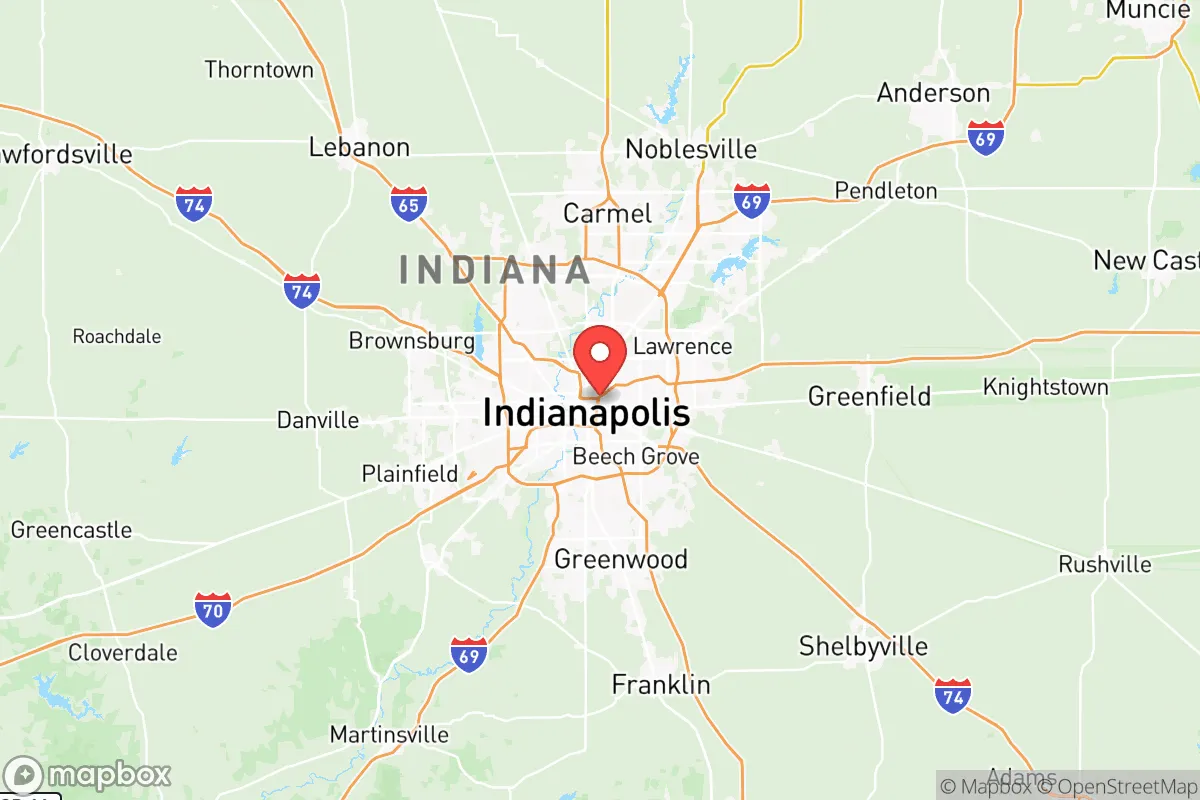
Marion County, Indiana, sits at the intersection of Midwestern pragmatism and an increasingly assertive state government that has, in recent years, worked to carve out room for personal sovereignty against federal overreach. For conservative individuals and families weighing a move to Indianapolis and its surrounding towns, the county offers a mixed environment: the state's constitutional carry law and strong property rights provide genuine autonomy, while local noise ordinances, zoning restrictions inside the city limits, and a consolidated city-county government can create friction for those who prize self-reliance. The balance tips in favor of the freeholder and the prepared, but the choice of exactly where you plant your flag within the county makes the difference between living under a light regulatory hand and fighting city hall every month.
Tax burden and regulatory posture: what households actually pay and tolerate
Indiana's state-level tax philosophy leans fiscally conservative. The state income tax rate is a flat 3.15% in 2026, and Marion County's combined sales tax sits at 7% (state 7%, no local add-on). Property taxes are assessed at 1% of gross assessed value for homesteads, thanks to the state's constitutional tax caps, but effective rates inside Marion County can run slightly higher than surrounding counties like Hamilton or Hancock due to local levies for schools, libraries, and public safety. The Unigov structure, which merged Indianapolis with Marion County in 1970, means most unincorporated areas are effectively city territory, so you won't escape city regulation by moving a mile outside the urban core. However, outlying neighborhoods such as Warren Park (a tiny enclave in the northeast) and Homecroft (south side) remain fully incorporated towns with their own councils and zoning boards — places where a prepper-friendly building variance or a backyard chicken coop is approved with a handshake rather than a three-month review. On the regulatory front, Indiana is a right-to-work state and generally hostile to overbearing environmental mandates, but Marion County's Stormwater Management District and air quality rules (under the state's SIP) can complicate certain off-grid water catchment or waste systems. If you want minimal bureaucracy, look to the county's fringe towns like Clermont (northwest) or Lawrence (northeast), where small-town boards still treat property rights with respect.
Self-defense and gun law specifics: constitutional carry and local pitfalls
Indiana is a constitutional carry state as of July 2022. Any law-abiding adult 18 or older can carry a handgun openly or concealed without a permit. That freedom is uniform across Marion County — the Indianapolis Metropolitan Police Department does not and cannot enforce its own gun restrictions beyond state law. However, the practical reality of self-defense in Marion County is not the same in every neighborhood. In high-crime areas like the near-eastside (Near Eastside and parts of Brightwood), firearm possession is legal but the social friction with neighbors or property managers may be higher. Meanwhile, Beech Grove and Speedway — independent cities within the county with their own police forces — tend to have more gun-friendly cultures, with fewer "no guns" signs posted on businesses. The state preempts local firearm ordinances, so you won't find an Indianapolis-specific assault weapons ban or magazine limit. Stand your ground is enshrined in Indiana common law and codified in statute, giving broad latitude to use force in self-defense. For prepper-minded families, the key strategic consideration is storage and transport: Indiana law does not require any specific locking device, but local prosecutors in Marion County can be more aggressive than rural counterparts on negligent discharge or unsafe storage cases, especially if a child accesses an unsecured weapon. Overall, gun law sovereignty in Marion County is stronger than any blue-state alternative but demands awareness of the urban context.
Self-reliance and homesteading viability: lot sizes, zoning, and off-grid feasibility
True off-grid living inside Marion County is a stretch. The county's zoning code divides land into residential, agricultural, and commercial districts, and the building code requires connection to municipal water and sewer in most platted subdivisions. If your dream is a self-sufficient homestead with solar panels, rainwater catchment, and a septic system, you need to look at the agricultural or "A" zones in the county's southern and eastern pockets. The towns of Southport and the unincorporated area around Wanamaker (southeast) still have parcels zoned for agriculture with minimum lot sizes of one to five acres, where you can legally raise chickens, goats, and even a steer under the "right to farm" protections of Indiana state law. But inside Indianapolis proper, city ordinances limit livestock to certain species and numbers, and off-grid power is complicated by the net-metering policies of Indianapolis Power & Light (now AES Indiana). Solar panels are allowed, but battery storage systems must meet fire code, and any water well requires a permit from the Marion County Health Department. The most homestead-friendly addresses are on the rural periphery: around the northeastern edge of Lawrence, the far southwest near Valley Mills, and the unincorporated pockets east of Cumberland. These areas still have soil that supports a garden, neighbors who share canning recipes, and code enforcement that looks the other way at a small greenhouse. For preppers, the trade-off is clear: you gain space and autonomy but lose the convenience of city emergency services. Plan accordingly.
Personal liberties: parental rights, medical autonomy, speech, and property
Indiana has become a battleground for personal liberties in recent years, with mixed results for conservatives. Parental rights are strong on paper: state law grants parents the right to direct their child's education, including the removal from any curriculum or activity that violates their religious or moral beliefs. The state's school choice program, the Choice Scholarship voucher system, gives families the taxpayer-funded means to send their child to a private or religious school — a significant autonomy win. However, Marion County's public school districts, especially Indianapolis Public Schools (IPS), have been tied up in governance disputes, with some parents feeling their voice is ignored. Medical autonomy faces headwinds: Indiana bans nearly all abortions (with narrow exceptions), aligning with many conservative families, but the state also mandates vaccine disclosure for schoolchildren and enforces strict oversight of any home-based medical practice. The COVID-era emergency orders in Marion County were among the most restrictive in the state, with mask mandates and lockdowns that rankled personal sovereignty advocates. Outlying suburbs like Carmel (technically Hamilton County but adjacent) and Fishers had lighter local enforcement, but inside Marion County, you are under the purview of the Indianapolis City-County Council. Free speech is solidly protected — Indiana has no hate-speech laws that chill expression, and the public forums in city parks and libraries are open. Property rights are reinforced by the state's "right to farm" statute and a recent law limiting home-owner association (HOA) overreach. Even so, HOAs in newer developments near Avon (just west of the county line) and inside Plainfield can still enforce restrictive covenants that ban clotheslines, metal roofs, or parked work trucks — so choose your subdivision wisely.
Overall, Marion County offers a personal sovereignty package that is distinctly better than the deep-blue metros of the coasts but falls short of the true libertarian enclaves found in rural Indiana counties like Brown or Martin. The state preempts local gun laws, keeps taxes moderate, and protects parental rights and property rights at a level that will satisfy most conservative families. The friction comes from the Unigov apparatus and the urban density of Indianapolis itself, which can introduce noise restrictions, licensing delays, and a culture that sometimes equates self-reliance with anti-government grumpiness. If you can pick a town within Marion County that still operates like a small town — Beech Grove, Speedway, the southeastern hamlets — you can enjoy the benefits of city proximity without surrendering your freedom to plan, build, and defend your home. For the prepper who wants to be within 30 minutes of a major medical hub and airport, while still maintaining a vegetable garden and a gun safe full of options, Marion County is a viable, sober choice.

* Values derived from national, state, county, city and local statistics and may differ in a specific area. Last updated: 2026-06-01T13:06:35.000Z
Narrative content on this page is AI-generated and may contain mistakes. Verify any details that matter before acting on them.
ReloMaps may earn a commission from affiliate links at no extra cost to you.

