Personal Sovereignty in Mclean County
Viable for self-reliance. Generally workable, though some barriers may limit total independence.
What does Personal Sovereignty tell us?
Personal Sovereignty measures your capacity for self-reliance and independence with minimal government friction. Higher scores mean fewer barriers between you and the way you want to live... but it assumes you have the space you need and good neighbors.
What does this tell us?
Personal Sovereignty measures your capacity for self-reliance and independence with minimal government friction. Higher scores mean fewer barriers between you and the way you want to live... but it assumes you have the space you need and good neighbors.
State Policy
Energy independence: Importer (45% of energy produced in-state)
Personal Liberty
Homesteading

Personal Liberty Analysis
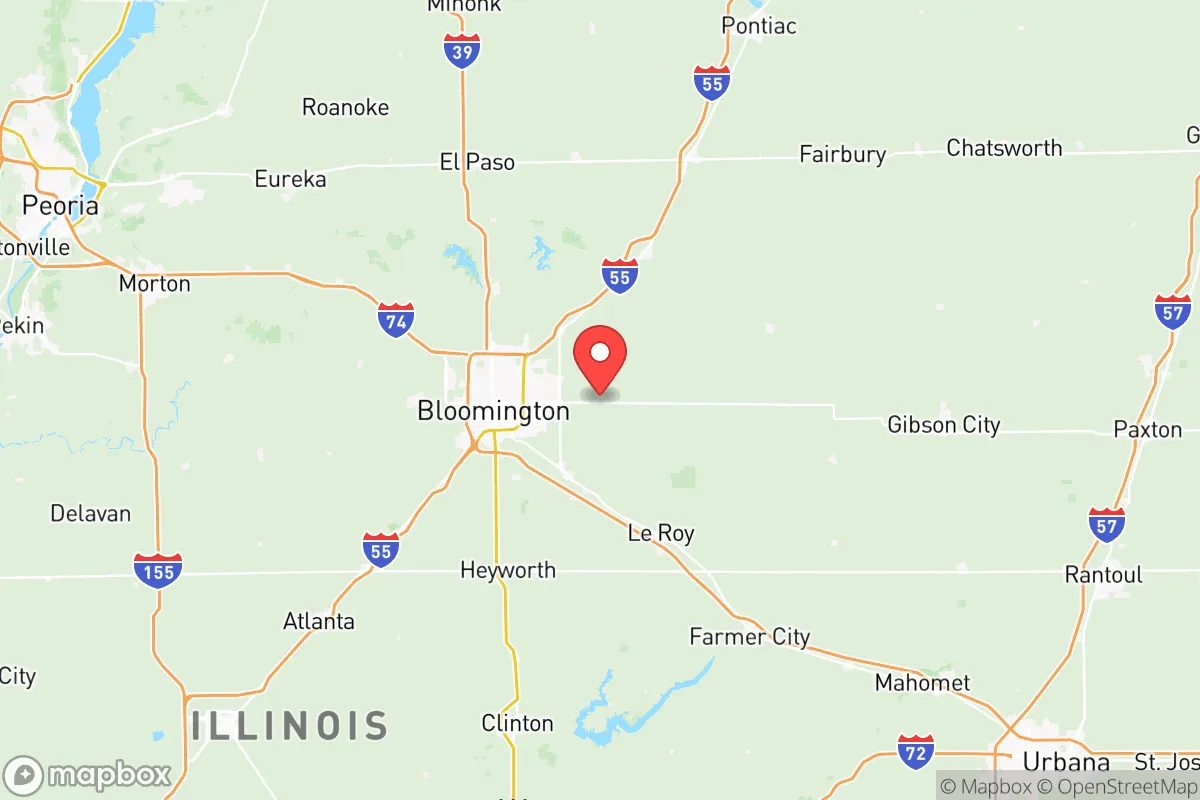
McLean County, Illinois, offers a nuanced personal sovereignty environment that balances the practical freedoms of a largely rural, agricultural region with the regulatory realities of a state with a strong tradition of governance. For individuals and families prioritizing autonomy, the county presents a landscape where self-reliance is feasible but requires navigating Illinois’s state-level tax burden and legal frameworks. The county’s mix of the small city of Bloomington-Normal, the university town of Normal, and dozens of unincorporated townships like Towanda, LeRoy, and Colfax creates distinct zones where personal freedom feels markedly different, from the more regulated city limits to the hands-off posture of rural townships.
Tax burden and regulatory posture in McLean County
Illinois is known for a high overall tax burden, and McLean County is not exempt. The state’s flat income tax rate of 4.95% and a combined state-local sales tax rate that can exceed 9% in Bloomington-Normal are fixed costs for residents. However, the county’s property tax landscape is more variable. The average effective property tax rate in McLean County is around 2.1% of assessed home value, which is above the national average but typical for Central Illinois. The key regulatory advantage lies outside the city limits. Townships like Hudson and Downs have minimal zoning ordinances compared to Bloomington, allowing for more flexible land use, accessory structures, and home-based businesses without heavy permitting. The county’s regulatory posture is light-touch on agricultural operations—livestock, grain storage, and farm equipment are generally unregulated—but stricter on residential subdivisions and commercial development near the Interstate 55/74 corridors. For a freedom-minded resident, the choice is clear: living in an unincorporated area like Anchor or Cropsey reduces bureaucratic friction significantly compared to living within Bloomington’s city code enforcement.
Self-defense and gun law specifics in McLean County
Illinois is a shall-issue state for concealed carry, and McLean County’s sheriff’s office processes permits efficiently, with typical wait times of 90-120 days. The county is home to several gun ranges, including the McLean County Rifle and Pistol Club near Carlock, and gun ownership is culturally normalized, especially in rural townships. However, state law imposes significant restrictions: a Firearm Owners Identification (FOID) card is required to possess any firearm or ammunition, and the state’s 2023 ban on certain semi-automatic rifles and high-capacity magazines applies fully in McLean County. Local enforcement varies. In Bloomington and Normal, police are more likely to enforce the state’s “red flag” law and safe storage requirements, while in towns like Lexington and El Paso, the sheriff’s office takes a more hands-off approach, focusing on violent crime rather than regulatory compliance. For self-defense, the county’s rural character means that law enforcement response times in townships can exceed 20 minutes, making personal firearm ownership a practical necessity for many residents. The county’s gun culture is robust but operates within a state framework that many conservatives find restrictive.
Self-reliance and homesteading viability in McLean County
McLean County’s agricultural heritage makes it one of the more viable areas in Illinois for homesteading and self-reliance. Lot sizes in unincorporated areas can be as small as one acre for residential use, but many townships allow for 5- to 10-acre parcels without subdivision review. Towanda and Colfax are particularly homestead-friendly, with loose zoning that permits chickens, goats, and even small livestock on standard residential lots. Off-grid feasibility is mixed. The county has no county-wide ban on rainwater collection, and private wells are common in rural areas. Solar panels are permitted without special permitting in most townships, though Bloomington-Normal requires building permits for roof-mounted systems. The biggest barrier to full off-grid living is Illinois’s interconnection requirements for grid-tied solar, which can be bureaucratic. For a family seeking to raise food, keep animals, and reduce utility dependence, the area around LeRoy and Saybrook offers the best balance of affordable land (typically $5,000-$10,000 per acre) and minimal regulatory interference. The county’s soil is among the richest in the nation, making market gardening a realistic side pursuit.
Personal liberties in McLean County: parental rights, medical autonomy, speech, and property
Parental rights in McLean County are generally respected, with school districts like LeRoy Community Unit School District 2 and Tri-Valley Community Unit School District 3 maintaining conservative curricula and parental notification policies. The county’s public health department does not mandate childhood vaccines for school attendance, though state law requires them for public school enrollment. Medical autonomy is constrained by Illinois’s broad scope of practice laws—nurse practitioners and physician assistants can operate independently, but alternative medicine practitioners face more oversight than in states like Texas or Florida. Free speech is protected under the First Amendment, and the county has seen no notable controversies over public expression. Property rights are strong in rural townships, where eminent domain is rarely used outside of highway projects. The main friction point is the state’s property tax system, which can lead to reassessments that increase tax bills after improvements. For a resident who values low interference in daily life, the unincorporated areas of Hudson and Downs offer the highest degree of personal liberty within the county.
Overall, McLean County provides a moderate level of personal sovereignty relative to other areas in Illinois. It is significantly more freedom-friendly than Cook County or the collar counties around Chicago, where zoning, gun laws, and tax burdens are more restrictive. Compared to neighboring counties like Livingston or Ford, McLean is slightly more regulated due to the presence of Bloomington-Normal’s urban core, but it remains a viable choice for conservatives seeking a balance of economic opportunity and personal autonomy. The key is location: choosing a rural township over a city lot is the single most impactful decision for maximizing self-reliance and minimizing regulatory friction in McLean County.

* Values derived from national, state, county, city and local statistics and may differ in a specific area. Last updated: 2026-06-15T10:00:38.000Z
Narrative content on this page is AI-generated and may contain mistakes. Verify any details that matter before acting on them.
ReloMaps may earn a commission from affiliate links at no extra cost to you.

