Personal Sovereignty in Huntington Woods, MI
Strong independent fundamentals that actively favor personal liberty and low regulation.
What does Personal Sovereignty tell us?
Personal Sovereignty measures your capacity for self-reliance and independence with minimal government friction. Higher scores mean fewer barriers between you and the way you want to live... but it assumes you have the space you need and good neighbors.
What does this tell us?
Personal Sovereignty measures your capacity for self-reliance and independence with minimal government friction. Higher scores mean fewer barriers between you and the way you want to live... but it assumes you have the space you need and good neighbors.
State Policy
Energy independence: Importer (20% of energy produced in-state)
Personal Liberty
Homesteading

Personal Liberty Analysis
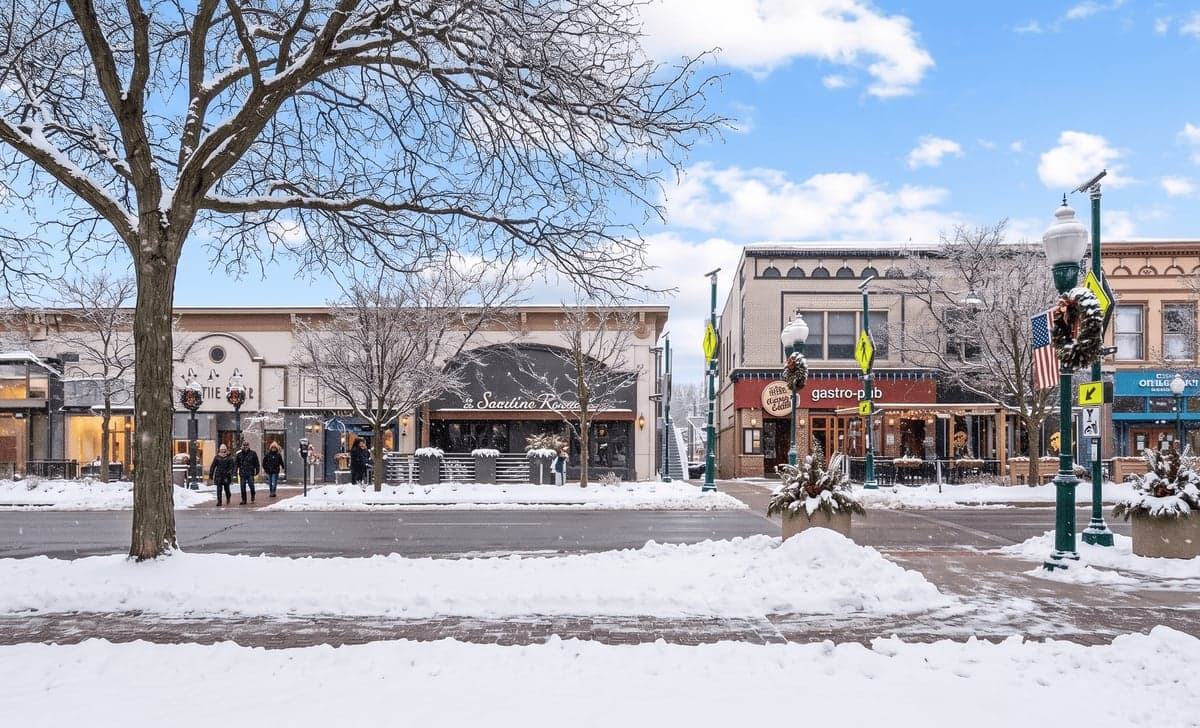
For the liberty-minded individual or family evaluating Huntington Woods, Michigan, the personal sovereignty picture is a study in contrasts: the city itself operates with a relatively light municipal touch, but it is firmly embedded in a state whose regulatory and tax climate has increasingly trended toward progressive intervention. This small, affluent enclave in Oakland County offers a quiet, tree-lined setting where daily life feels insulated from chaos, yet the legal framework of Michigan—particularly its tax structure, emergency powers, and firearm regulations—demands careful scrutiny from anyone prioritizing self-reliance and minimal government overreach. The question isn't whether you can live undisturbed here day-to-day, but whether the state-level architecture supports your right to defend, provide for, and govern your own household without bureaucratic friction.
Tax burden and regulatory posture in a high-cost state
Michigan’s state-level tax burden is moderate compared to high-tax neighbors like Illinois or Minnesota, but it is not a low-tax haven. The state income tax sits at a flat 4.25% as of 2025, with no signs of a reduction on the horizon, and sales tax is a fixed 6%. For a homeowner in Huntington Woods—where median home values hover around $300,000 to $400,000—property taxes are the real bite. Michigan’s property tax system, governed by Proposal A (1994), caps annual increases on taxable value at the rate of inflation or 5%, whichever is lower, but only as long as you own the home. When you buy, the property resets to its state equalized value (SEV), which is roughly half of market value, and you pay a combined millage rate that in Huntington Woods typically runs between 30 and 35 mills. That translates to an annual property tax bill of roughly $5,000 to $7,000 on a median-priced home—a significant recurring cost that eats into any prepper budget. On the regulatory front, Michigan has a mixed record. The state maintains a right-to-work law (enacted 2012, upheld 2023), which is a plus for individual employment freedom, but it also imposes strict environmental regulations on property use, particularly around wetlands and water runoff. Huntington Woods itself is a small, fully built-out city of just 1.4 square miles, meaning zoning is tight: no large-scale agriculture, no backyard workshops that could be deemed a nuisance, and no deviation from residential character. For the homesteader or off-grid enthusiast, this is a major constraint—you are buying into a suburban covenant, not a frontier.
Self-defense and gun law specifics in Michigan
Michigan is a shall-issue state for concealed pistol licenses (CPL), meaning that if you meet the statutory requirements—age 21, no disqualifying criminal record, completion of a state-approved training course—the county clerk must issue the permit. Oakland County, where Huntington Woods sits, is generally efficient in processing CPL applications, though wait times can stretch to 45–60 days. The state does not require a permit to openly carry a handgun, and long guns are unregulated for purchase and carry (no state-level assault weapons ban as of 2026). However, there are critical caveats. Michigan has a universal background check law for handgun purchases (passed in 2023), which means private sales of pistols must go through a licensed dealer—a bureaucratic hoop that slows down private transfers. Additionally, the state maintains a "gun-free zone" law that prohibits carry in schools, sports arenas, and certain government buildings, and Huntington Woods’ small-town police department is known to enforce these restrictions. Stand-your-ground laws are on the books, but Michigan’s self-defense statute requires a reasonable belief of imminent death or great bodily harm before using deadly force—a standard that can be interpreted narrowly by progressive prosecutors in Oakland County. For the survivalist, the takeaway is that while you can legally own and carry firearms, the state has layered on enough administrative friction (background checks, training mandates, restricted zones) to make it clear that the right to self-defense is not absolute. Ammunition and magazine capacity are unregulated, which is a plus, but the overall environment is one of tolerated ownership rather than enthusiastic support.
Self-reliance and homesteading viability in a dense suburb
Huntington Woods is not a place for serious self-reliance or homesteading. The average lot size is about a quarter-acre, and the city’s zoning code explicitly prohibits keeping livestock, poultry, or bees. Gardening is allowed, but front-yard vegetable plots are discouraged by homeowners' association-style neighborhood covenants, and the city’s tree canopy ordinance restricts cutting down mature oaks and maples without a permit. Off-grid feasibility is essentially zero: the city requires connection to municipal water and sewer, and solar panel installations must be approved by the planning commission, with aesthetic guidelines that often lead to rejection. For the prepper looking to build a root cellar, install a rainwater catchment system, or maintain a substantial food garden, this environment is hostile. The nearest viable land for homesteading is 30–40 minutes north in rural Oakland County (e.g., Oxford, Addison Township) or an hour west in Livingston County, where zoning allows for acreage, wells, and septic systems. Within Huntington Woods, the best you can do is a raised-bed vegetable garden in the backyard and a well-stocked pantry. The city’s small size also means that any significant disruption—power outage, water main break, civil unrest—would quickly affect the entire population of roughly 6,200 residents, with limited escape routes (only two main roads in and out). Self-reliance here is about stockpiling and community networking, not land-based independence.
Personal liberties: parental rights, medical autonomy, speech, and property
Michigan’s record on parental rights is mixed and trending negatively. The state has a compulsory vaccination law for school attendance (with medical and religious exemptions, but no philosophical exemption), and in 2023, the legislature expanded the state health department’s authority to mandate vaccines during public health emergencies—a direct erosion of parental medical autonomy. On education, Michigan does not have a broad parental bill of rights, and school boards in Oakland County have been known to adopt progressive curricula without parental opt-out provisions. Huntington Woods’ school district (Berkeley School District) is rated highly academically, but parents should expect limited transparency on classroom materials and a strong push for social-emotional learning programs that some conservatives view as ideological. Medical autonomy is similarly constrained: Michigan has a broad emergency powers law (the Emergency Management Act) that gives the governor unilateral authority to issue executive orders during declared emergencies, including mandates on medical treatments and business closures—a power that was used extensively during the COVID-19 pandemic and remains on the books. On the positive side, property rights are relatively strong: Michigan has no statewide rent control, and Huntington Woods does not impose short-term rental bans (though it does require a permit). Free speech is protected under the First Amendment, but Oakland County has seen local ordinances targeting "disorderly conduct" that have been used to quiet political protesters. For the liberty-minded individual, the state’s legal framework is a patchwork: some protections exist, but the trend is toward expanding government authority, particularly in health and education.
Overall, Huntington Woods offers a high degree of day-to-day personal autonomy in a quiet, safe suburban setting, but it is not a sovereignty-friendly jurisdiction for those seeking to live outside the system. The tax burden is real, the regulatory environment is restrictive on property use, and the state-level legal framework has been steadily eroding parental and medical rights. Compared to a place like rural Idaho or Texas, where homesteading, gun rights, and minimal government are the norm, Huntington Woods is a compromise: you get stability and community, but you trade away the ability to truly govern your own household without state interference. For the strategic relocator who values personal sovereignty above all else, this area is best viewed as a temporary base or a location for those who can navigate the system while maintaining a low profile—not a long-term stronghold for self-reliant living.

* Values derived from national, state, county, city and local statistics and may differ in a specific area. Last updated: 2026-04-27T18:05:20.000Z
Narrative content on this page is AI-generated and may contain mistakes. Verify any details that matter before acting on them.
ReloMaps may earn a commission from affiliate links at no extra cost to you.

