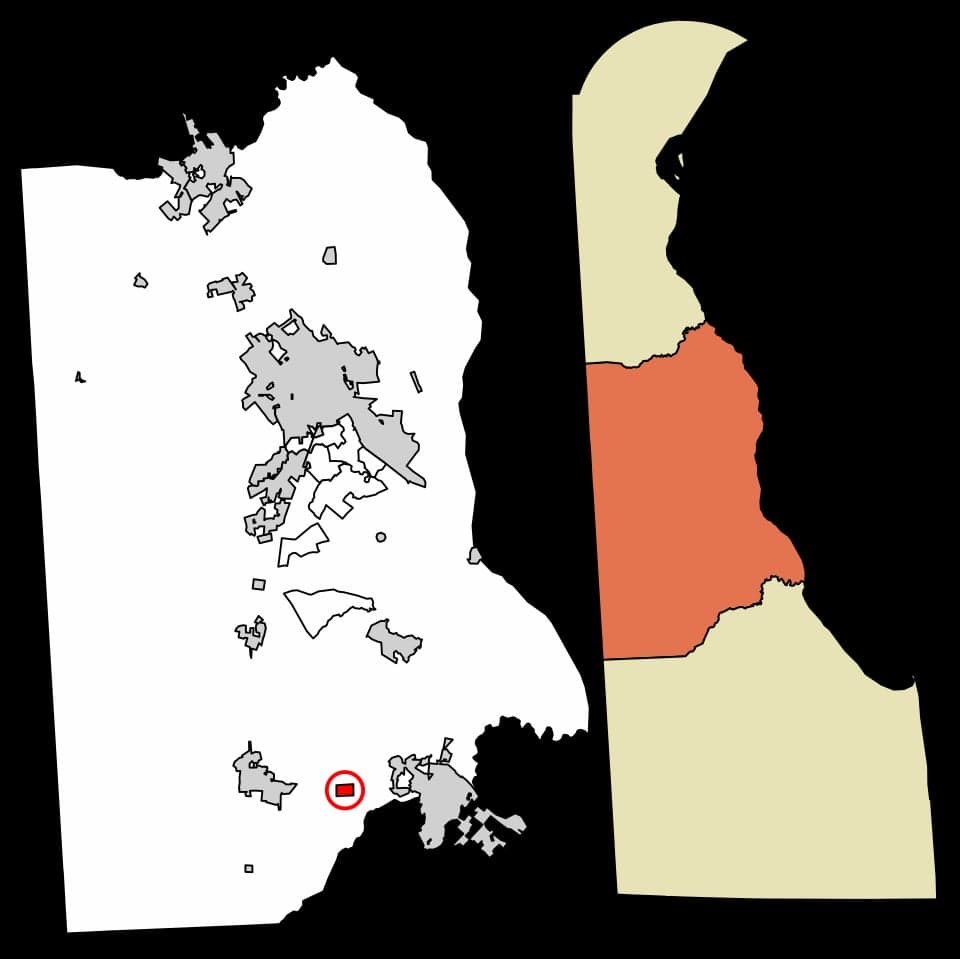
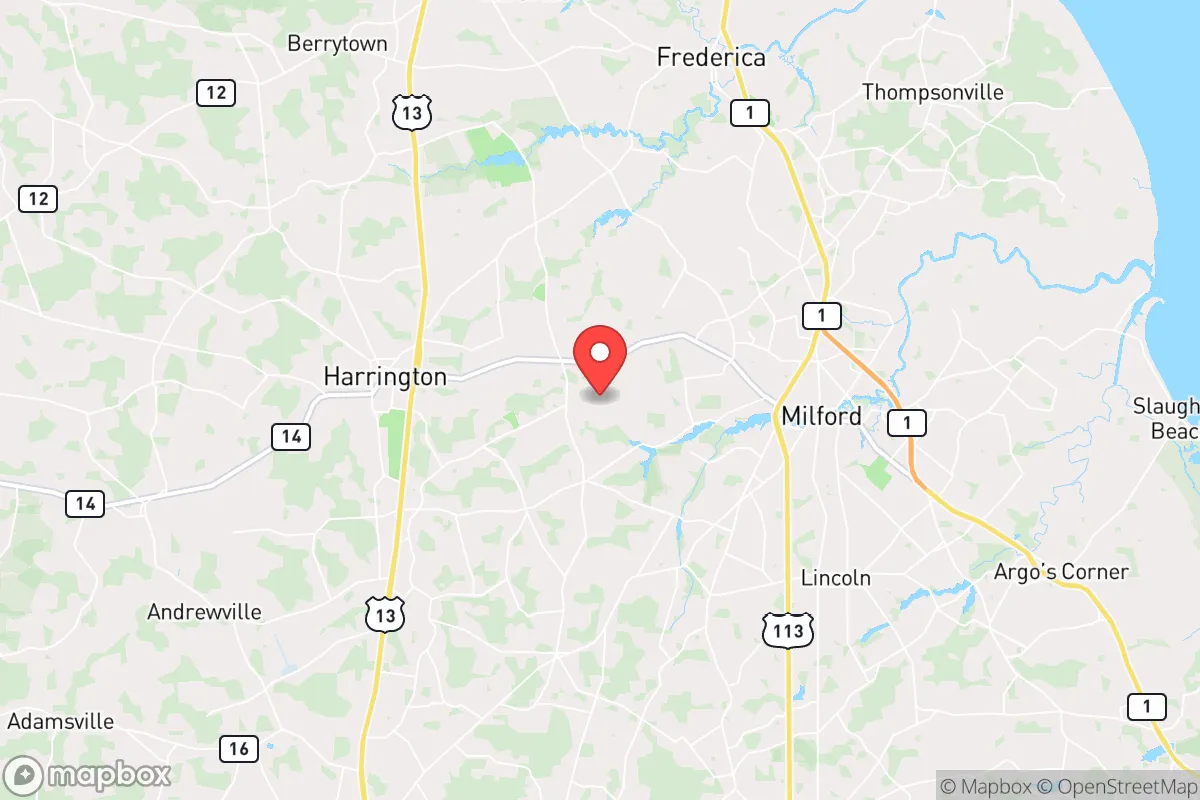
Photo: Wikipedia
Demographics of Houston, DE
Affluence Level in Houston, DE
A middle-class area roughly in line with national averages across income, home values, education, and employment.
People of Houston, DE
The people of Houston, Delaware, today form a small, predominantly white community of 456 residents, characterized by a notably low foreign-born population of just 0.7% and a college education rate of 5.3%. The population is overwhelmingly native-born, with a racial makeup of 86.0% white, 4.2% Black, and 3.5% Hispanic, and no measurable East/Southeast Asian or Indian subcontinent presence. This is a deeply rooted, rural community where generational ties to the land remain strong, and the population density is low, with a quiet, insular character shaped by its agricultural history and limited economic diversification.
How the city was settled and grew
Houston was originally settled in the mid-19th century as an agricultural hamlet in Kent County, drawing its first wave of European-American settlers—primarily of English and Scottish-Irish descent—who were granted land for farming along the St. Jones River. The town was formally laid out in 1855 and named after John W. Houston, a local politician, but it never grew beyond a small crossroads community. The original settlers clustered around the central intersection of what is now Main Street and Railroad Avenue, an area still referred to as Old Town Houston, where the earliest homes and the historic Houston Methodist Church stand. A second wave arrived in the late 19th century with the extension of the Delaware Railroad, which brought a small number of German and Irish laborers who settled in the Depot District near the tracks, working as farmhands and railroad maintenance crews. By the early 20th century, the population stabilized around 300, with the economy revolving around poultry farming, corn, and soybean production. No significant immigrant groups arrived during the Great Migration or the post-war boom, as Houston lacked the industrial jobs that drew Black and Hispanic workers to larger Delaware cities like Wilmington or Dover.
Modern era (post-1965)
After the 1965 Hart-Cellar Act, Houston saw virtually no new immigration; the foreign-born share remains under 1% today. The post-1965 period instead saw a slow domestic out-migration of younger residents seeking jobs in Dover or the Wilmington suburbs, while the remaining population aged in place. The small Black population (4.2%) is largely descended from families who worked on local farms in the early 20th century and now live in the South Houston area, a cluster of homes along South Main Street. The Hispanic population (3.5%) is a very recent addition, arriving in the 2010s as migrant agricultural laborers, primarily from Mexico and Central America, who settled in rental properties near the Harvest Lane mobile home park on the town’s eastern edge. No East/Southeast Asian or Indian subcontinent communities have ever established a presence, and the town remains one of the least ethnically diverse in Kent County. Suburbanization largely bypassed Houston—no new subdivisions were built after 1970—and the town’s housing stock consists almost entirely of single-family homes built before 1950.
The future
Houston’s population is projected to remain flat or decline slightly over the next 10–20 years, as the aging white cohort (median age likely in the mid-50s) continues to shrink and few young families move in. The Hispanic population may grow modestly if agricultural labor demand persists, but it will likely remain a small enclave rather than a transformative wave. The town is homogenizing in the sense that it is becoming older and whiter, with no signs of new immigrant or ethnic enclaves forming. The lack of rental housing, jobs, and public transit makes it unattractive to most newcomers, and the nearest significant employment centers—Dover (12 miles north) and Milford (8 miles south)—pull away anyone seeking economic opportunity. The Old Town Houston core is increasingly residential, with few businesses, while the Depot District has lost its rail function and now contains only a handful of occupied homes.
For someone moving in now, Houston offers a quiet, low-cost rural lifestyle with strong community ties, but it is a place where the population is static and aging. The lack of diversity, limited amenities, and low educational attainment mean that new residents—especially those with children—will need to commute for schools, shopping, and employment. This is a town that has changed little in a century and is likely to remain that way, appealing primarily to those seeking isolation and stability rather than growth or opportunity.

* Values derived from national, state, county, city and local statistics and may differ in a specific area. Last updated: 2026-04-30T01:14:32.000Z
Narrative content on this page is AI-generated and may contain mistakes. Verify any details that matter before acting on them.
ReloMaps may earn a commission from affiliate links at no extra cost to you.

