Photo: Wikipedia
Demographics of Hoonah, AK
Affluence Level in Hoonah, AK
A middle-class area roughly in line with national averages across income, home values, education, and employment.
People of Hoonah, AK
The people of Hoonah, Alaska, today number approximately 894, forming a community defined by its strong Tlingit heritage and a distinctive small-town identity shaped by isolation and resource-based economies. The population is predominantly Alaska Native, with 37.8% identifying as White and 12.1% as Hispanic, while East and Southeast Asian residents make up 4.0% and Black residents 0.8%. The foreign-born share is low at 3.1%, and only 18.9% of adults hold a college degree, reflecting a working-class character rooted in fishing, timber, and tourism. Hoonah is not a melting pot but a place where the Tlingit culture remains the central social and political force, with a tight-knit, family-oriented atmosphere that values self-reliance and community cohesion.
How the city was settled and grew
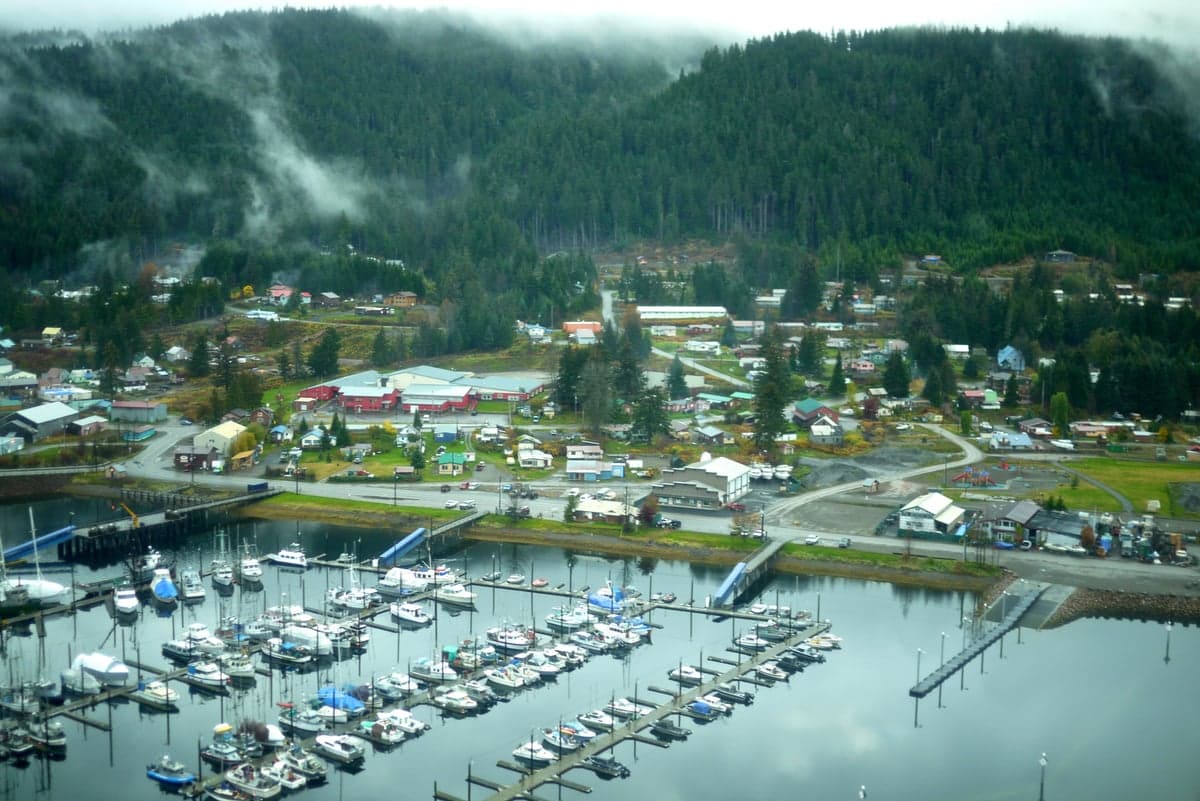
Hoonah’s human history begins with the Tlingit people, who have inhabited the area around Icy Strait for thousands of years. The name “Hoonah” itself derives from the Tlingit word Xunaa, meaning “protected from the north wind,” referencing the natural harbor that made the site a permanent winter village. The first major non-Native wave arrived in the late 19th and early 20th centuries, drawn by the salmon canneries and the burgeoning timber industry. The Huna Tlingit, who had traditionally used the area seasonally, established a permanent settlement here after the 1899 Tlingit evacuation of Glacier Bay. By the 1910s, a small but steady influx of European-American fishermen, cannery workers, and traders settled in the downtown waterfront district, building homes and businesses along the harbor. The Old Town neighborhood, clustered near the cannery sites, became the heart of this mixed Tlingit and Euro-American community, with boardwalks and modest frame houses. A second wave came during and after World War II, when the U.S. military built infrastructure in Southeast Alaska, and the Alaska Native Claims Settlement Act (ANCSA) of 1971 formally established the Hoonah Native Association, securing land and resources for the Tlingit population. This act solidified the Indian Village district—the traditional Tlingit residential area—as a legally recognized community hub, distinct from the newer, more scattered homes built by non-Native arrivals.
Modern era (post-1965)
After the 1960s, Hoonah’s demographic story became one of stabilization rather than rapid change. The post-Hart-Cellar immigration waves that reshaped urban America barely touched this remote island town; the foreign-born population remains under 4%. Instead, domestic in-migration has been modest, driven by employment in the Hoonah City School District, the local fishing fleet, and the seasonal tourism industry centered on Icy Strait Point. The Spruce Mill neighborhood, built on the site of a former sawmill, absorbed many of the families who moved in during the 1970s and 1980s for work in the timber industry, which collapsed in the 1990s. Since then, the population has been slowly declining—from a peak of around 860 in the 2000 census to the current 894—as younger residents leave for education and jobs in Juneau or Anchorage. The Hispanic population, at 12.1%, is a relatively recent addition, primarily composed of families who came to work in the seafood processing plants, and they tend to live in the Harbor View area, a newer subdivision with more affordable housing. The East and Southeast Asian community (4.0%) is largely descended from Filipino cannery workers who arrived in the mid-20th century, with families now concentrated in the downtown core near the harbor. The Tlingit population remains the majority, with many families living in the Indian Village and Old Town neighborhoods, where clan houses and community halls anchor social life.
The future
Hoonah’s population is heading toward further homogenization around its Tlingit core, with the non-Native share slowly shrinking as older Euro-American residents retire and move away. The Hispanic community is plateauing, as seafood processing becomes more mechanized and seasonal, while the East/Southeast Asian population is aging and not being replaced by new arrivals. The town is not tribalizing into distinct enclaves—it is too small for that—but the Indian Village and Old Town remain culturally Tlingit strongholds, while newer subdivisions like Harbor View are more mixed. The next 10–20 years will likely see continued population decline, with the school district shrinking and the median age rising. For a newcomer, Hoonah offers a place where community ties are deep, but economic opportunity is limited, and cultural integration requires respect for Tlingit traditions and governance.
For someone moving in now, Hoonah is becoming a more culturally singular place—a Tlingit-majority town with a small, stable Hispanic minority and a dwindling Euro-American presence. The economy is fragile, dependent on seasonal fishing and tourism, and the population is aging. The draw is not career growth but a quiet, self-sufficient lifestyle in a stunning natural setting, where community relationships matter more than diversity statistics.

* Values derived from national, state, county, city and local statistics and may differ in a specific area. Last updated: 2026-04-19T19:21:29.000Z
Narrative content on this page is AI-generated and may contain mistakes. Verify any details that matter before acting on them.
ReloMaps may earn a commission from affiliate links at no extra cost to you.

