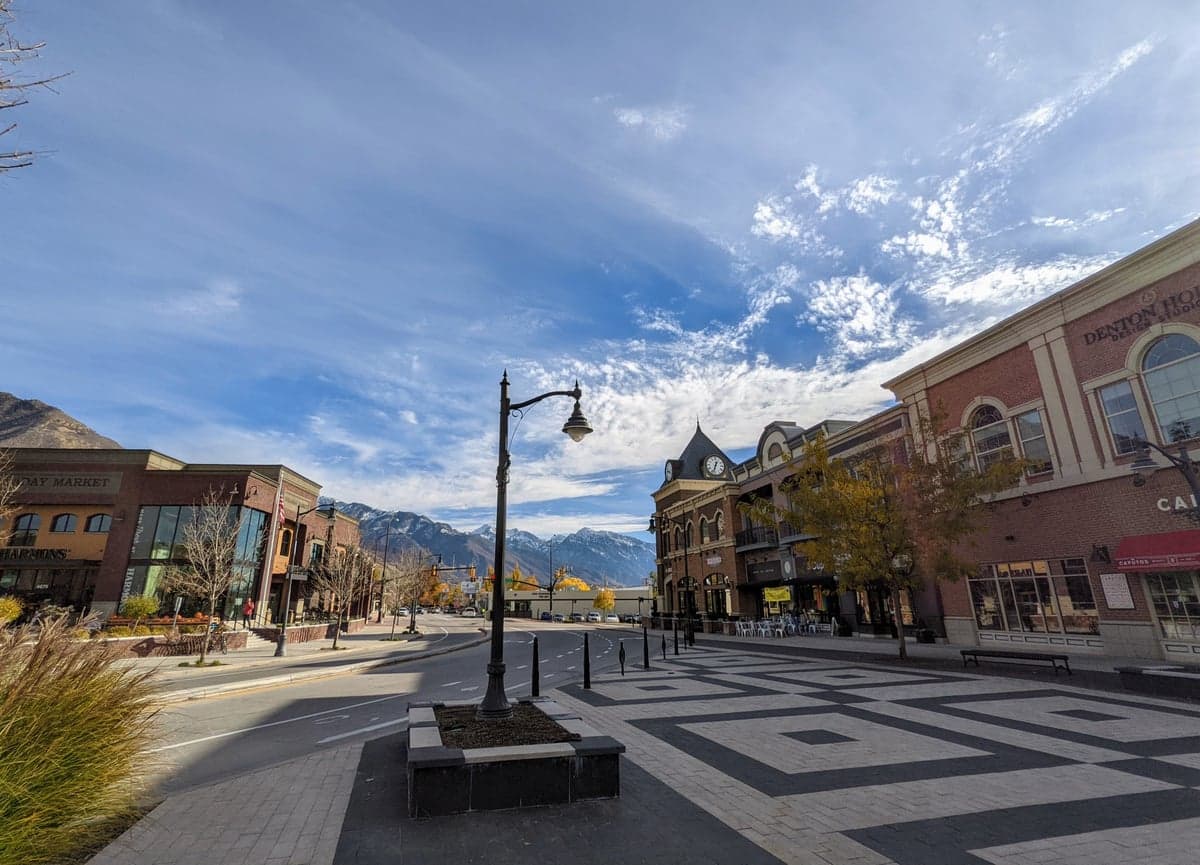
Photo: Wikipedia
Strategic Assessment of Holladay, UT
Workable tactical position. Some exposure to population density or targets, but generally defensible in a crisis.
What does the Strategic Assessment tell us?
Our Strategic Assessment grades tactical survivability of an area. Major population centers, military targets, fallout zones, natural disasters, and border exposure all drive risk — lower exposure means a more defensible position in a crisis.
This is heavily inspired by Joel Skousen's Strategic Relocation book. Highly recommended you checkout the book ($)What does this tell us?
Our Strategic Assessment grades tactical survivability of an area. Major population centers, military targets, fallout zones, natural disasters, and border exposure all drive risk — lower exposure means a more defensible position in a crisis.
This is heavily inspired by Joel Skousen's Strategic Relocation book. Highly recommended you checkout the book ($)Strategic Pillars

Key Distances
Regional Safe Places
Below is our recommended "safe zones" in Utah and the surrounding area based on our strategic heuristics. For most people, it's unrealistic to live in a “safe zone” full-time due to work, family or other personal reasons. They tend to be more rural. However, many of these areas are perfect for second homes and retreat properties that double as a vacation home or even a short-term rental.


Important Note: For informational purposes only. This does not mean nothing bad ever happens in the green zones. Please use common sense. This is based on public data and modeled with AI. We tried to take a conservative approach but mistakes happen. We update this regularly as new information becomes available.
Solar Generator Recommendations
Backup power matters more here than in safer locations. We've picked three solar generators across budgets and capacity tiers — start with the budget unit if you only need a few essentials, or step up if you want to run a fridge and HVAC for days at a time.

Jackery Portable Power Station Explorer 300
Budget OptionPower on the Go: Weighing only 11 lbs, it's convenient to set up and store with book-sized foldable solar panels

BLUETTI Portable Power Station AC180
Designed for both indoor and outdoor scenarios, AC180 is highly capable as it has a robost capacity and continuous output power.

EF ECOFLOW DELTA Pro Ultra Power Station
Upgraded PickEcoFlow DELTA Pro Ultra is a whole-home energy system designed to grow with your family. Integrated with the Smart Home Panel 2, it scales to meet your evolving energy needs — keeping your home powered, intelligent, and secure through every stage of life.
We earn a commission, at no additional cost to you.
Strategic Assessment Analysis
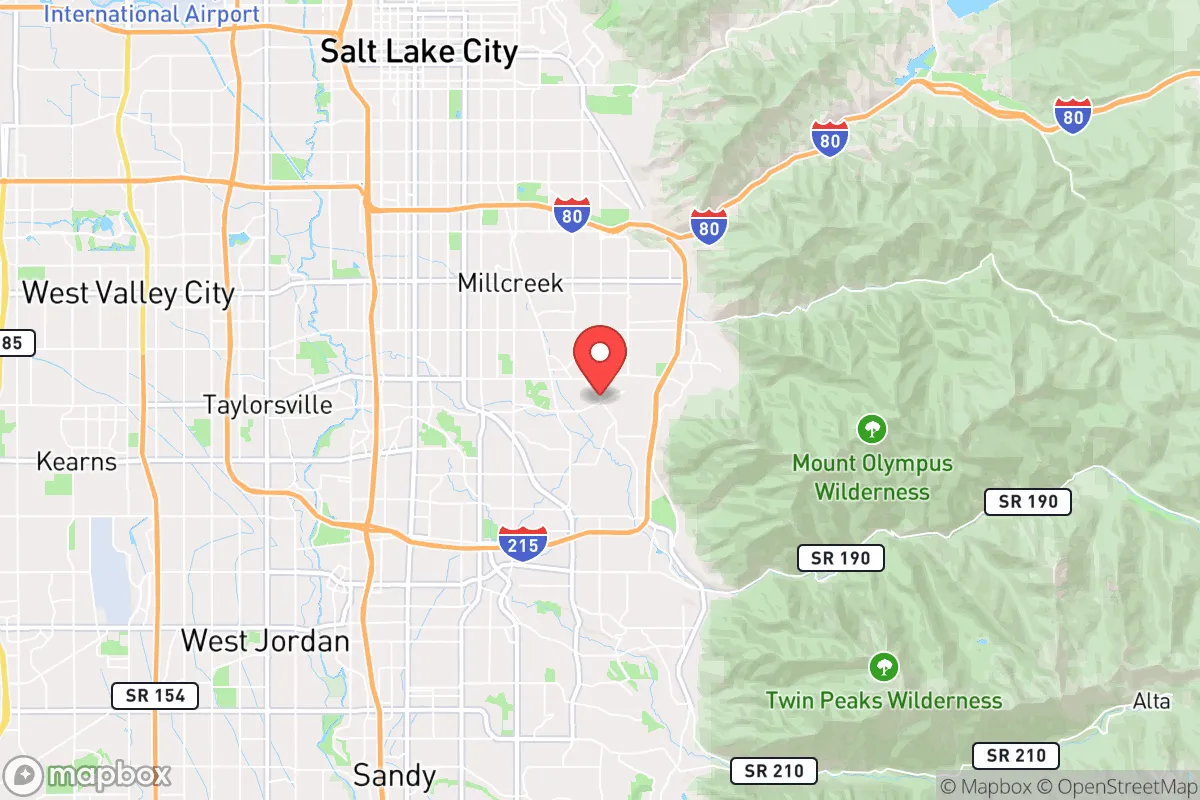
Holladay, Utah, sits in a precarious but potentially advantageous position for those prioritizing long-term resilience and strategic relocation. Nestled against the Wasatch Front, this affluent suburb of Salt Lake City offers a blend of natural barriers and suburban infrastructure that could serve as a buffer during widespread civic unrest or supply chain disruptions, but its proximity to a major metropolitan hub and critical infrastructure introduces significant vulnerabilities. For the conservative-minded prepper, Holladay presents a calculated trade-off: defensible terrain and a strong community ethos versus the inherent risks of being within striking distance of a primary target zone.
Geographic position and natural advantages for long-term security
Holladay’s geography is its strongest card. The city is pressed directly against the foothills of the Wasatch Range, providing immediate access to high-elevation escape routes, watersheds, and remote canyon systems like Big Cottonwood Canyon and Mill Creek Canyon. This terrain offers natural chokepoints and observation posts that would be invaluable during a breakdown of civil order. The elevation—roughly 4,500 feet—also means cooler summers and a lower risk of the extreme heat events that plague lower-elevation desert cities. The local water supply is a standout: Holladay sits atop a significant aquifer, and the nearby mountain streams (e.g., Big Cottonwood Creek) provide a year-round, gravity-fed water source that doesn't rely on the overtaxed Colorado River system. For a relocator, this means you can secure a property with a well or direct creek access, reducing dependence on municipal water that could be compromised during a grid-down scenario. The surrounding national forest land (Wasatch-Cache) also offers hunting, foraging, and timber resources, though legal access and overuse by other refugees would be a concern in a prolonged crisis.
Risks, exposures, and proximity to fallout-relevant landmarks
The elephant in the room is Salt Lake City, just 10 miles north. In any major conflict or terror event, the city’s concentration of government buildings, the LDS Church headquarters, the Salt Lake City International Airport, and the I-15 corridor make it a high-probability target for both conventional and asymmetric attacks. Holladay is close enough to experience fallout from a dirty bomb or a limited nuclear exchange—prevailing winds from the west could carry radioactive particles directly over the valley. Additionally, the city is within the blast radius of the Chevron refinery in North Salt Lake and the Tooele Army Depot (a massive chemical weapons storage site), both of which are plausible targets. Seismic risk is also real: the Wasatch Fault runs directly through the valley, and a major earthquake (estimated 7.0+ magnitude) would devastate infrastructure, including gas lines, power grids, and road networks. The 2020 Magna earthquake (5.7) was a wake-up call, but a larger event would collapse overpasses and isolate Holladay from the rest of the valley. Finally, the city’s affluence makes it a looting target during civil unrest—riots in Salt Lake City in 2020 demonstrated that mobs can quickly spill into suburbs.
Practical resilience for a relocator: food, water, energy, and defensibility
For a relocator serious about self-sufficiency, Holladay offers a mixed bag. Water is the strongest asset: many older homes have irrigation rights from the Holladay Water Company or access to secondary water systems fed by mountain runoff. Installing a rainwater catchment system or a hand pump on a well is feasible, and the high water table means shallow wells are productive. Food production is limited by the short growing season (last frost around mid-May, first frost by mid-October) and the prevalence of large lots that are more lawn than garden. However, the city’s zoning allows for backyard chickens and small livestock, and the nearby farmers’ markets (e.g., Holladay Farmers Market) indicate a local food culture that could be leveraged for barter. Energy independence is achievable but expensive: the valley’s 300+ days of sunshine per year make solar panels viable, but net metering policies from Rocky Mountain Power are increasingly restrictive. A propane generator with a buried tank is a more practical backup for most homes. Defensibility is neighborhood-dependent. The older, tree-lined neighborhoods near the foothills (e.g., around Holladay Boulevard) offer natural cover and limited access points, making them easier to secure. The newer developments near I-215 are more exposed. The city’s police force is well-funded but small—during a widespread event, response times would stretch to hours. The best strategy is to form a neighborhood watch or mutual-aid group with like-minded families, as the Mormon cultural emphasis on preparedness (food storage, emergency plans) means many neighbors already have supplies and skills.
The overall strategic picture for Holladay is one of calculated risk. It is not a remote bug-out location—it is a suburban outpost with excellent natural resources but significant exposure to the vulnerabilities of a major metropolitan area. For the relocator who values community, water security, and mountain access, and who is willing to invest in hardening a home against both natural disasters and human threats, Holladay can work. But it demands a clear-eyed acknowledgment that you are living in the shadow of a target zone. The prudent move is to treat Holladay as a base camp—not a final redoubt—with a secondary retreat in the Uinta Basin or the San Rafael Swell for when the balloon goes up. If you can afford the real estate and are disciplined about prepping, this is one of the better bets along the Wasatch Front. If you’re looking for true isolation, keep driving east.

* Values derived from national, state, county, city and local statistics and may differ in a specific area. Last updated: 2026-05-03T20:34:45.000Z
Narrative content on this page is AI-generated and may contain mistakes. Verify any details that matter before acting on them.
ReloMaps may earn a commission from affiliate links at no extra cost to you.

