
Photo: Wikipedia
Political ClimatePolitical Climate in Hoffman Estates, IL
District shown is the primary district for this city’s centroid. Cities may span multiple districts.
Local Political AnalysisPolitical Analysis of Hoffman Estates, IL
Hoffman Estates leans reliably Democratic, with a Cook PVI of D+5 that has only gotten bluer over the last decade. I’ve lived here long enough to remember when this was a solidly purple suburb where both parties had a real shot in local races. Now, the shift is unmistakable: the last few presidential elections saw Democratic margins widen, and the village board has followed suit, with progressive-backed candidates increasingly dominating. It’s not a radical leftist stronghold like Evanston or Oak Park, but the trajectory is concerning if you value limited government and personal freedoms.
How it compares
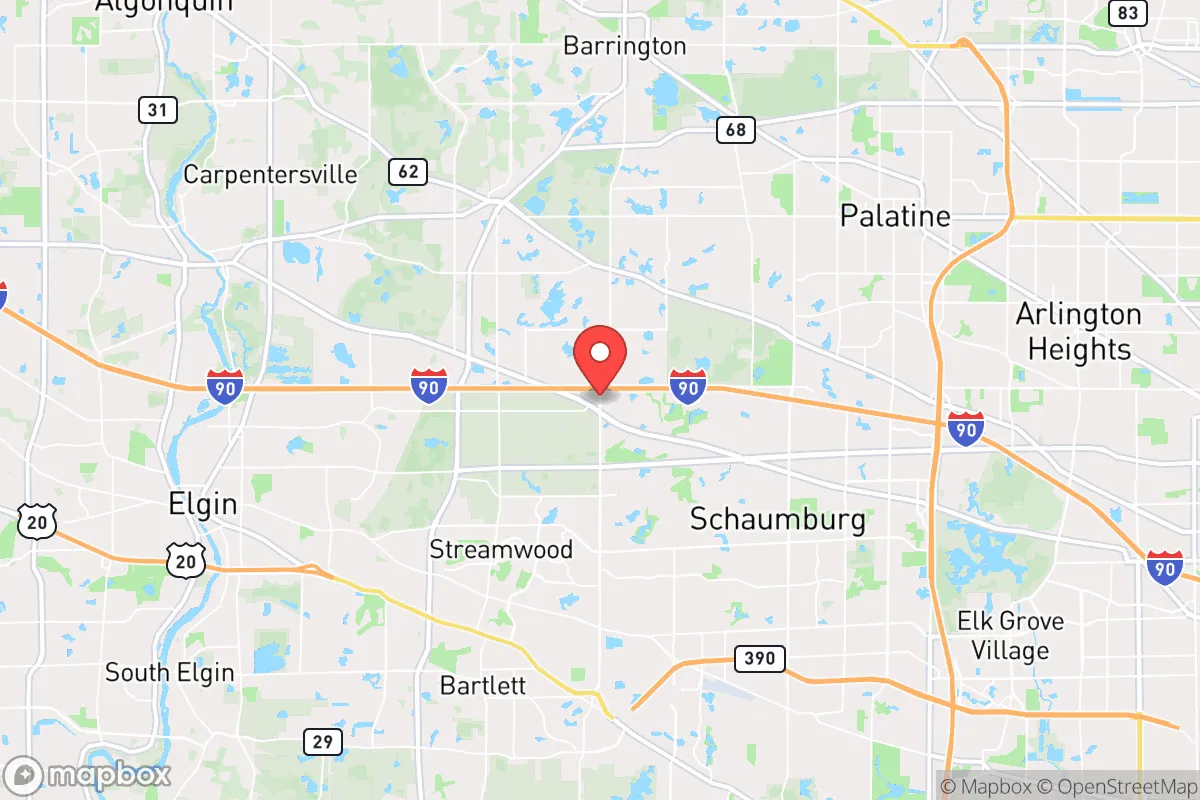
Drive ten minutes west to Elgin or south to Schaumburg, and you’ll find similar D+5 to D+7 leanings—it’s the whole northwest corridor trend. But head north to Barrington or east to Palatine, and the political map flips. Barrington still has a strong conservative base, with local school boards and village councils that push back on state-level mandates. In Hoffman Estates, you feel the weight of Cook County’s machine more directly. The county board and state legislature seats here are held by Democrats who rarely face serious opposition. That means policies like strict business regulations, high property taxes, and expansive public health orders get rubber-stamped without much debate. It’s a one-party environment where dissenting voices—especially on issues like school curriculum transparency or zoning restrictions—get sidelined fast.
What this means for residents
For a family or small business owner, the practical effect is a steady creep of government into daily life. Property taxes here are among the highest in the state, and the village has embraced progressive priorities like “equity” initiatives in local policing and mandatory diversity training for contractors. The school district, SD 54, has adopted curriculum changes that emphasize social-emotional learning and critical race theory concepts—something that would have been unthinkable when my kids were in school. If you value parental rights or want your tax dollars spent on core services rather than social engineering, you’ll find yourself increasingly at odds with local leadership. The village council has also pushed for higher-density housing developments near the train station, overriding neighborhood concerns about traffic and school overcrowding. It’s a pattern: top-down decisions that prioritize ideological goals over resident input.
One cultural distinction that stands out is the annual “Hoffman Estates Pride” event, which the village now officially sponsors. It’s a small thing, but it signals how far the local government has moved from a neutral, hands-off approach to actively promoting progressive social causes. The police department, once known for community-oriented policing, now has a “social services liaison” who focuses on mental health calls—a well-intentioned shift, but one that blurs the line between law enforcement and social work. If you’re looking for a place where government stays out of your business and lets you live your life, Hoffman Estates is not that place anymore. The next few years will likely bring more of the same: higher taxes, more mandates, and less room for traditional values. I’d keep an eye on the 2026 local elections—if the trend holds, the last conservative voices on the village board could be gone for good.

State Political ClimatePolitical Climate in Illinois
State Political AnalysisPolitical Environment in the State
Illinois is a deeply blue state in statewide elections, with Democrats holding every statewide office and supermajorities in both legislative chambers, but this dominance masks a stark and growing internal divide. The state has shifted leftward over the past 20 years, driven by the massive population and political machine of Cook County and Chicago, while the rest of the state has become increasingly Republican and frustrated. For a conservative considering relocation, Illinois presents a complex picture: a state with strong property rights in some areas, but a government that has consistently expanded its reach into personal freedoms, taxation, and education.
Urban vs. rural divide
The political map of Illinois is essentially a tale of two states. Cook County, anchored by Chicago, produces roughly 40% of the state's total vote and votes Democratic by margins of 60-70 points. The surrounding collar counties—DuPage, Lake, Kane, Will, and McHenry—have been trending blue for a decade, with once-reliable Republican suburbs like Naperville and Arlington Heights now regularly electing Democrats. Meanwhile, downstate Illinois is overwhelmingly red. Counties like Effingham, Williamson, and Macoupin vote Republican by 60-70 points. The divide is so sharp that a drive from Chicago to Carbondale feels like crossing a political border. The metro areas of Peoria, Rockford, and the Quad Cities are competitive but lean Democratic, while rural communities like Mount Vernon, Harrisburg, and Quincy are solidly conservative. This geographic split means that a conservative moving to Illinois can find a politically like-minded community, but they will be living under a state government that is increasingly hostile to their values.
Policy environment
Illinois’s policy environment is a textbook case of progressive governance. The state has the second-highest property tax burden in the nation, with effective rates averaging over 2.0% of home value, and a flat income tax rate of 4.95% that is likely to become progressive if a proposed constitutional amendment passes. The regulatory posture is heavy: Illinois has some of the strictest gun laws in the country, including a 2023 ban on dozens of semi-automatic firearms and magazines, passed without a grandfather clause for existing owners. Education policy is dominated by the Chicago Teachers Union, which has successfully resisted charter schools and pushed for progressive curricula. The state also has a sanctuary state law (the TRUST Act) that limits local law enforcement cooperation with federal immigration authorities. On the plus side, Illinois has no right-to-work laws, meaning union membership is high, and the state’s pension crisis—over $140 billion in unfunded liabilities—continues to drive tax increases and service cuts. For a conservative, the policy environment feels like a slow-motion erosion of personal freedom and fiscal responsibility.
Trajectory & freedom
Illinois is becoming less free, not more. The 2023 gun ban (HB 5471) was a major blow to Second Amendment rights, and the state has also passed laws restricting parental rights in education, including a mandate that schools cannot notify parents of a student’s gender identity without the student’s consent. The state’s medical autonomy landscape is mixed: abortion is fully legal, but the state has also expanded Medicaid and created a state-based health insurance exchange. On property rights, Illinois has a history of aggressive eminent domain, particularly in Chicago for development projects. The state’s tax burden is the most significant freedom issue: property taxes have risen an average of 3-4% annually for the past decade, and the state’s pension crisis means further increases are almost certain. The trend is clear: the state government is expanding its reach into personal choices, from what you can own to how you educate your children, while simultaneously demanding more of your income.
Civil unrest & political movements
Illinois has a history of political activism, but the flashpoints have intensified in recent years. The 2020 George Floyd protests in Chicago resulted in widespread looting and property damage, with the city’s response criticized as slow and ineffective. The state’s sanctuary policy has made it a destination for illegal immigration, with buses of migrants being sent from Texas to Chicago, straining city resources and creating visible tensions in neighborhoods like Pilsen and Little Village. On the right, the “Illinois Freedom Caucus” in the state legislature has been vocal in opposing gun bans and vaccine mandates, but has little legislative power. There have been calls for downstate counties to secede and form a new state, but these remain symbolic. Election integrity is a concern for many conservatives, as Illinois has no voter ID law and allows same-day registration, though there have been no major scandals. A new resident would notice the political divide in everyday life: Chicago’s progressive politics versus the conservative culture of downstate communities like Effingham or Marion.
Projection
Over the next 5-10 years, Illinois is likely to continue its leftward drift, but with increasing internal friction. Demographic trends are working against conservatives: the state’s population has declined for nine consecutive years, with most of the loss coming from downstate and rural areas, while Chicago and its suburbs have held steady or grown slightly. This means the political power of Cook County will only increase. The pension crisis will force either massive tax hikes or service cuts, likely both, making the state less attractive for businesses and families. The gun ban and parental rights laws are unlikely to be repealed, and further restrictions on speech and education are possible. However, the state’s strong economy in certain sectors—finance, tech, agriculture—means it will remain a major player. For a conservative moving in now, the expectation should be that the state government will continue to be a source of frustration, but that local communities in downstate Illinois will remain islands of conservative values. The bottom line: Illinois is a state where you can find a good life, but you’ll be fighting the government every step of the way.
For a new resident, the practical takeaways are clear. If you choose to move to Illinois, you are accepting a high tax burden, a government that is expanding its control over your personal choices, and a political environment that is increasingly hostile to conservative values. However, you can find like-minded communities in places like Effingham, Quincy, or Mount Vernon, where local politics are conservative and the pace of life is slower. The key is to be strategic: choose a county with low property taxes, a strong local economy, and a school board that respects parental rights. Illinois is not a lost cause, but it is a state that requires vigilance and engagement to protect your freedoms.
* Values derived from national, state, county, city and local statistics and may differ in a specific area. Last updated: 2026-04-23T08:20:35.000Z
Narrative content on this page is AI-generated and may contain mistakes. Verify any details that matter before acting on them.
ReloMaps may earn a commission from affiliate links at no extra cost to you.

