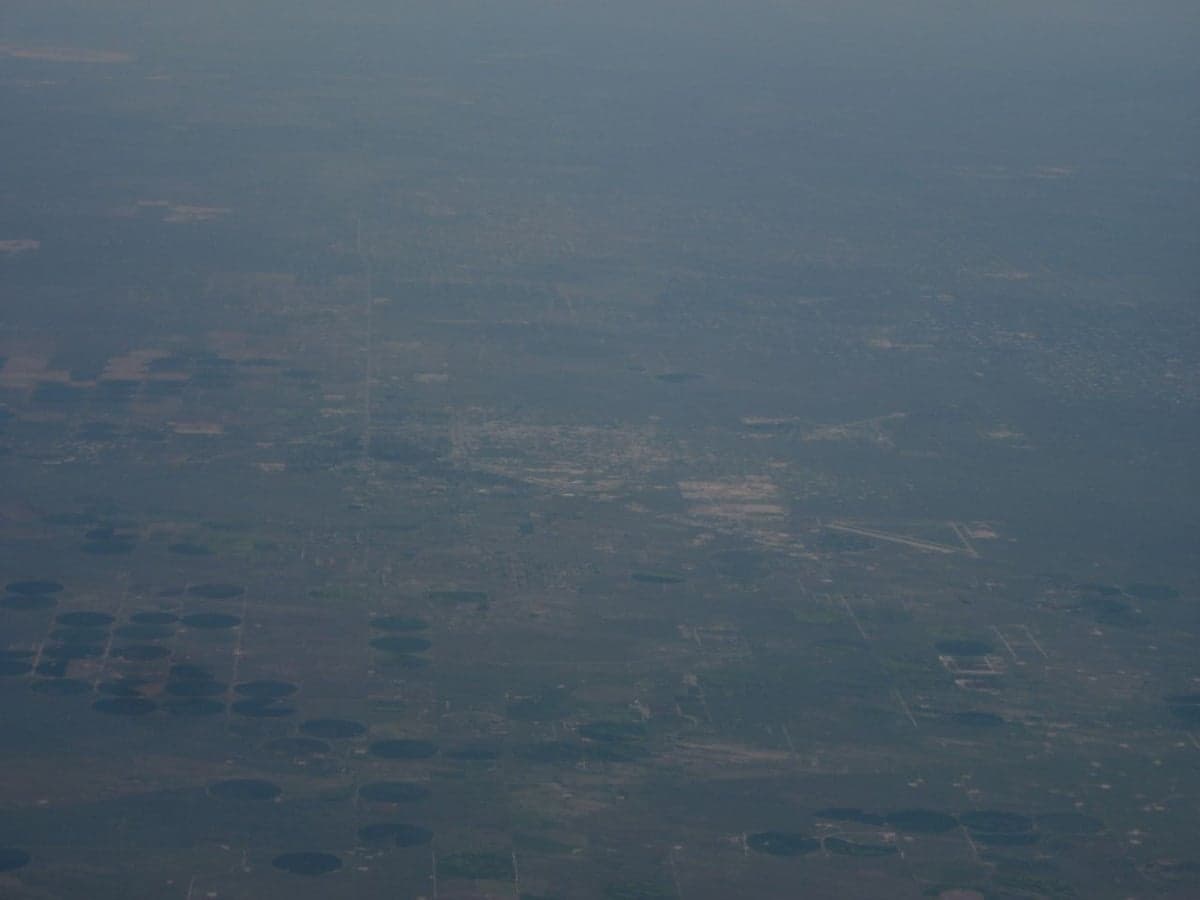
Photo: Wikipedia
Political ClimatePolitical Climate in Hobbs, NM
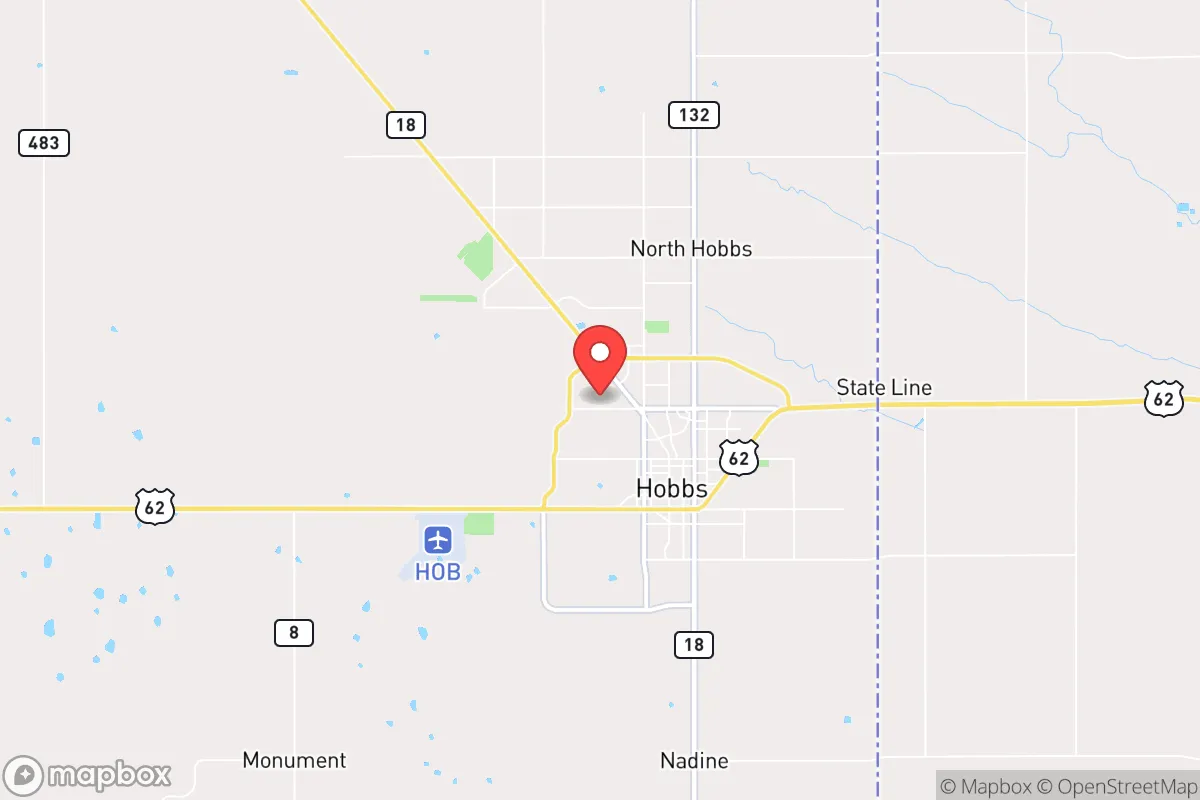
District shown is the primary district for this city’s centroid. Cities may span multiple districts.
Local Political AnalysisPolitical Analysis of Hobbs, NM
Hobbs, New Mexico, sits in a bit of a political tug-of-war, and if you’ve lived here as long as I have, you’ve felt the ground shift under your feet. The area’s Cook Partisan Voting Index (PVI) of D+3 tells you it leans Democratic on paper, but that number hides a much more complicated story. In reality, Hobbs and the surrounding Lea County have deep conservative roots, tied to the oil and gas industry, ranching, and a strong sense of personal liberty. The D+3 rating is largely driven by the rest of the state’s urban centers, like Albuquerque and Santa Fe, which push progressive policies that often feel like they’re being imposed on us from afar. The real trajectory here is a slow, uneasy drift leftward, especially in local school boards and city council races, but the old-school, freedom-loving spirit still fights hard to hold the line.
How it compares
Drive an hour north to Lovington, and you’ll find a town that’s even more reliably conservative—think deeper red, with less of the political noise you get in Hobbs. Head west toward Roswell, and you’re still in conservative territory, but it’s a different flavor, more tied to agriculture and less to the boom-and-bust oil cycles that define us. The real contrast, though, is when you look at the state capital. Santa Fe and Albuquerque are worlds apart from Hobbs—they’re where the progressive agenda gets cooked up, from stricter environmental regulations that threaten our energy jobs to gun control measures that feel like a direct attack on our Second Amendment rights. Compared to those places, Hobbs is a bastion of common sense, but the pressure is mounting. You see it in the push for more government oversight in local businesses and the slow creep of policies that prioritize ideology over the practical needs of a working-class community.
What this means for residents
For folks living here, the political climate means you have to stay vigilant. The biggest concern is government overreach—whether it’s state mandates on energy production that could cost jobs at the local refineries or new zoning laws that make it harder to run a small business without a stack of permits. The shift toward progressive ideology isn’t just a talking point; it affects your wallet and your freedom. Property taxes have inched up as the city tries to fund programs that many of us never asked for, and there’s a growing unease about how much say the state has in our local schools. On the flip side, the conservative backbone here means you’ve still got a strong network of churches, gun clubs, and community groups that push back. If you value personal responsibility over government handouts, you’ll find plenty of like-minded neighbors, but you’ll also need to get involved—showing up to city council meetings and voting in every local election—to keep the balance from tipping too far.
Culturally, Hobbs still holds onto its independent, oil-patch identity, but you can see the cracks. There’s a growing tension between the old guard, who remember when the town was smaller and more self-reliant, and newcomers drawn by the energy boom who might not share the same distrust of big government. Policy-wise, the biggest flashpoints are energy regulations and gun rights. The state’s push for renewable energy mandates feels like a slap in the face to a community built on oil and gas, and any talk of red flag laws or magazine capacity limits is met with serious pushback. In the long term, I see Hobbs staying a conservative island in a blue state, but it’s going to take constant effort to keep it that way. If you’re thinking of moving here, just know that your vote and your voice matter more than ever—and that the fight for personal freedom is never really over.

State Political ClimatePolitical Climate in New Mexico
State Political AnalysisPolitical Environment in the State
New Mexico has been a reliably blue state in presidential elections since 2004, but its political climate is far more nuanced than the statewide results suggest. The state’s Democratic lean is driven by a coalition of urban liberals in Albuquerque, Santa Fe, and Las Cruces, combined with a large Hispanic electorate that has historically favored Democrats on economic and immigration issues. However, the past decade has seen a notable rightward shift in rural and exurban areas, with counties like Lea, Eddy, and Otero becoming deep red strongholds, while the state’s overall trajectory has moved left on social and regulatory policy. For a conservative considering relocation, New Mexico offers a mixed bag: low taxes and a pro-business energy sector in the southeast, but a growing progressive policy environment in the population centers that increasingly shapes state law.
Urban vs. rural divide
The political map of New Mexico is a stark study in contrasts. The state’s largest city, Albuquerque (Bernalillo County), is a Democratic stronghold, delivering roughly 60% of its vote to Joe Biden in 2020. Santa Fe, the capital, is even more liberal, with a heavily progressive activist class that drives much of the state’s legislative agenda. Las Cruces (Doña Ana County) leans blue, but with a more moderate, working-class Hispanic base that can swing on economic issues. In contrast, the southeastern corner of the state—anchored by Hobbs (Lea County) and Carlsbad (Eddy County)—is deeply conservative, fueled by the oil and gas industry. These counties voted for Donald Trump by margins of 40 points or more in 2020. The rural north, including counties like Rio Arriba and Taos, is culturally distinct and leans left, but with a strong libertarian streak on land-use and gun rights. The real battleground is the rapidly growing exurbs of Albuquerque, like Rio Rancho and Los Lunas, where conservative families are moving for better schools and lower crime, but these areas are still outvoted by the urban core.
Policy environment
New Mexico’s policy environment is a study in contradictions. On the positive side for conservatives, the state has no inheritance tax and a relatively low property tax rate, capped by the state constitution. The personal income tax is progressive, with a top rate of 5.9%, which is moderate compared to neighboring Colorado (4.4% flat) but lower than California. However, the regulatory posture is increasingly hostile to traditional industries. The 2021 Energy Transition Act, pushed by Governor Michelle Lujan Grisham, mandates a 100% carbon-free electricity grid by 2045, which has created uncertainty for the oil and gas sector that employs tens of thousands in the southeast. Education policy is a major concern: the state has one of the lowest graduation rates in the nation, and the 2023 passage of a universal school meals program and expanded pre-K funding has not addressed the underlying failures of the public school system. Parental rights took a hit in 2023 when the state passed a law prohibiting school boards from requiring parental notification of a student’s gender identity or sexual orientation—a direct blow to family autonomy. Healthcare is heavily Medicaid-dependent, with the state expanding the program under the Affordable Care Act, but rural access remains poor. Election laws are relatively secure, with voter ID required for first-time voters, but same-day registration and automatic voter registration have made the system more vulnerable to fraud concerns.
Trajectory & freedom
On the freedom index, New Mexico is trending in the wrong direction for conservatives. The most alarming recent development is the 2023 passage of a red flag law (HB 129), which allows courts to temporarily seize firearms from individuals deemed a threat by family or law enforcement, without a criminal conviction or a full hearing. This is a direct infringement on Second Amendment rights. On the positive side, the state remains a shall-issue concealed carry state, and there is no state-level assault weapons ban. However, the 2021 repeal of the state’s death penalty statute (which had been effectively dormant) and the decriminalization of small amounts of fentanyl test strips signal a soft-on-crime approach. Medical autonomy took a hit with the 2023 passage of the Reproductive and Gender-Affirming Health Care Act, which codified abortion access and protected providers from out-of-state lawsuits—a move that many conservatives see as a federal overreach into state sovereignty. Property rights are relatively strong, with no statewide rent control, but the 2023 Housing Opportunity Act allows local governments to impose inclusionary zoning mandates, which can restrict development. The biggest freedom concern is the state’s high crime rate, particularly in Albuquerque, where property crime and car thefts are among the highest in the nation, and the progressive district attorney’s office has been criticized for a catch-and-release approach to repeat offenders.
Civil unrest & political movements
New Mexico has a history of civil unrest, but it’s not the kind you see in Portland or Seattle. The most visible flashpoint is the ongoing immigration crisis at the southern border. The state is a major transit corridor for illegal crossings, and the city of Las Cruces and Doña Ana County have declared themselves sanctuary jurisdictions, refusing to cooperate with federal immigration enforcement. This has led to tensions with the Border Patrol and with conservative residents in nearby towns like Alamogordo and Deming. In 2020, the state saw significant Black Lives Matter protests in Albuquerque and Santa Fe, which were largely peaceful but included some property damage. On the right, the Otero County Commission made national headlines in 2022 when it refused to certify primary election results based on unfounded claims of machine fraud, leading to a state Supreme Court intervention. The New Mexico Civil Guard, a militia group, has been active in the southern border region, conducting citizen patrols that have drawn criticism from the ACLU. The state also has a small but vocal secessionist movement in the rural northeast, where some residents have called for a breakaway “State of Jefferson” due to feeling ignored by Santa Fe. For a new resident, the most noticeable political movement is the growing frustration with crime and homelessness in Albuquerque, which has spawned a grassroots “Take Back Our City” movement that has successfully pushed for more police funding.
Projection
Over the next 5-10 years, New Mexico is likely to continue its leftward drift on social and environmental policy, driven by the growing influence of Santa Fe’s progressive activist class and the influx of remote workers from California and Colorado. The urban-rural divide will only deepen, with the southeast oil patch becoming more politically isolated and resentful. The state’s demographic trends are not favorable for conservatives: the Hispanic population, which has historically been a swing vote, is becoming more reliably Democratic among younger voters, while the white working-class base in the rural areas is shrinking. In-migration is modest and largely concentrated in the liberal enclaves of Santa Fe and Albuquerque’s North Valley. The most likely scenario is that New Mexico remains a blue state, but with a more moderate Democratic governor after Lujan Grisham’s term ends in 2026, as the state’s fiscal dependence on oil and gas revenue will force some pragmatism. For a conservative moving in now, expect to see more gun control, more sanctuary policies, and a continued erosion of parental rights, but also a low-tax environment and a booming energy sector in the southeast that offers economic opportunity.
For a conservative considering New Mexico, the bottom line is this: the state offers genuine economic opportunity in the oil and gas fields of the southeast, with low property taxes and a pro-business energy regulatory environment at the local level. But you will be living in a state where the political culture in Santa Fe and Albuquerque is increasingly hostile to your values on guns, education, and family autonomy. If you can tolerate the blue state policies and focus on the economic upside, places like Hobbs, Carlsbad, or even the conservative exurbs of Rio Rancho offer a decent quality of life. But if you’re looking for a state that respects your Second Amendment rights, protects parental authority, and keeps government out of your healthcare decisions, New Mexico is not trending in your direction.
* Values derived from national, state, county, city and local statistics and may differ in a specific area. Last updated: 2026-05-01T06:13:02.000Z
Narrative content on this page is AI-generated and may contain mistakes. Verify any details that matter before acting on them.
ReloMaps may earn a commission from affiliate links at no extra cost to you.

