 Popular
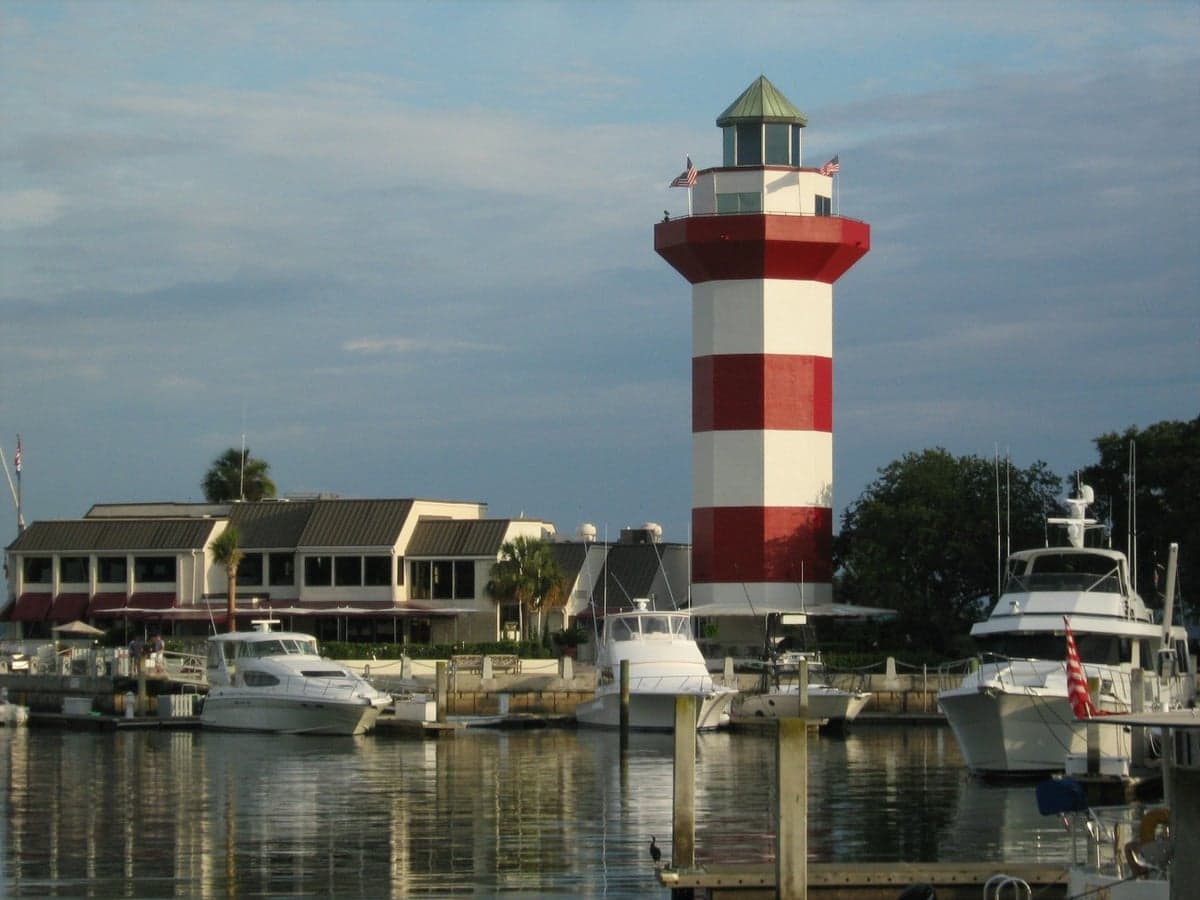
Photo: Wikipedia
Demographics of Hilton Head Island, SC
Affluence Level in Hilton Head Island, SC
An upper-middle-class area. Household wealth, education levels, and homeownership run ahead of national benchmarks.
People of Hilton Head Island, SC
Hilton Head Island’s 37,805 residents form a predominantly white (75.1%), college-educated (55.3%) community with a notable Hispanic minority (15.1%) and a small Black population (6.3%). The island’s character is defined by its planned resort communities, gated neighborhoods, and a service economy that draws both wealthy retirees and a growing workforce from Latin America. Foreign-born residents make up 8.4% of the population, a share that is rising as the island’s hospitality and construction sectors expand.
How the city was settled and grew
Hilton Head’s human history begins with the indigenous Yemassee and Euchee peoples, who used the island for seasonal hunting and fishing. European contact in the 16th century brought Spanish missionaries, but permanent settlement did not begin until the 18th century, when Sea Island cotton and indigo plantations were established. Enslaved Africans, primarily from the Rice Coast of West Africa, were brought to work these plantations, and their descendants—the Gullah Geechee people—developed a distinct creole language and culture that survives today. After the Civil War, freedmen established small farming communities, most notably in Mitchelville, the first self-governed town of formerly enslaved people in the United States, located near present-day Port Royal Plantation. For nearly a century, the island remained isolated, accessible only by boat, with a population of a few hundred Gullah Geechee families living in scattered settlements like Spanish Wells and Stoney. The construction of the James F. Byrnes Bridge in 1956 ended this isolation and set the stage for modern development.
Modern era (post-1965)
The modern population boom began with Charles Fraser’s development of Sea Pines Resort in the late 1950s, which transformed Hilton Head into a planned, upscale destination. The 1965 Immigration and Nationality Act had little direct effect on the island’s demographics, as the primary growth driver was domestic in-migration—wealthy retirees, second-home buyers, and corporate executives from the Northeast and Midwest. These newcomers settled in master-planned communities like Sea Pines, Palmetto Dunes, and Shipyard Plantation, which remain the island’s most affluent enclaves. The Hispanic population began growing in the 1990s and 2000s, driven by demand for labor in landscaping, construction, and hospitality. Today, Hispanic residents (15.1%) are concentrated in the Mid-Island area, particularly around William Hilton Parkway and the Marshland Road corridor, where more affordable housing and rental properties are located. The Black population (6.3%) is largely composed of Gullah Geechee descendants who remain in historic neighborhoods like Spanish Wells and Stoney, though many have been displaced by rising property values. East/Southeast Asian residents (0.9%) are a small but stable presence, often working in professional services or owning small businesses, with no single neighborhood concentration. The Indian-subcontinent population is effectively zero (0.0%).
The future
Hilton Head’s population is aging and becoming more Hispanic. The median age is high, reflecting the large retiree cohort, while the Hispanic share (15.1%) is the fastest-growing demographic segment, driven by both immigration and higher birth rates. The island’s strict development regulations and high land costs limit new housing construction, which will likely slow overall population growth. The Gullah Geechee community continues to shrink due to gentrification and property tax pressures, with many families selling land to developers. The white, college-educated majority is expected to remain dominant, but the island is not homogenizing—it is tribalizing into distinct economic and ethnic zones: wealthy gated communities along the coast, a working-class Hispanic corridor in the mid-island, and shrinking Gullah Geechee enclaves in the north. The next decade will likely see continued Hispanic growth, plateauing Asian and Black shares, and a gradual decline in the Gullah Geechee population as the island becomes more uniformly affluent and service-oriented.
For a conservative-leaning mover, Hilton Head offers a stable, low-crime, high-amenity environment with a clear social hierarchy. The island is becoming more diverse in its workforce but remains culturally and economically dominated by its white retiree and second-home population. New arrivals should expect a community that values order, privacy, and property rights, with a growing but largely separate Hispanic service class. The Gullah Geechee heritage is preserved in museums and historic sites, but the living community is fading. This is a place where the past is curated, not lived.

* Values derived from national, state, county, city and local statistics and may differ in a specific area. Last updated: 2026-04-30T01:13:18.000Z
Narrative content on this page is AI-generated and may contain mistakes. Verify any details that matter before acting on them.
ReloMaps may earn a commission from affiliate links at no extra cost to you.

