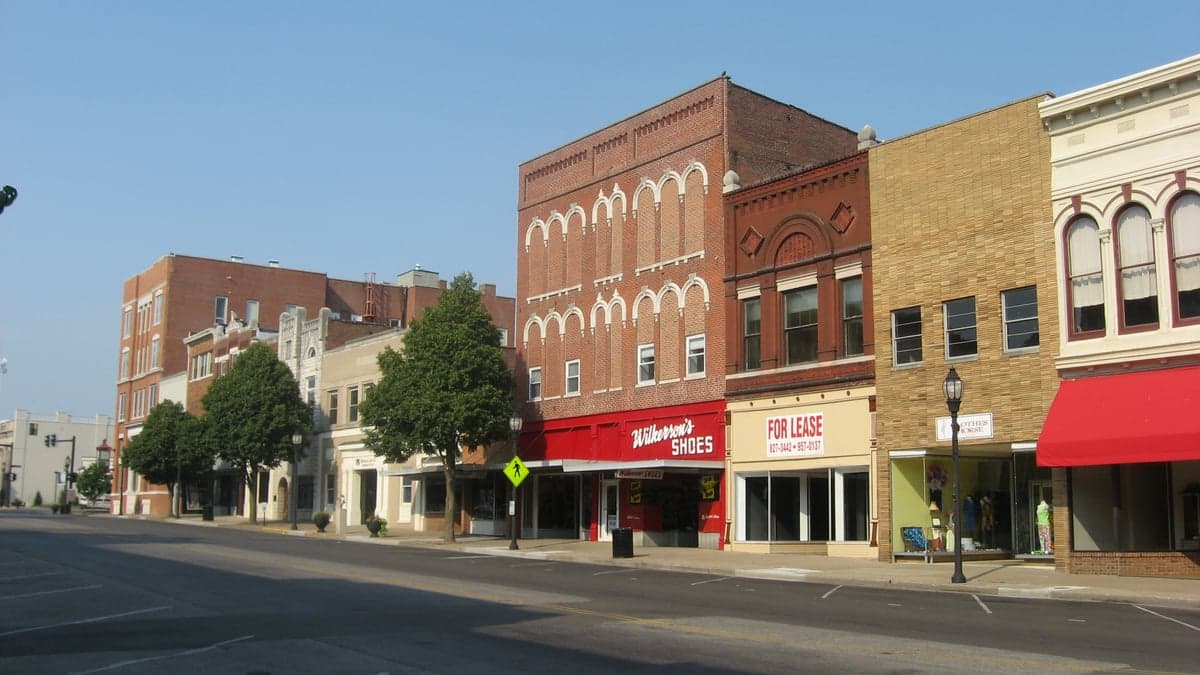
Photo: Wikipedia
Strategic Assessment of Henderson, KY
Workable tactical position. Some exposure to population density or targets, but generally defensible in a crisis.
What does the Strategic Assessment tell us?
Our Strategic Assessment grades tactical survivability of an area. Major population centers, military targets, fallout zones, natural disasters, and border exposure all drive risk — lower exposure means a more defensible position in a crisis.
This is heavily inspired by Joel Skousen's Strategic Relocation book. Highly recommended you checkout the book ($)What does this tell us?
Our Strategic Assessment grades tactical survivability of an area. Major population centers, military targets, fallout zones, natural disasters, and border exposure all drive risk — lower exposure means a more defensible position in a crisis.
This is heavily inspired by Joel Skousen's Strategic Relocation book. Highly recommended you checkout the book ($)Strategic Pillars

Key Distances
Regional Safe Places
Below is our recommended "safe zones" in Kentucky and the surrounding area based on our strategic heuristics. For most people, it's unrealistic to live in a “safe zone” full-time due to work, family or other personal reasons. They tend to be more rural. However, many of these areas are perfect for second homes and retreat properties that double as a vacation home or even a short-term rental.
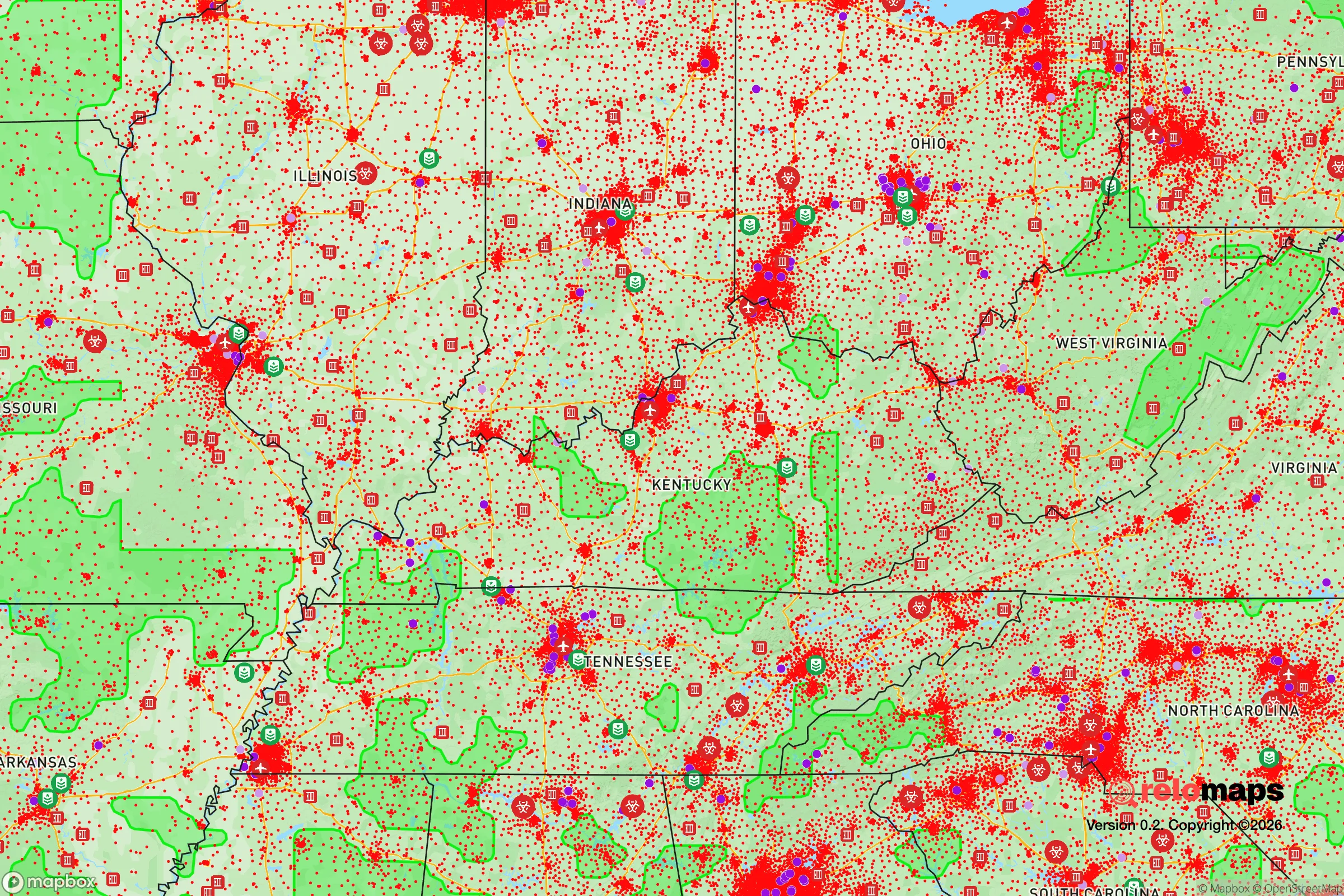
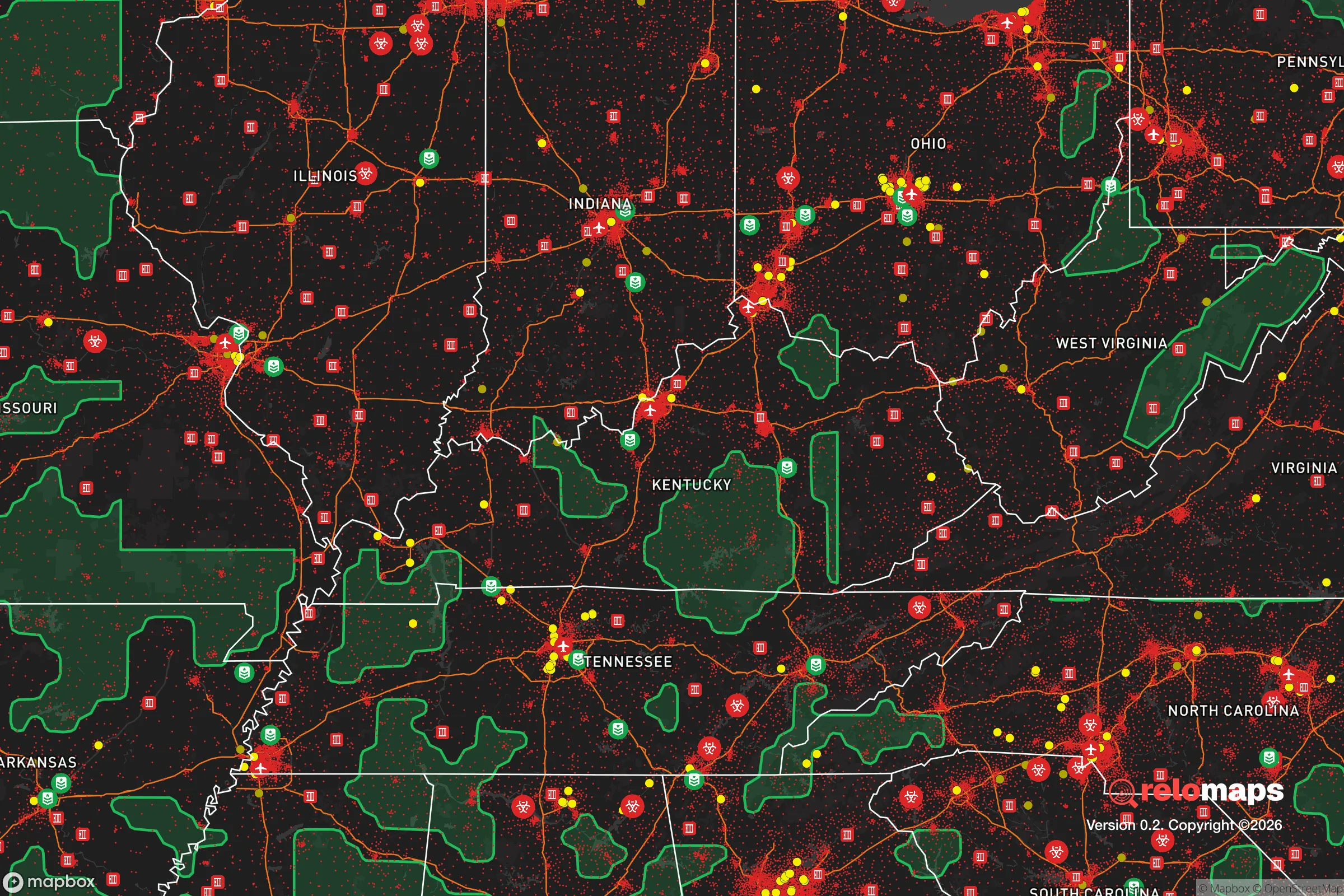


Important Note: For informational purposes only. This does not mean nothing bad ever happens in the green zones. Please use common sense. This is based on public data and modeled with AI. We tried to take a conservative approach but mistakes happen. We update this regularly as new information becomes available.
Solar Generator Recommendations
Backup power matters more here than in safer locations. We've picked three solar generators across budgets and capacity tiers — start with the budget unit if you only need a few essentials, or step up if you want to run a fridge and HVAC for days at a time.

Jackery Portable Power Station Explorer 300
Budget OptionPower on the Go: Weighing only 11 lbs, it's convenient to set up and store with book-sized foldable solar panels

BLUETTI Portable Power Station AC180
Designed for both indoor and outdoor scenarios, AC180 is highly capable as it has a robost capacity and continuous output power.

EF ECOFLOW DELTA Pro Ultra Power Station
Upgraded PickEcoFlow DELTA Pro Ultra is a whole-home energy system designed to grow with your family. Integrated with the Smart Home Panel 2, it scales to meet your evolving energy needs — keeping your home powered, intelligent, and secure through every stage of life.
We earn a commission, at no additional cost to you.
Strategic Assessment Analysis
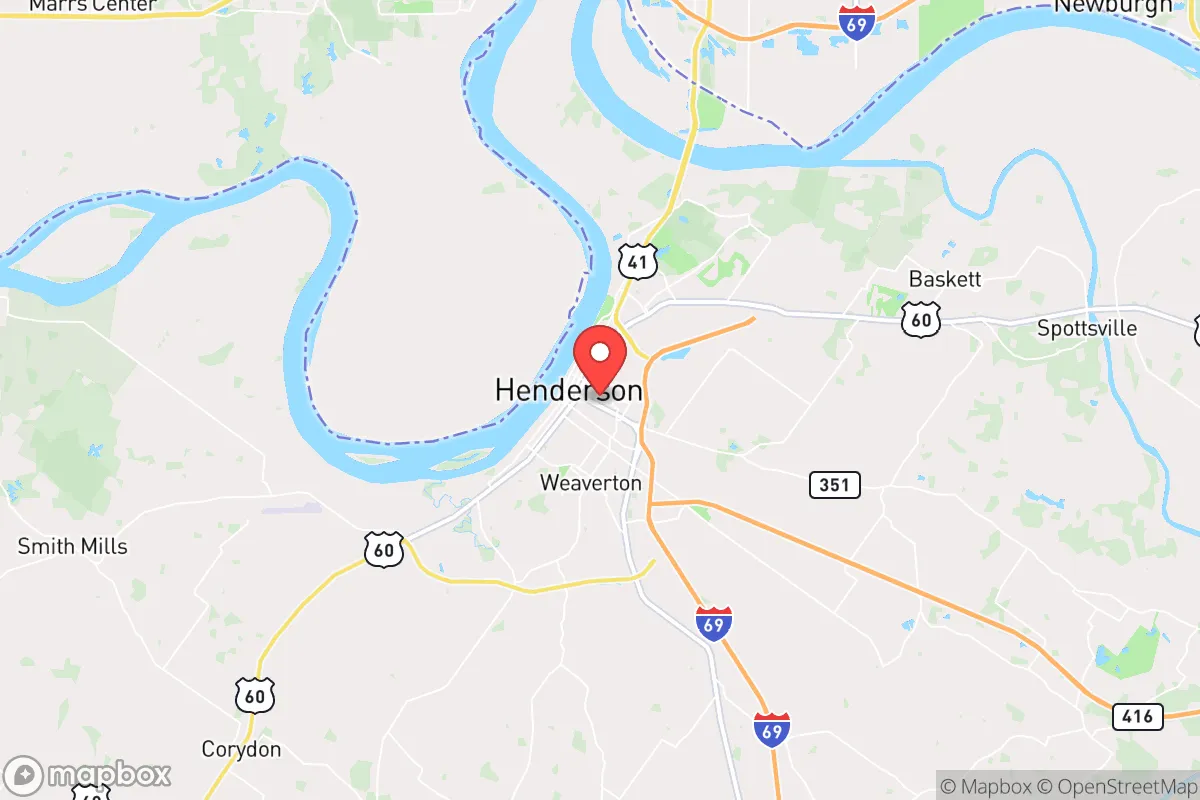
Henderson, Kentucky, sits in a sweet spot that few relocation analysts talk about openly: close enough to the Ohio River’s industrial muscle to matter, far enough from the blast zones and crowd densities that make a city a liability when things go sideways. For a conservative-minded prepper or family looking to plant roots in a place that can absorb shocks—economic, social, or otherwise—this town of roughly 28,000 offers a rare combination of agricultural self-sufficiency, water access, and low strategic profile. It’s not flashy, and that’s exactly the point. Henderson doesn’t make national headlines, which means it doesn’t make target lists either.
Geographic position and natural advantages for long-term stability
Henderson’s location at the confluence of the Ohio River and the Green River is its single greatest strategic asset. The Ohio provides a reliable, year-round water source that can support household use, small-scale irrigation, and even emergency transport if roads become compromised. The surrounding region is part of the Western Kentucky Coalfield, but more importantly, it sits atop the Ohio River Valley’s deep alluvial soils—some of the most productive farmland in the eastern United States. Within a 20-mile radius, you’ve got corn, soybeans, wheat, and livestock operations that could feed a local population for months without a single grocery truck rolling in. The climate is temperate, with four distinct seasons and average annual rainfall around 45 inches, meaning drought is rarely a long-term concern. For a relocator thinking about food security, that’s a concrete advantage over arid western states or flood-prone coastal zones. The terrain is gently rolling, not mountainous, which makes it easier to move supplies, set up solar panels, or dig a well without heavy equipment. Henderson is also positioned roughly 150 miles from both Nashville and Louisville—close enough to access major medical centers or supply runs in normal times, but far enough that a regional crisis in either city won’t immediately spill over into your backyard.
Risks, exposures, and proximity to fallout-relevant landmarks
No location is risk-free, and Henderson has its share of exposures that a serious prepper needs to account for. The most obvious is the Ohio River itself: while it’s a water asset, it’s also a flood risk. The 1937 flood inundated much of downtown Henderson, and while modern levees and the Ohio River Flood Protection Project have reduced that danger, a catastrophic failure or a 100-year event could still threaten low-lying neighborhoods. Check FEMA flood maps before buying property—elevation matters here. The second risk is industrial. Henderson is home to a major coal-fired power plant (the R.D. Green Station) and several chemical and manufacturing facilities along the river. A major industrial accident or a deliberate attack on that infrastructure could release toxic plumes or disrupt the local grid. The plant is a target, plain and simple, in any scenario involving coordinated sabotage or wartime strikes. On the plus side, Henderson is not within the immediate fallout zone of any major military installation or nuclear power plant. The closest nuclear facility is the Tennessee Valley Authority’s Watts Bar plant, about 200 miles southeast—well outside the lethal radiation zone for a worst-case meltdown or a ground burst. There are no major military bases within 100 miles, no strategic bomber wings, no missile silos. That’s a huge plus. The nearest large city is Evansville, Indiana, just across the river (population 120,000), which is small enough that a collapse there wouldn’t create a massive refugee wave, but large enough that any unrest or disease outbreak would be contained on the Indiana side. Henderson’s bridges across the Ohio are chokepoints—both a vulnerability and a defensive asset, depending on your perspective.
Practical resilience for a relocator: food, water, energy, and defensibility
For a family or individual serious about self-reliance, Henderson checks boxes that many “prepper-friendly” towns in the Rockies or Appalachia miss. Water is the first concern, and Henderson has it in spades. The municipal water supply comes from the Ohio River, treated at the Henderson Water Utility plant. In a grid-down scenario, that treatment stops, but the river itself is right there. A simple hand pump, a Berkey filter, or a sand filtration system can turn river water into drinking water indefinitely. The water table is high—most wells in the county hit good water at 50 to 100 feet—so drilling a private well is affordable and practical. For food, the local agricultural base means you can buy directly from farmers at the Henderson Farmers Market or arrange bulk purchases of grain, hay, and livestock feed. The county has a strong 4-H and FFA presence, so knowledge about gardening, animal husbandry, and food preservation is common, not fringe. You can learn canning, fermenting, and butchering from neighbors without traveling to a survivalist retreat. Energy is the weak link. The local grid is fed by coal and natural gas, and while the R.D. Green plant provides redundancy, a long-term outage would leave Henderson in the dark like anywhere else. Solar is viable—the region gets about 200 sunny days per year—but you’ll need battery storage because winter cloud cover can stretch for days. Natural gas is widely available in town, so a dual-fuel generator is a smart hedge. Defensibility is moderate. Henderson is not a natural fortress—no mountains, no narrow passes—but it’s surrounded by farmland and scattered woodlots, which means good lines of sight and limited cover for an approaching threat. The town’s layout is compact, with a historic downtown grid and suburban sprawl to the south and east. A determined group could secure a perimeter around a few blocks or a rural homestead, but you’re not holding a ridgeline. The local law enforcement presence is small—the Henderson Police Department has about 50 officers—so in a widespread breakdown, you’re largely on your own. That’s not a criticism; it’s a reality that demands you bring your own security plan.
The overall strategic picture for Henderson is one of quiet viability. It’s not a bug-out location for the end of the world—it’s a place to live a normal, self-sufficient life that happens to be resilient when the abnormal hits. The risks are real but manageable: flood zones can be avoided, industrial targets are known, and the river is both a gift and a liability. For a conservative-leaning relocator who values community, local food systems, and a low profile, Henderson offers a foundation that doesn’t require a bunker or a militia to be effective. You can raise kids here, work a remote job, and still be ready for the kind of disruptions that make the evening news feel like a warning. It’s not paradise—it’s a practical choice, and that’s exactly what a strategic relocation demands.

* Values derived from national, state, county, city and local statistics and may differ in a specific area. Last updated: 2026-04-21T10:48:18.000Z
Narrative content on this page is AI-generated and may contain mistakes. Verify any details that matter before acting on them.
ReloMaps may earn a commission from affiliate links at no extra cost to you.

