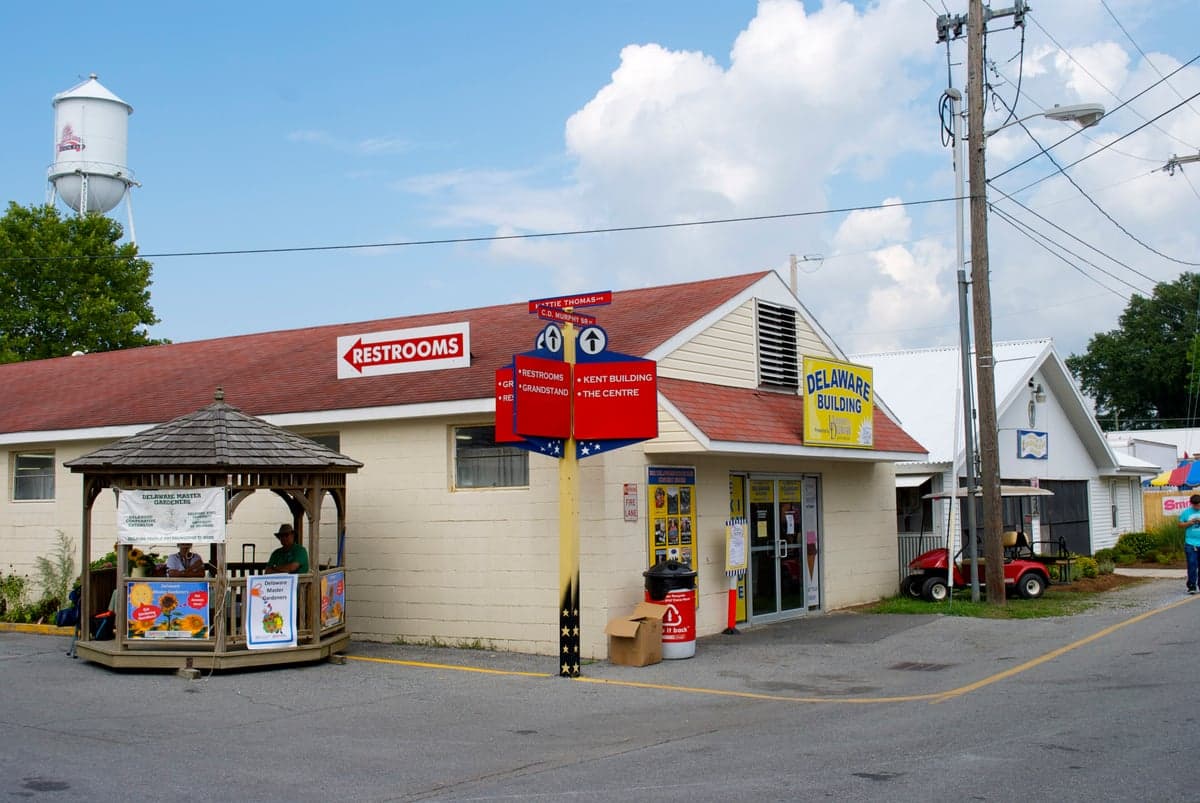
Photo: Wikipedia
Personal Sovereignty in Harrington, DE
Viable for self-reliance. Generally workable, though some barriers may limit total independence.
What does Personal Sovereignty tell us?
Personal Sovereignty measures your capacity for self-reliance and independence with minimal government friction. Higher scores mean fewer barriers between you and the way you want to live... but it assumes you have the space you need and good neighbors.
What does this tell us?
Personal Sovereignty measures your capacity for self-reliance and independence with minimal government friction. Higher scores mean fewer barriers between you and the way you want to live... but it assumes you have the space you need and good neighbors.
State Policy
Energy independence: Importer (2% of energy produced in-state)
Personal Liberty
Homesteading

Personal Liberty Analysis
Harrington, Delaware, sits in a state that presents a mixed bag for those prioritizing personal sovereignty, but the town itself offers a quieter, more hands-off environment than Delaware’s coastal or northern corridors. While the state government in Dover has steadily expanded its regulatory footprint, Harrington’s rural character and lower population density create a buffer against the most intrusive aspects of that overreach. For the survivalist or prepper, the key question is whether the local autonomy—rooted in agricultural land, a small-town ethos, and proximity to fewer state-level enforcement resources—outweighs the creeping constraints of Delaware’s broader legal and tax framework. The answer depends heavily on your specific priorities: gun rights, property control, and the ability to live off-grid are viable here, but you’ll need to navigate a state that is not as libertarian as its southern neighbors.
Tax burden and regulatory posture: how Delaware’s policies affect your wallet and freedom
Delaware’s tax structure is a double-edged sword for the sovereignty-minded. On the plus side, there is no state or local sales tax, which means every purchase you make in Harrington keeps more money in your pocket—a direct benefit for stockpiling supplies or funding a homestead. However, the state levies a progressive income tax ranging from 2.2% to 6.6%, and property taxes in Kent County, where Harrington sits, average around 0.55% of assessed value, which is moderate compared to neighboring Maryland but higher than parts of the South. The regulatory posture is where concerns arise: Delaware has a reputation for business-friendly incorporation laws, but for individuals, the state’s environmental and building codes can feel overbearing. For example, Delaware’s Department of Natural Resources and Environmental Control (DNREC) imposes strict wetland and stormwater management rules that can complicate any land development or off-grid construction. If you’re looking to build a self-sufficient retreat, expect to file permits and face inspections that a county like Sussex might handle more loosely. Harrington’s small-town government is generally less aggressive than state agencies, but you’re still under Dover’s thumb for major projects.
Self-defense and gun law specifics: what you can and cannot do in Harrington
Delaware’s gun laws have shifted leftward in recent years, and that trend is a red flag for the prepper community. The state now requires a permit to purchase a handgun, which involves fingerprinting, a background check, and a 10-day waiting period—a bureaucratic hurdle that delays your ability to arm yourself. Additionally, Delaware banned “assault weapons” and large-capacity magazines in 2022, a move that directly impacts the types of rifles and ammunition storage a survivalist might rely on. However, Harrington’s rural setting means local enforcement of these laws is often lax; the Kent County Sheriff’s Office is generally more focused on drug crimes and property theft than on hunting down standard-capacity magazines. Open carry is legal without a permit, and concealed carry requires a permit that is shall-issue, meaning you’ll get it if you meet the criteria—no subjective “good cause” requirement. For the self-defense-minded, the practical takeaway is that you can keep a shotgun or bolt-action rifle for home protection without much hassle, but building a comprehensive arsenal of modern sporting rifles will require out-of-state purchases or grandfathering. The state’s “stand your ground” law is weak—Delaware imposes a duty to retreat in public spaces before using deadly force, which is a significant limitation compared to Florida or Texas. If you’re serious about self-defense, Harrington offers a decent baseline, but you’ll need to stay informed on legislative sessions in Dover, where anti-gun bills are a perennial threat.
Self-reliance and homesteading viability: lot sizes, zoning, and off-grid feasibility
Harrington’s agricultural zoning is a major draw for those seeking self-reliance. The town is surrounded by farmland, and many residential lots in the unincorporated areas of Kent County are zoned for agricultural use (AR-1), allowing for livestock, gardens, and even small-scale farming operations. Minimum lot sizes in these zones are typically 1 to 2 acres, which is enough for a substantial garden, a few chickens, and a rainwater catchment system. However, off-grid living faces regulatory headwinds. Delaware requires all dwellings to be connected to a septic system or public sewer, and composting toilets are not legally recognized as a primary sanitation method. Solar panels are permitted, but net metering rules require a grid connection—going fully off-grid with battery storage is technically allowed but can trigger inspections from the local building department. Rainwater harvesting is legal for non-potable uses like irrigation, but potable systems must meet DNREC’s strict water quality standards, which often require professional installation. For the prepper, the best strategy is to buy a larger parcel—say, 5 to 10 acres—in the rural areas east of Harrington, where zoning is looser and neighbors are farther away. The town itself has a small but functional feed store and a farm supply co-op, making it easier to source seeds, tools, and animal feed locally. The climate is temperate, with a growing season of about 180 days, so you can produce a significant portion of your own food with planning.
Personal liberties: parental rights, medical autonomy, speech, and property
Delaware’s record on personal liberties is a mixed bag that leans toward government overreach in several key areas. Parental rights are under pressure: the state has a mandatory vaccination schedule for school attendance (with limited religious exemptions), and recent legislation has expanded the ability of minors to consent to certain medical treatments without parental notification, including mental health services and reproductive care. For parents who want to homeschool, Delaware requires annual notification and a basic curriculum outline, but there is no standardized testing requirement, which offers some flexibility. Medical autonomy is constrained by the state’s strict prescription drug monitoring program and a lack of broad health freedom laws—alternative treatments like ivermectin or off-label use of medications are not protected, and the state medical board is aggressive in pursuing doctors who deviate from standard protocols. Free speech is generally protected, but Harrington’s small-town culture means that controversial opinions can lead to social ostracism rather than legal consequences. Property rights are the strongest pillar: Delaware has no statewide rent control, and eminent domain is rarely used outside of major infrastructure projects. However, the state’s coastal zone act gives DNREC broad authority over land use within 200 feet of any tidal wetland, which can affect properties near the Murderkill River or other waterways in the area. For the sovereignty-minded, the key is to buy land away from these regulated zones and to keep a low profile on any non-standard practices.
Overall, Harrington offers a workable but not ideal environment for personal sovereignty compared to other regions. It’s a step up from the heavily regulated Northeast corridor—think New Jersey or New York—but it falls short of the libertarian havens in the rural South or Mountain West. The town’s low population density, agricultural zoning, and lax local enforcement create pockets of autonomy where a determined individual can build a self-reliant life. However, the state government in Dover is a persistent threat, with a track record of expanding gun control, medical mandates, and environmental regulations. For the prepper or survivalist, Harrington is a viable base if you’re willing to navigate the bureaucratic hurdles and keep a close eye on legislative sessions. If you want maximum freedom with minimal government interference, you’d be better off in Texas or Idaho, but if family or job ties keep you in the Mid-Atlantic, Harrington is one of the better bets in Delaware for maintaining a sovereign lifestyle.

* Values derived from national, state, county, city and local statistics and may differ in a specific area. Last updated: 2026-04-29T20:14:57.000Z
Narrative content on this page is AI-generated and may contain mistakes. Verify any details that matter before acting on them.
ReloMaps may earn a commission from affiliate links at no extra cost to you.

