
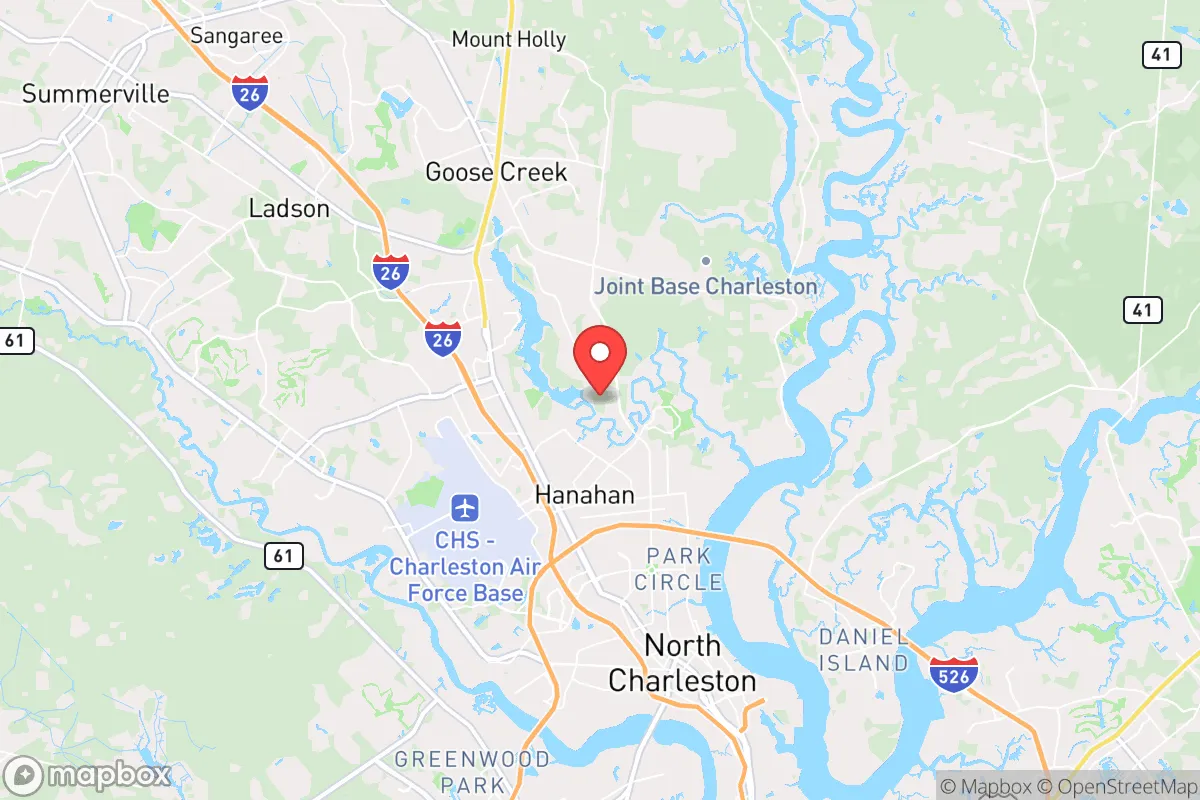
Photo by Leo Heisenberg on Unsplash
Political ClimatePolitical Climate in Hanahan, SC
District shown is the primary district for this city’s centroid. Cities may span multiple districts.
Local Political AnalysisPolitical Analysis of Hanahan, SC
Hanahan, South Carolina, sits solidly in the conservative column, with a Cook Partisan Voting Index of R+6, meaning it votes about six points more Republican than the national average. That’s not just a number on a map—it reflects a community where folks still believe in local control, low taxes, and the Second Amendment. But if you’ve lived here as long as I have, you’ve seen the political winds shift a bit, especially as Charleston’s growth pushes north. The trajectory is still red, but there’s a creeping unease about how much outside influence is seeping into our local decisions.
How it compares
Drive ten minutes south into North Charleston, and you’ll feel the difference immediately. That city leans more Democratic, with a younger, more transient population and a city council that’s been flirting with progressive zoning and spending policies. Hanahan, by contrast, has held the line. Our city council meetings are still about potholes and police funding, not equity audits or climate resolutions. Compare us to Mount Pleasant, which is R+8 but has seen a surge of out-of-state transplants pushing for denser development and bike lanes—Hanahan is more of a “keep it simple” conservative town. We’re closer to Summerville in spirit, but even Summerville has seen its school board debates get heated over curriculum. Here, the biggest political fights are usually about annexation and whether to raise the property tax rate (spoiler: we don’t).
What this means for residents
For the average Hanahan resident, the political climate means you can still run a small business without a dozen new regulations every year. It means your property taxes are among the lowest in Berkeley County, and you don’t need a permit to put up a fence or park your boat in the driveway. But there’s a growing concern: as Charleston’s housing crisis pushes people north, we’re seeing more pressure to “modernize” our zoning laws. Some on the council are whispering about density bonuses and affordable housing mandates—code words for government overreach into your property rights. If you value the freedom to use your land as you see fit, keep an eye on those planning commission meetings. The long-term trend is concerning: if we don’t hold the line, Hanahan could end up like West Ashley, where every new development comes with a laundry list of city-imposed “community benefits” that just mean higher costs for everyone.
Culturally, Hanahan still feels like the Lowcountry I grew up in—churches are full on Sunday, the VFW hall is packed for fish fries, and nobody blinks at a pickup truck with a gun rack. But there’s a quiet tension. The school board recently debated a “diversity, equity, and inclusion” policy, and while it was voted down, the fact that it was even proposed raised eyebrows. That’s the kind of progressive creep that starts small—a committee here, a survey there—and before you know it, your kid’s classroom has a poster about “privilege” instead of the Pledge of Allegiance. The good news is that Hanahan’s voters are still paying attention. Turnout in local elections is high for a town this size, and the incumbents who’ve kept us on a conservative path tend to get reelected. But if you’re thinking of moving here, understand this: the fight to keep Hanahan from becoming another Charleston suburb is ongoing. It’s a good place to raise a family if you value personal freedom, but you’ll need to stay involved to keep it that way.

State Political ClimatePolitical Climate in South Carolina
State Political AnalysisPolitical Environment in the State
South Carolina has been a reliably red state for decades, but the nature of that conservatism is shifting. The state leans Republican by about 10-12 points in presidential elections, with the 2024 cycle seeing Donald Trump win by roughly 18 points. However, the coalition is splitting: the old-school, establishment-friendly GOP of the Lowcountry is giving way to a more populist, culturally conservative energy in the Upstate and the Midlands. Over the last 10-20 years, the state has moved from a sleepy, one-party-Democratic past to a solidly Republican present, but the real story is the internal tension between the Charleston business class and the Greenville/Spartanburg grassroots.
Urban vs. rural divide
The political map is stark. Greenville and Spartanburg are the engine rooms of the modern conservative movement in the state—fast-growing, evangelical-heavy, and reliably red at every level. Charleston is the blue outlier: the city itself votes Democratic by wide margins, driven by tourism wealth, tech transplants, and a growing academic class, but the surrounding Berkeley and Dorchester counties remain deeply red. Columbia (Richland County) is the other Democratic stronghold, anchored by the state university and state government. The rural counties—Oconee, Pickens, Anderson, Lexington, Beaufort—vote 65-75% Republican. The real divide isn't just city vs. country; it's between the coastal transplant corridor (Charleston to Hilton Head) and the inland traditionalist belt. Myrtle Beach (Horry County) is a wildcard—historically red but now seeing a flood of out-of-state retirees who sometimes bring more moderate or libertarian leanings.
Policy environment
South Carolina's policy posture is broadly conservative, but with some notable wrinkles. There is no state income tax on retirement income, and the top marginal income tax rate was cut from 7% to 6.4% in 2023, with a path to 6% by 2026. Property taxes are low—the average effective rate is about 0.57%—but the state relies heavily on sales tax (6% state, plus local add-ons). Education policy is a battleground: the state passed a universal school voucher program in 2023 (the Education Scholarship Trust Fund), but implementation has been slow and the program is capped. Healthcare is a mixed bag—the state did not expand Medicaid, but it also has some of the loosest scope-of-practice laws for nurse practitioners in the Southeast. Election laws tightened after 2020: voter ID is required, absentee ballot drop boxes were restricted, and the state now has a 7-day early voting window. The legislature is firmly Republican (super-majorities in both chambers), but the governor's veto power is limited, and the real power often lies with the House Speaker and the Senate Finance Committee.
Trajectory & freedom
On personal freedom, South Carolina is moving in a positive direction for conservatives, but not without friction. Constitutional carry (permitless carry) became law in 2024, a major win for gun rights advocates. The state also passed a "Parents' Bill of Rights" in 2023, requiring schools to notify parents of any changes to a child's mental, emotional, or physical health—a direct response to transgender accommodation policies. On abortion, the state enacted a six-week heartbeat ban in 2023, though it's been tied up in court challenges. Medical autonomy took a hit with the COVID-era mandates: the state never imposed a broad mask or vaccine mandate, but local governments in Charleston and Richland County did, creating friction. Property rights are strong—there's no state-level rent control, and zoning is largely local—but the coastal areas are seeing increasing pressure from environmental regulations on development. The biggest freedom concern for newcomers is the lack of a state-level Religious Freedom Restoration Act (RFRA), which means religious liberty claims are decided under the weaker federal standard. That's a gap compared to states like Texas or Florida.
Civil unrest & political movements
South Carolina has a relatively low profile for civil unrest compared to other states, but there are flashpoints. The Confederate flag removal from the Statehouse grounds in 2015 after the Charleston church shooting was a watershed moment that still animates both sides. The "Moms for Liberty" movement is strong in the suburbs of Greenville and Lexington, where school board meetings have become battlegrounds over library books and curriculum. Immigration politics are less visible than in border states, but there's a growing tension in the Lowcountry (Beaufort, Jasper counties) where agricultural labor and construction rely heavily on undocumented workers. The state has no sanctuary cities, and a 2024 law requires all law enforcement to cooperate with ICE. Election integrity remains a live issue: the 2020 audit in Horry County found no widespread fraud, but the distrust persists among grassroots activists. You won't see daily protests, but you will see a politically engaged populace that shows up at school board meetings and county council hearings—especially in the Upstate.
Projection
Over the next 5-10 years, South Carolina will likely become more conservative, but in a populist, not establishment, direction. The in-migration from the Northeast and Midwest is accelerating—roughly 100,000 new residents per year—and while many are retirees seeking low taxes, a significant number are younger families fleeing high-cost blue states. These newcomers tend to be culturally conservative but economically moderate, which could push the state toward more school choice, lower property taxes, and less regulation on housing. The coastal areas (Charleston, Hilton Head) will continue to drift left as they fill with remote workers and creatives, but the Upstate and the Midlands will hold the line. The biggest wildcard is the state's growing Hispanic population, concentrated in the Lowcountry and the Greenville-Spartanburg corridor—they tend to vote more conservative than national averages, but that could shift as national politics polarize. Expect the legislature to continue cutting income taxes, expanding school choice, and tightening election laws. The state is unlikely to legalize marijuana or expand Medicaid in the next decade.
For a conservative moving to South Carolina, the bottom line is this: you'll find a state that broadly shares your values on taxes, guns, and parental rights, but you need to pick your county carefully. Greenville, Spartanburg, and Lexington counties are the safest bets for a like-minded community and responsive local government. Avoid Charleston city limits and Richland County if you want to avoid progressive local policies. The state is trending in the right direction on most freedom metrics, but the coastal transplant corridor is a reminder that no place is immune to demographic change. Come for the low taxes and the gun laws; stay for the school choice and the community. Just know that the political fight is shifting from the statehouse to the school board—and that's where you'll need to show up.
* Values derived from national, state, county, city and local statistics and may differ in a specific area. Last updated: 2026-04-29T20:04:29.000Z
Narrative content on this page is AI-generated and may contain mistakes. Verify any details that matter before acting on them.
ReloMaps may earn a commission from affiliate links at no extra cost to you.

