Photo: Wikipedia
Political ClimatePolitical Climate in Hampstead, MD
District shown is the primary district for this city’s centroid. Cities may span multiple districts.
Local Political AnalysisPolitical Analysis of Hampstead, MD
Hampstead, Maryland, sits in a bit of a political bubble, and not necessarily in a good way. The Cook PVI rating of D+10 means this town leans heavily Democratic, a full ten points more liberal than the national average. That’s a stark contrast to the surrounding Carroll County, which has historically been one of the more conservative strongholds in the state. If you’ve been here a while, you’ve watched the local politics shift from a common-sense, live-and-let-live approach to something that feels a lot more like the policies you see in Baltimore or Montgomery County—just on a smaller scale.
How it compares
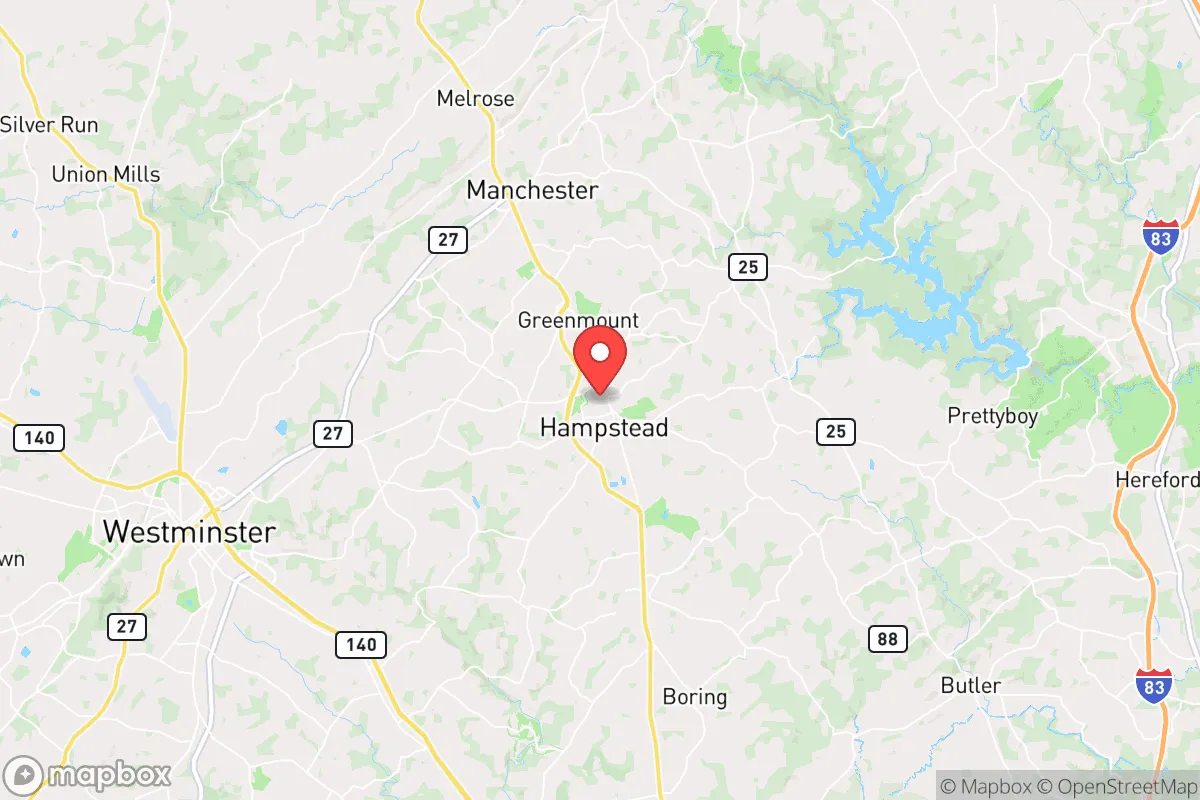
Drive ten minutes west to Manchester or fifteen minutes north to the Pennsylvania line, and you’ll find a completely different political vibe. Those areas still lean red, with folks who value limited government and personal responsibility. Hampstead, by contrast, has become an outlier in Carroll County. The town’s proximity to the Baltimore metro area—about 30 miles south—has brought in a wave of new residents who commute to the city and bring its politics with them. While the county as a whole voted for Trump in 2020 by a solid margin, Hampstead’s precincts went the other way. That split creates a real tension: you’ve got a town council and school board that are increasingly progressive, but a county government that still pushes back on things like mask mandates and property tax hikes. It’s a weird dynamic, and it means local elections here matter more than ever.
What this means for residents
For the average homeowner or small business owner in Hampstead, the D+10 lean translates directly into policy. You’ve seen zoning regulations get tighter, making it harder to run a home-based business or put up a fence without jumping through hoops. The school board has pushed for more progressive curriculum changes, and there’s been a steady creep of new fees and permits that feel less about safety and more about control. Property taxes have ticked up faster than in neighboring towns, and there’s talk of adding impact fees on new construction. If you value the freedom to use your land as you see fit or want your kids taught without ideological slant, these trends are a red flag. The local government seems more interested in aligning with state-level mandates from Annapolis than listening to the folks who’ve lived here for generations.
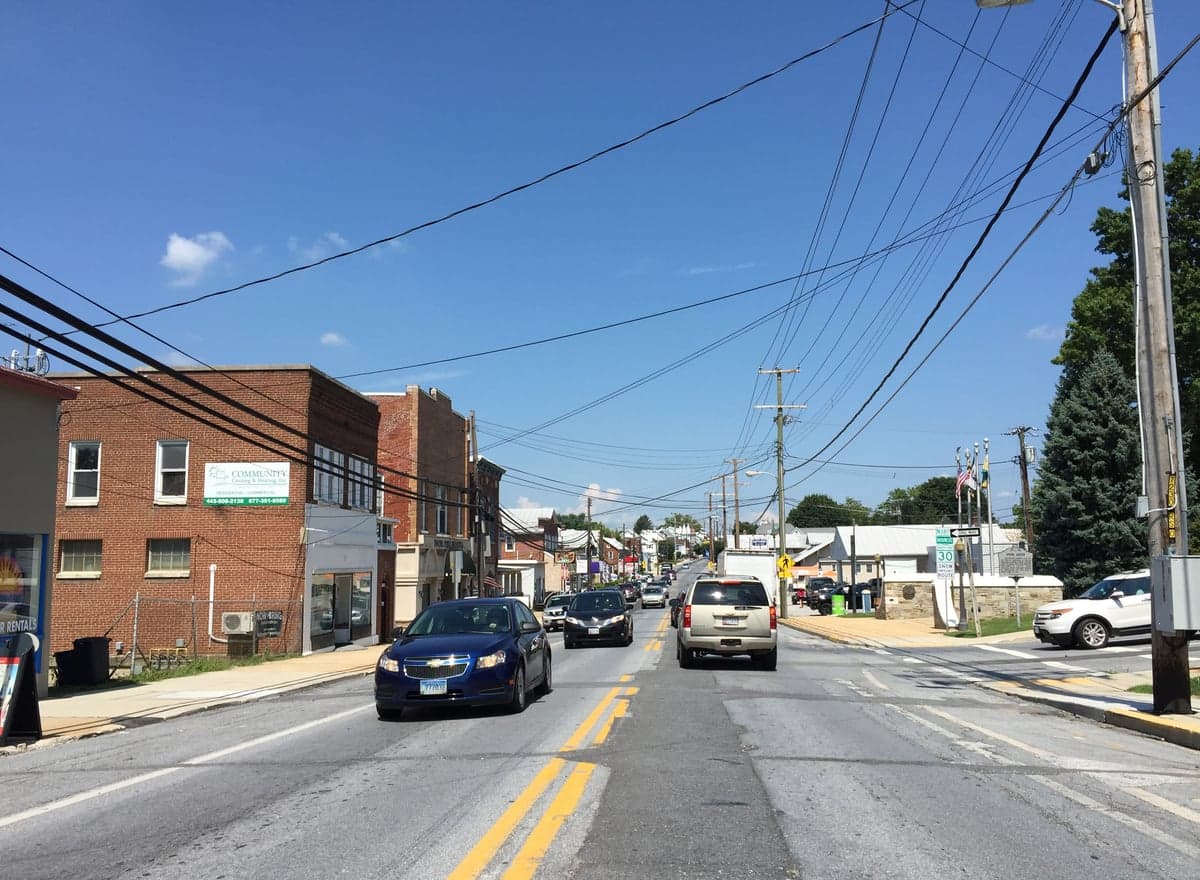
On the flip side, if you’re coming from a deep-blue area like Columbia or Silver Spring, Hampstead might feel like a breath of fresh air—relatively speaking. The town still has a small-town feel, with a Main Street that hasn’t been overrun by chain stores, and the county sheriff’s office generally respects Second Amendment rights. But the trajectory is concerning. The same folks who pushed for bike lanes and roundabouts are now talking about “equity audits” for local police. It’s a slow shift, but it’s real.
Culturally, Hampstead still holds onto some of its rural roots—you’ll see pickup trucks at the hardware store and kids playing in the street until dusk. But the annual Hampstead Day celebration now includes booths from progressive activist groups that would have been unheard of a decade ago. The long-term outlook? If the current trend holds, expect more regulations, higher taxes, and a growing disconnect between the town’s politics and the values of the surrounding county. For now, it’s still a decent place to raise a family, but you’ll want to keep a close eye on who’s running for town council next cycle.

State Political ClimatePolitical Climate in Maryland
State Political AnalysisPolitical Environment in the State
Maryland has long been a deep blue state, but its political landscape is far more complex than the statewide voting totals suggest. The Democratic Party holds a structural advantage thanks to the massive population centers of Montgomery County and Prince George’s County, which together account for nearly 40% of the state’s vote. Over the past 20 years, the state has shifted steadily leftward on cultural and economic issues, though a persistent and growing conservative minority remains in the rural west and on the Eastern Shore. For a conservative considering relocation, the key question isn’t whether Maryland is red—it’s whether the remaining pockets of freedom are worth the trade-offs.
Urban vs. rural divide
The political map of Maryland is a tale of two worlds. The Baltimore-Washington corridor, anchored by Baltimore City, Silver Spring, and Columbia, is overwhelmingly Democratic and increasingly progressive. These areas drive the state’s leftward tilt on everything from taxes to education. In contrast, the western counties—Garrett, Allegany, and Washington—vote reliably Republican, often by margins of 30 points or more. The Eastern Shore, including Salisbury and Easton, is more mixed but leans red in local races. The real battleground is the suburban ring around D.C., particularly Frederick County and Howard County. Frederick has been a rare bright spot for conservatives, flipping from blue to red in local elections in the 2020s, while Howard remains a Democratic stronghold. The divide isn’t just geographic—it’s cultural. Rural Marylanders feel increasingly alienated from the policies coming out of Annapolis, and that resentment fuels the state’s small but vocal conservative movement.
Policy environment
Maryland’s policy environment is a mixed bag for conservatives, with some bright spots and many red flags. The state has a progressive income tax structure with rates up to 5.75%, plus a local piggyback tax that can push the effective rate over 8% in high-tax counties like Montgomery. Property taxes are high, especially in the D.C. suburbs, and the estate tax kicks in at $5 million, making it one of the worst states for wealth preservation. On the plus side, Maryland has no sales tax on groceries or prescription drugs, and the corporate income tax rate of 8.25% is competitive regionally. Education policy is a flashpoint: the state’s Blueprint for Maryland’s Future law mandates massive spending increases on public schools, but it also centralizes control in Annapolis, reducing local school board autonomy. Parents in Carroll County and Harford County have fought back against curriculum changes and mask mandates, with some success in local elections. Election laws are a concern: Maryland has no voter ID requirement, same-day registration, and universal mail-in ballots were made permanent in 2021. For conservatives, the lack of election integrity measures is a major worry.
Trajectory & freedom
Maryland is becoming less free by the year, particularly on issues of personal liberty and economic freedom. The 2023 passage of the Maryland Gun Safety Act banned the carry of firearms in many public places, including hospitals, stadiums, and any establishment that serves alcohol—effectively gutting the spirit of the Bruen decision. The state also passed a red flag law in 2018 and requires a license to purchase a handgun, making it one of the most restrictive states for gun owners. On medical freedom, Maryland was an early adopter of COVID-19 vaccine mandates for healthcare workers and state employees, and the state’s health department retains broad emergency powers. Parental rights took a hit with the 2021 passage of the Transgender Health Equity Act, which allows minors to access gender-affirming care without parental consent in some circumstances—a major concern for conservative families. Property rights are under pressure from the state’s aggressive use of eminent domain for transit-oriented development, particularly in the Purple Line corridor. The only area where freedom has expanded is in school choice: Maryland launched a modest voucher program in 2024 for low-income students in struggling districts, but it’s a drop in the bucket compared to the state’s $18 billion education budget.
Civil unrest & political movements
Maryland has seen its share of civil unrest, most notably the 2015 Baltimore riots following the death of Freddie Gray, which exposed deep racial and economic divides. Since then, the state has become a battleground for progressive activism, with groups like CASA de Maryland pushing for sanctuary policies and driver’s licenses for undocumented immigrants. The state is a sanctuary jurisdiction, and in 2023, the legislature passed the Dignity Not Detention Act, which limits cooperation with federal immigration authorities. On the right, the Maryland Republican Party has been energized by grassroots movements around parental rights and election integrity, but it remains fractured between moderates and Trump-aligned conservatives. The Frederick County Republican Club and Eastern Shore Patriots are active, but they struggle to gain traction in a state where Democrats hold supermajorities in both chambers. Election integrity remains a hot-button issue: the 2020 and 2022 cycles saw widespread use of ballot drop boxes and mail-in voting, and conservative activists have filed multiple lawsuits over the state’s voter rolls, which they argue are bloated with inactive and ineligible voters. For a new resident, the most visible flashpoint is likely to be the annual Maryland Tax Revolt rally in Annapolis, where hundreds of activists protest the state’s high tax burden.
Projection
Over the next 5-10 years, Maryland is likely to continue its leftward drift, driven by in-migration from the D.C. suburbs and the growing political power of Montgomery and Prince George’s counties. The state’s population is aging and diversifying, but the new arrivals are overwhelmingly Democratic-leaning professionals. The rural and exurban counties—Garrett, Allegany, Washington, and parts of the Eastern Shore—will continue to lose political influence as their populations stagnate or decline. The one wild card is Frederick County, which has been growing rapidly and could become a conservative counterweight if it continues to flip red. But even if Frederick turns solidly Republican, it won’t be enough to overcome the Democratic strongholds. The most likely scenario is that Maryland becomes a one-party state in practice, with Republicans reduced to a permanent minority in the legislature. For conservatives, the practical implication is that policy will continue to shift left on taxes, guns, education, and social issues. The only hope for change is a national realignment that breaks the Democratic stranglehold on the D.C. suburbs, but that’s a long shot.
Bottom line for a new resident: If you’re a conservative moving to Maryland, you’re choosing to live in a state where your vote will rarely matter in statewide elections. Your best bet is to target a red-leaning county like Frederick, Carroll, or Harford, where local government is still somewhat responsive to conservative concerns. You’ll pay high taxes, deal with restrictive gun laws, and watch your children’s education be shaped by Annapolis bureaucrats. But you’ll also find strong communities of like-minded people, good schools in the right districts, and access to some of the best job markets in the country. It’s a trade-off—and one that requires you to be politically engaged at the local level just to hold the line.
* Values derived from national, state, county, city and local statistics and may differ in a specific area. Last updated: 2026-04-22T01:54:27.000Z
Narrative content on this page is AI-generated and may contain mistakes. Verify any details that matter before acting on them.
ReloMaps may earn a commission from affiliate links at no extra cost to you.

