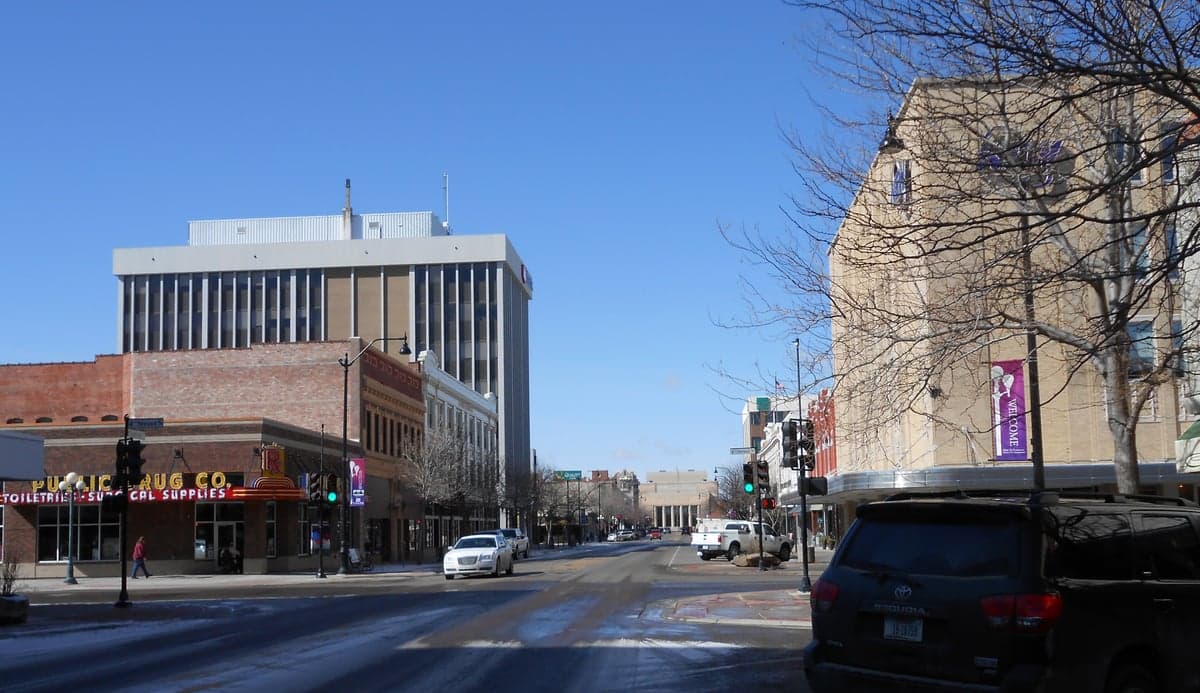
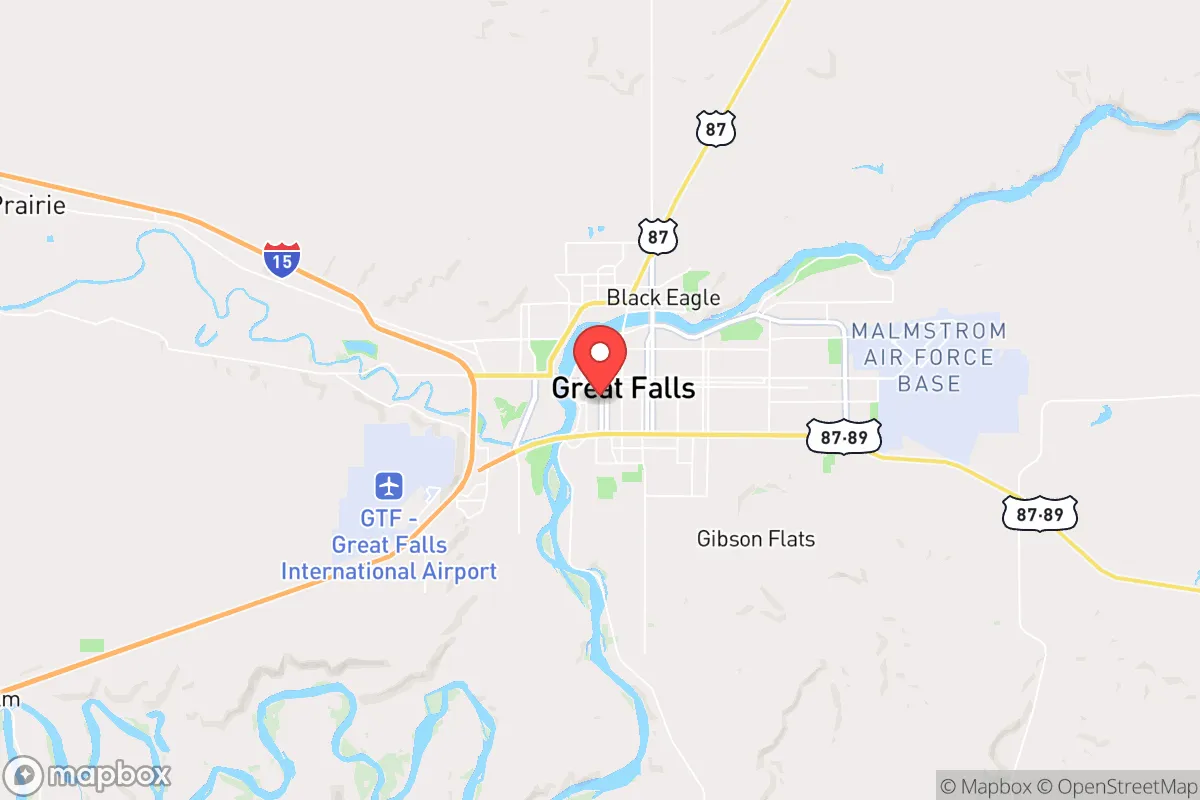
Photo: Wikipedia
Personal Sovereignty in Great Falls, MT
Viable for self-reliance. Generally workable, though some barriers may limit total independence.
What does Personal Sovereignty tell us?
Personal Sovereignty measures your capacity for self-reliance and independence with minimal government friction. Higher scores mean fewer barriers between you and the way you want to live... but it assumes you have the space you need and good neighbors.
What does this tell us?
Personal Sovereignty measures your capacity for self-reliance and independence with minimal government friction. Higher scores mean fewer barriers between you and the way you want to live... but it assumes you have the space you need and good neighbors.
State Policy
Energy independence: Net exporter (120% of energy produced in-state)
Personal Liberty
Homesteading

Personal Liberty Analysis
Great Falls, Montana, offers a notably high degree of personal sovereignty compared to much of the United States, largely due to Montana’s constitutional and legislative framework that prioritizes individual liberty over government reach. For a survivalist or prepper mindset, this translates into a legal environment where self-reliance is not just tolerated but actively protected, though it is not without its own local nuances. The city sits in Cascade County, a region where the state’s strong libertarian streak—rooted in its frontier history and a deep skepticism of federal overreach—creates a baseline of freedom that is increasingly rare in coastal or urbanized states. However, the presence of Malmstrom Air Force Base and a sizable federal workforce introduces a subtle tension between local autonomy and federal dependency, which a strategic relocator should weigh carefully.
Tax burden and regulatory posture for individuals and small operations
Montana’s tax structure is a clear win for personal sovereignty, with no state sales tax and a relatively flat income tax rate of 5.9% as of 2026, which applies to all income levels. This means no hidden consumption taxes on gear, food, or ammunition—a direct benefit for anyone stockpiling supplies or running a home-based business. Property taxes in Great Falls are moderate, averaging around 0.8% of assessed value, which is lower than the national average and far below states like Texas or New York. The regulatory posture in Montana is explicitly pro-freedom: the state has a right-to-farm law that protects agricultural activities from nuisance lawsuits, and Cascade County’s zoning is generally permissive outside the city limits. For a prepper, this means fewer bureaucratic hurdles for building a workshop, storing fuel, or keeping livestock. The state also has no business inventory tax, which is a boon for anyone holding bulk supplies or running a small manufacturing operation. The main regulatory friction comes from federal environmental agencies, particularly around water rights and mining claims, but Montana’s state government actively pushes back against EPA overreach, making it a more hospitable environment for those who value minimal government interference.
Self-defense and gun law specifics in Great Falls and Montana
Montana is a constitutional carry state, meaning no permit is required to carry a concealed firearm for anyone legally allowed to possess one. Great Falls residents enjoy this right without the need for a license, background check beyond the point of purchase, or waiting periods for handguns. The state preempts all local gun ordinances, so Cascade County cannot impose stricter rules than the state—no magazine bans, no assault weapon restrictions, and no red flag laws as of 2026. Stand-your-ground laws are in full effect, with no duty to retreat in any place where a person is lawfully present. For a survivalist, this is a critical layer of sovereignty: the legal framework assumes you are the first line of defense for your home and family. The state also has a strong castle doctrine, protecting the use of deadly force against intruders in your home, vehicle, or workplace. The only notable limitation is that Montana does not allow the open carry of firearms in certain government buildings or schools, but these restrictions are narrow and well-defined. The local gun culture in Great Falls is robust, with multiple gun shops, ranges, and a strong community of competitive shooters and hunters, which reinforces the social acceptance of armed self-defense.
Self-reliance and homesteading viability: lot sizes, zoning, and off-grid feasibility
Great Falls and its surrounding rural areas offer genuine homesteading potential, though the city itself is more suburban. Inside city limits, standard residential lots range from 6,000 to 10,000 square feet, which is enough for a large garden, a chicken coop, and a small workshop, but not for significant livestock or extensive off-grid systems. The real opportunity lies in Cascade County’s unincorporated areas, where you can find parcels of 1 to 40 acres within a 20-minute drive of downtown. Zoning in these areas is minimal: no building permits are required for structures under 200 square feet, and there are no county-wide restrictions on rainwater collection, solar panels, or composting toilets. Off-grid living is legally feasible, provided you meet basic septic and well requirements, which are enforced by the state health department but are straightforward for a prepared individual. The city’s water rights are senior and well-established, but for those drilling a private well, Montana follows a prior-appropriation system that can be complex—consulting a water rights attorney is advisable. The growing season is short (about 120 days), but cold-hardy crops and greenhouse techniques are well-understood by local homesteaders. The biggest practical challenge is winter: heating a home off-grid requires serious planning, as temperatures can drop to -30°F. Wood stoves are common and legal, and the surrounding national forests offer firewood permits for $5 per cord, making self-reliant heating affordable.
Personal liberties: parental rights, medical autonomy, speech, and property
Montana is a stronghold for parental rights, with state law explicitly affirming that parents have the fundamental right to direct the upbringing, education, and healthcare of their children. This means no mandatory vaccine requirements for school attendance (only opt-out forms), and no state-level mask mandates or forced medical procedures for minors. The state also has a robust medical freedom law that prohibits discrimination based on vaccination status, which is a key consideration for those wary of government overreach in health decisions. Free speech is protected by Montana’s constitution, which includes a specific clause that no law shall be passed impairing the freedom of speech, and the state has no hate speech laws that could chill political or religious expression. Property rights are strongly defended: Montana has a private property rights protection act that requires the government to compensate landowners for any regulatory taking that reduces property value by 30% or more. This makes eminent domain abuse rare and gives landowners leverage against zoning changes. The only area where personal liberty is somewhat constrained is in the city of Great Falls itself, which has a noise ordinance and some restrictions on burning and livestock within city limits, but these are typical for a small city and easily avoided by moving just outside the urban boundary.
Overall, Great Falls offers a level of personal sovereignty that is among the highest in the lower 48, particularly for those willing to live just outside the city limits. The combination of no sales tax, constitutional carry, strong parental rights, and permissive zoning creates an environment where a survivalist or prepper can operate with minimal government interference. The main trade-off is the harsh winter climate, which demands serious self-reliance in heating and food storage, and the presence of a federal military base that brings some federal oversight to the local economy. Compared to states like California, New York, or even Colorado, Great Falls is a sanctuary for those who value autonomy over convenience. It is not a libertarian utopia—there are still property taxes, state income tax, and some federal land restrictions—but for a conservative-leaning individual or family looking to escape the encroaching regulatory state, it is one of the most viable options in the Mountain West. The key is to buy land in the county, not the city, and to understand that true sovereignty here requires preparation, not just legal permission.

* Values derived from national, state, county, city and local statistics and may differ in a specific area. Last updated: 2026-04-29T20:14:40.000Z
Narrative content on this page is AI-generated and may contain mistakes. Verify any details that matter before acting on them.
ReloMaps may earn a commission from affiliate links at no extra cost to you.

