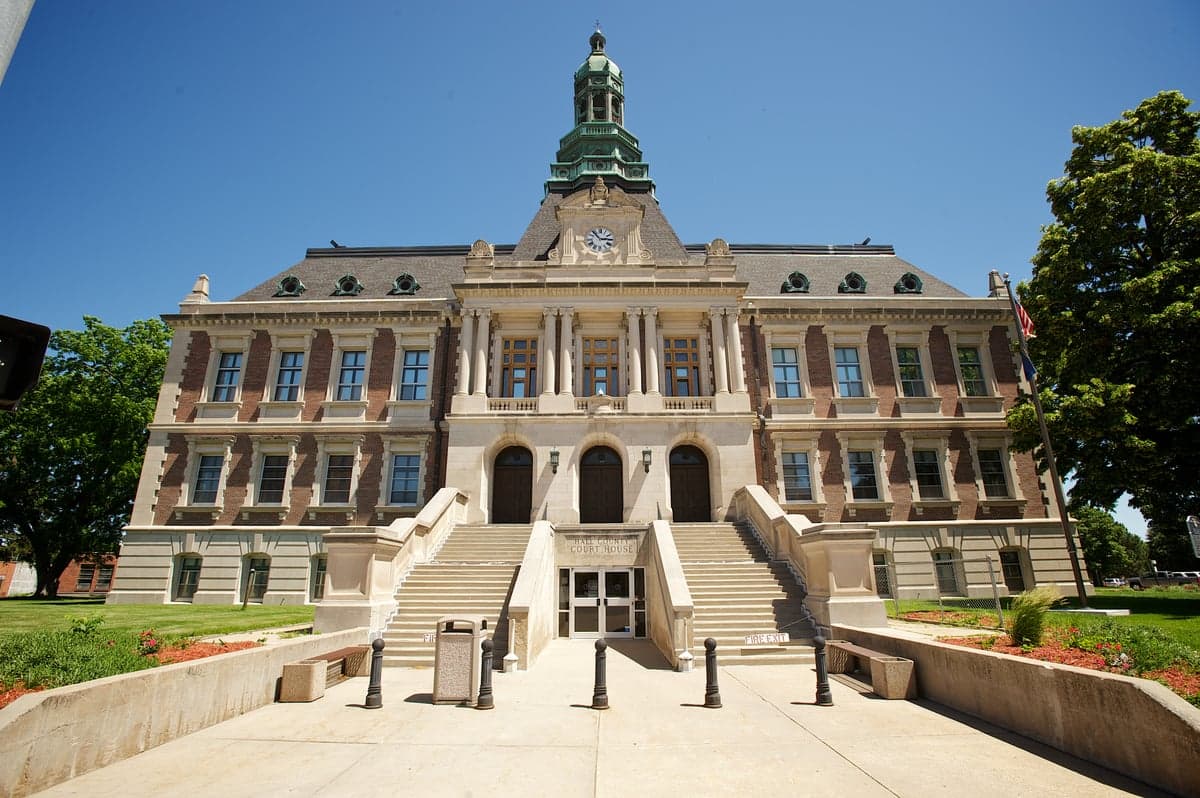
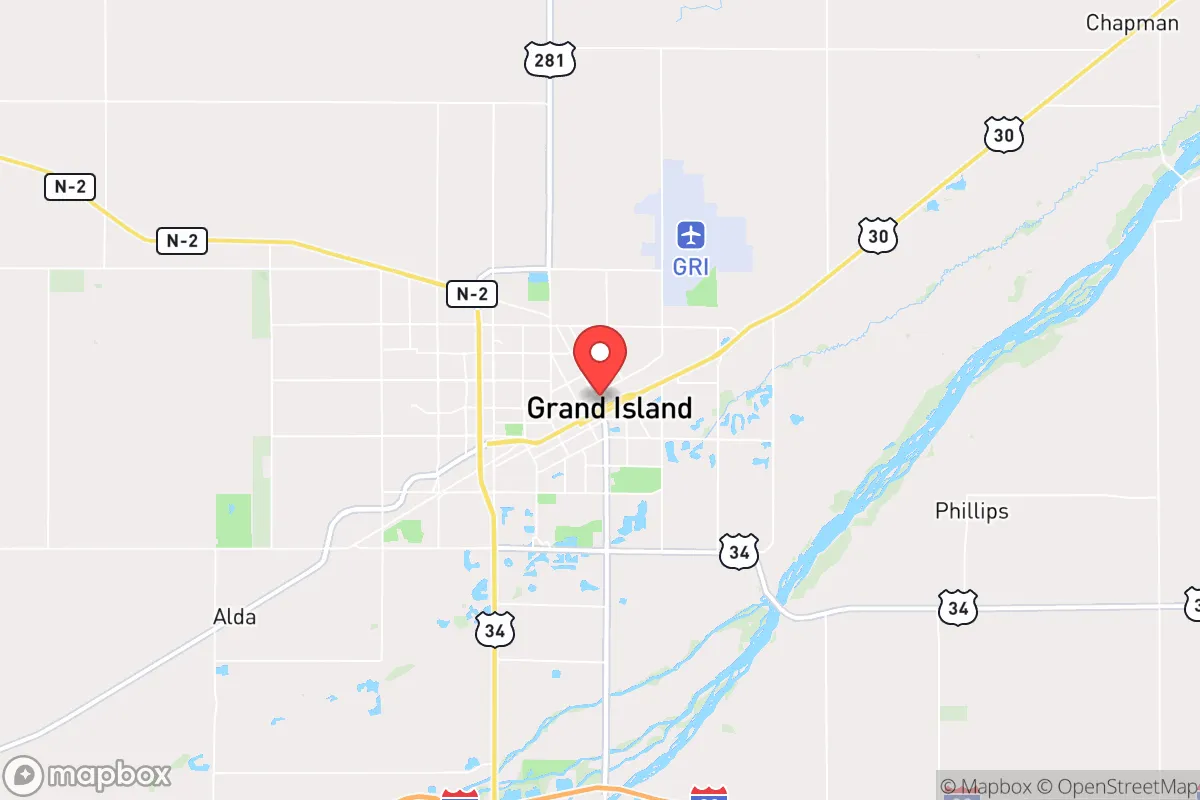
Photo: Wikipedia
Demographics of Grand Island, NE
Affluence Level in Grand Island, NE
A middle-class area roughly in line with national averages across income, home values, education, and employment.
People of Grand Island, NE
The people of Grand Island, Nebraska, today form a community of 52,761 that is notably younger and more diverse than the state average, shaped by a long history of agricultural labor demand and refugee resettlement. The city’s identity is defined by a large and growing Hispanic population (35.4%), a significant East/Southeast Asian community (1.1%), and a small but established Black population (3.7%), all set against a white majority (57.2%) that is older and more likely to be native-born. With a foreign-born share of 11.6% — nearly triple the Nebraska average — and a college attainment rate of just 20.7%, Grand Island is a working-class, family-oriented city where manufacturing, meatpacking, and logistics anchor daily life. The population is increasingly suburbanizing into newer developments on the south and west sides, while older neighborhoods retain distinct ethnic enclaves.
How the city was settled and grew
Grand Island’s founding population arrived via the Union Pacific Railroad in the 1860s, drawn by the promise of cheap land under the Homestead Act and the construction of the transcontinental railroad. The original settlers were overwhelmingly German and Irish immigrants, followed by a wave of Danish and Swedish farmers who established the city as a regional agricultural hub. By the early 1900s, the city’s core neighborhoods — Downtown and the South Locust Street corridor — housed these European ethnic groups in dense, walkable blocks of single-family homes and boarding houses. The opening of the Grand Island Meatpacking Plant in the 1930s (later owned by Monfort and then JBS) began attracting Mexican migrant laborers, who settled in the West Lawn and Southwest Park neighborhoods, forming the first Hispanic enclaves. Through the mid-20th century, the city remained overwhelmingly white (over 98% in 1950), with the European-descended population concentrated in Northwest Grand Island and the East Side near the Platte River.
Modern era (post-1965)
The 1965 Immigration and Nationality Act, combined with the expansion of the JBS beef plant in the 1970s, fundamentally reshaped Grand Island’s population. The plant’s demand for low-skill labor drew a steady stream of Mexican and Central American immigrants, who settled in the Southwest Park and West Lawn neighborhoods, areas that remain heavily Hispanic today. By 1990, the Hispanic share had risen to 12%, and by 2020 it had surged to 35.4%, driven by both immigration and high birth rates. The 1980s also saw the arrival of a smaller but distinct East/Southeast Asian community — primarily Vietnamese and Filipino refugees — who clustered in the South Locust Street area near the plant. The Black population, historically tiny, grew modestly from 0.5% in 1990 to 3.7% today, concentrated in the South Central neighborhood near the railroad tracks. Meanwhile, domestic white in-migration slowed sharply after 1980, with many younger white residents leaving for college or jobs in Lincoln and Omaha, contributing to the city’s aging white demographic. The Indian subcontinent population remains negligible at 0.1%, with no visible enclave.
The future
The population is heading toward a continued Hispanic majority, likely crossing the 50% threshold within the next 10–15 years, driven by both immigration and a median age for Hispanic residents (26) that is 15 years younger than the white median (41). The East/Southeast Asian community is stable but not growing rapidly, as the meatpacking plant has automated some roles and refugee resettlement has slowed. The white population is declining in absolute numbers, with many older residents aging in place in Northwest Grand Island and the East Side, while younger white families increasingly move to newer subdivisions on the south edge of town, such as South Grand Island near Highway 281. The city is not tribalizing into hostile enclaves — neighborhoods remain mixed, though schools and churches are increasingly segregated by language and culture. The foreign-born share (11.6%) is likely to plateau as second-generation Hispanic residents become native-born and English-dominant, but the cultural identity of the city will continue to shift toward a Hispanic-majority, working-class character.
For a conservative-leaning individual or family considering a move to Grand Island, the city offers a stable, family-oriented environment with low crime relative to similarly sized Nebraska towns, but with a demographic trajectory that is unmistakably toward a Hispanic-majority future. The economy remains anchored by meatpacking and manufacturing, providing steady blue-collar employment, while the public schools are increasingly bilingual and the housing market remains affordable. The city is becoming a place where traditional Midwestern values coexist with a growing immigrant workforce — a pragmatic, not ideological, community where the bottom line is work, family, and stability.

* Values derived from national, state, county, city and local statistics and may differ in a specific area. Last updated: 2026-04-19T12:33:05.000Z
Narrative content on this page is AI-generated and may contain mistakes. Verify any details that matter before acting on them.
ReloMaps may earn a commission from affiliate links at no extra cost to you.

