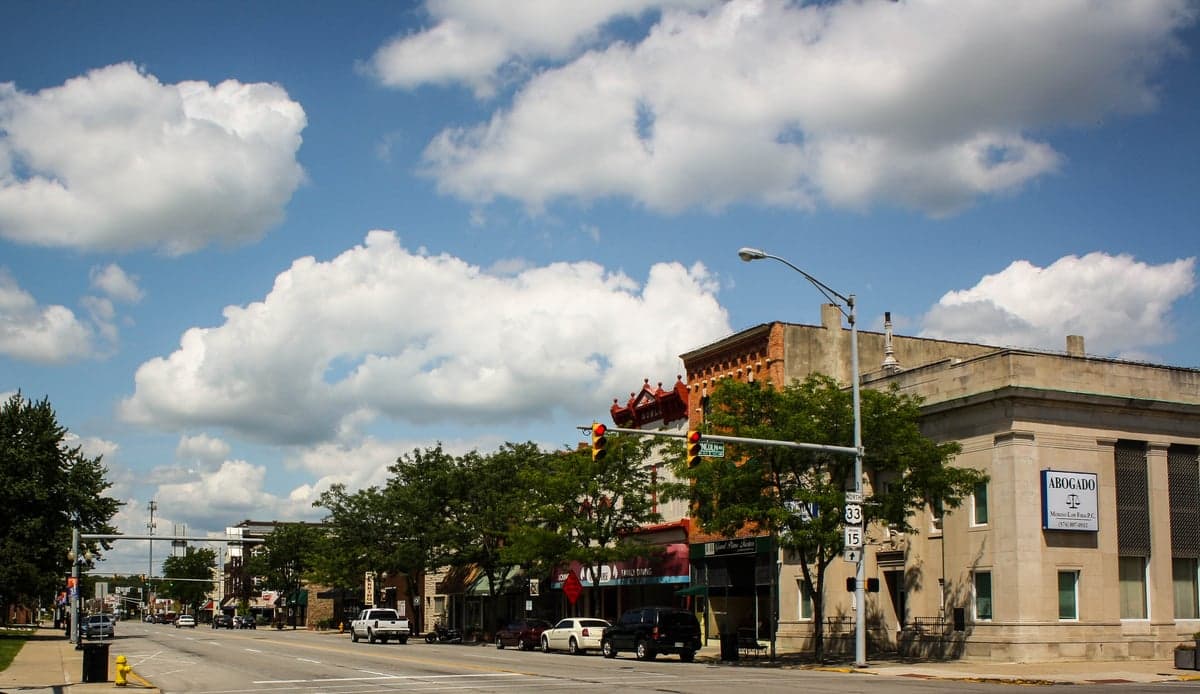
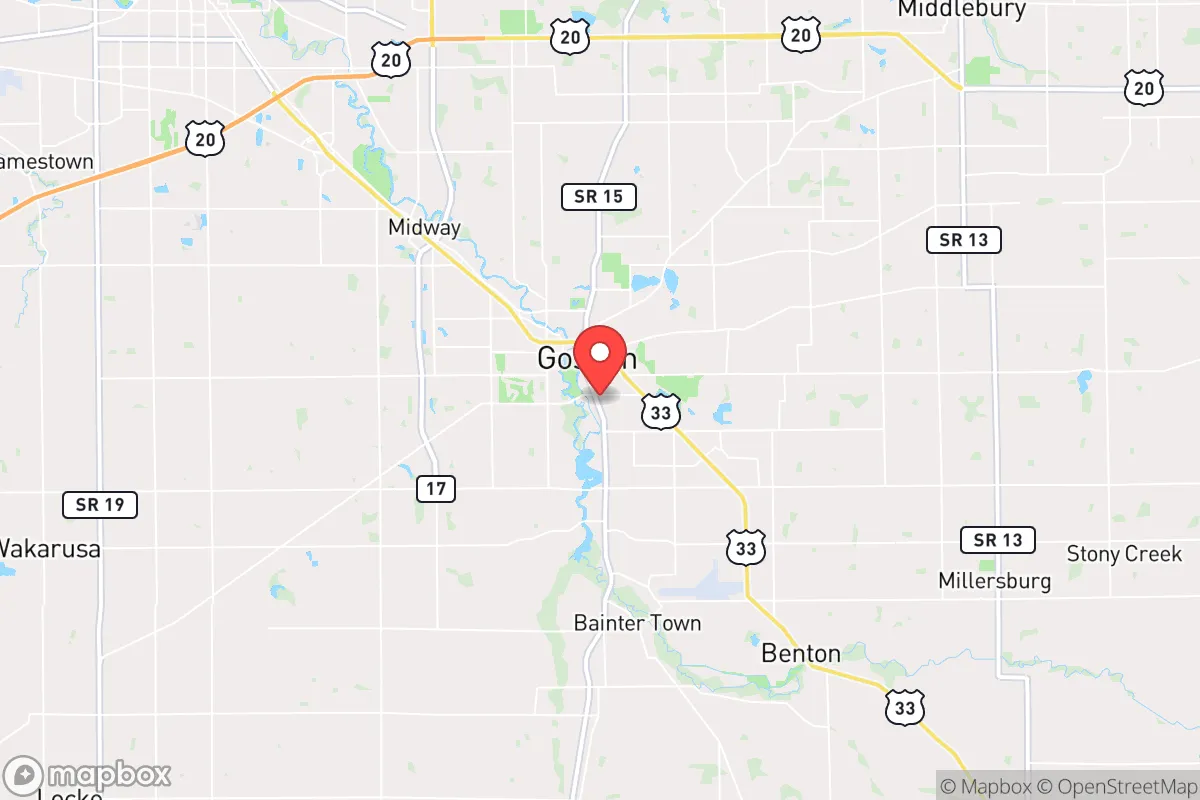
Photo: Wikipedia
Demographics of Goshen, IN
Affluence Level in Goshen, IN
A middle-class area roughly in line with national averages across income, home values, education, and employment.
People of Goshen, IN
Goshen, Indiana, is a city of 34,374 residents defined by its deep-rooted Amish and Mennonite heritage, a growing Hispanic population that now makes up nearly a third of the city, and a predominantly white but diversifying middle-class base. The city’s character is a blend of conservative small-town values, a strong manufacturing economy, and a visible immigrant workforce that has reshaped neighborhoods and schools. With a foreign-born population of 10.2% and a college attainment rate of 23.2%, Goshen is more working-class and ethnically varied than many of its northern Indiana peers, yet it retains a distinctly Midwestern, family-oriented identity.
How the city was settled and grew
Goshen’s founding in 1831 was driven by the federal land office’s decision to locate there, drawing Anglo-American settlers from Ohio, New York, and New England who sought fertile farmland and timber. The arrival of the railroad in the 1850s turned Goshen into a regional manufacturing and agricultural hub, attracting German and Irish immigrants who built homes in the South Side and East Side neighborhoods near the rail yards and factories. By the late 19th century, a significant Amish and Mennonite population from Pennsylvania and Switzerland settled in the surrounding countryside and in the North Goshen area, establishing a religious and cultural foundation that persists today. The early 20th century saw a wave of Polish and Italian immigrants working in the city’s carriage, furniture, and later RV industries, clustering in the West End near the former Goshen Malleable plant. These groups largely assimilated into the white majority over generations, leaving the Amish and Mennonite communities as the most distinct historical enclaves.
Modern era (post-1965)
The post-1965 immigration reforms and the collapse of the domestic RV industry’s labor supply triggered Goshen’s most significant demographic shift: the arrival of Hispanic workers, primarily from Mexico and Central America, to fill factory jobs at companies like Jayco and Forest River. By the 1990s, this wave had concentrated in the Southwest Goshen neighborhoods around the industrial parks and along Lincoln Avenue, where Spanish-language businesses, churches, and grocery stores now anchor a vibrant corridor. The Hispanic share of the population rose from under 5% in 1980 to 30.9% today, making Goshen one of the most Hispanic cities in northern Indiana. Meanwhile, the white population (61.1%) has aged and suburbanized, with many families moving to newer subdivisions in North Goshen and the Greencroft area, while the Black population (3.5%) and East/Southeast Asian communities (1.2%) remain small but stable, concentrated near the Goshen College campus and downtown. The Indian subcontinent population (0.2%) is negligible, largely tied to medical professionals at Goshen Hospital.
The future
Goshen’s population is heading toward a continued Hispanic majority, driven by higher birth rates and ongoing immigration for manufacturing jobs, while the white population is slowly declining due to aging and out-migration to larger cities. The city is not tribalizing into hostile enclaves but is experiencing a gradual spatial sorting: Southwest Goshen is becoming a predominantly Hispanic working-class area, North Goshen remains majority white and more affluent, and the downtown core is seeing modest gentrification from young professionals and artists. The Amish and Mennonite populations are stable but not growing in the city limits, as many move to rural areas for cheaper land. Over the next 10–20 years, Goshen will likely become a majority-minority city with a strong Hispanic cultural and economic presence, while retaining its conservative political leanings and manufacturing base. The key question is whether the school system and local government can integrate the growing Hispanic population into leadership roles without the ethnic friction seen in other Rust Belt towns.
For a conservative-leaning mover, Goshen offers a stable, family-oriented community with a strong work ethic and low cost of living, but the demographic shift is real and accelerating. The city is becoming more diverse and bilingual, not less, and newcomers should expect a place where traditional values coexist with a growing immigrant workforce. Those comfortable with that reality will find a resilient, affordable city with a clear sense of place.

* Values derived from national, state, county, city and local statistics and may differ in a specific area. Last updated: 2026-04-22T09:11:54.000Z
Narrative content on this page is AI-generated and may contain mistakes. Verify any details that matter before acting on them.
ReloMaps may earn a commission from affiliate links at no extra cost to you.

