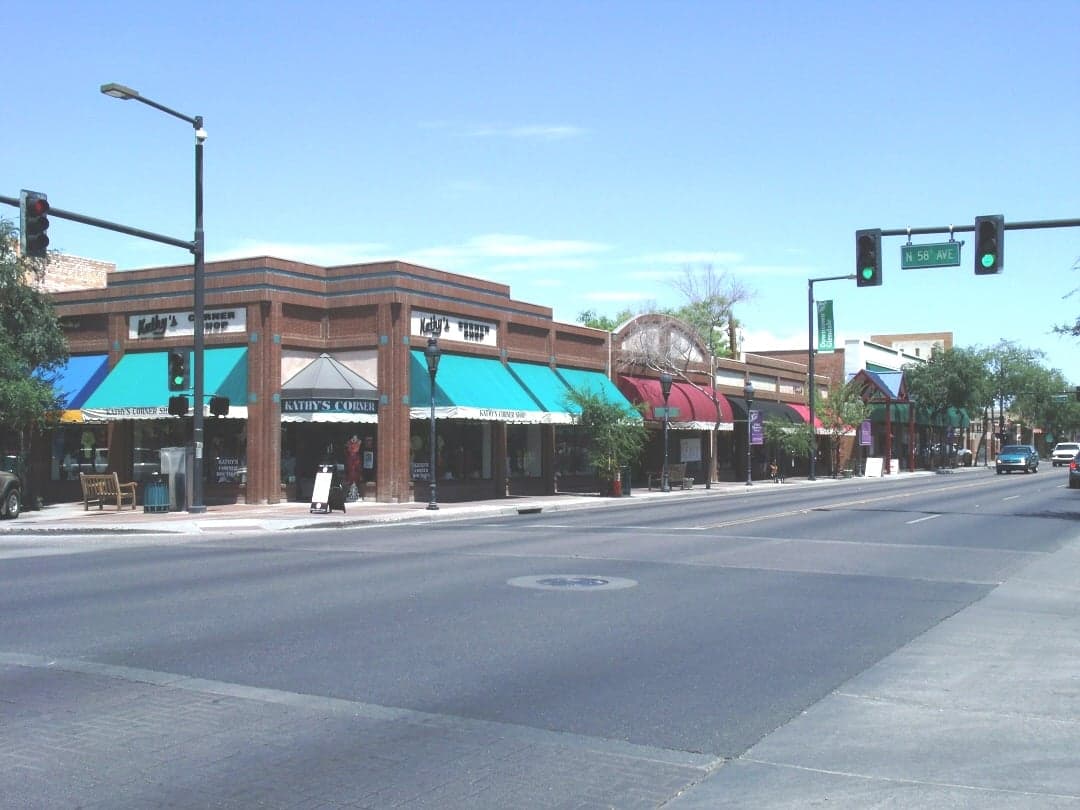
Photo: Wikipedia
Personal Sovereignty in Glendale, AZ
Viable for self-reliance. Generally workable, though some barriers may limit total independence.
What does Personal Sovereignty tell us?
Personal Sovereignty measures your capacity for self-reliance and independence with minimal government friction. Higher scores mean fewer barriers between you and the way you want to live... but it assumes you have the space you need and good neighbors.
What does this tell us?
Personal Sovereignty measures your capacity for self-reliance and independence with minimal government friction. Higher scores mean fewer barriers between you and the way you want to live... but it assumes you have the space you need and good neighbors.
State Policy
Energy independence: Importer (20% of energy produced in-state)
Personal Liberty
Homesteading

Personal Liberty Analysis
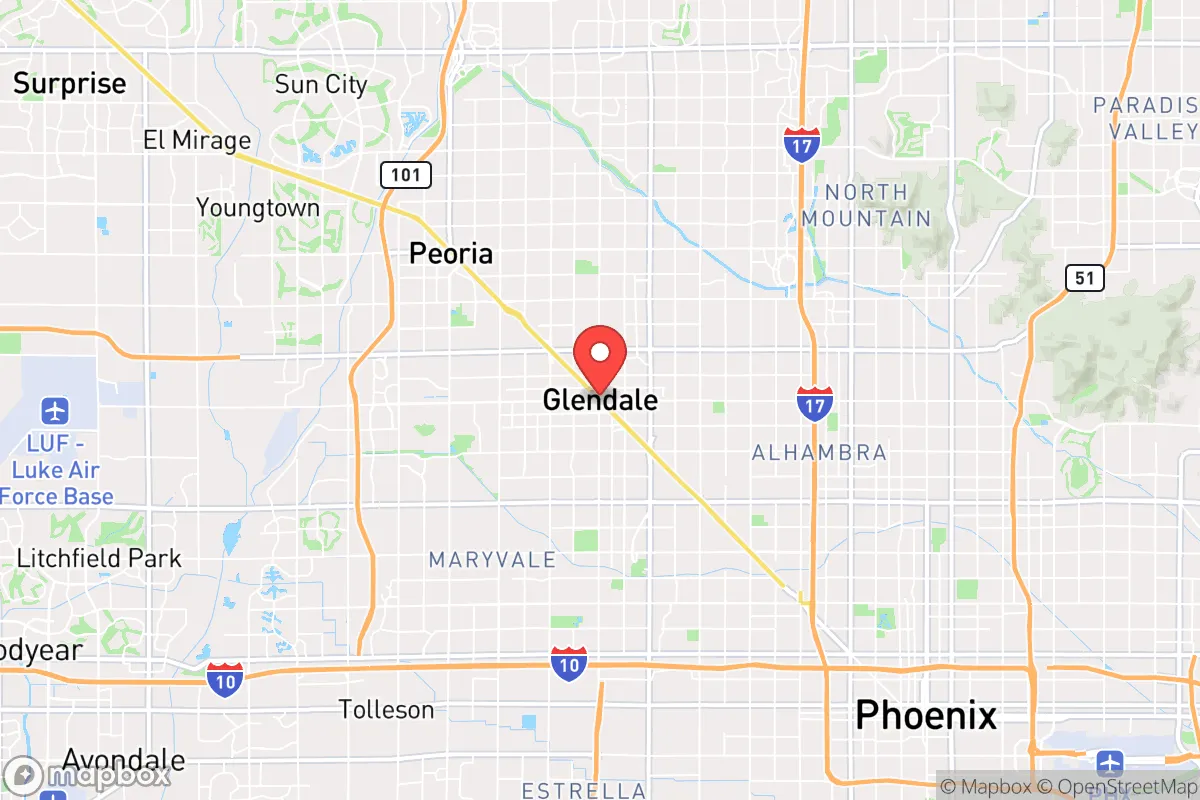
For the individualist or prepper evaluating Glendale, Arizona, personal sovereignty here is defined less by local ordinances and more by the robust state-level framework that actively pushes back against federal overreach and preserves a wide berth for self-reliance. While Glendale is a mid-sized suburban city within Maricopa County—meaning you’re not entirely off the grid—Arizona’s constitutional and statutory environment creates a strong foundation for autonomy. The key is understanding where the city’s municipal code intersects with state preemption laws, and where you can operate with minimal government interference in your daily life, your defense, and your property.
Tax burden and regulatory posture for the self-reliant individual
Arizona’s tax structure is a clear win for sovereignty-minded residents. There is no state tax on Social Security benefits, and the state’s flat income tax rate has been reduced to 2.5% as of 2024, one of the lowest in the nation. For a single individual or a family, this means more of your earned income stays in your control, not in government coffers. Glendale itself imposes a city sales tax of 2.3% on top of the state’s 5.6%, bringing the combined rate in some areas to around 8.9%—not the lowest in the Valley, but manageable. More importantly, Arizona is a right-to-work state, meaning you cannot be forced to join a union as a condition of employment, and the state’s regulatory climate is consistently ranked among the top 10 most business-friendly in the country. For the prepper or survivalist, this translates to fewer bureaucratic hurdles if you want to start a side business, operate a home-based trade, or engage in cash-based work. The state also has no inventory tax and no corporate income tax on pass-through entities, which matters if you’re running a small-scale homestead operation or a consulting gig from your property. The regulatory posture here is one of “leave me alone unless I’m harming someone,” which aligns well with a low-trust, high-self-reliance worldview.
Self-defense rights and gun law specifics in Glendale
Arizona is a constitutional carry state, and Glendale fully respects that. Since 2010, any adult 21 or older who can legally possess a firearm may carry it openly or concealed without a permit. No training, no background check beyond the federal purchase requirement, and no waiting period for most firearms. This is a foundational pillar of personal sovereignty: the right to defend yourself, your family, and your property is not subject to the whims of local politicians. Glendale city code does not impose any additional restrictions beyond state law, meaning there are no local bans on magazine capacity, no “assault weapon” registrations, and no red flag laws that allow confiscation without due process. The state also has strong stand-your-ground and castle doctrine laws. You have no duty to retreat from any place you are lawfully present, and the use of deadly force is presumed justified if someone has unlawfully entered your residence or vehicle. For the prepper, this is critical: your home is your castle, and the law backs you up. Additionally, Arizona does not require registration of firearms, and private sales between individuals are legal without a background check. This preserves a degree of privacy and autonomy in your defensive preparations that is increasingly rare in blue states.
Self-reliance and homesteading viability: lot sizes, zoning, and off-grid feasibility
Glendale is a suburban city, so don’t expect 40-acre ranches within city limits. Standard residential lots in established neighborhoods range from 6,000 to 10,000 square feet, with some newer developments offering slightly smaller parcels. However, the city’s zoning code does allow for urban agriculture—you can keep chickens, rabbits, and even miniature goats on most residential lots, provided you follow setback and noise ordinances. Beekeeping is also permitted with registration. For the serious homesteader, the real opportunity lies in the unincorporated areas of Maricopa County just north and west of Glendale, where lot sizes jump to 1 acre or more, and zoning is far more permissive. Off-grid feasibility within Glendale proper is limited: the city requires connection to municipal water and sewer in most areas, and solar panels are allowed but must meet building code and HOA approvals if applicable. However, Arizona state law prohibits HOAs from banning solar panels outright, though they can regulate placement. Rainwater harvesting is legal and even encouraged—the state offers a tax credit for cistern systems. For the prepper, the biggest constraint is water. Glendale gets about 8 inches of rain per year, so true off-grid living would require a well (only possible on larger parcels outside city limits) or a serious rainwater catchment system. The city does not restrict food storage, root cellars, or emergency supplies on your property. In short, Glendale is a good base for suburban self-reliance, but the hardcore homesteader will want to look at the rural fringe.
Personal liberties: parental rights, medical autonomy, speech, and property
Arizona has become a battleground for personal liberties, and the state generally leans toward individual freedom. Parental rights are explicitly protected under state law—Arizona was one of the first states to pass a “Parents’ Bill of Rights” (HB 2161 in 2022), which affirms that parents have the fundamental right to direct their children’s education, healthcare, and upbringing. This means no government mandate for mask mandates on children, no forced vaccine requirements for school attendance (though some childhood vaccines are required for public school, with broad exemption options), and no secret gender transition policies. For the parent concerned about government overreach into the family, this is a significant buffer. Medical autonomy is also strong: Arizona has no state-level vaccine passport system, and the state legislature has repeatedly blocked efforts to mandate COVID-19 vaccines. The Right to Try Act and medical freedom laws allow terminally ill patients to access experimental treatments without FDA interference. Free speech is robust—there are no local hate speech ordinances that go beyond the First Amendment, and Glendale has not attempted to restrict political expression or religious gatherings. Property rights are protected by the state’s strong eminent domain laws, which require just compensation and a public use that is narrowly defined. Arizona also has a private property rights protection act that limits the ability of government to devalue property through regulatory takings. For the survivalist, this means your bug-out location or suburban retreat is less likely to be seized or regulated into uselessness.
Overall, Glendale offers a solid level of personal sovereignty that is well above the national average, though it is not a libertarian paradise. The state-level protections—constitutional carry, parental rights, low taxes, and regulatory restraint—create a buffer against the worst forms of government overreach. The city itself is a typical suburban jurisdiction with HOAs, zoning codes, and municipal services, but it does not actively suppress individual autonomy. Compared to cities in California, Oregon, or Illinois, Glendale is a haven. Compared to rural Montana or Idaho, it is more constrained. For the strategic relocator who wants a job, decent infrastructure, and a legal environment that respects the individual, Glendale is a strong contender. Just know that true off-grid sovereignty will require moving to the county fringe, but the city itself is a defensible, liberty-respecting base of operations in an increasingly uncertain world.

* Values derived from national, state, county, city and local statistics and may differ in a specific area. Last updated: 2026-04-19T09:12:17.000Z
Narrative content on this page is AI-generated and may contain mistakes. Verify any details that matter before acting on them.
ReloMaps may earn a commission from affiliate links at no extra cost to you.

