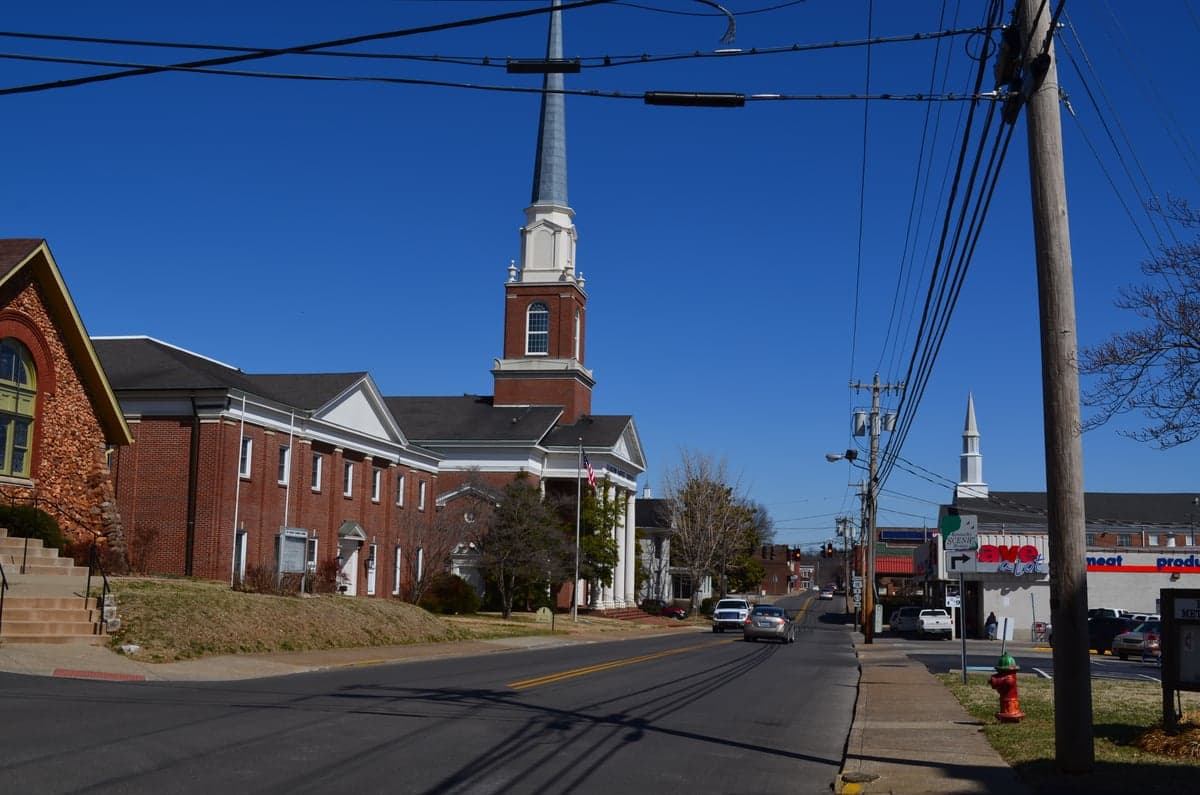
Photo: Wikipedia
Strategic Assessment of Glasgow, KY
Workable tactical position. Some exposure to population density or targets, but generally defensible in a crisis.
What does the Strategic Assessment tell us?
Our Strategic Assessment grades tactical survivability of an area. Major population centers, military targets, fallout zones, natural disasters, and border exposure all drive risk — lower exposure means a more defensible position in a crisis.
This is heavily inspired by Joel Skousen's Strategic Relocation book. Highly recommended you checkout the book ($)What does this tell us?
Our Strategic Assessment grades tactical survivability of an area. Major population centers, military targets, fallout zones, natural disasters, and border exposure all drive risk — lower exposure means a more defensible position in a crisis.
This is heavily inspired by Joel Skousen's Strategic Relocation book. Highly recommended you checkout the book ($)Strategic Pillars

Key Distances
Regional Safe Places
Below is our recommended "safe zones" in Kentucky and the surrounding area based on our strategic heuristics. For most people, it's unrealistic to live in a “safe zone” full-time due to work, family or other personal reasons. They tend to be more rural. However, many of these areas are perfect for second homes and retreat properties that double as a vacation home or even a short-term rental.
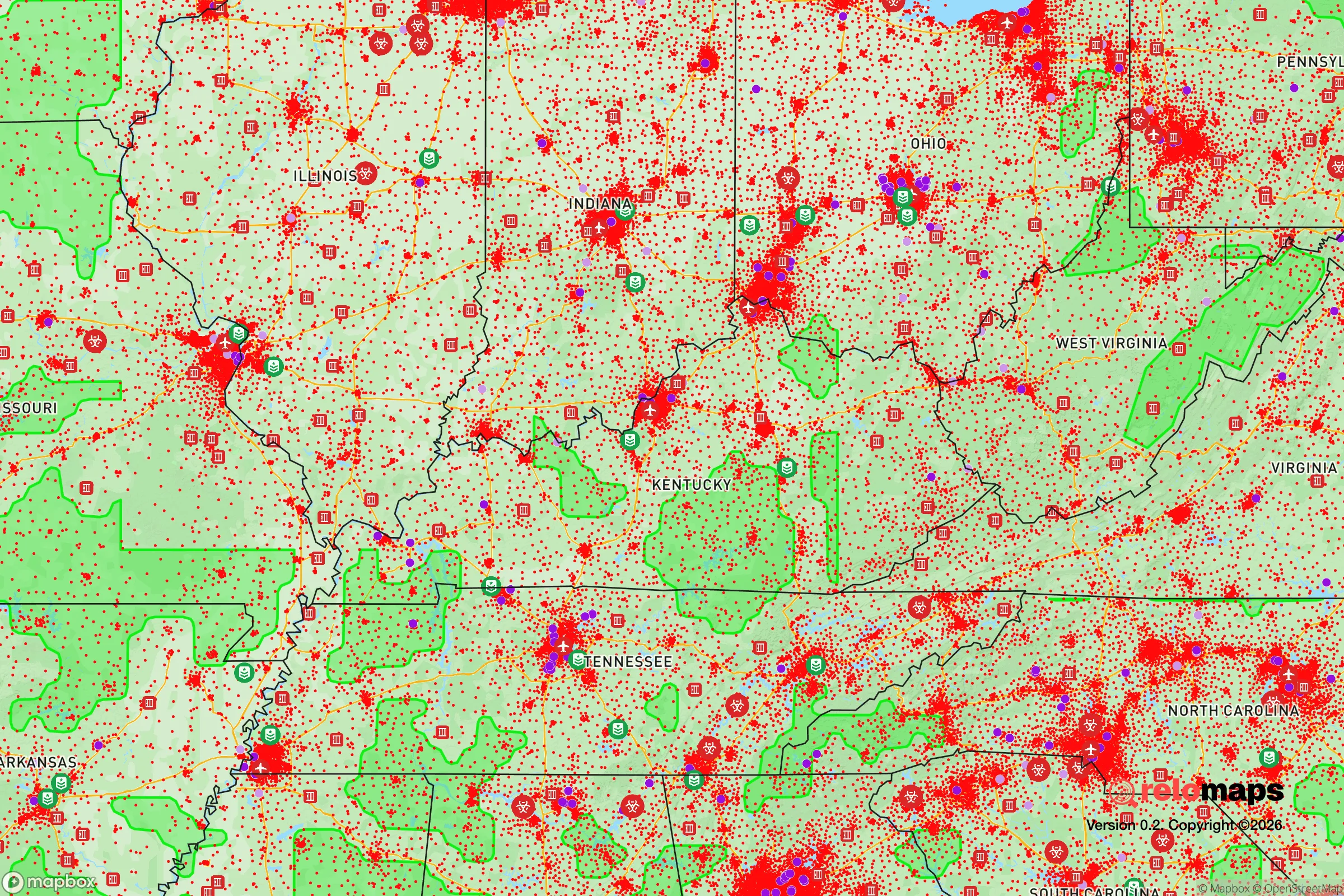
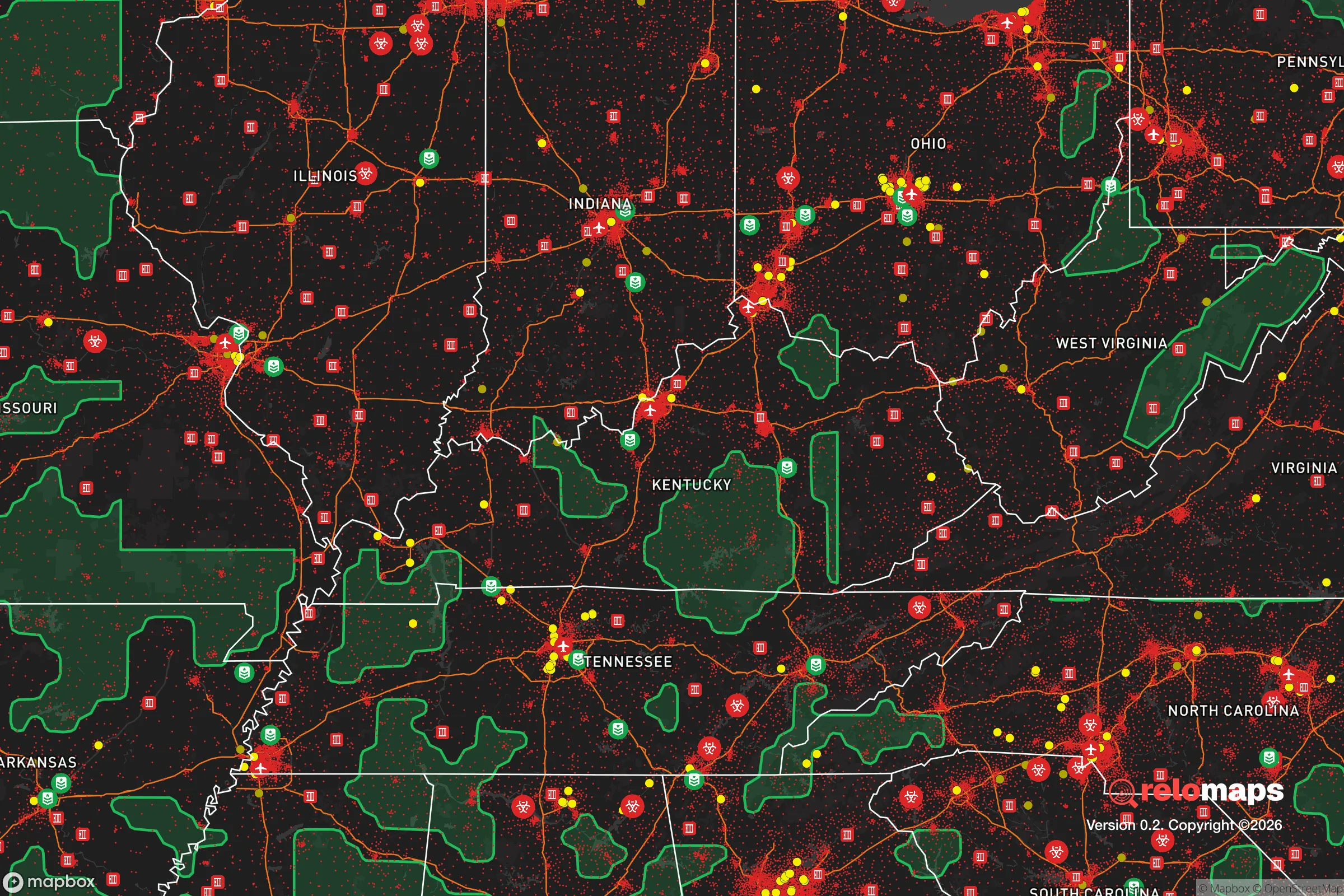


Important Note: For informational purposes only. This does not mean nothing bad ever happens in the green zones. Please use common sense. This is based on public data and modeled with AI. We tried to take a conservative approach but mistakes happen. We update this regularly as new information becomes available.
Solar Generator Recommendations
Backup power matters more here than in safer locations. We've picked three solar generators across budgets and capacity tiers — start with the budget unit if you only need a few essentials, or step up if you want to run a fridge and HVAC for days at a time.

Jackery Portable Power Station Explorer 300
Budget OptionPower on the Go: Weighing only 11 lbs, it's convenient to set up and store with book-sized foldable solar panels

BLUETTI Portable Power Station AC180
Designed for both indoor and outdoor scenarios, AC180 is highly capable as it has a robost capacity and continuous output power.

EF ECOFLOW DELTA Pro Ultra Power Station
Upgraded PickEcoFlow DELTA Pro Ultra is a whole-home energy system designed to grow with your family. Integrated with the Smart Home Panel 2, it scales to meet your evolving energy needs — keeping your home powered, intelligent, and secure through every stage of life.
We earn a commission, at no additional cost to you.
Strategic Assessment Analysis
Glasgow, Kentucky, sits in a sweet spot that few relocators from either coast fully appreciate: close enough to regional infrastructure to be practical, yet far enough from the major urban cores to offer genuine strategic depth. This Barren County seat of roughly 15,000 people anchors a micropolitan area that has quietly become a waypoint for families and individuals looking to put distance between themselves and the fragility of larger cities, without stepping into total isolation. Its resilience profile is built on a foundation of modest but real advantages—decent agricultural land, a diversified local economy, and a position that keeps it out of the direct blast zones of any high-value target, while still being within a day’s drive of critical supply chains.
Geographic position and natural advantages for long-term stability
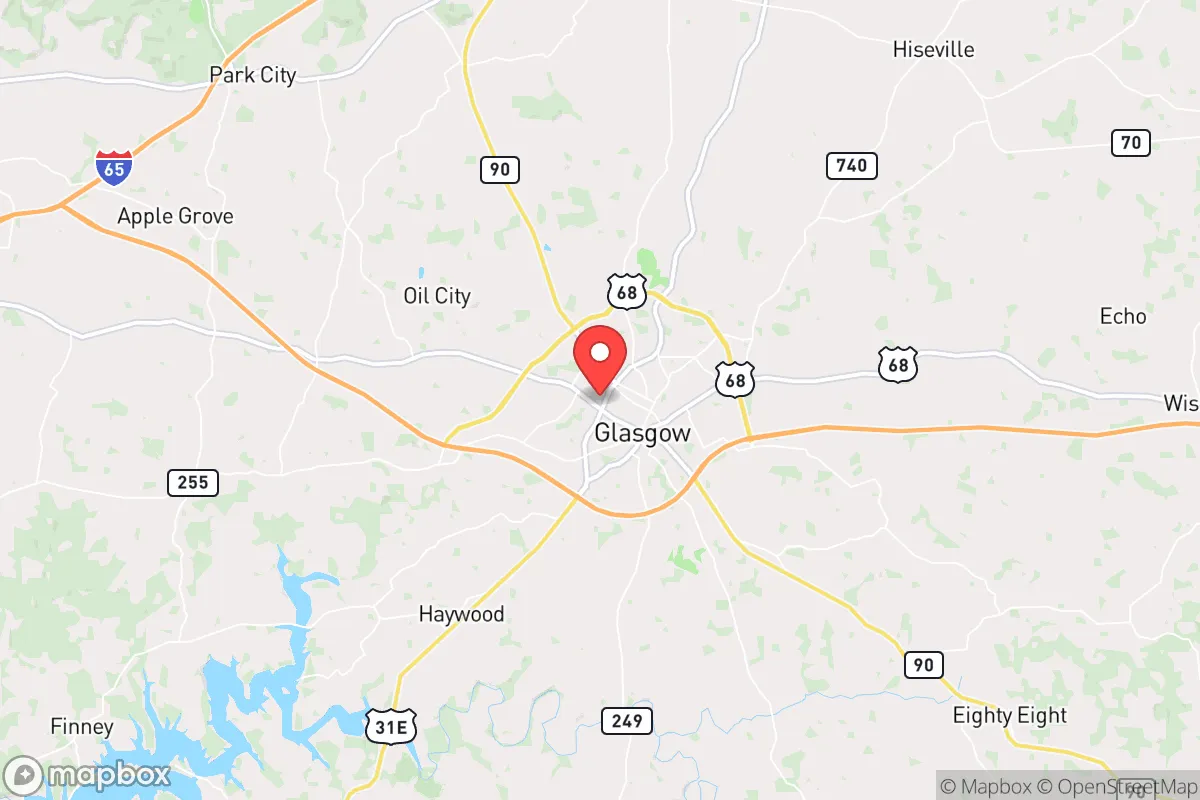
Glasgow’s location in south-central Kentucky places it roughly 90 miles south of Louisville, 85 miles northeast of Nashville, and about 60 miles west of Lexington. That puts it outside the immediate suburban sprawl of any major metro, but still within a two-hour radius of three significant cities. For a prepper mindset, this is the Goldilocks zone: you can access urban medical centers, big-box hardware stores, and specialty suppliers when things are stable, but you’re far enough out that a localized disaster in any one city won’t directly swamp your area. The terrain is rolling hills and limestone karst, which provides natural drainage and some defensible high ground, especially south and east of town. The Cumberland River watershed runs through the region, and the Barren River Lake—a U.S. Army Corps of Engineers project—lies just 15 miles northeast, offering a substantial freshwater reservoir and recreational buffer. The local climate is humid subtropical, with four distinct seasons and an average annual rainfall of about 50 inches, which supports reliable agriculture without the drought risks of the western plains. The growing season runs roughly 190 days, enough for corn, soybeans, tobacco, and market gardens. For anyone serious about food security, the surrounding farmland is productive and, critically, not yet fully corporatized into monoculture—there are still small family operations and local livestock auctions within a 30-minute drive.
Risks, exposures, and proximity to fallout-relevant landmarks
No location is immune, and Glasgow has its own set of vulnerabilities that a strategic relocator must weigh. The most obvious is proximity to Interstate 65, which runs about 20 miles west of town. I-65 is a major north-south corridor connecting the Great Lakes to the Gulf Coast, and in any scenario involving mass evacuation or supply chain disruption, that highway becomes a chokepoint and a potential vector for unrest. Glasgow itself is not on the interstate, which is a plus—you avoid the direct flow of refugees and looters—but you are close enough that secondary roads could see diverted traffic if the main artery is compromised. The nearest significant military or government target is Fort Knox, roughly 55 miles north, which houses the U.S. Army Armor School and the U.S. Bullion Depository. That is a high-value target in any major conflict scenario, and while Glasgow is outside the likely blast radius of a conventional strike, fallout patterns depend on wind direction. Prevailing winds in this region are from the southwest, meaning that a release at Fort Knox would generally push northeast, away from Glasgow. Still, it’s a factor worth monitoring. The Bowling Green area, 30 miles west, has a General Motors Corvette assembly plant and a growing logistics hub—another potential target for economic disruption. Closer to home, Glasgow has a small regional airport (Glasgow Municipal) and a rail line running through town, both of which are low-priority targets but could become points of contention in a breakdown scenario. Natural risks are minimal: no hurricane storm surge, no earthquake fault lines of consequence, and tornado activity is moderate—Barren County averages about 3-5 tornado warnings per year, with the last direct hit being an EF-2 in 2008. Flooding is localized along the Little Barren River, but most of the town sits on higher ground.
Practical resilience for a relocator: food, water, energy, and defensibility
For someone looking to establish a long-term hold, Glasgow offers a mix of built-in advantages and gaps that need to be filled. Water security is solid: the city draws from the Barren River and has a treatment plant with a capacity of about 6 million gallons per day, serving the municipal area. Rural properties typically rely on wells, and the limestone aquifer in this region is generally reliable at depths of 100-300 feet, though water hardness is high and a filtration system is recommended. For off-grid capability, the Barren River Lake holds over 100 billion gallons at full pool, accessible via public access points, but you’ll want a private well or rainwater catchment for daily use. Food production is where Glasgow shines relative to many relocation destinations. The surrounding county has a strong agricultural base, with livestock auctions in Cave City (15 miles north) and Glasgow itself hosting a farmers’ market from April through October. The local extension office at the Barren County Cooperative Extension Service offers soil testing, seed libraries, and workshops on canning and food preservation. For bulk supplies, there are two Walmart Supercenters and a Kroger in town, but the real value is in the smaller feed stores and farm supply outlets—places like Southern States and Tractor Supply—where you can stockpile seed, tools, and animal feed without drawing attention. Energy resilience is a mixed bag. The local grid is served by the Tennessee Valley Authority (TVA) through the Glasgow Electric Plant Board, which has a decent reliability record but is vulnerable to cascading failures from the broader TVA system. Solar potential is moderate—Kentucky averages about 4.5 peak sun hours per day—and there are no state-level solar incentives, but net metering is available. Natural gas is piped into town, but rural properties often rely on propane, which requires storage and planning. For defensibility, the terrain offers natural chokepoints: the rolling hills and winding roads make it difficult for large groups to move quickly through the area, and the lack of a major interstate interchange in town means that casual traffic is low. The local law enforcement presence is modest—Barren County Sheriff’s Office has about 30 deputies for a county of 44,000—so community-based security arrangements would be necessary in a prolonged breakdown. The social fabric is still intact enough that neighbor-to-neighbor trust exists, but it’s not a gated community; you’ll need to build relationships.
The overall strategic picture for Glasgow is that of a viable secondary relocation node—not a fortress, but a place where a prepared individual or family can establish a sustainable foothold with reasonable access to resources and a manageable risk profile. It lacks the extreme isolation of the Mountain West or the deep agricultural security of the Midwest, but it compensates with proximity to multiple supply chains, a moderate climate that supports year-round food production, and a population density low enough that you won’t be competing with a thousand other preppers for the same well water. The biggest strategic weakness is the I-65 corridor and the potential for spillover from Louisville or Nashville in a crisis, but that can be mitigated by choosing a property east or south of town, away from the main evacuation routes. For a conservative-leaning relocator who values self-reliance, community stability, and a low-key profile, Glasgow deserves a serious look—just don’t expect it to stay quiet forever if the country takes a hard turn.

* Values derived from national, state, county, city and local statistics and may differ in a specific area. Last updated: 2026-04-21T10:45:13.000Z
Narrative content on this page is AI-generated and may contain mistakes. Verify any details that matter before acting on them.
ReloMaps may earn a commission from affiliate links at no extra cost to you.

