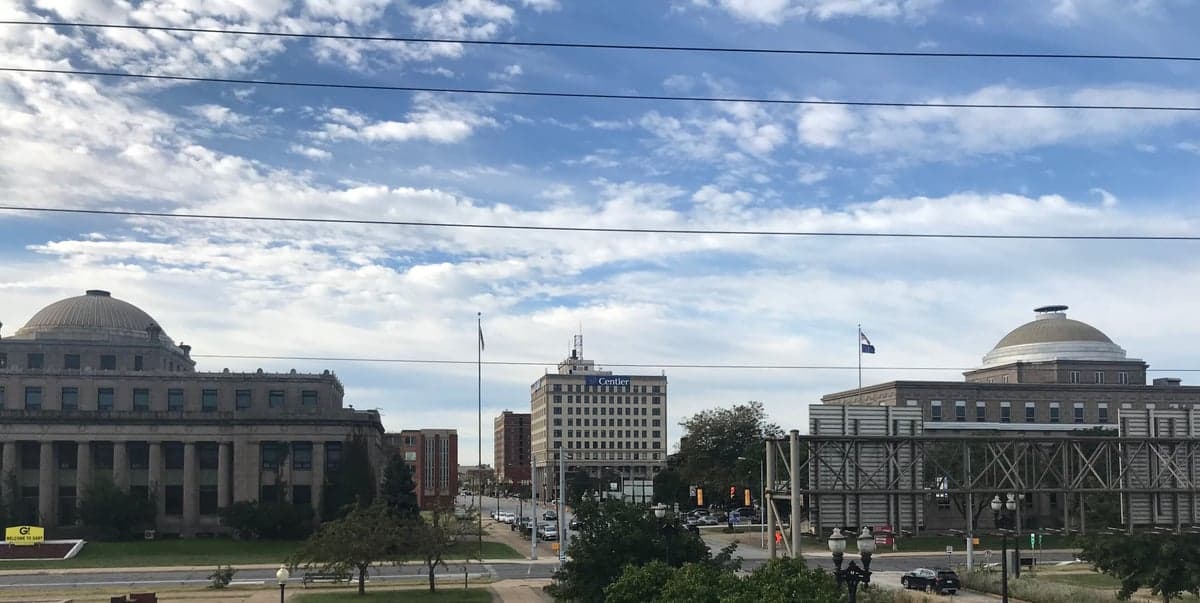
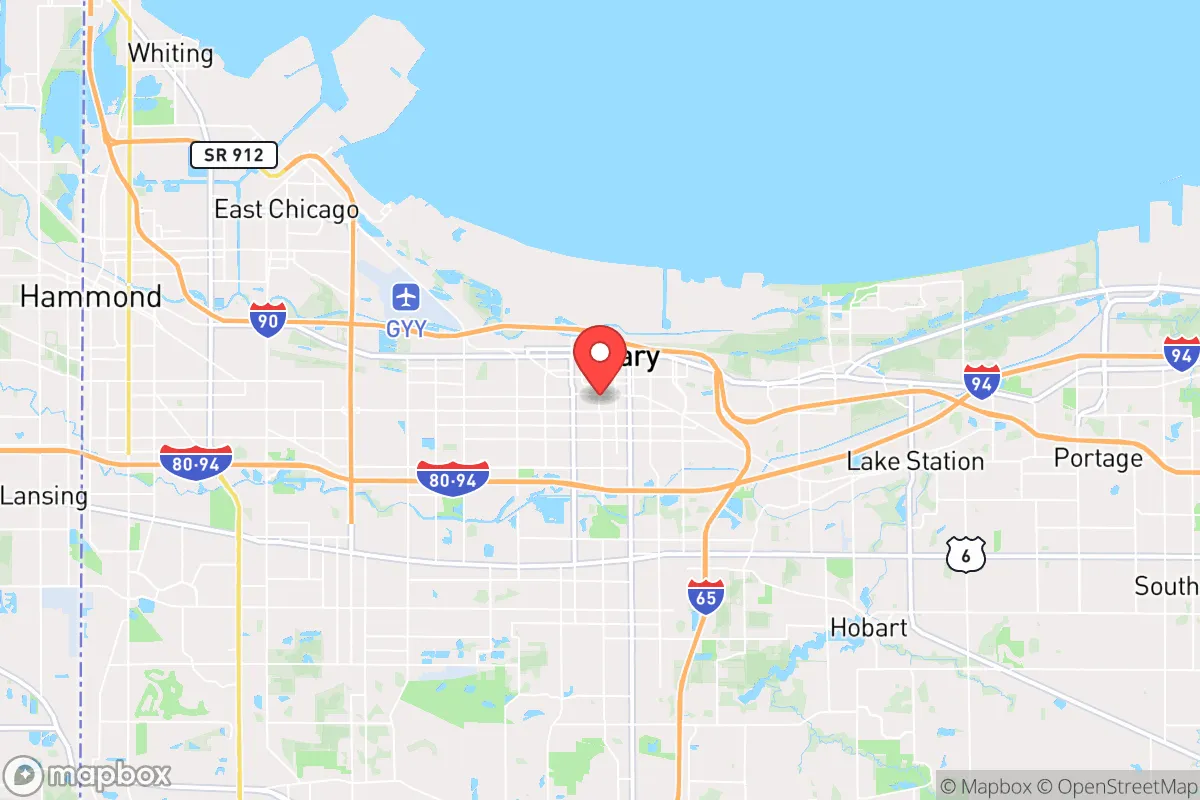
Photo: Wikipedia
Political ClimatePolitical Climate in Gary, IN
District shown is the primary district for this city’s centroid. Cities may span multiple districts.
Local Political AnalysisPolitical Analysis of Gary, IN
Gary, Indiana, has been a Democratic stronghold for generations, and that hasn't changed much on paper—the Cook PVI sits at D+1, which is actually less partisan than you'd expect for a city this size. But if you've lived here as long as I have, you know the real story isn't just about party registration; it's about how the local machine has run things for decades, and how that's starting to crack under the weight of progressive overreach. The city votes reliably blue, but the enthusiasm is fading among folks who remember when Gary was a thriving industrial hub, not a laboratory for top-down social experiments.
How it compares
Drive twenty minutes south to Crown Point or Valparaiso, and you're in a completely different world—those communities lean conservative, with lower taxes, fewer regulations, and a general "leave us alone" attitude that feels like a breath of fresh air. Even neighboring Merrillville and Hobart have pushed back against some of the more aggressive progressive policies coming out of Lake County. Gary, by contrast, has embraced a one-size-fits-all approach from the state capital and county board, which means higher property taxes, more red tape for small businesses, and a school system that's been more focused on equity initiatives than on actually teaching kids to read. The contrast is stark: while surrounding towns are cutting business license fees and streamlining permitting, Gary's city council has been busy debating non-binding resolutions on national issues that have nothing to do with fixing potholes or reducing crime.
What this means for residents
If you value personal freedom—the right to run a business without a dozen inspections, the right to keep more of your paycheck, the right to send your kid to a school that isn't pushing political agendas—Gary is becoming a harder place to call home. The local government has a habit of reaching into your life in ways that feel less like public service and more like social engineering. Property taxes have climbed steadily, even as home values have stagnated, and the city has been aggressive about code enforcement that targets small landlords while ignoring bigger problems like abandoned industrial sites. For families, the biggest concern is the school district, which has seen enrollment drop by over 60% since 2000 as parents vote with their feet—opting for charters, private schools, or moving to Lake or Porter counties altogether. The long-term trajectory, if nothing changes, is more of the same: a shrinking tax base, more mandates from Indianapolis and Washington, and a government that seems more interested in controlling behavior than creating opportunity.
One thing that still sets Gary apart culturally is its deep-rooted union history and a certain blue-collar pride that doesn't easily translate into today's identity politics. You'll find plenty of lifelong Democrats here who are pro-Second Amendment, skeptical of mask mandates, and tired of being told how to live their lives by people who don't even live in the neighborhood. That tension—between the old-school, practical liberalism of the steel mills and the new-wave, top-down progressivism of the county board—is the real story of Gary's political climate. If the city ever shakes off the machine politics and starts listening to the folks who actually show up to city council meetings, it might have a future. But right now, the trend is concerning for anyone who believes government should stay out of your garage, your wallet, and your kid's classroom.

State Political ClimatePolitical Climate in Indiana
State Political AnalysisPolitical Environment in the State
Indiana has long been a reliably red state in presidential elections, voting Republican by double digits in every cycle since 2008, but its political climate is more nuanced than a simple partisan label suggests. The state’s dominant coalition is a mix of socially conservative rural voters, fiscally conservative suburbanites, and a shrinking but still influential union-heavy Democratic base in the industrial northwest. Over the last 15 years, the trajectory has been a steady rightward shift, accelerated by the exodus of moderate Democrats from the legislature and the consolidation of Republican supermajorities in both chambers since 2010.
Urban vs. rural divide
The political map of Indiana is a textbook study in geographic polarization. The Democratic strongholds are concentrated in the urban cores of Indianapolis (Marion County), Gary (Lake County), and South Bend (St. Joseph County), along with the college towns of Bloomington (Monroe County) and West Lafayette (Tippecanoe County). Outside of these islands, the state is overwhelmingly Republican. The shift is most dramatic in the Indianapolis suburbs: Hamilton County, just north of the city, was once a swing area but now votes +30 points Republican, driven by the influx of families seeking lower taxes and conservative school boards. Meanwhile, rural counties like Pike, Switzerland, and Randolph routinely deliver 75-80% of their vote to the GOP. The real story is the collapse of the "Blue Dog" Democrat in small industrial towns like Muncie and Kokomo, which flipped hard to Trump in 2016 and have stayed red since. If you’re moving to Indiana, your political experience will depend almost entirely on whether you land in a dense urban pocket or the vast, red middle.
Policy environment
Indiana’s policy environment is a model of limited government conservatism, with a few notable exceptions that raise eyebrows. The state has a flat income tax rate of 3.15% (down from 3.23% in 2023, with a scheduled phase-down to 2.9% by 2029), and no inheritance or estate tax. Property taxes are capped at 1% of assessed value for homesteads, a constitutional amendment that keeps housing affordable. On education, Indiana was an early adopter of school choice, with the Choice Scholarship Program (vouchers) now available to most families regardless of income, and a robust charter school sector. However, the state’s pre-K funding remains below the national average, and the 2023 "Parents’ Bill of Rights" (HEA 1608) requires schools to notify parents of any changes in a child’s health or well-being, including mental health services, which has been a flashpoint. Healthcare is a mixed bag: Indiana expanded Medicaid under the HIP 2.0 waiver (a conservative, market-based approach), but the state has not expanded traditional Medicaid and has some of the highest hospital consolidation rates in the country, driving up costs. Election laws are secure but not restrictive: voter ID is required, early voting is available for 28 days, and no-excuse absentee voting was made permanent in 2023 after a temporary pandemic-era expansion. The state also passed a constitutional carry law (2022), allowing permitless carry of handguns, which is a clear win for Second Amendment advocates.
Trajectory & freedom
On the freedom front, Indiana is moving in a distinctly positive direction, but it’s not a straight line. The most significant expansion of personal liberty in recent years was the 2022 permitless carry law (HEA 1296), which eliminated the requirement for a license to carry a handgun in public. This was followed by the 2023 "Parents’ Bill of Rights", which gives parents more control over their children’s education and medical decisions. On medical freedom, the state passed SB 8 in 2023, which prohibits gender transition procedures for minors, a move that aligns with the conservative base. However, there are warning signs. The 2023 state budget (HEA 1001) included a 10% increase in K-12 funding, but also expanded the state’s Pre-K program (On My Way Pre-K), which some conservatives view as an overreach into early childhood education. The biggest concern is the growing influence of the Indiana Economic Development Corporation (IEDC), which has been given broad authority to offer tax abatements and incentives to corporations, effectively picking winners and losers in the market. Property rights advocates have also raised alarms about the 2023 "Regional Economic Acceleration and Development Initiative (READI)", which funnels state money into regional development plans that can override local zoning. Overall, Indiana is freer than most states, but the creeping expansion of state-level economic planning is something to watch.
Civil unrest & political movements
Indiana has seen its share of political flashpoints, though large-scale civil unrest is rare. The most notable recent event was the 2020 George Floyd protests in Indianapolis, which turned violent with looting and arson in the downtown area, leading to a heavy National Guard presence. That event galvanized the conservative base and contributed to the passage of 2021’s "Back the Blue" law (HEA 1006), which increased penalties for rioting and obstructing police. On the right, the Indiana Firearms Coalition and Indiana Right to Life are the most organized activist groups, with the latter successfully pushing for the 2022 near-total abortion ban (SB 1), which prohibits abortion except in cases of rape, incest, or lethal fetal anomaly. Immigration politics are relatively quiet, but Elkhart County (home to a large Amish and Mennonite population) has seen tensions over immigration enforcement, with local sheriffs cooperating with ICE. There is no serious secession or nullification movement, but the Indiana Sovereignty Resolution (HCR 3 in 2023) reaffirmed the state’s right to push back against federal overreach under the Tenth Amendment. Election integrity controversies have been minimal, though the 2020 election saw a brief dispute over the counting of absentee ballots in Lake County, which was resolved without major incident. A new resident would notice the strong presence of "Don’t Tread on Me" flags and pro-life billboards along interstates, especially in the rural south.
Projection
Over the next 5-10 years, Indiana is likely to become even more Republican, but with a growing tension between the traditional small-government wing and a newer, more populist faction. The biggest demographic shift is the in-migration of conservatives from Illinois and California, drawn by lower taxes and housing costs. Towns like Noblesville and Fishers are booming, and these newcomers tend to be even more conservative than native Hoosiers on cultural issues but more pro-business on economics. The Indianapolis metro area will remain the only competitive region, but even there, the suburbs are bleeding blue. The biggest wildcard is the state’s aging population — Indiana has one of the oldest median ages in the Midwest, and younger voters are slightly more libertarian-leaning on social issues, which could create friction on abortion and drug policy. The 2025 legislative session is expected to see a push for school choice expansion and a potential repeal of the state’s remaining business personal property tax. If you’re moving in now, expect a state that is solidly conservative but not static — the fight will be between the Chamber of Commerce Republicans and the grassroots populists, not between the two major parties.
For a new resident, the bottom line is this: Indiana offers a high degree of personal freedom, low taxes, and a political environment that respects parental rights and gun ownership. The downsides are a growing state-level economic bureaucracy that can feel intrusive, and a healthcare system that is expensive due to consolidation. If you’re a conservative looking for a place where your values are the norm and the government mostly stays out of your way, Indiana is a strong bet — just be aware that the fight for the soul of the state is happening within the GOP, not against it.
* Values derived from national, state, county, city and local statistics and may differ in a specific area. Last updated: 2026-04-22T09:25:23.000Z
Narrative content on this page is AI-generated and may contain mistakes. Verify any details that matter before acting on them.
ReloMaps may earn a commission from affiliate links at no extra cost to you.

