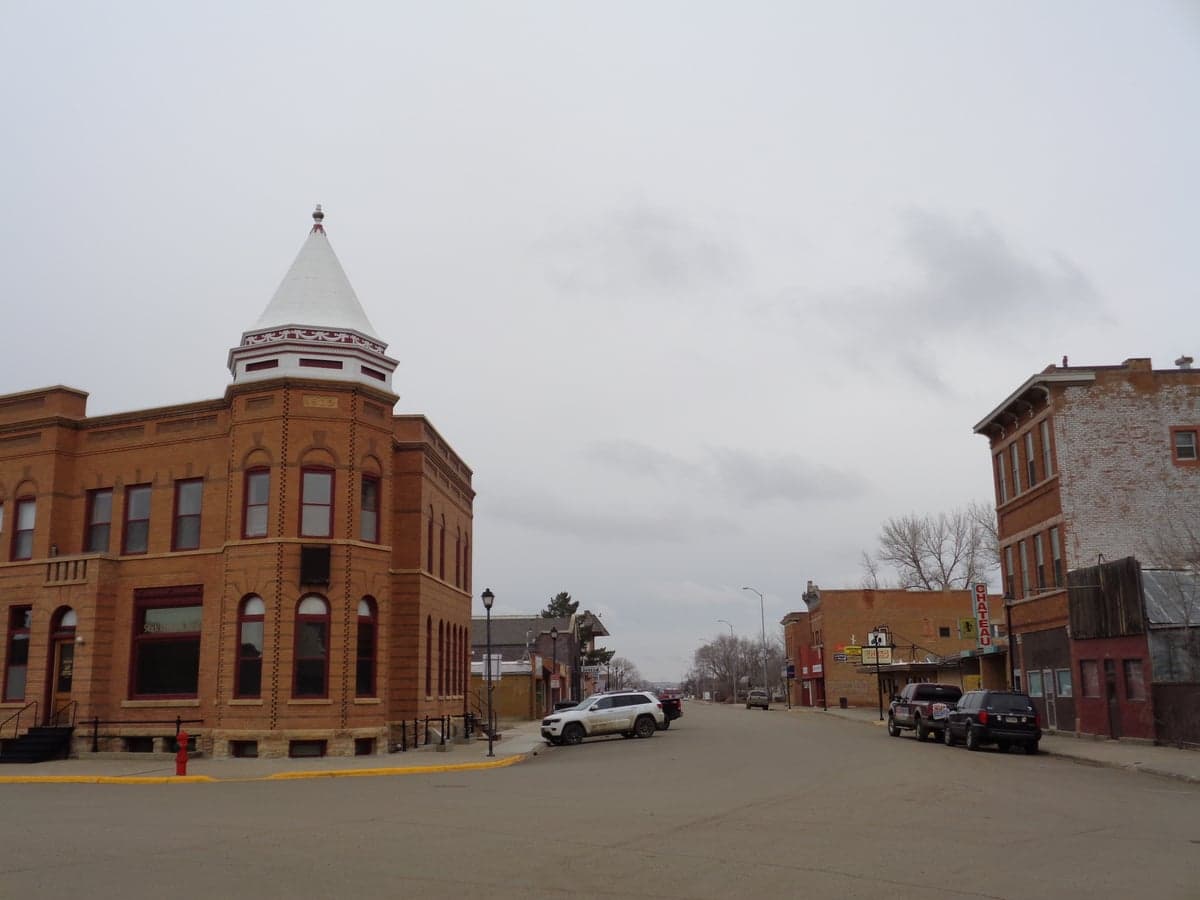
Photo: Wikipedia
Demographics of Fort Pierre, SD
Affluence Level in Fort Pierre, SD
A middle-class area roughly in line with national averages across income, home values, education, and employment.
People of Fort Pierre, SD
The people of Fort Pierre, South Dakota, today form a small, overwhelmingly white community of 2,534 residents, characterized by a strong ranching and outdoor-recreation identity and a notably low population density. The city’s population is 91.4% white, with no foreign-born residents and negligible racial or ethnic diversity—Hispanic residents make up just 1.3%, and there are no recorded Black, Asian, or Indian subcontinent populations. This homogeneity is a direct legacy of the city’s settlement history, which was driven by fur trade, railroad expansion, and agricultural land grants rather than industrial or post-1965 immigration waves. For a conservative-leaning audience, Fort Pierre represents a stable, culturally cohesive community where traditional livelihoods and family networks remain central.
How the city was settled and grew
Fort Pierre’s human history begins with the Lakota Sioux, who controlled the Missouri River valley long before European contact. The first permanent non-Native settlement came in the 1830s, when the American Fur Company established a trading post near the confluence of the Missouri and Bad Rivers. The original fort—Fort Pierre Chouteau—drew French-Canadian and Métis fur traders, who built crude cabins along what is now Old Fort Road, a historic corridor that still contains some of the city’s oldest residential lots. The 1854 U.S. Army purchase of the fort site and the subsequent 1862 Homestead Act triggered the first major wave of white settlers: primarily German-Russian and Scandinavian homesteaders, who claimed 160-acre parcels under the act. These families clustered in what became the Northside district, a grid of streets north of the railroad tracks where modest frame houses and Lutheran churches still dominate. The arrival of the Chicago, Milwaukee & St. Paul Railroad in 1880 transformed Fort Pierre from a fur outpost into a cattle-shipping hub, drawing Irish and German railroad workers who settled in the Depot District around the rail yards. By 1900, the population was nearly 100% white, with a small number of Lakota families living in a segregated camp south of town—a pattern that persisted until the mid-20th century.
Modern era (post-1965)
The post-1965 period brought no significant demographic shift to Fort Pierre. The 1965 Hart-Cellar Act, which reshaped immigration nationwide, had zero measurable effect here: the city’s foreign-born population remains 0.0% in 2026. Instead, domestic in-migration from rural South Dakota and neighboring states drove modest growth. The construction of the Oahe Dam (completed 1962) and the subsequent Lake Oahe recreation economy attracted a wave of retirees and second-home buyers, who built modern subdivisions in the West Hills area, a hillside neighborhood west of U.S. Highway 83 with newer ranch-style homes and lake views. Meanwhile, the Riverside Addition, a post-1970 subdivision along the Missouri River, absorbed younger families drawn by affordable lots and proximity to Pierre (the state capital, just across the river). The city’s racial composition remained static: the white share has held above 90% since 1970, with no recorded growth in Black, Asian, or Hispanic populations. The small Hispanic presence (1.3%) is almost entirely seasonal agricultural workers from the Central Valley of California, who work at the local feedlots and typically do not settle permanently. The Indian subcontinent population is zero, and there are no East/Southeast Asian communities. The city’s college-educated share (24.6%) is below the state average of 30%, reflecting a workforce concentrated in ranching, construction, and state-government support roles rather than professional services.
The future
Fort Pierre’s population is projected to remain stable or decline slightly over the next 10–20 years, with no major demographic diversification on the horizon. The city’s zero foreign-born rate and lack of industrial or tech-sector employers mean it will not attract the immigrant streams reshaping larger Plains cities like Sioux Falls or Rapid City. Instead, the population is likely to homogenize further, as younger residents move to Pierre or out of state for college and white-collar jobs, while retirees from the surrounding ranch country replace them. The West Hills and Riverside Addition neighborhoods will continue to absorb these in-movers, but the Northside and Depot District are aging, with many homes owned by elderly residents whose children have left. No new immigrant enclaves are forming; the city’s tribalization is not ethnic but economic—a divide between lakefront property owners and working-class ranching families. The Hispanic population may grow slightly if feedlot operations expand, but it will likely remain below 5%. For a conservative-leaning mover, this means Fort Pierre will remain a culturally homogeneous, low-tax, low-service community where social cohesion is high but economic opportunity is limited to agriculture, government, and tourism.
For someone moving in now, Fort Pierre is a place where the population is not changing—and that stability is its defining feature. The city offers a predictable, family-oriented environment with strong church and school networks, but no ethnic diversity, no immigrant-driven growth, and a shrinking youth population. It is best suited for those seeking a quiet, rural lifestyle with direct access to outdoor recreation and state-government employment across the river in Pierre, rather than for those expecting demographic dynamism or urban amenities.

* Values derived from national, state, county, city and local statistics and may differ in a specific area. Last updated: 2026-04-20T14:13:57.000Z
Narrative content on this page is AI-generated and may contain mistakes. Verify any details that matter before acting on them.
ReloMaps may earn a commission from affiliate links at no extra cost to you.

