Photo: Wikipedia
Quality of Life in Florence, KY
A high quality of life with strong walkability, manageable living costs, healthy neighborhood signals, and solid amenity access.
What does Quality of Life tell us?
Quality of Life blends cost of living, nearby amenities, socioeconomic signals, and neighborhood character. City-level scores represent the whole municipality; individual neighborhoods can differ.
What does this tell us?
Quality of Life blends cost of living, nearby amenities, socioeconomic signals, and neighborhood character. City-level scores represent the whole municipality; individual neighborhoods can differ.
Cost of Living
10% below national average
The Real Cost of Living in Florence, KY for 2026
| Tier | Individual | Family (4) |
|---|---|---|
| Survival | $19k | $36k |
| Comfortable | $38k | $56k |
| Luxury | $103k+ | $160k+ |
| Elite (Top 5%) | $121k+ | $188k+ |
122%
The Area Signal
A metric tracking the socioeconomic signals of the area.
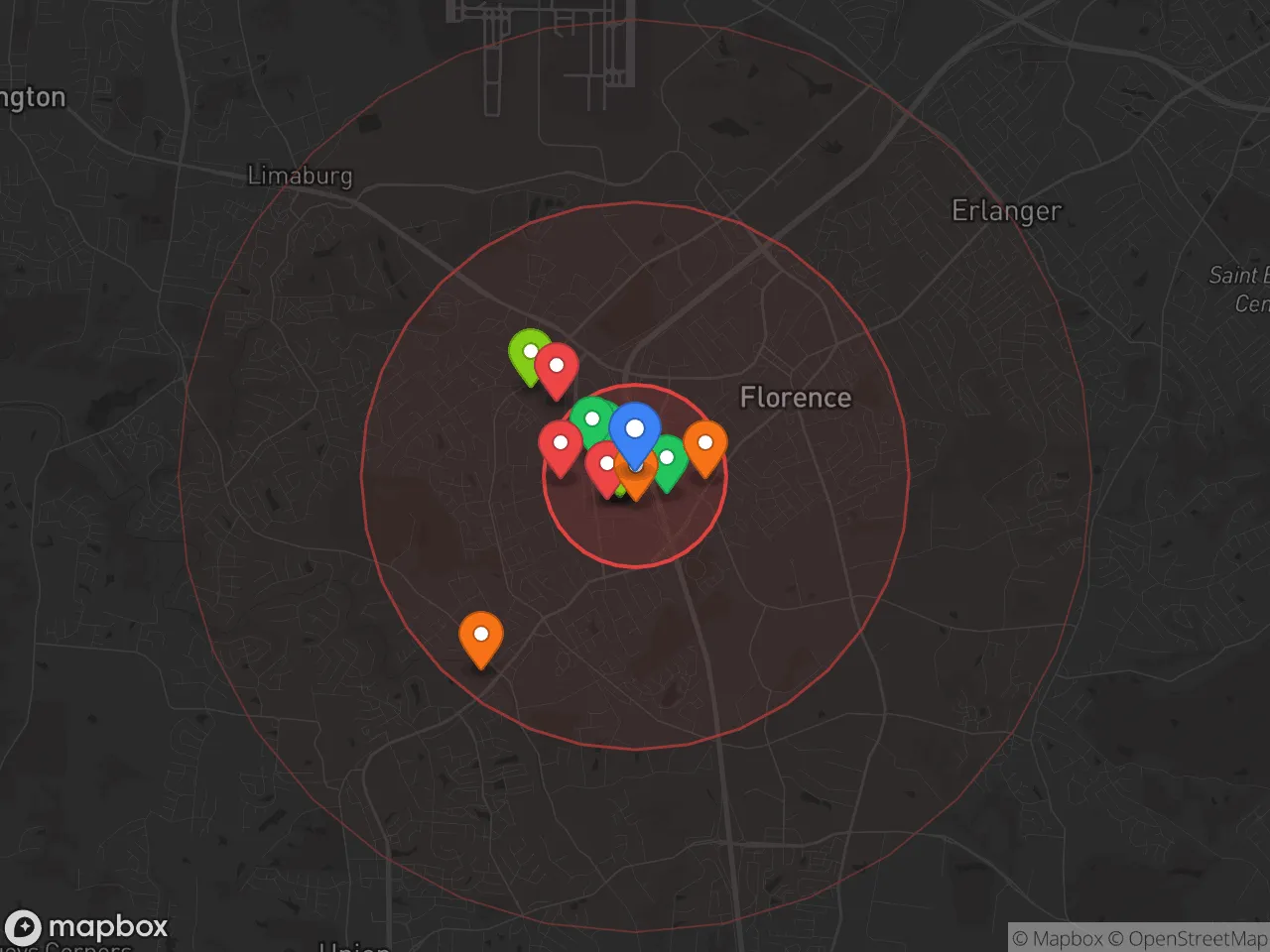
Hobbies
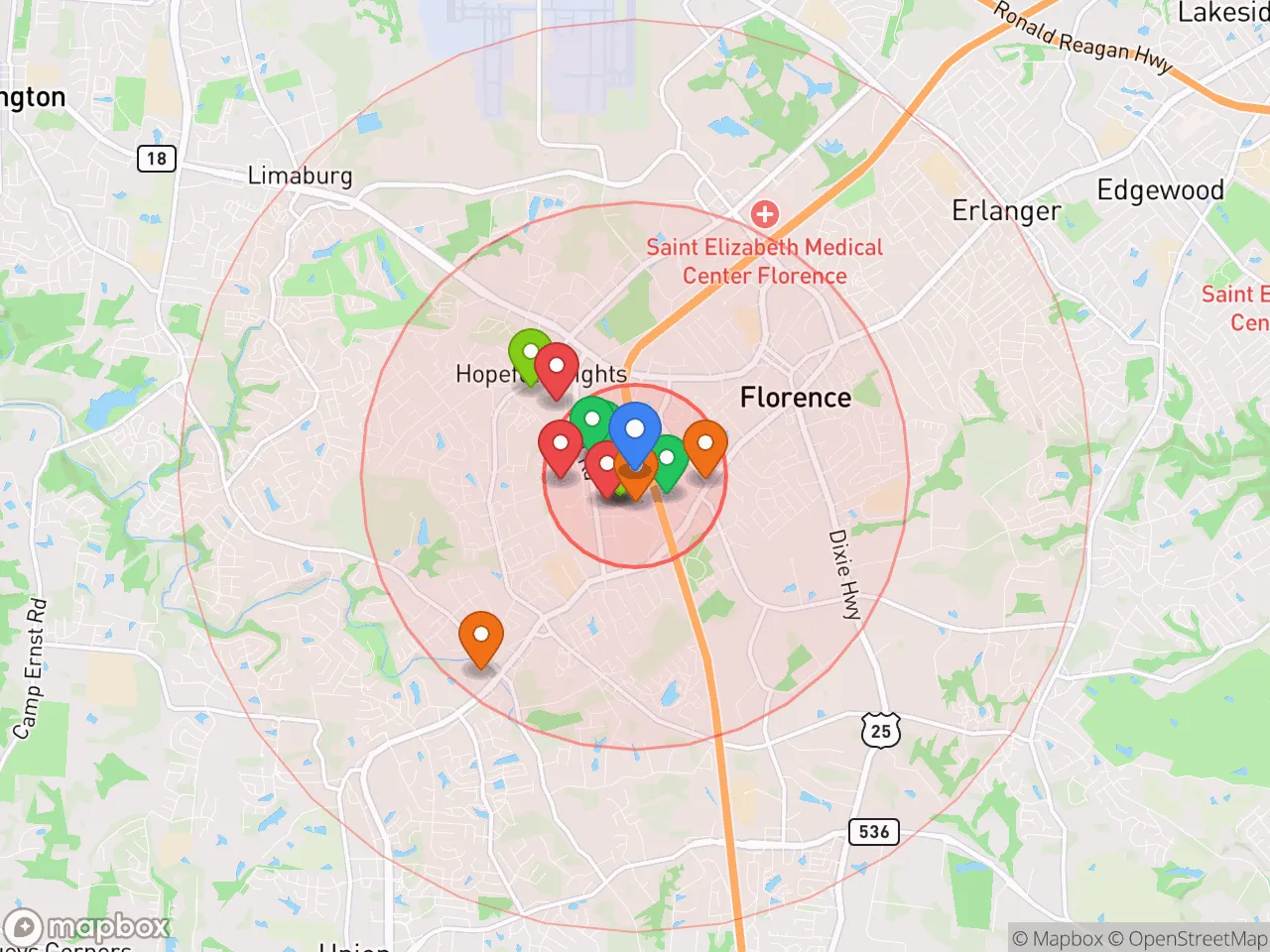
Explore the areaGroceries
8 within 10 miles
Gas
20 within 10 miles
Hospital
20 within 20 miles
Airport
Indianapolis International Airport
Post Office
USPS — Florence, KY
Critical Amenities
Quality-of-Life Analysis
Florence, Kentucky, presents a quality of life defined by suburban affluence and practical convenience, attracting a mix of young families, established professionals, and long-term residents who value proximity to Cincinnati without the Ohio city’s higher costs. With a cost of living index of 90 (where 100 equals the U.S. average), the city offers a tangible financial edge over the metro core, while its median household income consistently outpaces state and national averages. The population skews toward homeowners and married couples, creating a stable, family-oriented community that balances small-town feel with big-city access via Interstates 71/75 and the nearby Cincinnati/Northern Kentucky International Airport (CVG).
Cost of living, housing affordability, and how Florence compares to nearby areas
Florence’s cost of living sits 10% below the national average, a gap that widens significantly when compared to Cincinnati’s pricier eastern suburbs like Hyde Park or Mariemont. The median home value of $196,200 is roughly $100,000 less than the Cincinnati metro average, making homeownership attainable for dual-income households earning around $70,000–$80,000 annually. Median rent of $1,199 undercuts comparable suburban rentals in Northern Kentucky’s Covington or Newport by 10–15%, though it is slightly above the state median. Property taxes in Boone County are moderate, and Kentucky’s flat income tax rate of 4.5% (as of 2026) offers a small advantage over Ohio’s progressive brackets for middle earners. The average commute of 23.8 minutes is shorter than the national average of 26 minutes, with most residents driving to jobs in Florence’s own commercial corridor, CVG, or downtown Cincinnati (a 20-minute drive via I-75).
Schools, amenities, and what daily life feels like for families and professionals
Daily life in Florence revolves around the Boone County School District, which consistently ranks among Kentucky’s top 10 for academic performance, with Florence Elementary and R.A. Jones Middle School earning state recognition for growth metrics. The city’s amenity base is anchored by the Florence Mall, the Florence Y’all water tower landmark, and the sprawling Florence Nature Park with 3 miles of paved trails. For groceries and errands, residents rely on Kroger and Meijer along Mall Road, while dining options range from local barbecue at Smoke Justis to chain favorites. Healthcare access is strong via St. Elizabeth Florence Hospital, a full-service facility with a Level III trauma center. The rhythm is distinctly suburban: weekend youth sports at Florence Freedom Park, weekday commutes on the 71/75 corridor, and occasional trips to Cincinnati for Reds games or the Cincinnati Art Museum. The city lacks a walkable downtown core, so a car is essential for most errands.
Florence is best suited for homebuyers seeking affordability within commuting distance of Cincinnati, particularly families who prioritize school quality and suburban safety over urban nightlife. Professionals working at CVG, Amazon’s nearby fulfillment centers, or Cincinnati’s corporate offices will find the commute manageable and the housing costs freeing. Retirees on fixed incomes may also appreciate the lower cost of living and access to St. Elizabeth’s medical network, though those craving dense walkability or cultural amenities should look closer to the Ohio River. For anyone who values a quiet, well-maintained suburb with strong schools and a 20-minute drive to a major city, Florence delivers a pragmatic, high-value quality of life.

Crime in Florence, KY
Generally safer than 62% of comparable U.S. locations.
Violent CrimeViolent Crime Analysis
Property CrimeProperty Crime Analysis
Crime Analysis
Florence, Kentucky, presents a mixed safety profile that demands careful consideration from potential residents. While the city's violent crime rate of 190.1 incidents per 100,000 residents sits below the national average, its property crime rate of 2,327.9 per 100,000 significantly exceeds both state and national benchmarks, creating a tangible risk for homeowners and renters alike. As a growing suburb within the Cincinnati metropolitan area, Florence's crime dynamics are influenced by regional trends, including the proximity to a large urban center where progressive prosecutorial policies have been linked to higher recidivism and reduced public safety.
Crime in context
Florence's violent crime rate is roughly half the national average of 380 per 100,000, placing it among safer communities for personal safety. However, the property crime rate tells a different story: it is nearly 1.5 times the national average of 1,954 per 100,000 and well above Kentucky's statewide rate of approximately 2,100 per 100,000. This disparity is typical of cities situated near major metro areas like Cincinnati, where property crime—particularly theft and vehicle break-ins—flows across jurisdictional lines. Readers should note that the broader Hamilton County, Ohio, justice system, which includes Cincinnati, has adopted progressive policies such as cash bail reform and reduced prosecution of non-violent offenses. These approaches, while intended to reduce incarceration, have been correlated with increased property crime in suburban border communities like Florence, as offenders face fewer consequences and greater freedom to re-offend.
What residents experience
Daily life in Florence involves navigating a heightened risk of property crime, especially in commercial corridors like Mall Road and Houston Road. Vehicle break-ins and package thefts are the most commonly reported incidents, with police logs showing clusters of such crimes near shopping centers and apartment complexes. Violent crime is rare but not absent; when it occurs, it is typically domestic in nature or tied to disputes among known individuals, rather than random attacks on the public. The Florence Police Department maintains a visible presence through community policing initiatives, but the department's resources are stretched by the city's role as a regional retail hub, which draws transient populations and opportunistic criminals. For families, the primary concern is securing homes and vehicles against theft, as the risk of personal harm remains low.
Neighborhood-level variation is significant. Established subdivisions like Thoroughbred Hills and Doe Run Lake area report property crime rates 30-40% lower than the city average, thanks to private security patrols and neighborhood watch programs. In contrast, apartment complexes near I-75 and the Florence Y'all water tower experience higher theft rates, driven by easy highway access and dense, transient populations. Newer developments on the city's western edge, such as those off U.S. 42, show intermediate risk levels. Prospective residents should prioritize properties with off-street parking, outdoor lighting, and active homeowners' associations, as these features correlate with lower incident rates. Overall, Florence offers a livable environment for those who take proactive security measures, but the property crime data and regional prosecutorial climate warrant caution.
* Values derived from national, state, county, city and local statistics and may differ in a specific area. Last updated: 2026-04-21T10:46:15.000Z
Narrative content on this page is AI-generated and may contain mistakes. Verify any details that matter before acting on them.
ReloMaps may earn a commission from affiliate links at no extra cost to you.

