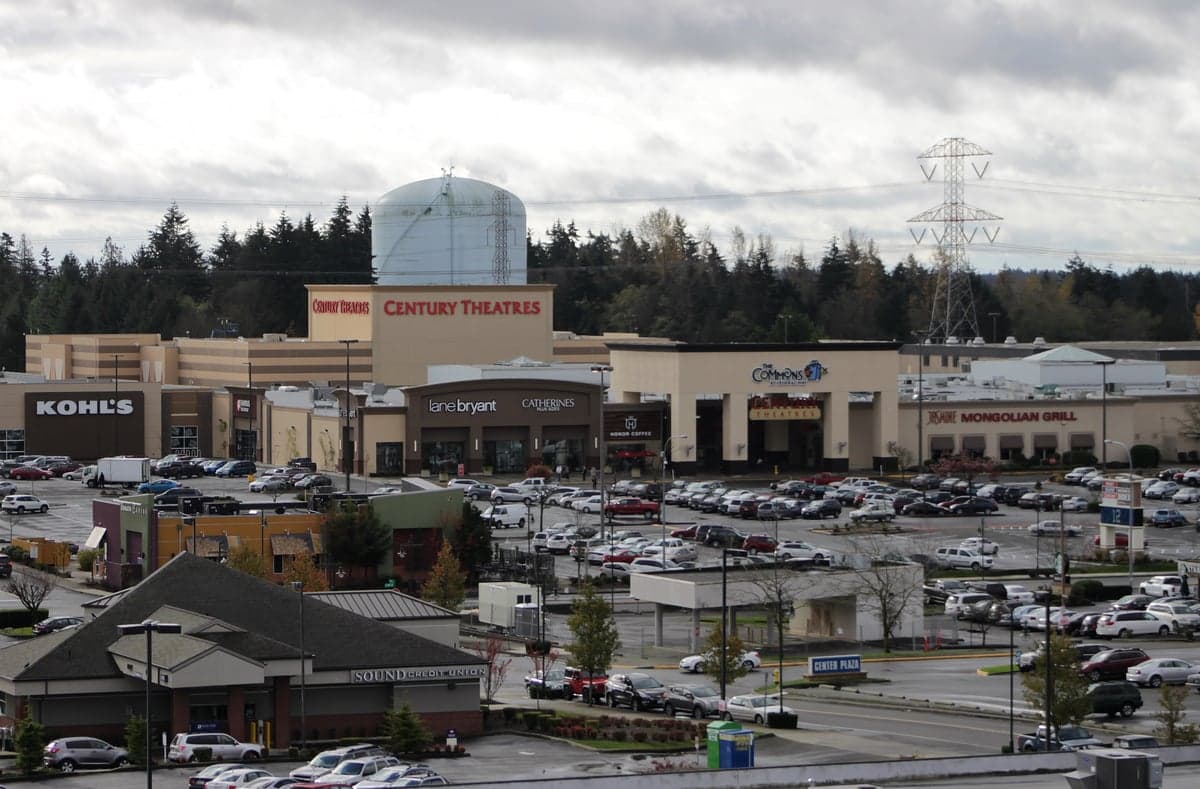
Photo: Wikipedia
Strategic Assessment of Federal Way, WA
Multiple tactical vulnerabilities. Population density, target proximity, or disaster risk are likely compounding. A retreat property and exit planning is required.
What does the Strategic Assessment tell us?
Our Strategic Assessment grades tactical survivability of an area. Major population centers, military targets, fallout zones, natural disasters, and border exposure all drive risk — lower exposure means a more defensible position in a crisis.
This is heavily inspired by Joel Skousen's Strategic Relocation book. Highly recommended you checkout the book ($)What does this tell us?
Our Strategic Assessment grades tactical survivability of an area. Major population centers, military targets, fallout zones, natural disasters, and border exposure all drive risk — lower exposure means a more defensible position in a crisis.
This is heavily inspired by Joel Skousen's Strategic Relocation book. Highly recommended you checkout the book ($)Strategic Pillars

Key Distances
Regional Safe Places
Below is our recommended "safe zones" in Washington and the surrounding area based on our strategic heuristics. For most people, it's unrealistic to live in a “safe zone” full-time due to work, family or other personal reasons. They tend to be more rural. However, many of these areas are perfect for second homes and retreat properties that double as a vacation home or even a short-term rental.
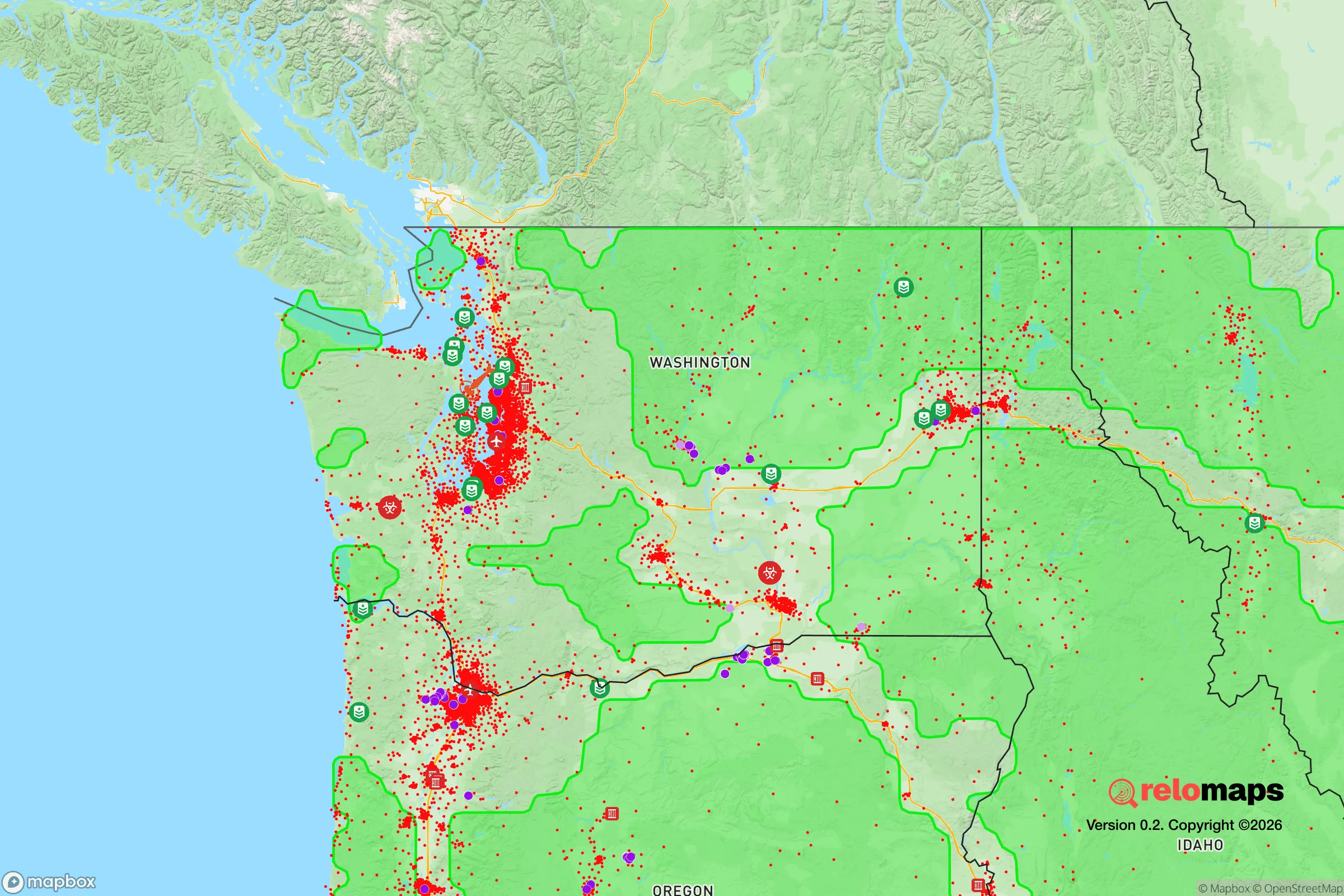
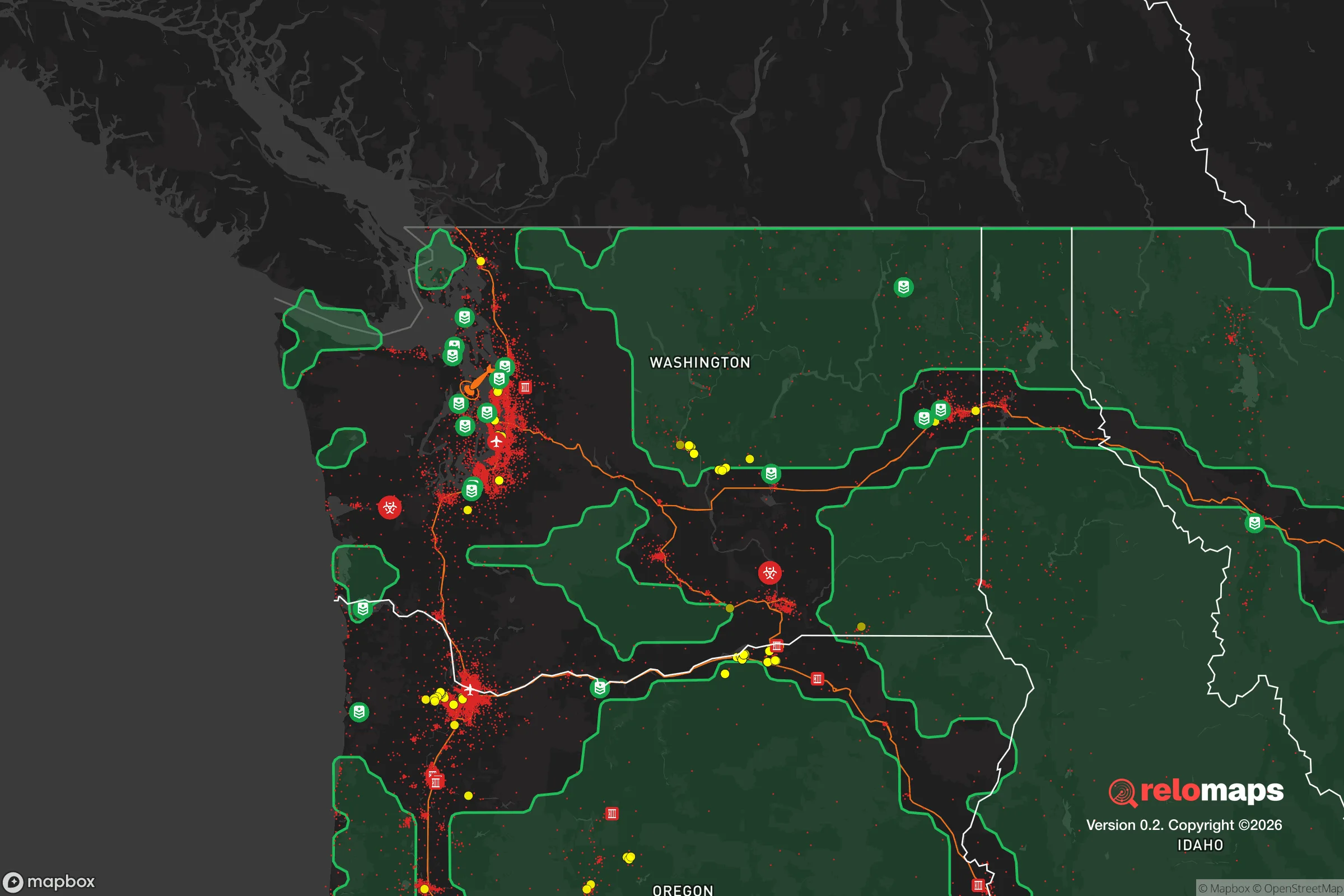


Important Note: For informational purposes only. This does not mean nothing bad ever happens in the green zones. Please use common sense. This is based on public data and modeled with AI. We tried to take a conservative approach but mistakes happen. We update this regularly as new information becomes available.
Solar Generator Recommendations
Backup power matters more here than in safer locations. We've picked three solar generators across budgets and capacity tiers — start with the budget unit if you only need a few essentials, or step up if you want to run a fridge and HVAC for days at a time.

Jackery Portable Power Station Explorer 300
Budget OptionPower on the Go: Weighing only 11 lbs, it's convenient to set up and store with book-sized foldable solar panels

BLUETTI Portable Power Station AC180
Designed for both indoor and outdoor scenarios, AC180 is highly capable as it has a robost capacity and continuous output power.

EF ECOFLOW DELTA Pro Ultra Power Station
Upgraded PickEcoFlow DELTA Pro Ultra is a whole-home energy system designed to grow with your family. Integrated with the Smart Home Panel 2, it scales to meet your evolving energy needs — keeping your home powered, intelligent, and secure through every stage of life.
We earn a commission, at no additional cost to you.
Strategic Assessment Analysis
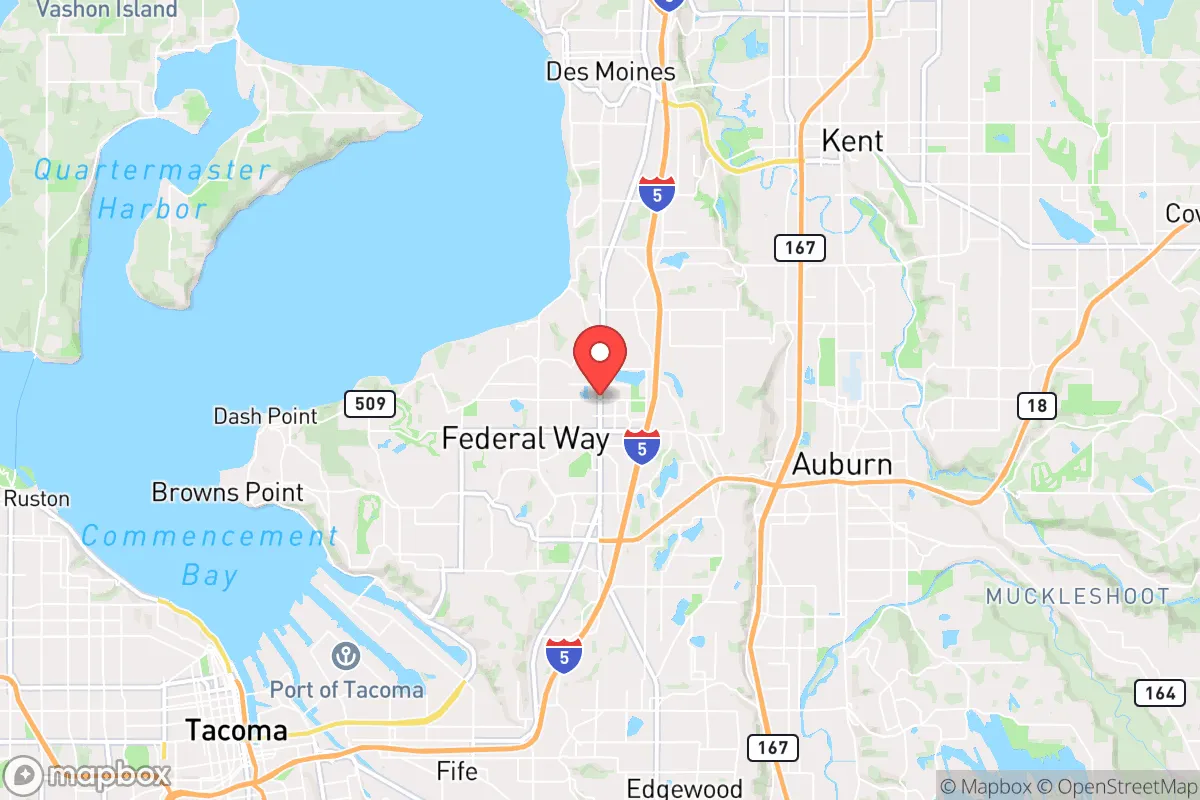
Federal Way, Washington, occupies a strategic but precarious position in the Pacific Northwest, offering a mix of logistical advantages and significant vulnerabilities for those focused on long-term preparedness. Situated roughly halfway between Seattle and Tacoma along the I-5 corridor, this city of about 100,000 residents benefits from access to major transportation arteries, a robust local economy, and proximity to natural resources. However, for a relocator operating from a survivalist mindset—one concerned with civic unrest, mass casualty events, and systemic collapse—Federal Way’s location near dense urban centers, critical infrastructure, and potential fallout targets demands a sober assessment. The city’s resilience is not inherent; it must be actively engineered by those who choose to live here, with a clear-eyed understanding of both its defensive strengths and its exposure to cascading risks.
Geographic position and natural advantages for long-term survival
Federal Way’s geographic setting provides several tangible benefits for a prepper household. The city sits on a plateau overlooking Puget Sound, with the Olympic Mountains to the west and the Cascade Range to the east. This positioning offers natural defensibility through elevation—much of the city is 300–500 feet above sea level, reducing flood risk from coastal storm surges or tsunami events, which are a real threat to lower-lying areas like Tacoma’s tideflats or Seattle’s waterfront. The region’s temperate maritime climate means year-round growing seasons are feasible, with mild winters and consistent rainfall averaging 37 inches annually. For a family looking to establish food security, this allows for extended gardening, rainwater catchment, and even small-scale livestock operations in suburban lots, provided local zoning permits it. The nearby Green River and Puget Sound offer fishing and potential water sources, though both require treatment due to industrial and agricultural runoff. Federal Way is also within a 30-minute drive of multiple state and national forests, including the Mount Baker-Snoqualmie National Forest, which provides timber, game, and remote retreat options. For a relocator prioritizing self-sufficiency, these natural assets are a solid foundation—but they come with strings attached.
Risks, exposures, and proximity to fallout-relevant landmarks
The same location that gives Federal Way access to resources also places it in a high-risk corridor. The city is directly adjacent to Joint Base Lewis-McChord (JBLM), one of the largest military installations on the West Coast, housing the I Corps headquarters and tens of thousands of active-duty personnel. In a major conflict or terrorist event, JBLM is a prime target for conventional or nuclear strikes, and Federal Way lies within the likely fallout plume zone depending on wind direction. The I-5 corridor itself is a chokepoint for military and civilian logistics, making it a target for sabotage or disruption during civil unrest. Additionally, the Port of Tacoma and the Port of Seattle—both within 20 miles—are critical economic nodes that could attract cyberattacks, maritime blockades, or physical assaults. For a prepper, this means Federal Way is not a bug-out location but a potential blast zone if geopolitical tensions escalate. The city’s population density (roughly 4,000 people per square mile) also creates risks during a pandemic or mass casualty event, where hospitals like St. Francis Hospital (the only major trauma center in the area) could be overwhelmed quickly. The 2020 civil unrest in Seattle and Portland demonstrated how quickly chaos can spread along the I-5 corridor, and Federal Way’s proximity to those cities—combined with its own diverse, politically mixed population—means it could see localized unrest, supply chain disruptions, or refugee flows from urban centers.
Practical resilience for a relocator: food, water, energy, and defensibility
For a relocator serious about preparedness, Federal Way requires a proactive, layered approach. Water is the most immediate concern: the city draws from the Green River watershed, which is vulnerable to contamination from industrial spills, earthquakes (the Cascadia subduction zone is a known threat), or intentional sabotage. A household should plan for at least two weeks of stored water, plus a Berkey or similar filtration system for rainwater or local streams. Food security is achievable but not automatic. The area has several farmers’ markets and a strong local food movement, but during a crisis, grocery stores will empty within hours. A prepper should establish a garden with cold-hardy crops like kale, potatoes, and carrots, and consider joining a local food co-op or barter network. Energy resilience is mixed: Federal Way is served by Puget Sound Energy, which has a history of outages during windstorms and ice events. Solar panels with battery storage are a wise investment, as the region gets enough sun for partial off-grid capability, but a backup generator (with fuel stored safely) is essential for winter months. Defensibility is the trickiest variable. Federal Way’s suburban layout—with cul-de-sacs, greenbelts, and some wooded areas—offers natural chokepoints and concealment compared to dense urban blocks. However, the city’s reliance on I-5 and Highway 99 for movement means that any roadblock or bridge failure could trap residents. A relocator should identify multiple egress routes, including back roads through Auburn or Enumclaw, and maintain a vehicle with off-road capability. Community is the wildcard: Federal Way has a mix of long-term families, military retirees, and recent immigrants, which can create either strong neighborhood networks or cultural friction. Building relationships with like-minded neighbors—through church groups, gun clubs, or prepper meetups—is critical for mutual aid during a crisis.
The overall strategic picture for Federal Way is one of calculated risk. It is not a remote survivalist paradise, nor is it a doomed urban death trap. For a conservative-leaning relocator who values preparedness, the city offers a viable base of operations if you are willing to invest in hardening your home, stockpiling supplies, and maintaining a low profile. The proximity to JBLM and the I-5 corridor is a double-edged sword: it provides economic stability and access to military-grade resources (including surplus gear and training opportunities), but it also makes the area a target. The key is to treat Federal Way as a forward operating base, not a final redoubt. Have a bug-out plan for the Cascades or eastern Washington, maintain a go-bag with medical and communications gear, and stay informed about regional threats. The Pacific Northwest is a beautiful but volatile region, and Federal Way sits at the intersection of opportunity and exposure. With discipline and foresight, it can be a smart relocation choice—but only for those who understand that resilience is earned, not given.

* Values derived from national, state, county, city and local statistics and may differ in a specific area. Last updated: 2026-04-19T09:38:49.000Z
Narrative content on this page is AI-generated and may contain mistakes. Verify any details that matter before acting on them.
ReloMaps may earn a commission from affiliate links at no extra cost to you.

