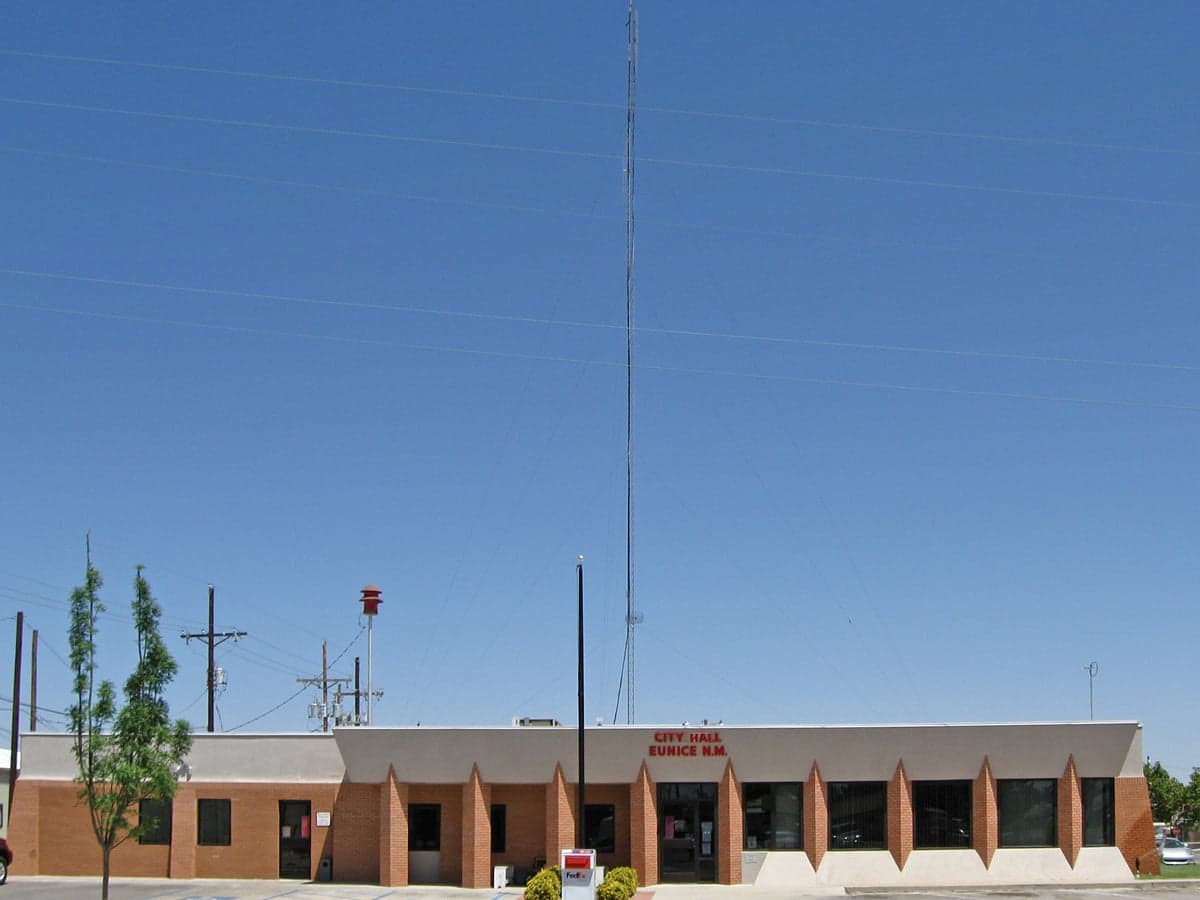
Photo: Wikipedia
Strategic Assessment of Eunice, NM
Workable tactical position. Some exposure to population density or targets, but generally defensible in a crisis.
What does the Strategic Assessment tell us?
Our Strategic Assessment grades tactical survivability of an area. Major population centers, military targets, fallout zones, natural disasters, and border exposure all drive risk — lower exposure means a more defensible position in a crisis.
This is heavily inspired by Joel Skousen's Strategic Relocation book. Highly recommended you checkout the book ($)What does this tell us?
Our Strategic Assessment grades tactical survivability of an area. Major population centers, military targets, fallout zones, natural disasters, and border exposure all drive risk — lower exposure means a more defensible position in a crisis.
This is heavily inspired by Joel Skousen's Strategic Relocation book. Highly recommended you checkout the book ($)Strategic Pillars

Key Distances
Regional Safe Places
Below is our recommended "safe zones" in New Mexico and the surrounding area based on our strategic heuristics. For most people, it's unrealistic to live in a “safe zone” full-time due to work, family or other personal reasons. They tend to be more rural. However, many of these areas are perfect for second homes and retreat properties that double as a vacation home or even a short-term rental.

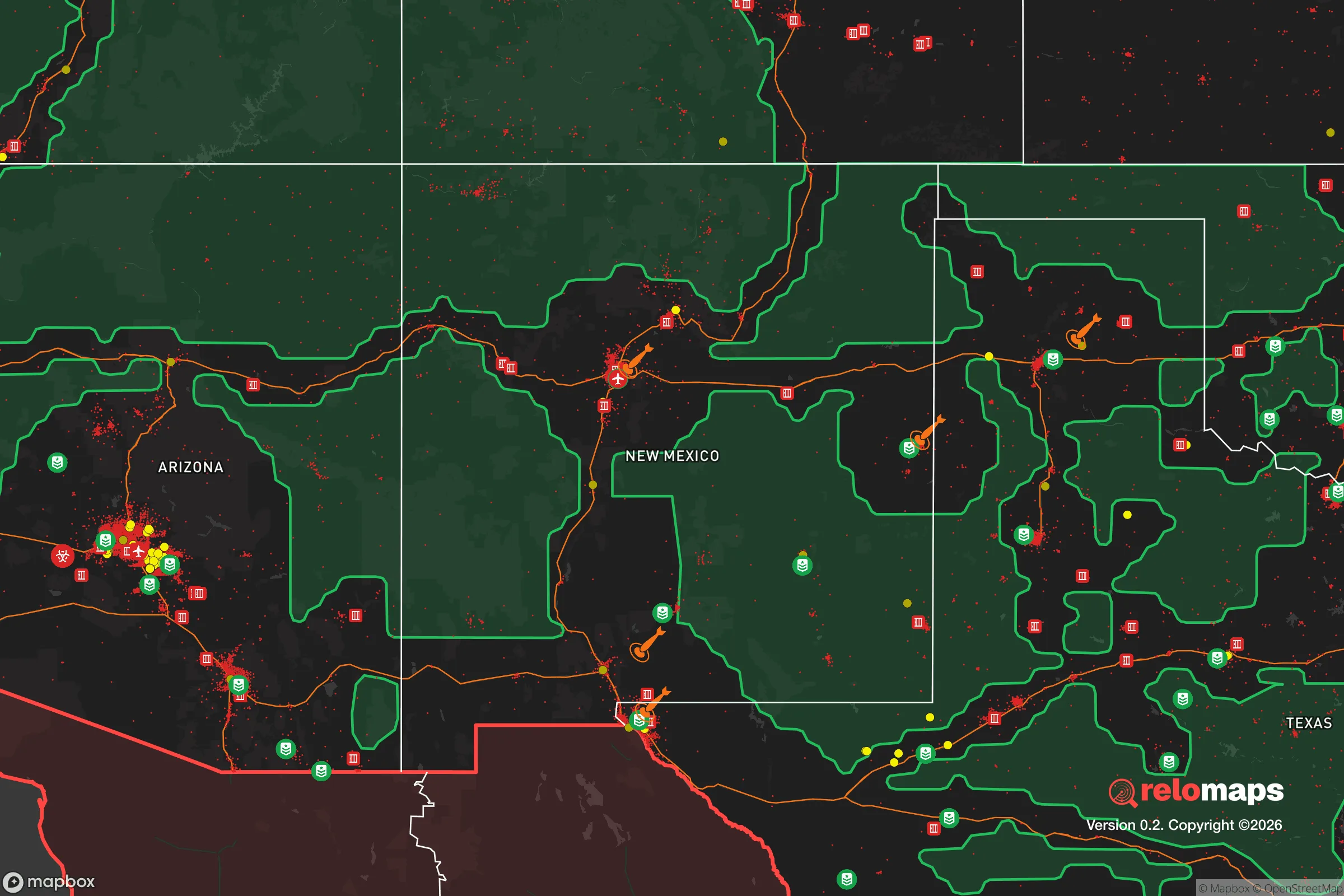


Important Note: For informational purposes only. This does not mean nothing bad ever happens in the green zones. Please use common sense. This is based on public data and modeled with AI. We tried to take a conservative approach but mistakes happen. We update this regularly as new information becomes available.
Solar Generator Recommendations
Backup power matters more here than in safer locations. We've picked three solar generators across budgets and capacity tiers — start with the budget unit if you only need a few essentials, or step up if you want to run a fridge and HVAC for days at a time.

Jackery Portable Power Station Explorer 300
Budget OptionPower on the Go: Weighing only 11 lbs, it's convenient to set up and store with book-sized foldable solar panels

BLUETTI Portable Power Station AC180
Designed for both indoor and outdoor scenarios, AC180 is highly capable as it has a robost capacity and continuous output power.

EF ECOFLOW DELTA Pro Ultra Power Station
Upgraded PickEcoFlow DELTA Pro Ultra is a whole-home energy system designed to grow with your family. Integrated with the Smart Home Panel 2, it scales to meet your evolving energy needs — keeping your home powered, intelligent, and secure through every stage of life.
We earn a commission, at no additional cost to you.
Strategic Assessment Analysis
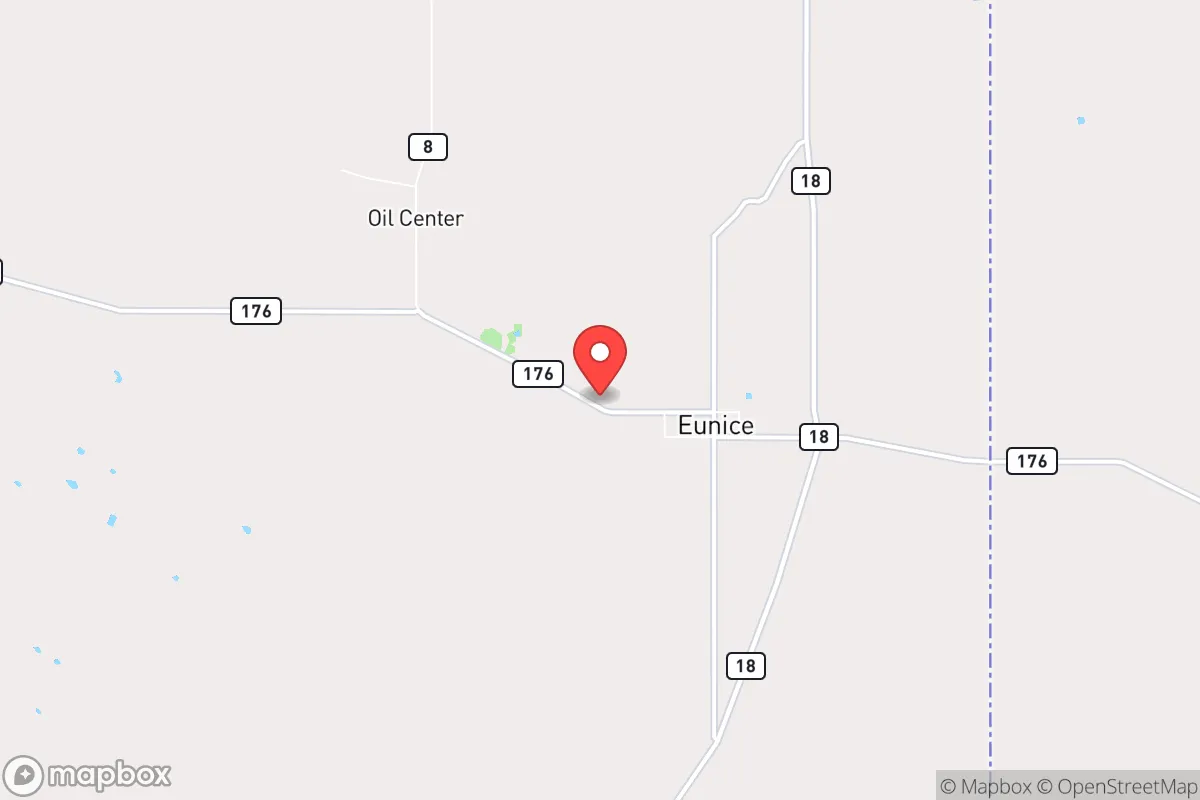
Eunice, New Mexico, sits in the southeastern corner of the state, a location that offers a distinct set of strategic advantages for those prioritizing resilience and self-reliance. Its position places it roughly 30 miles from the Texas state line, 50 miles from Hobbs, and about 120 miles from Lubbock, Texas, putting it far enough from major population centers to avoid the immediate chaos of a collapse event, yet close enough to access supplies or medical care if needed. The area’s low population density—Eunice itself has fewer than 3,000 residents—combined with its arid climate and agricultural infrastructure, makes it a viable option for those seeking a buffer from the volatility of urban centers. This analysis examines the location’s natural defenses, exposure to risks, and practical resilience factors for a relocator with a prepper mindset.
Geographic position and natural advantages for long-term survival
Eunice sits on the High Plains, a region characterized by flat terrain, sparse vegetation, and a semi-arid climate that averages about 14 inches of rainfall annually. This geography provides a natural defensive advantage: the open landscape offers long sightlines, making it difficult for any large, disorganized group to approach undetected. The area is part of the Permian Basin, one of the most productive oil and gas regions in the United States, which means local infrastructure for energy extraction is robust. For a relocator, this translates to potential access to fuel, propane, and natural gas even during supply chain disruptions. The region’s agricultural base—primarily cotton, sorghum, and cattle ranching—ensures that food production is a local reality, not just a distant concept. The nearby Lea County, where Eunice is located, has a population density of about 12 people per square mile, which drastically reduces competition for resources in a crisis scenario. The absence of major rivers or floodplains eliminates flood risks, and the area’s elevation (around 3,500 feet) provides a moderate climate that avoids extreme heat or cold, though summers can be hot and winters windy.
Risks, exposures, and proximity to fallout-relevant landmarks
While Eunice’s isolation is a strength, it is not without vulnerabilities. The primary risk comes from its proximity to the Permian Basin’s industrial infrastructure. Oil and gas facilities, including refineries and processing plants, are scattered throughout the region. A major accident, intentional sabotage, or a natural disaster could release toxic chemicals or cause fires that would affect air quality and water sources. The nearest significant population center is Hobbs (population ~40,000), which, while not a major city, could become a focal point for unrest or resource competition if regional stability collapses. Eunice is roughly 200 miles from the U.S.-Mexico border, a distance that provides some buffer from border-related security issues but does not eliminate the risk of drug cartel activity or human trafficking corridors that pass through the area. For those concerned with nuclear fallout, Eunice is not near any major military installations or strategic targets. The closest potential target is the Pantex Plant near Amarillo, Texas (about 150 miles north), which assembles and disassembles nuclear weapons. While not a direct threat, a major event there could produce fallout patterns that might affect the region depending on wind direction. The area’s flat terrain also means that any airborne contamination would spread quickly, but the low population density reduces the likelihood of secondary effects like looting or panic.
Practical resilience for a relocator: food, water, energy, and defensibility
Water is the most critical concern in this arid environment. The Ogallala Aquifer lies beneath the region, and local wells can tap into it, but the aquifer is being depleted at an unsustainable rate for agricultural use. A relocator would need to secure a private well or develop rainwater catchment systems, as municipal water supplies could fail during a prolonged crisis. The average annual rainfall of 14 inches is low, but with proper storage and filtration, it can supplement a well. For food, the local agricultural economy means that bulk grains, livestock feed, and even live animals are available from nearby ranches and farms. Establishing a garden would require irrigation, but the growing season is long (about 200 days), and crops like beans, squash, and corn can thrive with careful management. Energy is a strong point: natural gas is abundant, and solar potential is high due to over 280 sunny days per year. A solar array with battery storage would be a wise investment, as the grid in rural New Mexico can be unreliable during storms or high demand. Defensibility is moderate. The flat terrain means that a property with a perimeter fence, clear sightlines, and a well-placed structure can be easily monitored. However, the lack of natural cover (forests, hills) means that a determined group could approach from any direction. A community of like-minded individuals would be ideal, as the area’s isolation can become a liability if you are alone and need to defend a large property. The local culture is heavily conservative, with a strong emphasis on self-reliance, gun ownership, and community support, which aligns well with a prepper mindset. The nearest hospital is in Hobbs, about 30 minutes away, so medical emergencies would require a well-stocked first aid kit and basic trauma training.
The overall strategic picture for Eunice is one of trade-offs. It offers a genuine escape from the density and fragility of urban life, with access to energy, food, and a like-minded community. The risks—water scarcity, industrial hazards, and flat terrain—are manageable with preparation and investment. For a single individual or family willing to drill a well, install solar, and build a defensible property, Eunice provides a solid foundation for long-term resilience. It is not a fortress, but it is a place where a prepared person can thrive while the world around them falters. The key is to act now, before the window of opportunity closes, and to recognize that no location is perfect—only better than the alternatives.

* Values derived from national, state, county, city and local statistics and may differ in a specific area. Last updated: 2026-05-01T01:36:12.000Z
Narrative content on this page is AI-generated and may contain mistakes. Verify any details that matter before acting on them.
ReloMaps may earn a commission from affiliate links at no extra cost to you.

