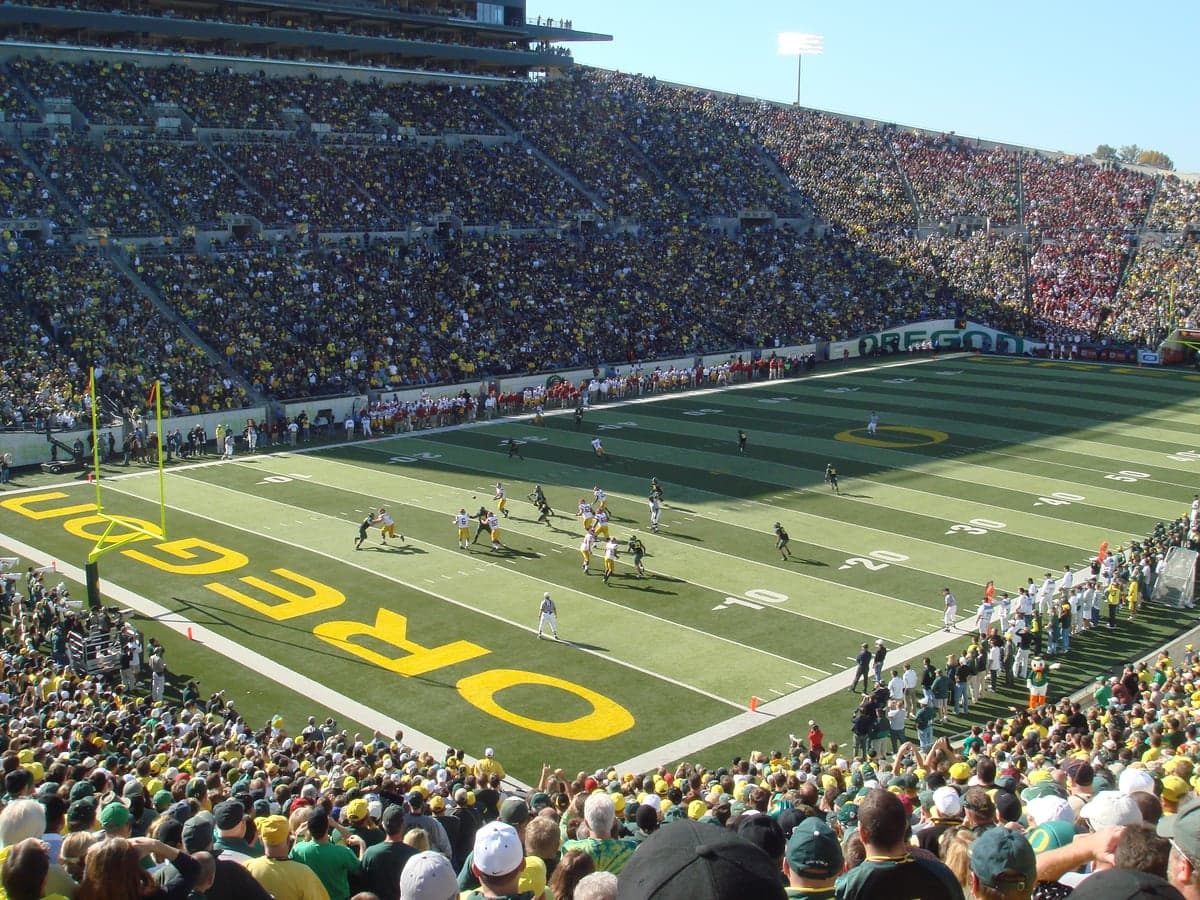
Photo: Wikipedia
Strategic Assessment of Eugene, OR
Workable tactical position. Some exposure to population density or targets, but generally defensible in a crisis.
What does the Strategic Assessment tell us?
Our Strategic Assessment grades tactical survivability of an area. Major population centers, military targets, fallout zones, natural disasters, and border exposure all drive risk — lower exposure means a more defensible position in a crisis.
This is heavily inspired by Joel Skousen's Strategic Relocation book. Highly recommended you checkout the book ($)What does this tell us?
Our Strategic Assessment grades tactical survivability of an area. Major population centers, military targets, fallout zones, natural disasters, and border exposure all drive risk — lower exposure means a more defensible position in a crisis.
This is heavily inspired by Joel Skousen's Strategic Relocation book. Highly recommended you checkout the book ($)Strategic Pillars

Key Distances
Regional Safe Places
Below is our recommended "safe zones" in Oregon and the surrounding area based on our strategic heuristics. For most people, it's unrealistic to live in a “safe zone” full-time due to work, family or other personal reasons. They tend to be more rural. However, many of these areas are perfect for second homes and retreat properties that double as a vacation home or even a short-term rental.


Important Note: For informational purposes only. This does not mean nothing bad ever happens in the green zones. Please use common sense. This is based on public data and modeled with AI. We tried to take a conservative approach but mistakes happen. We update this regularly as new information becomes available.
Solar Generator Recommendations
Backup power matters more here than in safer locations. We've picked three solar generators across budgets and capacity tiers — start with the budget unit if you only need a few essentials, or step up if you want to run a fridge and HVAC for days at a time.

Jackery Portable Power Station Explorer 300
Budget OptionPower on the Go: Weighing only 11 lbs, it's convenient to set up and store with book-sized foldable solar panels

BLUETTI Portable Power Station AC180
Designed for both indoor and outdoor scenarios, AC180 is highly capable as it has a robost capacity and continuous output power.

EF ECOFLOW DELTA Pro Ultra Power Station
Upgraded PickEcoFlow DELTA Pro Ultra is a whole-home energy system designed to grow with your family. Integrated with the Smart Home Panel 2, it scales to meet your evolving energy needs — keeping your home powered, intelligent, and secure through every stage of life.
We earn a commission, at no additional cost to you.
Strategic Assessment Analysis
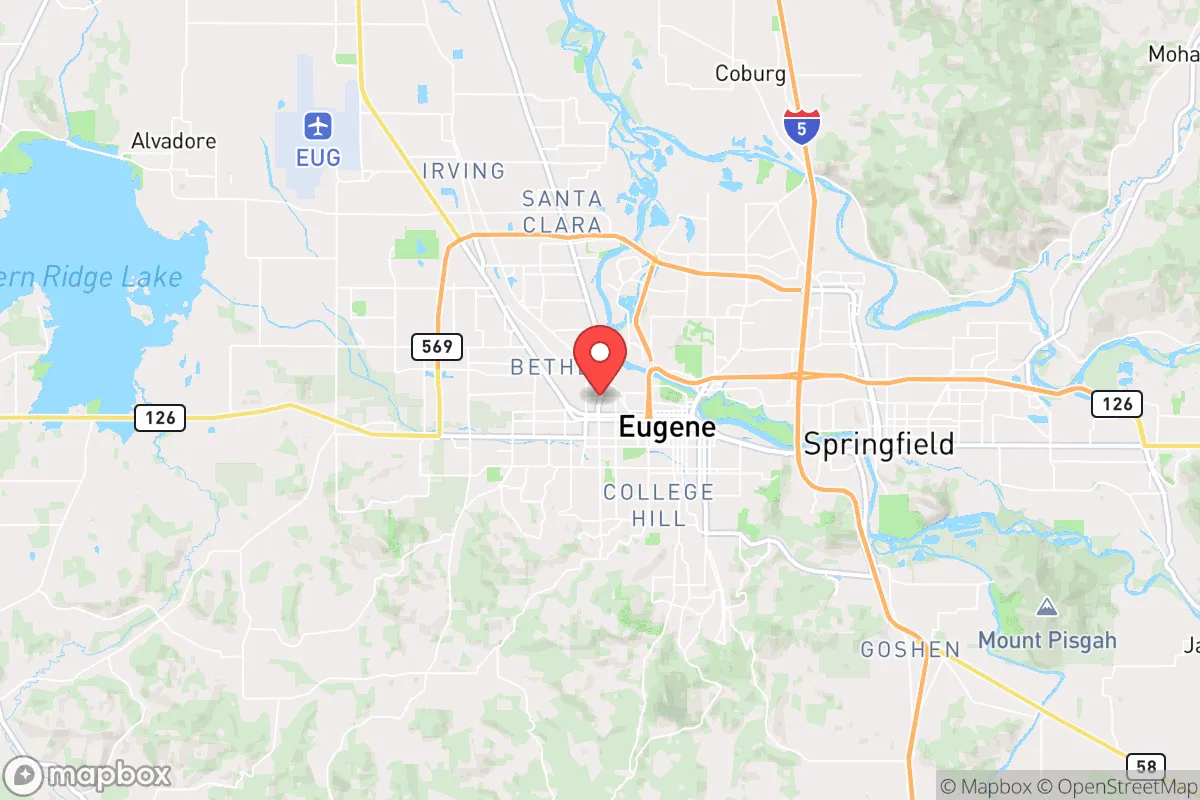
Eugene, Oregon, presents a mixed strategic picture for the conservative prepper or survivalist. Its location in the southern Willamette Valley offers genuine natural advantages—abundant water, fertile soil, and a temperate climate—but these are offset by the area's deep-blue political culture, proximity to Portland (110 miles north), and a growing population that strains local resources. For a relocator prioritizing long-term resilience, Eugene is not a bug-out destination but a potential base camp that requires careful hardening against both natural and man-made threats.
Geographic position and natural advantages for long-term survival
Eugene sits at the confluence of the Willamette and McKenzie Rivers, giving it a reliable surface water supply that many Western cities lack. The surrounding Willamette National Forest and Cascade Range provide timber, game, and defensible terrain to the east, while the Coast Range to the west offers a buffer against Pacific storms. The climate is mild—average highs in the 80s in summer, lows in the 30s in winter—meaning heating and cooling demands are low, a critical factor for off-grid living. The valley's volcanic soil is among the most productive in the nation; with seed stock and know-how, a household could sustain itself on a few acres. However, the area's earthquake risk is real: the Cascadia Subduction Zone runs offshore, and a major quake (Magnitude 9.0) would devastate the I-5 corridor, likely cutting road access for weeks. Eugene's position 60 miles inland gives it a slight edge over coastal cities like Newport or Coos Bay, but the shaking and liquefaction in the valley floor would be severe.
Risks, exposures, and proximity to fallout-relevant landmarks
Eugene's biggest vulnerability is its dependence on the I-5 corridor for food, fuel, and medical supplies. A Cascadia earthquake, a Cascadia earthquake, a major wildfire, or civil unrest in Portland would sever that lifeline. The city itself is a high-value target for civil unrest given its reputation as a progressive stronghold—home to the University of Oregon and a vocal activist community. In a national crisis, Eugene could become a flashpoint rather than a refuge. Proximity to Portland (110 miles north) means fallout from a Portland-area event—whether a dirty bomb, a chemical release, or a riot—could drift south depending on prevailing winds. The Eugene Airport (EUG) is a potential FEMA staging point, which in a disaster would draw crowds and government attention. The McKenzie River watershed is vulnerable to contamination from upstream landslides or industrial accidents. On the plus side, there are no nuclear power plants within 150 miles, and the nearest major military installation (Joint Base Lewis-McChord) is 200 miles north, reducing the chance of Eugene being a direct target in a conflict.
Practical resilience for a relocator: food, water, energy, and defensibility
For a relocator serious about self-sufficiency, Eugene offers a strong foundation with significant caveats. Water is plentiful: the McKenzie River is high-quality and gravity-fed from the mountains, making it feasible to draw and filter without pumps. The city's municipal water comes from the McKenzie, but a quake could break the pipelines; a well on your property is a must. The growing season is long (April to October), and the Willamette Valley is a national breadbasket for grass seed, hazelnuts, and berries. You can raise chickens, goats, and even a small orchard on a standard suburban lot. Energy is a weak point: the grid is aging and prone to ice-storm outages. Solar is viable (average 150 sunny days per year), but you'll need battery storage and a backup generator for the long, overcast winters. Wood heat is common and practical, but you must secure a supply chain before a crisis—everyone will be buying firewood in October. Defensibility is poor in the city core but improves as you move east into the foothills (e.g., McKenzie Bridge, Blue River) or south toward Cottage Grove. These areas offer choke points on narrow roads, but they also lack the population density to support a community defense. The ideal setup is a rural property within 30 minutes of Eugene, where you can access supplies while maintaining a low profile. Avoid the West Eugene area (floodplain and industrial) and the Whitaker neighborhood (high crime, dense population).
Overall strategic picture for the conservative relocator
Eugene is not a prepper's paradise, but it is a viable long-term base for those willing to invest in hardening. The natural resources—water, soil, timber, mild climate—are genuine assets that few urban areas in the West can match. The political and social environment, however, is a liability. In a crisis, Eugene's progressive governance and activist population could lead to conflict over resources, restrictions on firearms, and a general lack of community self-reliance. The city's emergency management is competent but geared toward shelter-in-place and government-led response, not individual preparedness. For a single individual or family, the smart play is to buy land east of Eugene, in Lane County's unincorporated areas, where building codes are lax, neighbors are sparse, and you can establish a self-sufficient homestead. Keep a low profile, build relationships with local farmers and loggers, and maintain a vehicle capable of navigating forest roads. Eugene itself is a place to resupply and gather intel, not to live full-time. If the Cascadia quake hits, the valley will be a mess for months; but if you're on high ground with stored supplies, you'll be in a better position than 90% of the Pacific Northwest. The bottom line: Eugene offers the raw ingredients for resilience, but the recipe is entirely up to you.

* Values derived from national, state, county, city and local statistics and may differ in a specific area. Last updated: 2026-05-02T08:40:01.000Z
Narrative content on this page is AI-generated and may contain mistakes. Verify any details that matter before acting on them.
ReloMaps may earn a commission from affiliate links at no extra cost to you.

