Photo: Wikipedia
Demographics of Elmira, NY
Affluence Level in Elmira, NY
A below-average socioeconomic profile. Incomes, home values, and educational attainment trail the U.S., with higher poverty and unemployment.
People of Elmira, NY
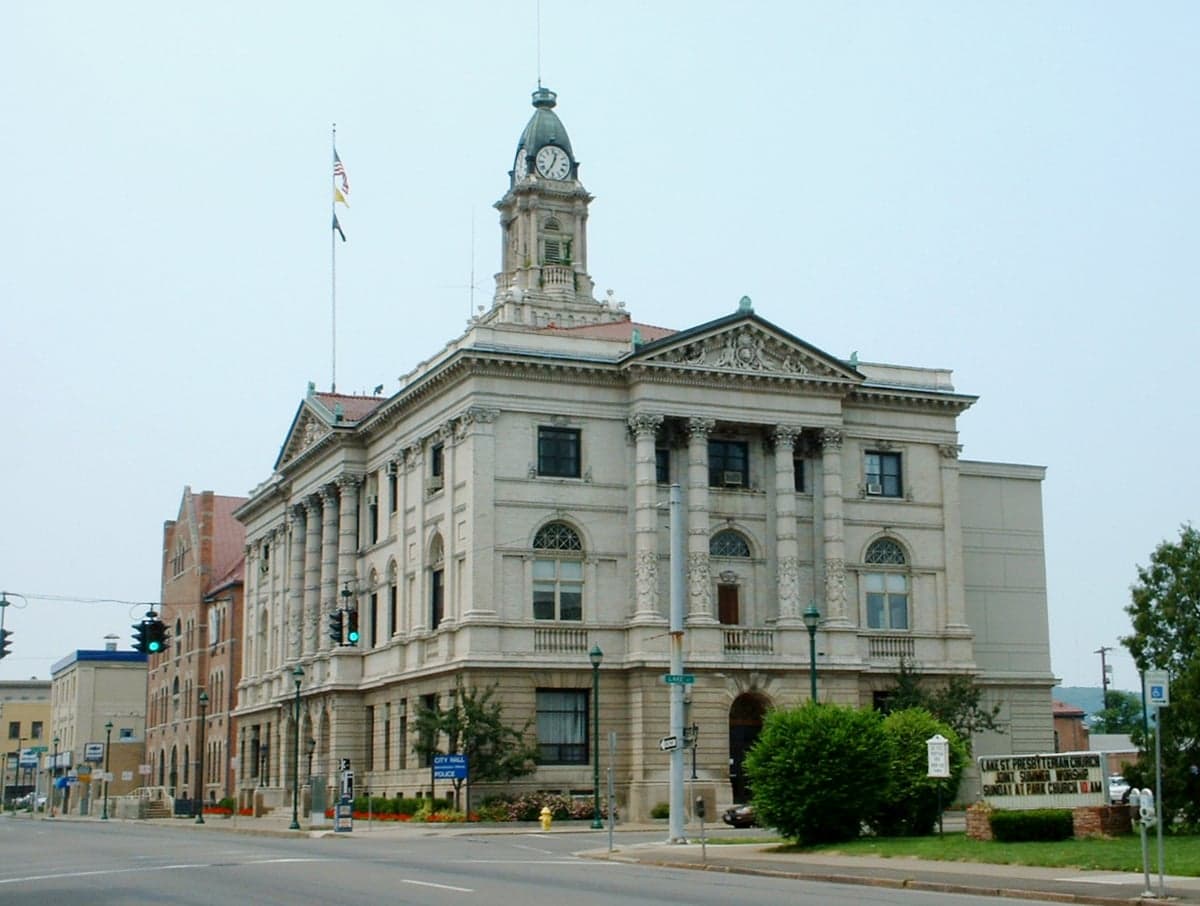
The people of Elmira, New York, today form a predominantly white (71.9%) and notably less diverse population than the national average, with a foreign-born share of just 1.6% — roughly one-fifth the U.S. rate. The city’s 26,349 residents are concentrated in a compact urban footprint, with a distinctive blue-collar and small-town character shaped by a history of industrial boom and subsequent decline. Elmira’s identity is marked by a relatively low college attainment rate (18.7%), a significant Black minority (13.1%), and a growing Hispanic community (6.1%), creating a demographic profile that is both historically rooted and slowly shifting.
How the city was settled and grew
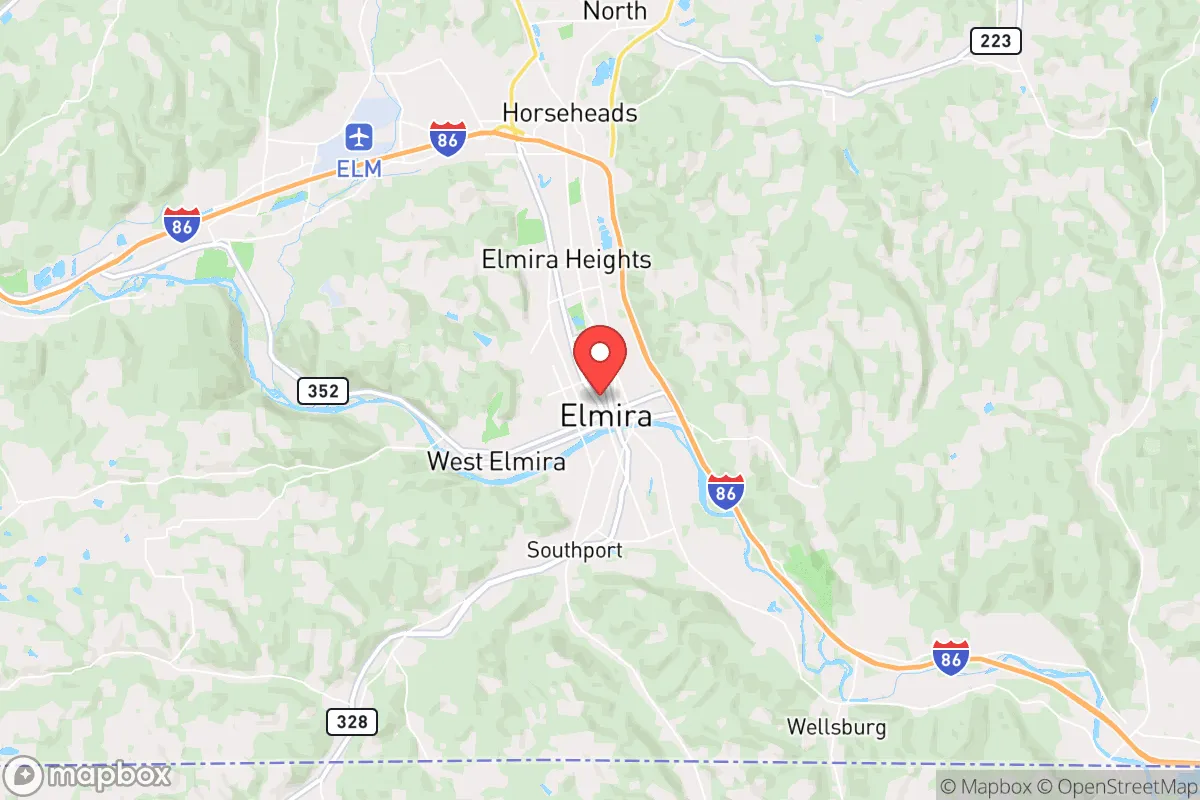
Elmira’s population history begins with the Chemung River valley’s strategic location, which first drew European settlers in the late 18th century. The city was officially founded in 1792 as a trading post and quickly became a transportation hub after the Chemung Canal opened in 1833, linking the region to the Erie Canal system. This canal era brought a wave of Irish immigrants who settled in the Southside neighborhood, building the locks and working the barges. The arrival of the Erie Railroad in the 1850s deepened the city’s industrial base, attracting German and English skilled laborers who established themselves in the Eastside district, near the rail yards and foundries. By the late 19th century, Elmira’s population had swelled to over 30,000, fueled by carriage manufacturing, iron works, and the famous Elmira Reformatory. A smaller wave of Italian immigrants arrived in the early 1900s, clustering in the Westside neighborhood around the St. Mary’s Church parish, working in construction and the burgeoning glass industry. The city’s peak population of 49,716 in 1930 reflected this industrial prosperity, with a largely white, European-ancestry population concentrated in tight-knit ethnic enclaves.
Modern era (post-1965)
The post-1965 period brought significant demographic change, driven by industrial decline and suburbanization. The collapse of major employers like the American LaFrance fire engine plant and the Remington Rand factory in the 1970s and 1980s triggered a sustained population loss of over 40% from the 1930 peak. White residents, particularly those of German and English descent, began moving to surrounding towns like Horseheads and Big Flats, leaving the city core increasingly vacant. The Black population, which had been small and concentrated in the Northside neighborhood near the railroad tracks since the Great Migration of the 1940s and 1950s, grew as a share of the total as the white population shrank. By 2020, Black residents made up 13.1% of Elmira’s population, with the Northside remaining the historic center of Black community life, though poverty rates there are high. The Hispanic population, largely of Puerto Rican and Mexican origin, began growing in the 1990s, settling in the Southside and Westside neighborhoods, where affordable housing stock and rental properties are concentrated. East/Southeast Asian communities (0.7%) and Indian-subcontinent residents (0.4%) remain very small, with no distinct ethnic enclave; they are scattered across the city, often drawn by professional roles at the Arnot Health hospital system or Elmira College. The foreign-born share (1.6%) is among the lowest in New York State, reflecting limited recent immigration.
The future
Elmira’s population is projected to continue a slow decline, with the city losing roughly 1-2% of residents per decade since 2000. The white population is aging and shrinking, while the Hispanic share is the fastest-growing segment, projected to reach 8-9% by 2035 if current trends hold. The Black population is stable but aging, with younger Black residents often leaving for larger cities like Rochester or Syracuse. The city is not tribalizing into distinct enclaves but rather homogenizing into a lower-income, older, and more Hispanic core, while the remaining white middle-class families increasingly concentrate in the Maple Avenue and Hoffman Street corridors near the city’s southern edge, where newer subdivisions and better schools are located. Immigrant communities are not growing significantly; the small East/Southeast Asian and Indian populations are plateauing, with no new refugee resettlement programs or ethnic businesses emerging. The next 10-20 years will likely see Elmira become a smaller, poorer, and slightly more Hispanic city, with the Northside and Southside neighborhoods absorbing most of the demographic change while the Eastside and Westside continue to depopulate.
For someone moving to Elmira now, the city offers a low-cost, walkable urban environment with a deeply rooted sense of place, but the demographic trajectory points toward continued population loss and economic stagnation. The city is becoming a more Hispanic and Black community within a predominantly white region, and newcomers should expect limited ethnic diversity and a population that skews older and less educated than the national average. The Maple Avenue corridor remains the most stable and family-oriented area, while the Northside offers the strongest sense of historic community for Black residents. Overall, Elmira is a city in demographic transition, holding onto its past while slowly reshaping its future.

* Values derived from national, state, county, city and local statistics and may differ in a specific area. Last updated: 2026-05-01T18:48:56.000Z
Narrative content on this page is AI-generated and may contain mistakes. Verify any details that matter before acting on them.
ReloMaps may earn a commission from affiliate links at no extra cost to you.

