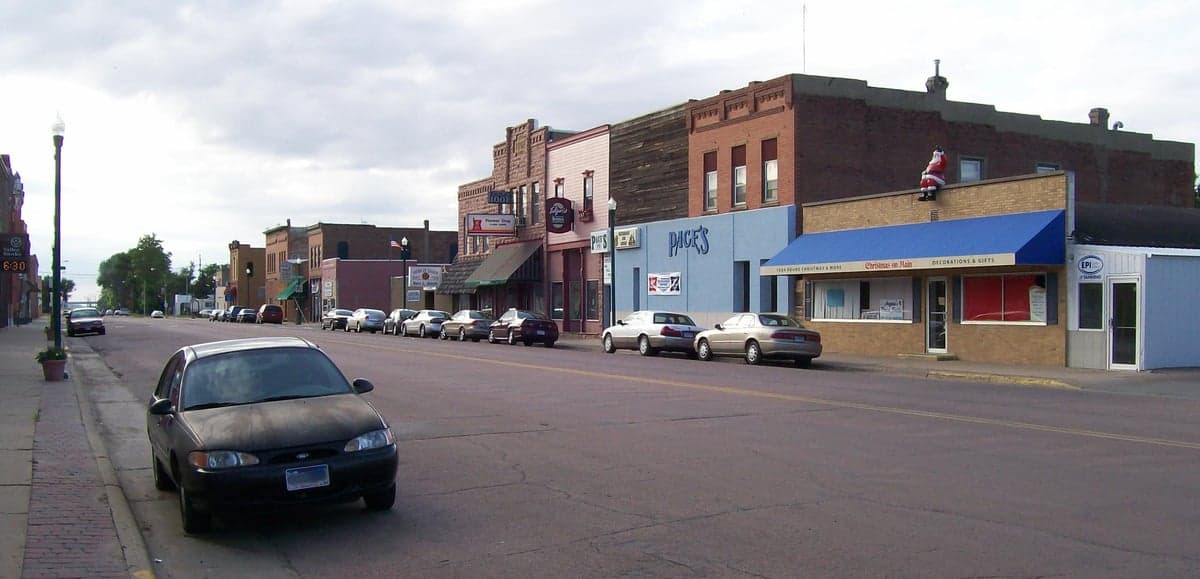
Photo: Wikipedia
Strategic Assessment of Elk Point, SD
Workable tactical position. Some exposure to population density or targets, but generally defensible in a crisis.
What does the Strategic Assessment tell us?
Our Strategic Assessment grades tactical survivability of an area. Major population centers, military targets, fallout zones, natural disasters, and border exposure all drive risk — lower exposure means a more defensible position in a crisis.
This is heavily inspired by Joel Skousen's Strategic Relocation book. Highly recommended you checkout the book ($)What does this tell us?
Our Strategic Assessment grades tactical survivability of an area. Major population centers, military targets, fallout zones, natural disasters, and border exposure all drive risk — lower exposure means a more defensible position in a crisis.
This is heavily inspired by Joel Skousen's Strategic Relocation book. Highly recommended you checkout the book ($)Strategic Pillars

Key Distances
Regional Safe Places
Below is our recommended "safe zones" in South Dakota and the surrounding area based on our strategic heuristics. For most people, it's unrealistic to live in a “safe zone” full-time due to work, family or other personal reasons. They tend to be more rural. However, many of these areas are perfect for second homes and retreat properties that double as a vacation home or even a short-term rental.
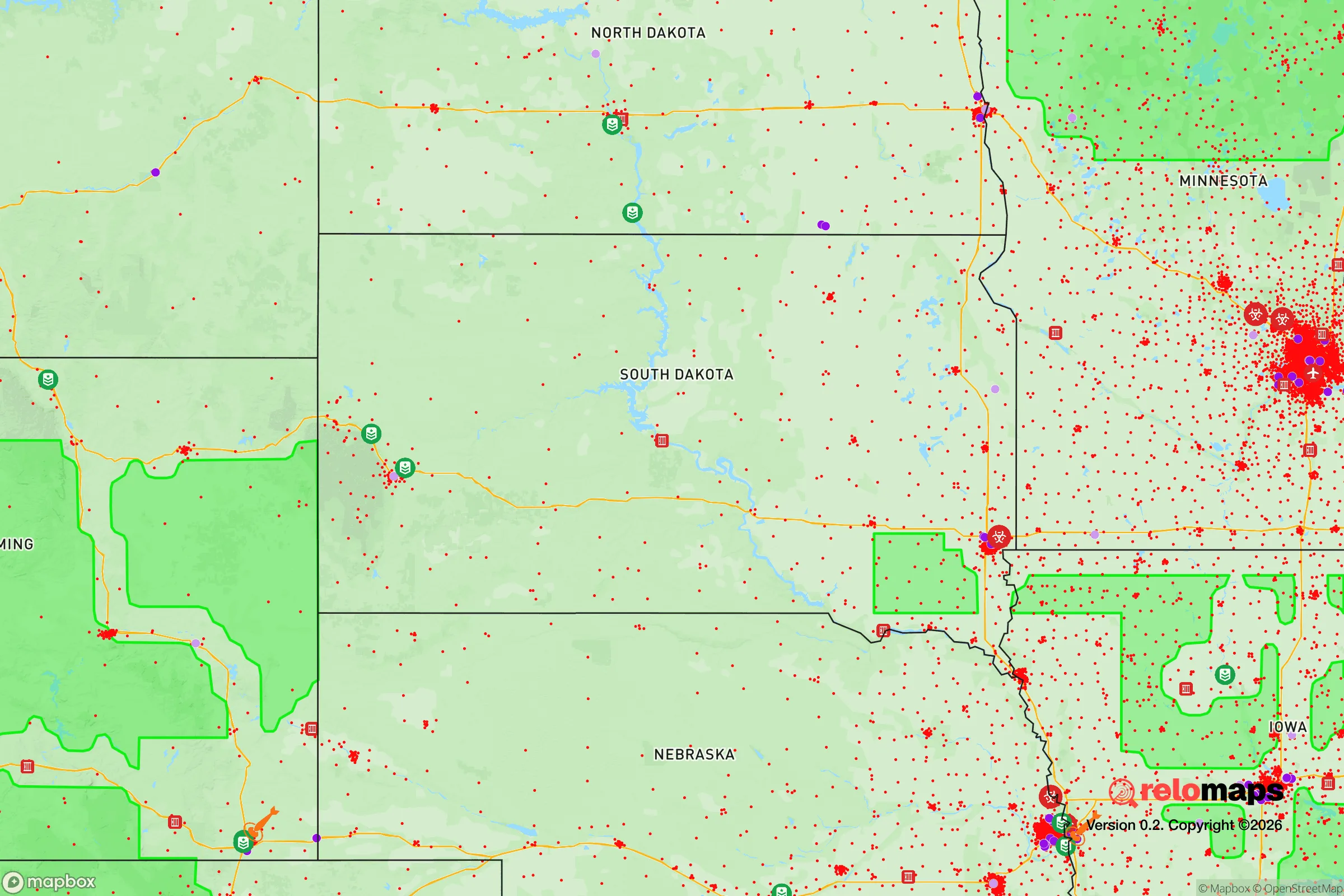


Important Note: For informational purposes only. This does not mean nothing bad ever happens in the green zones. Please use common sense. This is based on public data and modeled with AI. We tried to take a conservative approach but mistakes happen. We update this regularly as new information becomes available.
Solar Generator Recommendations
Backup power matters more here than in safer locations. We've picked three solar generators across budgets and capacity tiers — start with the budget unit if you only need a few essentials, or step up if you want to run a fridge and HVAC for days at a time.

Jackery Portable Power Station Explorer 300
Budget OptionPower on the Go: Weighing only 11 lbs, it's convenient to set up and store with book-sized foldable solar panels

BLUETTI Portable Power Station AC180
Designed for both indoor and outdoor scenarios, AC180 is highly capable as it has a robost capacity and continuous output power.

EF ECOFLOW DELTA Pro Ultra Power Station
Upgraded PickEcoFlow DELTA Pro Ultra is a whole-home energy system designed to grow with your family. Integrated with the Smart Home Panel 2, it scales to meet your evolving energy needs — keeping your home powered, intelligent, and secure through every stage of life.
We earn a commission, at no additional cost to you.
Strategic Assessment Analysis
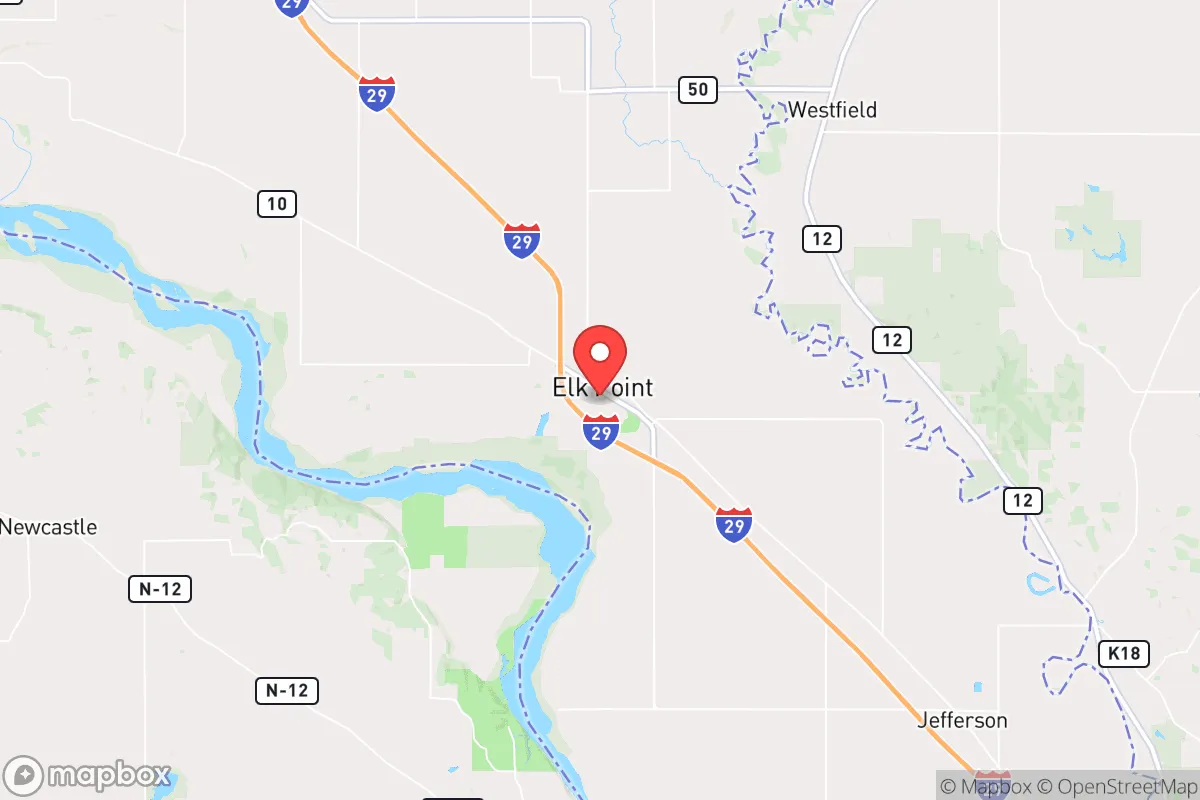
Elk Point, South Dakota, sits in a strategic sweet spot that resilience-minded relocators should take seriously: close enough to Sioux City for supply runs and medical access, yet far enough from major population centers to avoid the worst of urban collapse scenarios. Its position along the Missouri River and near the intersection of I-29 and the South Dakota–Iowa–Nebraska tri-state border gives it logistical advantages that matter when supply chains falter or civil order degrades. For a conservative-leaning individual or family looking to plant roots in a place where self-reliance is still a cultural norm rather than an afterthought, Elk Point offers a rare combination of agricultural productivity, low population density, and geographic insulation from the most likely flashpoints of unrest.
Geographic position and natural advantages for long-term stability
Elk Point’s location at the confluence of the Missouri River and the Big Sioux River is its single greatest asset from a prepper’s perspective. The Missouri provides a reliable freshwater source that can support irrigation, livestock, and household needs even if municipal systems fail—something that cannot be said for most towns in the arid West. The surrounding terrain is flat to gently rolling, which means good agricultural soil for growing food, but also open sightlines that make defensive positioning easier than in wooded or mountainous areas where ambush points are abundant. The town sits at roughly 1,100 feet elevation, well above any floodplain concerns from the Missouri, though the Big Sioux can cause localized flooding in heavy rain years. Winters are cold and snowy, which acts as a natural barrier to mass migration from warmer regions during a crisis—people simply won’t walk or drive hundreds of miles through a South Dakota January. Summers are hot and humid, but the growing season is long enough (about 150 frost-free days) to produce corn, soybeans, hay, and garden vegetables. For a family looking to become semi-self-sufficient, the land around Elk Point is affordable and available, with acreages often selling for a fraction of what similar plots cost in Colorado or Montana.
Risks, exposures, and proximity to fallout-relevant landmarks
No location is risk-free, and Elk Point has vulnerabilities that a strategic relocator must weigh. The most obvious is its proximity to Sioux City, Iowa, just 15 miles south. Sioux City is a regional hub with a population of about 85,000, a major rail yard, and an interstate junction—all of which make it a potential target for civil unrest, infrastructure sabotage, or even a conventional strike in a worst-case scenario. During a mass casualty event or supply chain collapse, Sioux City could become a source of refugees moving north along I-29, and Elk Point would be the first South Dakota town in their path. The Union County seat itself has only about 2,500 residents, which means local law enforcement and emergency services are thin. There is no major hospital in Elk Point; the nearest trauma center is in Sioux City, which could be overwhelmed or inaccessible during a crisis. The town also sits within 100 miles of the Fort Calhoun Nuclear Station (Nebraska) and the Cooper Nuclear Station (Nebraska), both of which are aging plants that have faced regulatory scrutiny. A catastrophic failure at either—whether from sabotage, earthquake, or simple neglect—could put Elk Point in a fallout plume depending on wind direction. Additionally, the nearby Sioux City Air National Guard base and the Army’s Camp Rapid in western South Dakota are military assets that could become targets in a conflict. For the prepper, the calculus is this: Elk Point is far enough from major cities to avoid the initial shockwave of unrest, but close enough to be affected by secondary effects like refugee flows, supply disruptions, and fallout from regional infrastructure.
Practical resilience for a relocator: food, water, energy, and defensibility
For someone serious about self-reliance, Elk Point offers a workable baseline. The water situation is strong: the Missouri River is a perennial source, and the local aquifer is productive enough for private wells. Most rural properties in Union County have access to groundwater at depths of 50 to 150 feet, and well drilling costs are reasonable compared to the West. The town’s municipal water comes from the Missouri, so even if the grid goes down, gravity-fed surface water is available for treatment with portable filters. Food production is the area’s standout advantage. Union County is among the top corn and soybean producers in South Dakota, and there are local farmers who sell direct to consumers—grain, beef, pork, eggs, and produce. A family with a few acres can raise chickens, goats, or a milk cow without raising eyebrows. The growing season supports a substantial garden, and the soil is rich loam, not the rocky or sandy stuff found in many rural areas. For energy, the grid is reasonably stable, but winter ice storms can knock out power for days. Solar is viable—the area gets about 200 sunny days per year—but wind is the more consistent resource. Small wind turbines are common on farms here, and a 1-kilowatt turbine paired with a battery bank can keep a freezer, lights, and a well pump running during outages. Defensibility is mixed. The open terrain means you can see threats coming from a distance, but it also means you are visible. A property with a good perimeter—fencing, natural barriers like tree lines, and a clear field of fire—is essential. The local culture is gun-friendly, and there are several shooting ranges and gun shops within a 30-minute drive. The Union County Sheriff’s Office is professional but small; during a widespread event, you cannot count on them for protection. The town itself has a strong sense of community, which is a resilience factor that cannot be bought. Neighbors know each other, and there is a tradition of helping out during blizzards or floods. That social capital is worth more than any piece of gear.
The overall strategic picture for Elk Point is one of moderate risk with high upside for the prepared relocator. It is not a bug-out location in the remote wilderness sense—you cannot disappear into the hills here—but it is a place where a family can build a sustainable, defensible life with access to water, food, and community. The proximity to Sioux City is the biggest liability, but it also means that for day-to-day life, you have hospitals, hardware stores, and supply chains within a short drive. For the conservative prepper who wants to be part of a functioning rural community rather than a lone wolf in the mountains, Elk Point deserves a serious look. The key is to arrive with a plan: secure a property with a well and good soil, invest in solar or wind backup, stockpile supplies for at least three months, and build relationships with local farmers and the sheriff’s office before trouble comes. If you do that, this little corner of southeast South Dakota can be a solid anchor in an uncertain future.

* Values derived from national, state, county, city and local statistics and may differ in a specific area. Last updated: 2026-04-19T08:15:44.000Z
Narrative content on this page is AI-generated and may contain mistakes. Verify any details that matter before acting on them.
ReloMaps may earn a commission from affiliate links at no extra cost to you.

