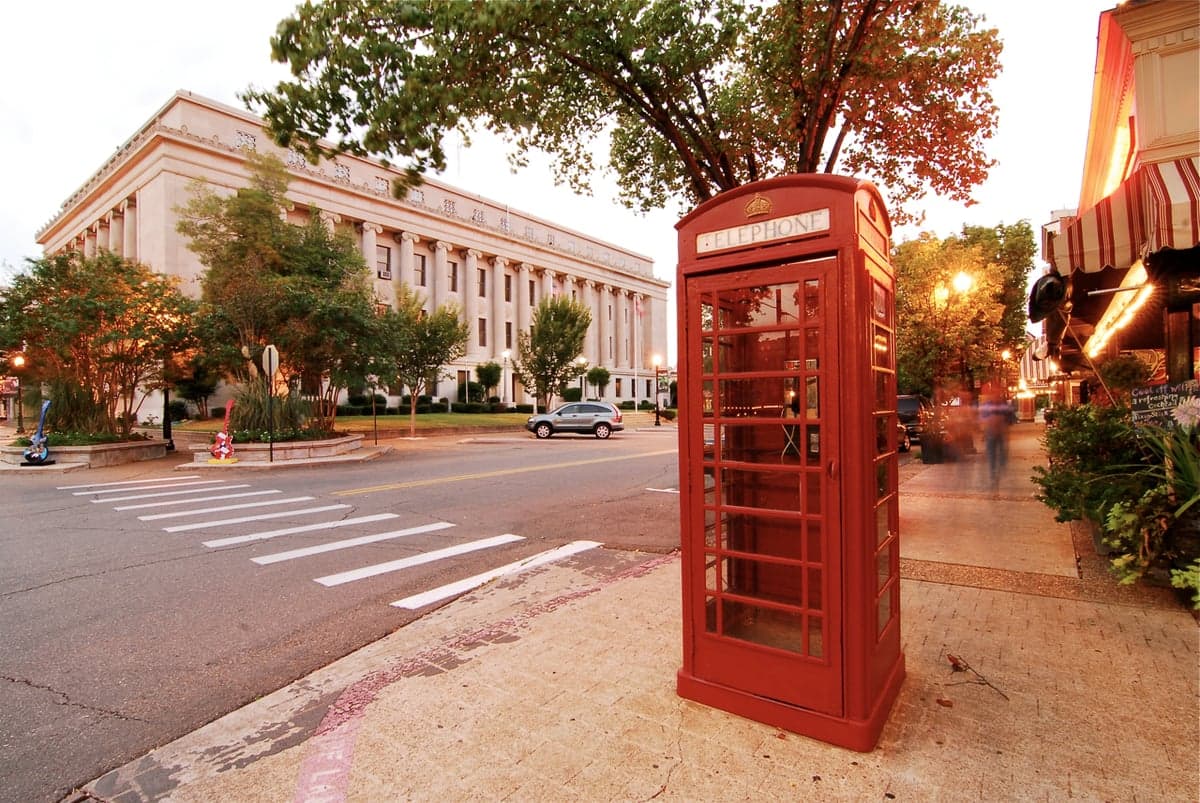
Photo: Wikipedia
Political ClimatePolitical Climate in El Dorado, AR
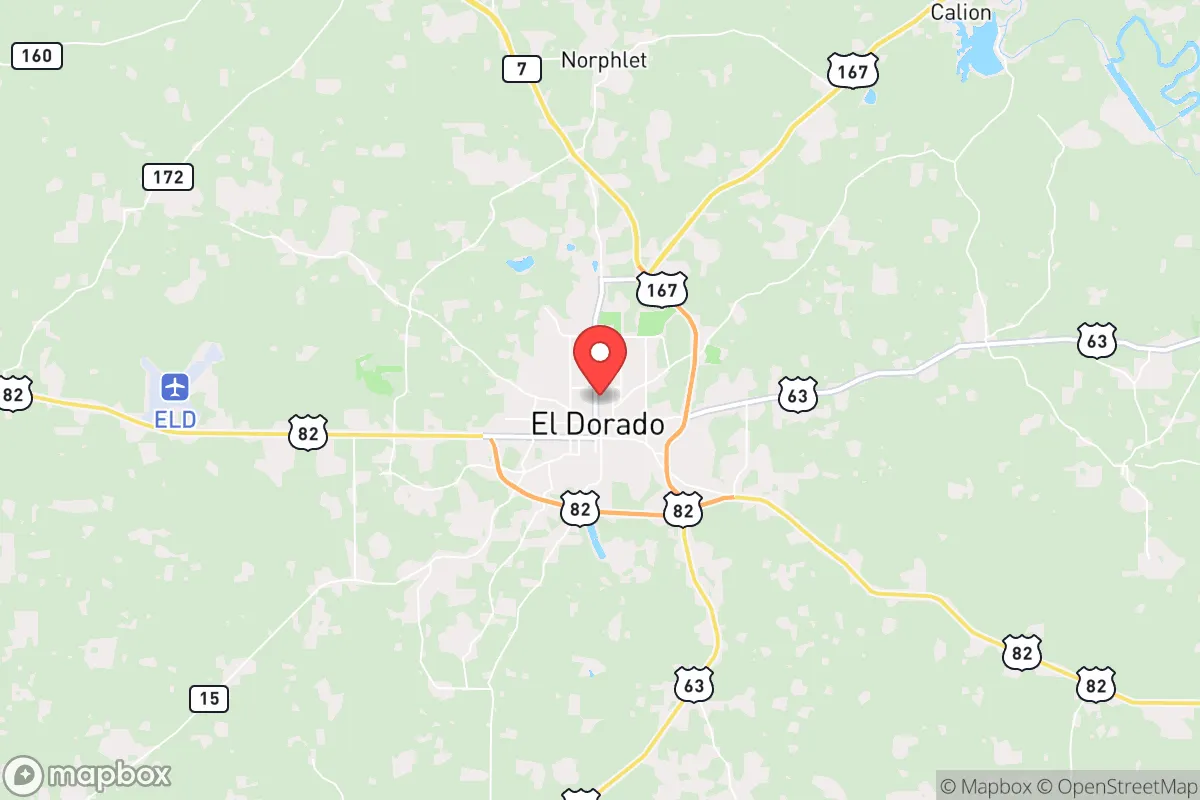
District shown is the primary district for this city’s centroid. Cities may span multiple districts.
Local Political AnalysisPolitical Analysis of El Dorado, AR
El Dorado, Arkansas, sits deep in the heart of the Bible Belt, and its politics reflect that. The city and surrounding Union County are rock-ribbed conservative territory, with a Cook Partisan Voting Index of R+20 — meaning the area votes about 20 points more Republican than the national average. In practical terms, that translates to a place where local elections are often decided in the Republican primary, and where the idea of a Democrat winning a countywide race is about as likely as an ice storm in July. The trajectory here has been steady: if anything, the area has gotten more conservative over the last decade, as national trends toward progressive policies have pushed even moderate Democrats to the right.
How it compares
To understand El Dorado's politics, you have to look at the map around it. Drive an hour north to Little Rock, and you'll hit a blue island in a red sea — Pulaski County votes reliably Democratic, with a PVI around D+15. That's a world away from El Dorado. Head east toward Monticello or west to Magnolia, and you'll find similar conservative strongholds, but El Dorado stands out for its sheer consistency. The city itself is a bit more moderate than the surrounding rural areas — the oil and timber industries bring in some out-of-state workers — but the county as a whole hasn't voted for a Democratic presidential candidate since 1996, and even then it was a squeaker. The contrast with Little Rock isn't just political; it's cultural. El Dorado folks see the capital's push for progressive policies — like expanded government healthcare or stricter environmental regulations on the oil fields — as a direct threat to their way of life and personal freedoms.
What this means for residents
For someone living here, the political climate means a few concrete things. First, taxes stay low — Arkansas has a flat income tax rate of 4.4% as of 2026, and local property taxes are among the lowest in the state. Second, gun rights are taken seriously; you can carry a concealed weapon without a permit in Arkansas, and that's a point of pride here. Third, the school system — El Dorado Public Schools — reflects the community's values, with a focus on local control and parental rights. There's no push for critical race theory or gender ideology in the curriculum, and the school board has been vigilant about keeping it that way. The downside? If you're looking for a place with a thriving progressive scene or a lot of political diversity, you won't find it. The local Democratic Party is essentially a social club for a handful of retirees. But for conservatives who value limited government, personal responsibility, and traditional values, El Dorado is a haven.
One thing that sets El Dorado apart from some other small Southern towns is its cultural pride without the political baggage. The Murphy Arts District, a $100 million downtown revitalization project, brings in national acts and art shows, but it doesn't come with the progressive agenda you'd expect in a city like Austin or Nashville. The local paper, the El Dorado News-Times, leans conservative in its editorial stance, and the city council has consistently rejected any proposals for "sanctuary city" policies or defunding the police. Looking ahead, the biggest concern among locals is the encroachment of federal overreach — whether it's EPA regulations on the timber industry or mandates from the Department of Education. The hope is that El Dorado can keep doing what it's done for generations: mind its own business, keep the government out of the way, and let people live their lives the way they see fit.

State Political ClimatePolitical Climate in Arkansas
State Political AnalysisPolitical Environment in the State
Arkansas has been a reliably red state for decades, but don't let that fool you into thinking it's a monolith. The state leans solidly Republican at the presidential level — Donald Trump won it by over 27 points in 2024 — but the real story is a slow, grinding shift in the suburbs and a hardening of the rural-urban divide. Over the last 20 years, the state has moved from a purple-ish, Democrat-heavy past (Bill Clinton's home turf) to a deep-red stronghold, but the coalition is fracturing: the northwest corner is booming with conservative transplants, while Little Rock and a few college towns are drifting left. If you're looking for a place where the culture war is being fought in real time, Arkansas is a front-row seat.
Urban vs. rural divide
The political map of Arkansas is a tale of two regions. Northwest Arkansas — the corridor from Fayetteville through Springdale, Rogers, and Bentonville — is the state's economic engine and its most dynamic political battleground. Fayetteville, home to the University of Arkansas, is a blue island in a red sea: it voted for Biden in 2020 and Harris in 2024, driven by a young, educated, and increasingly progressive population. But drive 15 minutes north to Bentonville or Rogers, and you're in deep-red territory, fueled by Walmart executives, Christian conservatives, and a flood of out-of-state transplants from California and Texas who are fleeing high taxes but bringing their own brand of suburban Republicanism. Little Rock is the other blue hub — Pulaski County went for Biden in 2020 — but the surrounding suburbs like Conway, Maumelle, and Cabot are reliably red. The rural areas — the Delta counties east of I-40, the Ozarks, and the timberlands of the south — are overwhelmingly Republican, often by 70-80 point margins. The divide isn't just about cities versus farms; it's about growth versus stagnation. The northwest is gaining population and political influence, while the Delta is shrinking and losing its voice.
Policy environment
Arkansas's policy environment is a mixed bag for a conservative. On the plus side, the state has a flat income tax that was cut from 4.9% to 4.4% in 2023, with a goal of reaching 3.9% by 2027. There's no state property tax on vehicles, and the sales tax is moderate at 6.5% (though local add-ons can push it higher). The regulatory climate is business-friendly, especially in the northwest, where the state has actively courted manufacturing and logistics. On education, Arkansas passed the LEARNS Act in 2023, a sweeping school choice law that created universal Education Freedom Accounts — essentially vouchers — for any student to attend private or homeschool. That's a big win for parental rights. But there's a dark cloud: the state's healthcare system is heavily dependent on the Arkansas Works Medicaid expansion, which was a compromise under Governor Asa Hutchinson. The current governor, Sarah Huckabee Sanders, has pushed for work requirements and tighter eligibility, but the expansion remains in place, meaning the state is still entangled with federal healthcare dollars. Election laws are solid — voter ID is required, and the state has purged inactive voters from rolls — but there's no early voting on the Saturday before Election Day, which some see as a minor inconvenience.
Trajectory & freedom
On the freedom front, Arkansas has been a mixed bag, but the trend is mostly positive for conservatives. Gun rights are strong: the state passed constitutional carry in 2021, allowing permitless carry of handguns, and there are no red flag laws. Parental rights got a major boost with the LEARNS Act, but also with the Save Adolescents From Experimentation (SAFE) Act of 2021, which bans gender-transition procedures for minors. That's a clear win for medical autonomy and parental authority. On property rights, the state has a strong right-to-farm law that protects agricultural operations from nuisance lawsuits, but there's no statewide preemption on local zoning, meaning some cities like Fayetteville have imposed their own rental inspection and occupancy limits that can feel like overreach. The biggest red flag for freedom hawks is taxation: while the income tax is dropping, the state still has a high combined state and local sales tax burden (over 9% in some cities like Little Rock), and property taxes are creeping up in fast-growing areas like Benton County. The Arkansas Freedom of Information Act is strong, but there have been recent attempts to weaken it — a trend to watch. Overall, the state is becoming more free on cultural and Second Amendment issues, but less free on economic issues as local governments expand their reach.
Civil unrest & political movements
Arkansas hasn't seen the kind of violent protests that hit Portland or Seattle, but it's had its share of flashpoints. In 2020, Little Rock saw several nights of protests after George Floyd's murder, with some property damage and a heavy police response. The Black Lives Matter movement has a presence in the capital and in Fayetteville, but it's small and largely peaceful. On the right, the Arkansas Patriot Coalition and local Moms for Liberty chapters are active, especially in the northwest and central parts of the state. They've been vocal at school board meetings, pushing for book bans and curriculum transparency. Immigration politics are a hot-button issue: the state passed a law in 2023 requiring local law enforcement to cooperate with ICE, and there's a growing tension in the northwest, where the poultry and construction industries rely heavily on immigrant labor. There's no sanctuary city movement to speak of — the closest is Fayetteville's "Welcoming City" resolution, which was symbolic and non-binding. Election integrity was a major topic after 2020, with the state legislature passing a law to ban ballot drop boxes and tighten absentee voting rules. No major fraud was ever proven, but the changes were popular with the base. The most visible flashpoint for a new resident would be the Confederate monument debates — the state removed a statue from the Capitol grounds in 2020, but it was a contentious process that still rankles many.
Projection
Looking ahead 5-10 years, Arkansas is going to get redder in the rural areas, but bluer in the growth corridors. The northwest is the key: if the influx of out-of-state transplants continues — and it's showing no signs of slowing — places like Bentonville and Rogers could become more moderate, even purple, as newcomers bring their own cultural values. Fayetteville will likely become more progressive, possibly electing its first openly socialist city council member within a decade. Meanwhile, the Delta will continue to shrink and harden its Republican identity. The state's overall partisan lean will probably stay solidly red, but the intra-party fights will intensify: the establishment wing (pro-business, pro-chamber of commerce) versus the populist wing (anti-vax, anti-establishment, pro-gun absolutists). The LEARNS Act and the SAFE Act are likely to be defended and expanded, but there will be legal challenges. The biggest wildcard is demographics: the state is aging and white, but the northwest is attracting younger families and some diversity. If that trend accelerates, the political center of gravity could shift. For someone moving in now, expect a state that remains culturally conservative but is increasingly divided between the old rural guard and the new suburban arrivals.
For a new resident — especially a conservative parent or single person — Arkansas offers a solid foundation: low taxes (getting lower), strong gun rights, school choice, and a government that mostly stays out of your personal life. But don't expect a libertarian paradise. The local zoning fights, the sales tax burden, and the growing influence of the northwest's corporate class mean you'll still have to pick your battles. If you're looking for a place where your values are respected and your kids can get a good education without government interference, Arkansas is a strong bet — just keep an eye on Fayetteville and Little Rock, because that's where the future is being fought over.
* Values derived from national, state, county, city and local statistics and may differ in a specific area. Last updated: 2026-04-23T03:47:33.000Z
Narrative content on this page is AI-generated and may contain mistakes. Verify any details that matter before acting on them.
ReloMaps may earn a commission from affiliate links at no extra cost to you.

