
Photo: Wikipedia
Personal Sovereignty in Easton, PA
Strong independent fundamentals that actively favor personal liberty and low regulation.
What does Personal Sovereignty tell us?
Personal Sovereignty measures your capacity for self-reliance and independence with minimal government friction. Higher scores mean fewer barriers between you and the way you want to live... but it assumes you have the space you need and good neighbors.
What does this tell us?
Personal Sovereignty measures your capacity for self-reliance and independence with minimal government friction. Higher scores mean fewer barriers between you and the way you want to live... but it assumes you have the space you need and good neighbors.
State Policy
Energy independence: Net exporter (150% of energy produced in-state)
Personal Liberty
Homesteading

Personal Liberty Analysis
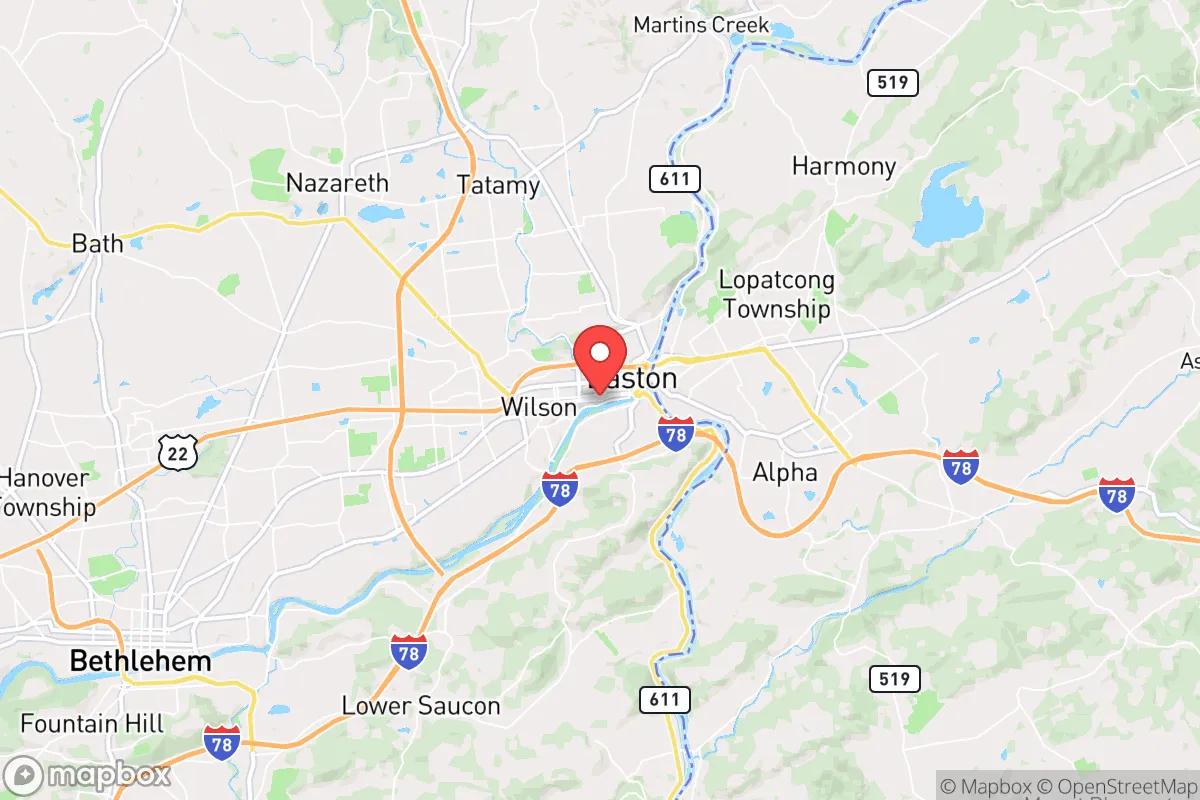
For the liberty-minded individual or family evaluating Easton, Pennsylvania, the personal sovereignty environment presents a mixed picture that demands careful scrutiny. While the Lehigh Valley offers a lower cost of living than nearby New Jersey or New York, Pennsylvania’s state-level framework imposes significant constraints on self-reliance, particularly in the realms of taxation, self-defense, and property use. Easton itself, as a mid-sized city with a Democratic-leaning local government, introduces additional layers of regulation that can feel intrusive to those prioritizing autonomy. The key question for a survivalist or prepper is whether the area’s advantages—affordable land, proximity to rural escape routes, and a relatively robust firearms culture—outweigh the creeping hand of state and municipal control.
Tax burden and regulatory posture in the Lehigh Valley
Pennsylvania’s tax structure is a double-edged sword for sovereignty-minded residents. The state’s flat income tax rate of 3.07% is among the lowest in the Northeast, and there is no state tax on retirement income, which is a clear win for those seeking to keep more of their earnings. However, the property tax burden in Northampton County is steep, with effective rates often exceeding 2.5% of assessed value—a figure that can cripple a homesteader’s budget. Easton adds its own earned income tax of roughly 1.5%, meaning a resident can easily face a combined local and state income tax rate near 4.5%. More concerning for the prepper mindset is the regulatory posture: Pennsylvania’s Uniform Construction Code (UCC) imposes strict building and zoning rules that can hamper off-grid modifications, such as installing rainwater catchment systems or composting toilets, without costly permits. The state’s Department of Environmental Protection (DEP) also enforces aggressive stormwater management mandates, even on small residential lots, which can feel like government overreach into how you manage your own land.
Self-defense and gun law specifics in Pennsylvania
On the critical issue of self-defense, Pennsylvania is a shall-issue state for concealed carry permits, meaning no subjective “good cause” requirement—a clear win for personal sovereignty. The state preempts local gun ordinances, so Easton cannot ban firearms within city limits, though the city council has passed symbolic resolutions supporting “safe storage” measures that carry no legal weight. Open carry is legal without a permit, but it becomes illegal in a vehicle during a state of emergency, a nuance that preppers should note. The major drawback is the lack of constitutional carry: a License to Carry Firearms (LCF) is required for concealed carry, and while the application process is straightforward (fingerprinting, background check, and a fee of about $20), it still represents a government permission slip for a fundamental right. Stand-your-ground laws are in effect, and there is no duty to retreat in one’s home or vehicle, which aligns with a survivalist’s expectation of defending one’s castle. However, Pennsylvania’s firearm preemption law is not ironclad—cities like Philadelphia have successfully challenged it in court, and Easton’s progressive city council could attempt similar overreach in the future.
Self-reliance and homesteading viability: lot sizes, zoning, and off-grid feasibility
For those seeking to live off the grid or pursue serious homesteading, Easton’s urban and suburban zoning is a significant obstacle. Within city limits, standard residential lots are typically 0.1 to 0.25 acres, with strict prohibitions on keeping livestock, raising poultry, or operating a home-based agricultural business. The city’s zoning code explicitly bans “agricultural uses” in R-1 through R-4 districts, meaning even a small chicken coop could trigger a citation. However, the surrounding townships—Forks, Palmer, and Williams—offer a different story. In Forks Township, for example, lots of 1 to 5 acres are common, and agricultural zoning allows for horses, goats, and even limited commercial farming. Off-grid feasibility is hampered by Pennsylvania’s building codes, which require connection to the electrical grid for new construction in most municipalities, though solar panels are permitted with a permit. Rainwater collection is technically legal but limited to 2,500 gallons of storage without a water allocation permit, and composting toilets are only allowed if a public sewer connection is unavailable. For the serious prepper, the best strategy is to buy land in the rural townships north of Easton, where zoning is looser and code enforcement is less aggressive.
Personal liberties: parental rights, medical autonomy, speech, and property
Pennsylvania’s record on parental rights is mixed. The state has a robust homeschool law that requires only a notarized affidavit and an annual evaluation, with no standardized testing mandate—a clear win for families seeking educational autonomy. However, the state’s Department of Education has increasingly pushed for “opt-out” rather than “opt-in” for student data collection, and vaccine mandates for school attendance are strictly enforced, with no philosophical exemption. Medical autonomy is a sore point: Pennsylvania has a broad emergency powers law that allows the governor to mandate vaccines, masks, and business closures during a declared disaster, as seen during COVID-19. The state’s medical marijuana program is operational, but recreational use remains illegal, and home cultivation is prohibited even for medical patients. Free speech is protected under the state constitution, but Easton has enacted “disorderly conduct” ordinances that have been used to target street preachers and protesters, raising concerns about viewpoint discrimination. Property rights are generally strong, with Pennsylvania’s “private property rights” law requiring compensation for regulatory takings, but the state’s Act 537 (Sewage Facilities Act) can force homeowners to connect to public sewer lines even on large rural lots, a clear infringement on self-determination.
In the broader landscape of personal sovereignty, Easton sits in a precarious middle ground. It offers tangible advantages over deep-blue states like New York or New Jersey—lower taxes, shall-issue carry, and a more permissive homeschool environment—but it falls far short of the liberty found in states like New Hampshire, Idaho, or Texas. The city’s local government is actively hostile to Second Amendment rights, though state preemption limits its reach, and the regulatory burden on homesteading is real but navigable if you choose the right township. For the survivalist or prepper, Easton is a viable base of operations only if you are willing to fight for your freedoms at the local level, attend zoning board meetings, and build relationships with like-minded neighbors. If you value maximum autonomy with minimal government interference, you would be better served looking further north or west. But if your circumstances require proximity to the Northeast corridor, Easton offers a foothold where sovereignty is not dead—it is simply under constant siege.

* Values derived from national, state, county, city and local statistics and may differ in a specific area. Last updated: 2026-05-01T02:56:48.000Z
Narrative content on this page is AI-generated and may contain mistakes. Verify any details that matter before acting on them.
ReloMaps may earn a commission from affiliate links at no extra cost to you.

