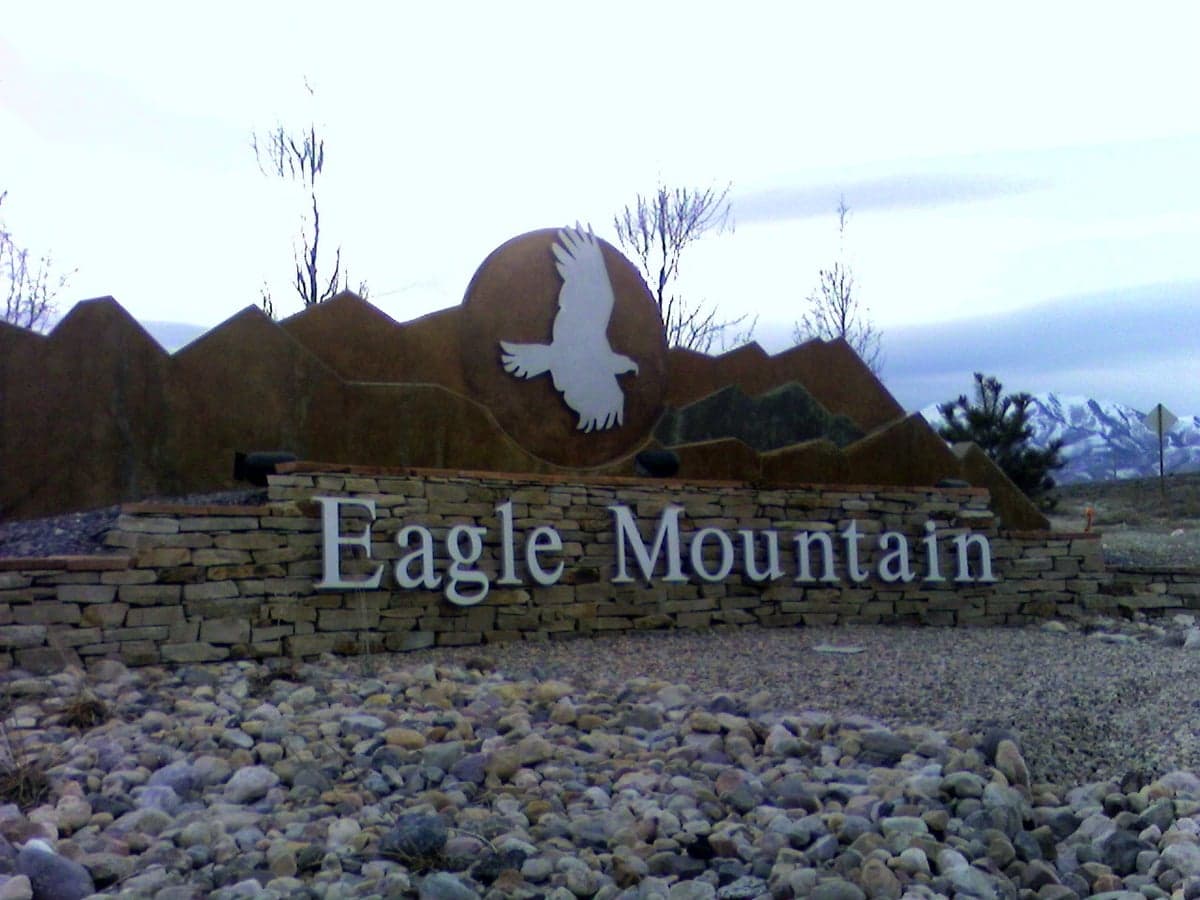
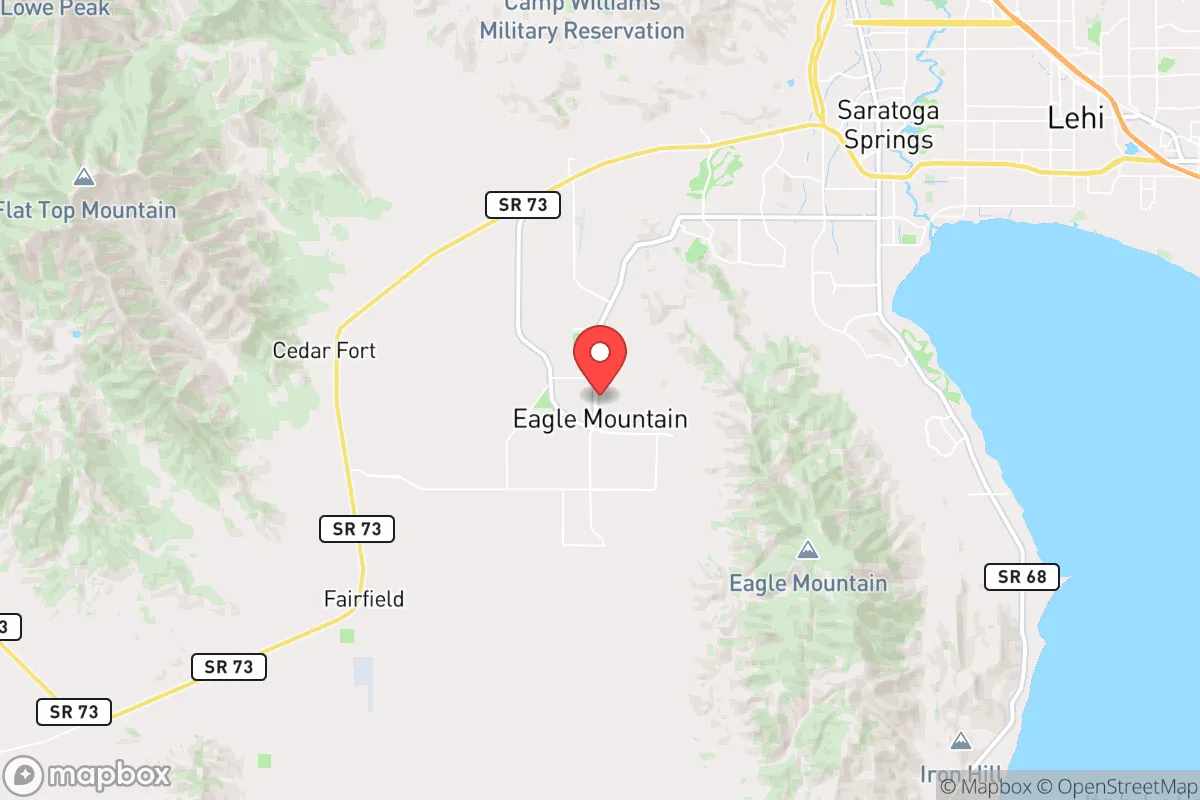
Photo: Wikipedia
Quality of Life in Eagle Mountain, UT
A high quality of life with strong walkability, manageable living costs, healthy neighborhood signals, and solid amenity access.
What does Quality of Life tell us?
Quality of Life blends cost of living, nearby amenities, socioeconomic signals, and neighborhood character. City-level scores represent the whole municipality; individual neighborhoods can differ.
What does this tell us?
Quality of Life blends cost of living, nearby amenities, socioeconomic signals, and neighborhood character. City-level scores represent the whole municipality; individual neighborhoods can differ.
Cost of Living
70% above national average
The Real Cost of Living in Eagle Mountain, UT for 2026
| Tier | Individual | Family (4) |
|---|---|---|
| Survival | $31k | $58k |
| Comfortable | $86k | $127k |
| Luxury | $126k+ | $196k+ |
| Elite (Top 5%) | $149k+ | $230k+ |
83%
The Area Signal
A metric tracking the socioeconomic signals of the area.
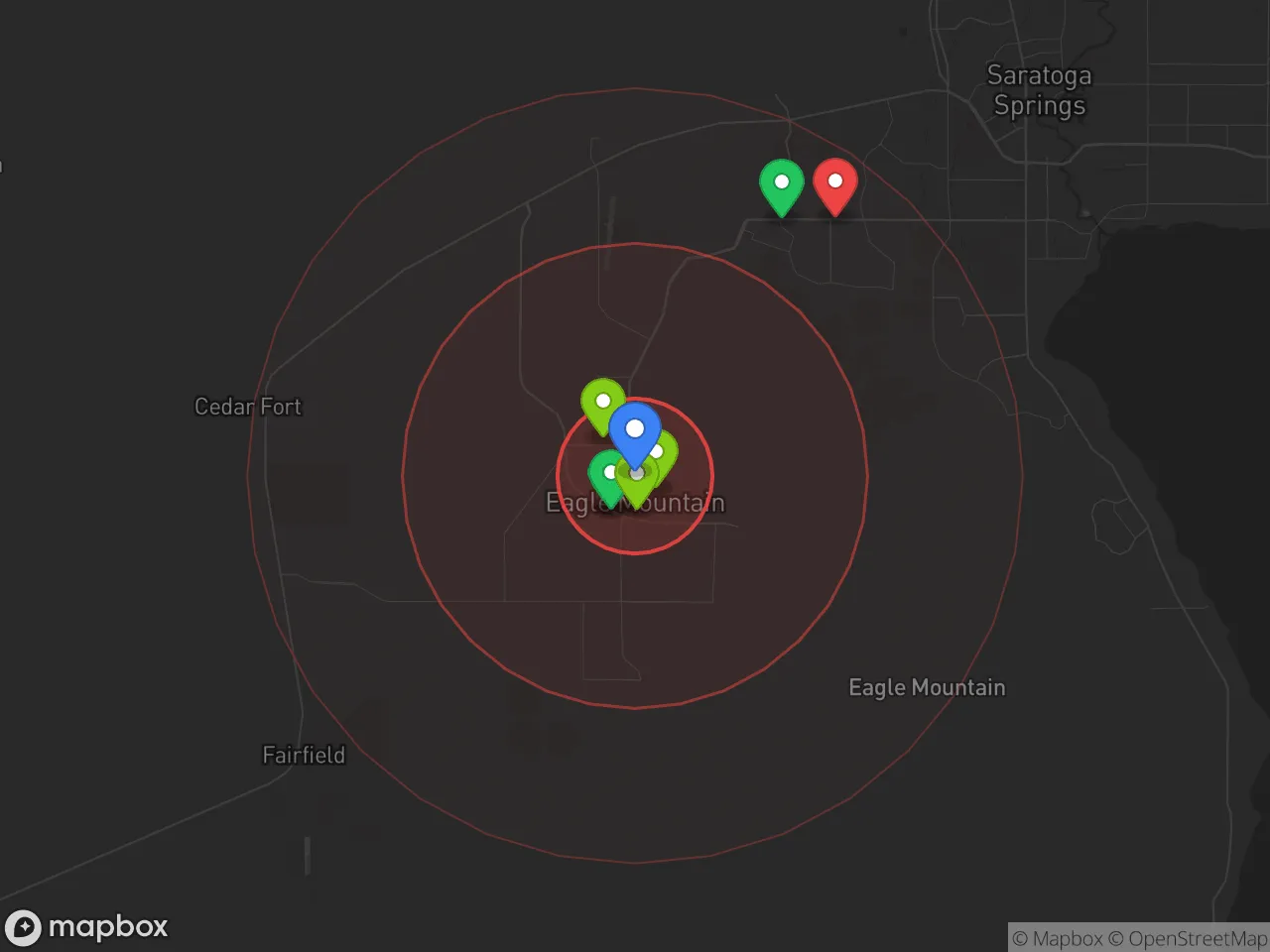
Hobbies
Explore the areaGroceries
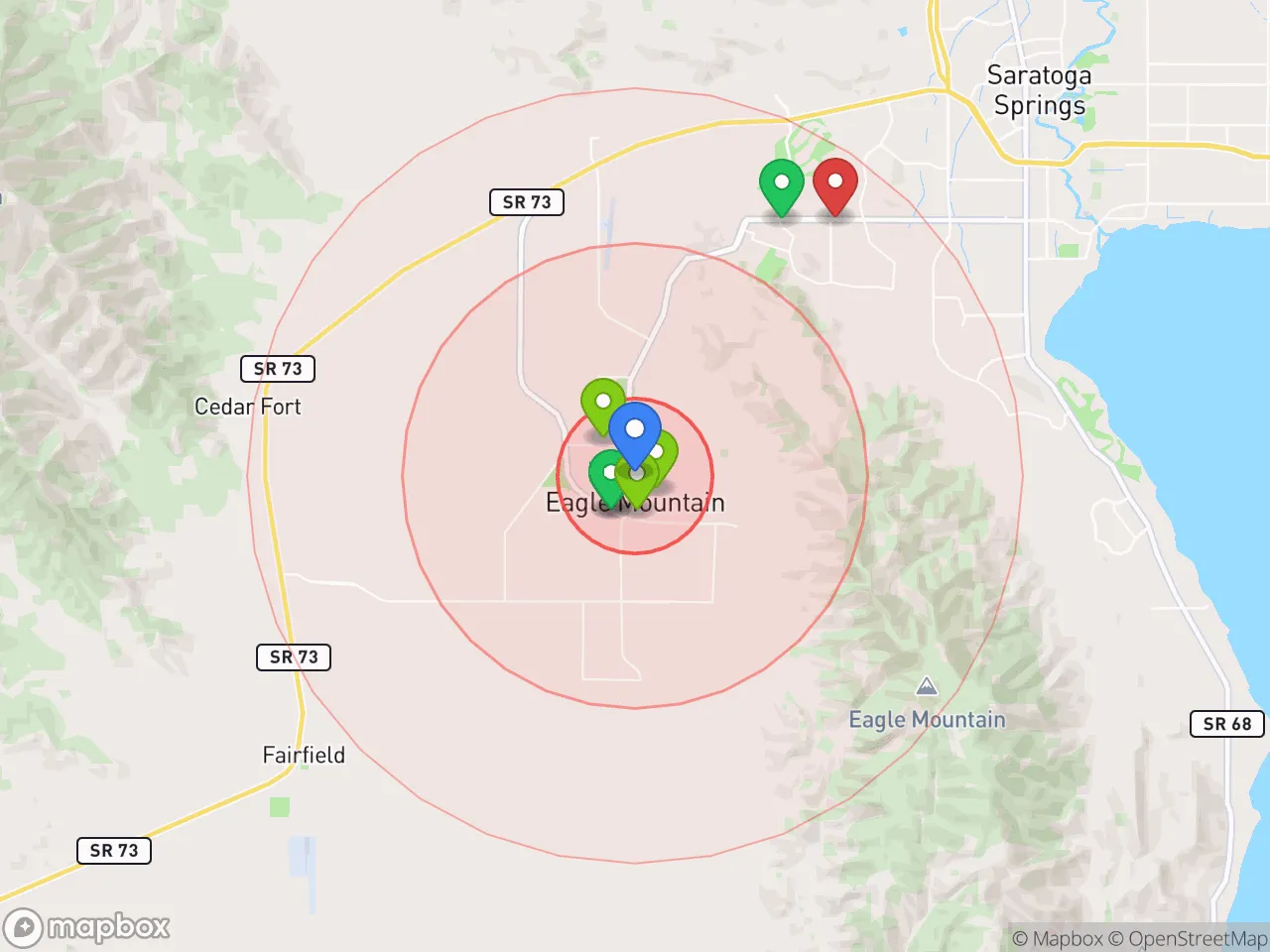
2 within 10 miles
Gas
20 within 10 miles
Hospital
20 within 20 miles
Airport
SLC — Salt Lake City International
Post Office
USPS — Eagle Mountain, UT
Critical Amenities
Quality-of-Life Analysis
Eagle Mountain, Utah, is an affluent, fast-growing master-planned community in northern Utah County, drawing families and professionals who prioritize space, newer housing, and a family-oriented lifestyle over urban proximity. With a cost of living index of 170 (70% above the U.S. average), the city is notably more expensive than nearby Lehi (index ~145) and Saratoga Springs (index ~155), but remains less costly than Park City (index ~250). The population skews young and married, with a median age of 28 and over 80% of households being families, reflecting a community built around raising children and commuting to tech and professional jobs along the I-15 corridor.
Cost of living, housing prices, and how Eagle Mountain compares to nearby cities
Eagle Mountain’s housing market is the primary driver of its high cost of living. The median home value sits at $469,500, roughly 15% higher than the Utah County median of $410,000, while the median rent of $1,995 per month is about $200 above the county average. For comparison, a similar-sized single-family home in Lehi (10 miles north) would cost around $520,000, and in Saratoga Springs (adjacent to the east) about $450,000. The average commute of 31.5 minutes is longer than the Utah County average of 24 minutes, reflecting the city’s position as a bedroom community where many residents drive to jobs in Lehi’s Silicon Slopes tech hub or Provo. Property taxes are moderate for the area, at roughly 0.65% of assessed value, but the lack of a state income tax on wages (Utah has a flat 4.85% income tax) offsets some housing costs. Homeowners here typically pay $3,000–$3,500 annually in property taxes, compared to $3,800–$4,200 in Lehi for similar values.
What daily life is like for families: schools, parks, and local amenities
Daily life in Eagle Mountain revolves around its extensive trail system, community events, and highly rated schools within the Alpine School District. The city operates over 30 parks and 50 miles of multi-use trails, with Pony Express Park and Eagle Mountain City Park hosting youth sports leagues and summer concerts. Schools like Eagle Mountain Elementary and Frontier Middle School consistently score 8–9 out of 10 on GreatSchools ratings, while Cedar Valley High School offers a strong STEM program and a 94% graduation rate. Retail and dining are limited compared to Lehi or American Fork; most residents drive 10–15 minutes to the Thanksgiving Point complex in Lehi for grocery stores (Harmons, WinCo), big-box retailers, and restaurants. The city’s master plan emphasizes walkable neighborhoods, but car dependency remains high due to the spread-out layout. Healthcare access is a 15-minute drive to Mountain Point Medical Center in Lehi or 20 minutes to Intermountain American Fork Hospital.
Eagle Mountain is best suited for families and remote workers who value new construction, low crime rates (violent crime is 60% below the national average), and a strong sense of community over urban nightlife or short commutes. Young professionals without children may find the social scene sparse, and the long commute to Salt Lake City (45–60 minutes) can be a drawback. However, for those seeking a safe, amenity-rich suburb with good schools and room to grow, Eagle Mountain offers a compelling, if expensive, quality of life in Utah’s rapidly expanding tech corridor.

Crime in Eagle Mountain, UT
Generally safer than 67% of comparable U.S. locations.
Violent CrimeViolent Crime Analysis
Property CrimeProperty Crime Analysis
Crime Analysis
Eagle Mountain, Utah, presents a mixed safety profile for prospective residents. The city’s violent crime rate of 215.9 incidents per 100,000 people is notably lower than the national average, while its property crime rate of 1,267.7 per 100,000 sits slightly above the national figure. These numbers place Eagle Mountain in a middle ground: generally safer than many large metro areas, but with property crime concerns that warrant attention.
Crime in context
When compared to statewide Utah averages, Eagle Mountain’s violent crime rate is roughly in line with the state’s overall figure of approximately 230 per 100,000. However, its property crime rate exceeds the Utah average of about 1,100 per 100,000. This disparity is significant because Utah’s property crime rates have been trending upward in recent years, driven largely by theft and vehicle break-ins in suburban communities. The city’s proximity to the Provo-Orem metropolitan area means it shares some of the region’s crime pressures, including property crimes linked to transient populations and organized retail theft rings. For context, nearby Lehi reports a property crime rate near 1,100 per 100,000, while Saratoga Springs sits closer to 900 per 100,000, making Eagle Mountain’s rate comparatively elevated.
What residents experience
Residents of Eagle Mountain most commonly encounter property-related incidents, particularly theft from vehicles and package theft, which are typical of growing suburban communities. Violent crime is rare, with the city recording no homicides in recent years and few aggravated assaults. The local police department emphasizes community-oriented policing and has a visible presence in the city’s neighborhoods and schools. However, the broader Utah County justice system has not adopted the progressive prosecutorial policies seen in some large metro areas. Utah County’s district attorney’s office is known for a more traditional, law-and-order approach, which means offenders are less likely to receive lenient sentences that could lead to repeat offenses. This is a positive factor for residents concerned about recidivism and public safety.
Neighborhood-level variation in Eagle Mountain is modest but noticeable. The older, more established areas near the city center tend to report slightly lower crime rates than the rapidly expanding subdivisions on the city’s outskirts, where construction and transient populations can contribute to opportunistic theft. The newer developments around Pony Express Parkway and the Ranches area have seen a higher incidence of vehicle break-ins, while the more rural, lower-density zones to the west experience fewer incidents overall. For families and individuals prioritizing safety, choosing a home in a well-established neighborhood with active neighborhood watch programs can further reduce risk. Overall, Eagle Mountain offers a safe environment relative to many large metro areas, but vigilance against property crime remains advisable.
* Values derived from national, state, county, city and local statistics and may differ in a specific area. Last updated: 2026-05-03T20:37:11.000Z
Narrative content on this page is AI-generated and may contain mistakes. Verify any details that matter before acting on them.
ReloMaps may earn a commission from affiliate links at no extra cost to you.

